Sony Group’s Form 20‑F for fiscal 2016 presents a comprehensive view of the company’s strategic priorities, financial performance, and risk landscape. The core thesis centers on a turnaround driven by disciplined cost control, product‑mix optimization, and targeted capital allocation, while acknowledging persistent competitive pressures in consumer electronics, gaming, and media. Operating income surged 329 % to ¥294 billion, largely from Game & Network Services, Imaging Products, and Music segments; losses in Devices, Financial Services, and Pictures partially offset the upside. Cost‑of‑sales fell 2 % and selling‑general‑administrative expenses dropped 6.6 %, improving margin ratios to 73.4 % and 24.0 %. Net income flipped from a ¥126 billion loss in FY2015 to ¥147.8 billion, reflecting the elimination of goodwill impairments and gains from securities sales.
Geographically, Japan and the United States generate 57 % of revenue, with significant exposure to currency volatility. The company’s global footprint spans semiconductor plants in Japan, the U.S., China, Malaysia, Singapore, and Taiwan, supporting diversified segments. Sony’s risk profile is broad: rapid product cycles, intense competition, supply‑chain fragility, and high R&D costs threaten profitability; cyber‑attacks, natural disasters, and regulatory changes pose operational shocks. Capital structure remains robust, with equity rising 6 % to ¥2.46 trillion and debt falling 4 %. Liquidity is maintained through a ¥500 million credit line, ample cash reserves, and disciplined cash‑flow management. Governance practices align with U.S. SEC and NYSE expectations, featuring independent audit oversight and a compensation framework tied to performance.
Overall, Sony’s 2016 report underscores a strategic pivot toward high‑margin gaming and media while investing in semiconductor capacity, managing restructuring costs, and fortifying risk controls across its global operations.
Sony Group · 2026
Sony Group · 2025

Sony Group · 2024

Sony Group · 2024
Sony Group · 2023
Sony Group · 2022
Sony Group · 2021
Sony Group · 2020
Sony Group · 2019
Sony Group · 2018
Sony Group · 2017
Sony Group · 2015
Ubisoft · 2026
Sony Group Corporation · 2026
Enthusiast Gaming Holdings · 2026
Drake Star Partners · 2026
Aream & Co · 2026
Capcom · 2026

Modern Times Group · 2026
Bandai Namco · 2026
Aream & Co · 2026
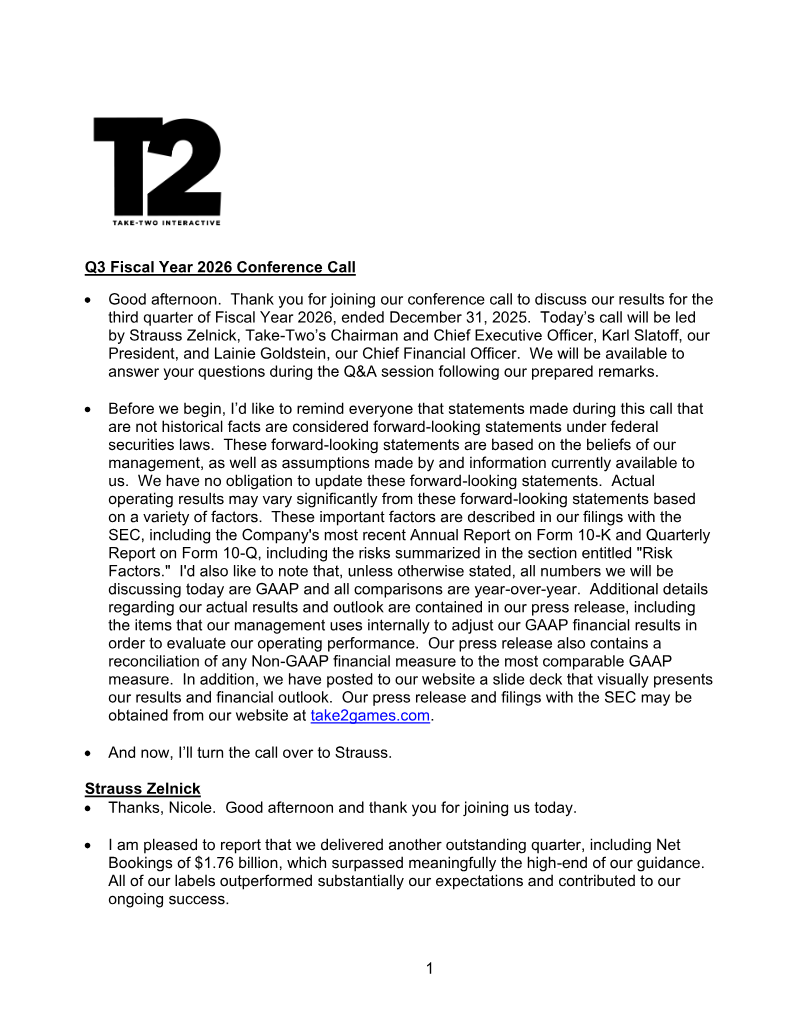
Take-Two Interactive · 2026
Take-Two Interactive · 2026
PCF Group · 2026