Transcript
Welcome to the Naavik Gaming Podcast, where it is our mission to explore the business and future of video games. We bring together the industry's brightest builders, investors, and thinkers to keep a pulse on current events, dissect emerging trends in games, share lessons learned, and have a great time. This podcast is also part of Naavik's growing ecosystem, which ranges from free and premium research to consulting and advisory services. For more information, visit www.naavik.co. This episode is brought to you by TikTok's Live Ops program, which is designed to help mobile game publishers keep players engaged and returning for more. In 2024 alone, TikTok found 9x growth of Live Ops campaigns on its platform, driving dynamic in-game events, seasonal updates, and post-launch content. By leveraging
TikTok's innovative platform, publishers are able to enhance player retention, improve engagement, and ultimately boost in-game success. Learn how TikTok can help your game thrive by visiting TikTok's link in the show notes. It's just one click away. It's a super compelling program, so definitely take the time to check it out. And with that, let's jump into the episode. Hello, and welcome to the Naavik Gaming Podcast. I'm your host, Nico Vouri. Today, we have a very special episode for you. We are going to do something that we rarely get to do in the gaming industry, and that is to cover a brand new gaming category that barely existed as recently as 2017, but has grown into a multi-billion dollar opportunity in just the past few years. Last year, this new category generated almost 6 billion in revenue, and this number is expected to double to nearly 12 billion by next year, in 2025. And I'm willing to bet that most of our listeners have never heard of this category, just like I hadn't until
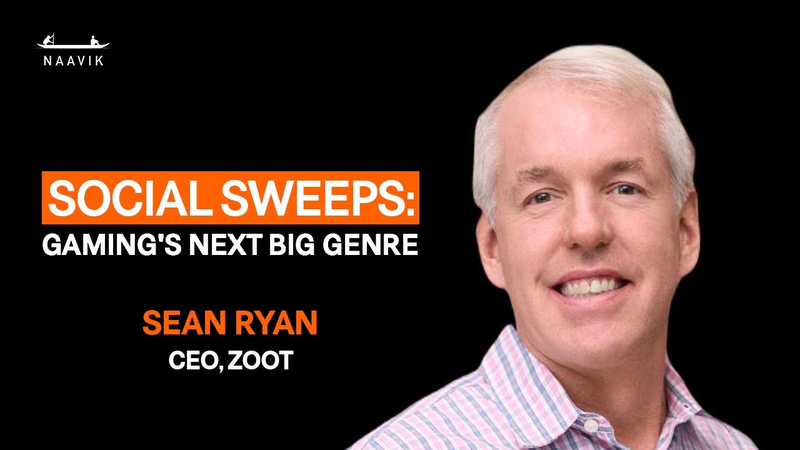
fairly recently. The category we'll be talking about is adjacent to social casino and real money gaming, both huge categories, of course, uh on their own merits, but what we are talking about is something that has been just a feature of many games for decades, but has now become its own thing. And that thing is called social sweeps. What are social sweeps, you ask? Well, to find out, we have invited a return guest and friend of the pod who's going after this opportunity with his latest startup, Zoot. So, without further ado, today I'm excited to welcome back Sean Ryan, the founder and CEO of Zoot, to the show. Sean, welcome back to the pod. Great to have you here. Thank you, Nico. I'm excited to be here. Great to reconnect again as we both moved on to our next startups. So, hopefully these will go incredibly well. Yes, better than the last one, at least. Um yeah. Okay, so with that out of the way, let's get right into the episode. And I know you've been on the pod before, but uh we always like to start with the background, so let's go over that again. You've got a very uh storied and uh
deep uh connection to the gaming industry, so I'd like to uh go over that and uh share that with our our listeners. Thanks, you, Nico. One of the few benefits of being on the older side is that you've got a long career in to talk about. So, I was a gamer from day one, which is back in space when you had arcade games, so on machines in malls. So, that was Space Invaders and Asteroids. Then up through the Atari 2600 and then television up through the Apple II and Wizardry and then up in the university. And again, this all happened before the internet and before smartphones. So, then I really wanted to be in gaming as a business, couldn't figure out a way in after banking and retail, went to business school and found my way to Sega Soft Networks, which was one of the original uh multiplayer game entities that started just as we went from dial-up modems, which maybe people on the podcast won't remember, to broadband, which enabled a much richer form of gaming. So Sega soft had a product called heat.net. It was one of the early
players in this space, one of the early companies. I was there for 2 years while we tried to build this entirely new business along with some competitors. Then I took a break, went to music for 7 or 8 years, which again was the same theme in my career, which is areas that are physical, going physical media going to digital. That was music at a company called Rhapsody. And then came back, started a avatar and virtual world company called Meats, that today you would call a metaverse company cuz your valuation would be higher, at least it would have been 2 years ago. 2 years ago, come on, come on, Sean. That worked a little bit That's true. That worked a little bit. Uh did well in some ways, uh but we didn't have a revenue model and it was just as the smartphone was starting to hit. So at the same time we spun out a social casino company called Open Wager. I the last uh and then went to Russia for a year in Moscow to run a social media site there and help them uh modernize their platform stack at a company called LiveJournal.
Went to News Corp for 6 months in order to help them in their active game business, and then ended up at Facebook in 2011, where we were just starting the gaming platform and I was the leader of that and was and stayed at Facebook for 11 years, where many of the original game social game companies started before they moved to mobile. I ran that and additional divisions at Facebook for a long time. At the same time my former social casino company had uh fallen apart a bit and been sold to a company called ZGW. We will come back on this. ZGW is the leader in the social sweepstakes domain and our product was called Lucky Lion Slots, which is now the number two product in the industry. I went on and stayed at Facebook for 11 years, gaming and otherwise, payments, developer platform, a bunch of other things. And then left to do web three along with Diko and others when we thought it was the glorious future. It may be the glorious future, but it's still in the future. So, we did that for a couple years. And then we shut that down in December, waited a week to lick our lick our wounds, and January 2nd we started back
up with what we should have done two years earlier. We had the concept which was Zoot. Available at getzoot.us. And what this is is really not a casino the way many of the players in social sweeps are, but we can talk about that. This is a throwback to the old days of shockwave.com or addictinggames run by my friend Mika Salmi, which was simple, fun to play games that were spun out on a daily or weekly basis. And the only difference in our case is that the revenue model is not ads. Our revenue model is sweepstakes, and we can go through how that works and why we think this is a better mouse trap than some of the players in the space, but happy to go through it in more detail. All right. Well, I mean, that is a who's who and what's what of early gaming throughout you're always early, it sounds like. Maybe sometimes too early. my wife says the same thing. And so, that was one of the That was literally
discussion topic this time is are we too early, are we too late, are we just about right? And just like the three bears, I think we're just about right. There you go. There you go. Yeah, I mean, we got Rhapsody in there, addictinggames like I remember so so so many of these. Yeah. And Mika Salmi, of course, is a fellow Finn and I wouldn't call him a friend of mine, but I certainly know know him well and our paths have crossed in the past. So, okay. So, a lot in common there and also again, very early to a lot of gaming and let's see what this category looks like because it is early, relatively speaking, but it's already big, multi-billion dollar business. So, that brings us very nicely to the next question, which is what the heck are social sweeps? I I know sweepstakes well, we've implemented as features many, many times. So have many other gaming companies. It's worked really well as a feature inside a game, but how does it work on its own as a revenue model? So social sweeps popularized by a company called VGW based in Australia that I used to sign off on their financial their legal opinion when I was at Facebook.
Social sweeps are the idea that you have a free-to-play game system. So that's the social part which you have gold coins. And that when you buy a you buy a package of gold coins you are then given a set of sweepstakes entries. It's a bundle. You can then choose to play that game with either gold coins or sweepstakes coins. Those sweepstakes coins have monetary value and can be won or lost. So the closest analogy and where this runs from a regulatory perspective is that the the usual McDonald's. You go to McDonald's, you buy a Big Mac and as part of that you get entered into a sweepstakes and you have a chance to win something. Or for those who are old enough to remember Ed McMahon and Publishers Clearing House, you used to buy magazine subscriptions. Those are the things on paper that come in the mail. And you would get entered into a contest where you could win money or a car or things like that. So that's the basis
social sweeps. A free-to-play game system with gold coins attached to a sweepstakes entry system that from a regulatory perspective comes off the sweepstakes laws in the 50 states of the United States. So there's a couple quirks to it. One is you must have an alternative method of entry, MOE. You must be able to send me a postcard. It's actually an index card in an envelope. And if you do that, we will grant you a certain set of sweepstakes entries. That is always a requirement of sweepstakes law. And the usual rules that it must be luck based. It's a It can't be a skill based area. But, uh you are able to and you can win actual value from it. But, because you don't have to pay to enter, it does not qualify for what is considered to be real money gaming rules. Just to reiterate, real money gaming rules, as Nika knows from his time, you must you must put something of value up, luck must be the determinant outcome,
and you must win something of value. If any of those are not true, any of them, not all of them, that is not considered real money gaming or gambling. So, in the old Zynga Poker days or Zynga Slots days, you would you could put money in, luck determined the outcome, yet you couldn't win anything of value. Sweeps is the all opposite of it. Skill based games, on the other hand, are different because they're truly skill based and they do not fall under the real money gaming because they're the middle one, which was it must be luck based in its outcome. That's the definition of sweeps. We can go into more detail. There are various ways to play it. You have sweeps based sportsbooks, like Fliff would be the most well-known one. You have a multitude of sweeps based casino looking uh apps, like LuckyLand Slots or Fortune Coins or uh Crown Coins. And then you have us at Loot. We're in the arcade game sector, which is quite rare, and we can talk about that uh later in the podcast. Amazing. Okay, well, that's a great rundown um of of the landscape. Um and
that Zynga Poker, we actually not only do we have the free-to-play system, of course, um but we we also ran sweepstakes regularly. It was a very uh lucrative way to to kind of juice the numbers. You couldn't run them all the time because they kind of lost their power, but but we would run them, you know, maybe on a monthly basis, you know, every four or five weeks, give or take. Um and they were a nice revenue driver. Um they'd give you a nice pop. Uh and of course, we I remember very well, you needed to send in a postcard. Yeah, it was Listen, sweepstakes law is as established across the United States at the state level. Most states are pretty similar. So, this is a very well-understood concept. It just has been adapted for the digital world. Right, and that's my next question actually, which is it has existed as a concept for decades, quite quite frankly. Like, you know, pre-internet, like, you know, Publishers Clearing House. Like, you can go back all the way to, I mean, probably the turn of the cent- not this century, but the last century, um for for some of this, as I was doing my research here. Um but, this this notion of social sweeps is
actual driver of a digital product. Like I mentioned in my intro, it didn't really exist until about 2017. It was about a $100 million a year business by the kind of industry estimates that I've seen, but it's exploded to billions this year and and doubling potentially into 2025 up to $12 billion in in revenue. And then, of course, you've got to pay out the prizes, right? So, there's like a net rev- net revenue piece is smaller than that, but still a multi-dollar a multi-billion dollar business. So, what on Earth has driven this? Like, what happened in 2016-17 that allowed this to become its own thing and a huge category in its own right? Well, I think we have to give credit to VGW, this Australian-based firm that has done quite well with it. They have Chumba Casino, they have LuckyLand Slots, and they have a poker product. They're the ones who really popularized this, shot saw some success, then doubled down on the marketing and innovation in the category. And then, uh what happened was COVID hit a few a few years ago, and that drove the numbers up to the right. And what frankly happened is VGW is an Australian
company that has to, at a certain size, report their financials at some level. And people looked to see how successful this category was and what this category I'll be it existed, because this is unique to the US. Maybe not unique, but it's more common in the US. So, European providers and non-US providers are a little bit confused over it. So, then you started to see uh additional entrants in the area that brought a a of innovation and different marketing tactics, different games. So, that's really what has started to drive the the loop is that the EC more games, more competitors, just like we saw in social casino uh in 2012. And the idea that therefore it can be a growing business that appeals to more and more gaps. Yeah. So, so you mentioned VGW and you mentioned that at the very beginning, in fact, in your in your intro to yourself and your your career. Perfect time to talk about VGW now. Like, who are they? It seems like they almost single-handedly brought about as far as I can tell this new category, which of course now lots of others are
going after. They seemingly owned 100% of a very large category that was like a mystery to many. Like you mentioned Europeans, it's a mystery to me still. Like, I look at it and it's like, "Wow, where did this come from?" And so, very curious to hear about VGW and how they came about. What did they do initially to to launch What product did they launch that kind of showed them like, "Oh, wow, there's heat here." And then they doubled down, as you say, and and grew this into its own category essentially single-handedly or mostly single-handedly. Yeah, so I'm not the expert on them, but they were started by at the time a young man named Laurence Escalante. You can follow his Instagram feed since he's done quite well. He likes expensive sports cars and private planes. Um, so he's done very well. I remember meeting Laurence 15 years ago. I was running the games platform at Facebook and he sent in his app. And we at the time did not allow real money gaming apps. So, no gambling apps were allowed. They had to be free-to-play only. And this felt like a middle ground. And we weren't sure, just like King, by
the way, used to be in the skill-based option of this. King, before Candy Crush, before it became free-to-play, was in this a gaming adjacent area in skill. Where you had small amounts of money that you could win or lose. And so, I we I took it to the lawyers at Facebook and I said and we're pretty conservative, and I said, "What do I do here? I've never heard of this category. Uh, it doesn't seem I don't know where what box to put it into. And they looked at it and came back and said, "Based on the legal opinion and what we believe is true, it's legitimate as long as he is following the legal opinion that a law firm has decided where it's legal and what is legal. You have to put it on the Facebook platform." So, I did. And it was okay. It never took off with the ferocity that social casino did from Playtika and Zynga and others. But it was there. It was around the loop. And they were improving they were the team was continuing to improve the game, improve the marketing. Just on Facebook. It's a web-based app. We're back to web-based apps in many
cases cuz in most cases the app stores won't carry switch day. In some limited case if they do. But the just the app stores like Apple and Google are still in Android are still trying to figure out what to do here. Mhm. So, BGW deserves full credit for both there were other players but they were the ones who introduced it, invested, doubled down on it, acquired more properties like Lucky Land Slots from us, and continue to grow. You know, I originally started the real money gaming business at Facebook in 2014 when we went live in the UK and in Italy and Spain with partners and even in those days we barely heard about this category. It was either you were real money or you were social casino. And both were great categories. This lies in the middle between the two. I used to joke that it's for those family Catholics like me. It's purgatory. It's above it's below heaven and above hell. And so, the good news about it is nobody understands it. The bad news about it nobody understands it. So, you have to both from a consumer
perspective and also explain it. But we've found so far it's just a really fun category to be in. It's the growth rates are interesting and we like our approach to it at Zoot. Yeah, yeah. You know, what's what's really fascinating about this is you know, most social casino games have a real world analogy, right? And and as this social sweeps, but in social casino, they're they're actual games, right? Like there are slot machines in the casinos, you're playing poker for real money in casinos or, you know, at your local club or whatever with your friends. Um, you know, bingo, similarly, like they're actual games, right? Um, but sweeps is to me still doesn't It doesn't feel like a game. It doesn't feel like something that has a real-world analogy in the gaming world. It has, obviously, the Publishers Clearinghouse analogy, um, or the McDonald's, you know, entered into a sweeps analogy, but it doesn't feel like a game in and of itself. So, how Like, how does it work, quite frankly? Like, we can talk about Zoot in a second, but let's talk a little bit about like LuckyLand Slots and those kinds of games because it seems like that's where it's been adapted uh into
the casino world and you're taking an arcade approach. So, let's start with the casino world because that's, like you say, it's purgatory, right? It's between real money and social I think the casino world is where the majority of the assets is, both the existing ones and new ones that are arriving. And so, in this case, it is the same idea that I can run a social casino with gold coins, no different than a Zynga Slots was or Zynga Poker. That is you can never do anything with Sweeps Stakes, and you have a decent or a pretty good uh casino-style app that is social casino rules. If you wish to, you can move into the Sweeps Stakes area, which allows It's still the same game. So, I actually consider it to be very similar to Zynga Poker and Zynga Casino and Zynga Slots and all of the competitors in that the difference is you are able to purchase or be granted those uh Sweeps Stakes entries of value, and you can put them You can enter them into the contest. It is a luck-based contest. I want to be clear on this. Yep. And you win or you lose. And so, it's
for some people, not everybody, that feels like the right exchange of value. And so, it's uh for those who want something different or more than social casino, this is that next step up. Interesting. Interesting. Okay. And what are the things that are being given out of value? Is it Is it the usual? Is it cars? Is it vacations? Is it money? most mostly money. It is Now, I think we're going to see as more entries come in, we're going to start to move more into prizes. There are some people want iPhones or cars or TVs or not at all one. Right now, the vast majority of the sites that exist out there, it is money. Interesting. Okay. And I I I saw some numbers uh that imply that about 65% of the kind of money that's you know, paid by players is then given out in prizes, give or take, about 65%. Is that about right or does it range widely? Okay. No, it doesn't range widely. Like Like anything else, you're trying to have a
game that uh by and large is profitable, but you always want to have winners. Just like and so redemption is a key part of this is that you're giving away prizes, whether it's money or pri- other types of prizes, uh as part of the result of this contest. That's the core part of it is that if everybody loses, then no one will play. So, it's just like the lottery, just like all sorts of other games that are different but similarly related, you want to be able to play something in this case that you have a chance of winning. You could win gold coins or sweep coins, uh depending on what depending on how you enter. And so, it's one of those areas that the redemptions are a core part of it and it's up to every business to figure out how they handle redemptions and what that loss rate looks like. Interesting. Okay. Um brings up my next question, which is who are these players? Um I'm presuming it's a subs- It seems like it's a very lucrative subset, but it's a subset of maybe casino players, casual players, or are they they their own group of people who are unique in the sense of like you
can target them for this product, but you wouldn't get them for like a social casino product or you wouldn't get them for a poker product, you wouldn't get them for a real money gaming product. No. It's a bit of a player. What I would say they overlap depending on the genre you're in appears to be quite similar. So, the sports book genre tends to have young men or men who are out there. The casino genre has often the stereotypical middle-aged woman. At Zoo We in the arcade games, we have young men. So, not that doesn't change much. Uh so, I think so that's I don't think that's a radical difference. This is still a smaller category than the other bigger category. So, but what you find in this category is you're able to be more innovative on products. Mhm. Because you can move quickly without necessarily having to go through a regulator to get every single change approved, you can try stuff. So, if you look at some of the sports books that are based on sweeps, they're frankly more innovative, easier
to use, they try things, they shut them down a week later, they open it up, and that's true for all of us. It's all about product innovation at the end of the day. Uh giving people an experience they'd like and might be able to win a contest in, but at the other hand being more innovative about how you do it. And our case, it's about bringing what we know works in the social mobile games to this category, and in other cases, it's about, you know, making it simpler or making it more fun or more timely in a way that the classic uh casino-like apps in that category don't do. It's a broader mix of people, but it's probably a smaller kind of total addressable market than something like social casino or real money. It's too early to tell because it's a relatively new It's a relatively new vertical, but our adjacent vertical, but I think I yeah, I think it's still a subset. I mean, also what you have to understand is as you know, the social casino folks have had 10, 15 years to optimize their systems, and they're very good at what they do. Uh same thing with some of the RMG apps,
the DraftKings, the FanDuel's. They're very good at what they do. They continue to excel in the categories they're in. The social the social sweeps folks are are newer and in some ways more innovative, but also newer in their optimizations. This will take time. Yeah, yeah. Interesting. Yeah, we actually just literally just on the episode dropped 2 days ago Tuesday. I've recorded it last week with Danny Moy, chief strategy officer over at SciPlay. And so we were taking a kind of look at the social casino market and obviously we were both in it a while ago, you know. For me it's like since 2016, so that's a lot a lot has changed in that kind of almost decade since then, but but it is interesting to to hear how much innovation has happened and how sticky that category continues to be. And it's interesting that there are still like subcategories of social casino because I do view this, you know, social sweeps as a subcategory of that, still are able to pop up. You know, like somebody has didn't think about this and now it's like, oh duh, like this is such an obvious thing.
So Yeah, I think you listen. I've I've known Danny for a while and I think SciPlay has been executing incredibly well. So you look at that business, they continue to drive numbers up. It is not easy. They are just running an execution play. But you also always on the keep on the lookout for innovation and in these smaller genres, skill and luck and skill and sweeps, you start I think you see a little more innovation than you do because those are big businesses. They're very big businesses that you don't want to innovate too much cuz it might you might make a mistake. Yeah, and it was I mean the TLDR from that episode was that they're most I mean yes, they're trying to grow their you know, player base. Yes, they're trying to do new product launches, but by and large they're focused on their core business because why wouldn't they if they're continuing to grow it at like double digit CAGR, you know, go for it, right? Like I mean that's They they they've been honestly the most impressive social casino company in the last couple years. I I I love those guys and they have just continued to operate at a high level. Absolutely, absolutely. Okay, so let's talk What a typical user journey. Um, I know the user journey from social casino, at least from close to a decade
ago. Let's talk about the user journey for a social sweeps player. How do they come into your product or any of the other products that are out there? So, they come in through the usual channels, you know, SEM. So, there's a bit of social and SEO and virals. That's what you hope for, of course, but that's not enough by itself. And then you add in paid acquisition, no different than you would for social casino. And then you throw in toward the end either affiliate networks, which are the more more unique to gaming, or you influencers. So, I don't think it's any different. People seem to think this is radically different. You're still using these channels in different ways. It you redemption is part of it. That's obviously a different part of your marketing push. Uh, but in general, it is a very similar audience, similar channels, with a lot of people trying to optimize and try new and different channels. But traditional paid acquisition is is often the way people come in. Yeah. And just to clarify, mobile is not an option or like native mobile. It's a great question. Uh, some of It's It's not clear. It's
I would say the my best and I'm not the expert to We're not on apps. What I would say is Google is less friendly than Apple. Hm. And most of the sports books seem to be able to exist like Fliff on iOS. On the casino side, it's a little unclear to me. Some seem to get there, some try to get there and don't. It's You know, it's these areas even social casino was like this in 2012 where no one was 100% sure where does this fit. And so, right now what I'd say is all of us are on the web and some people some of the competitors of this growing group have made it onto the app stores, but it's still pretty early, Tim. Yeah. And is this something that there is clarity from Google and Apple on? Is this something that they have because they they early social casino, there wasn't really anything and it was like everybody as you say everybody was figuring it out and then they got there, right? And then there was actual clarity around it. There were certain rules like you just have to follow the rules and it was
clear that those rules were written in part for this category of social casino. Um, that sounds like it's not the case at all right now. Is this on the radar of Google and Apple? It's definitely on the radar partially because these apps are quite successful and because there's a lot of marketing spend behind them and increasing usage. What I'd say is the way the way this works, the journey works here is you build your initial application uh or your site. You go to a well-respected law firm. In our case, it's Ifrah Law, which is one of the gold standards in the business. They spend a fair amount of time you going through your site and making sure that it matches up with what they believe after looking at all 50 states what can be legal and in what states. You take that legal opinion and that is what you use to whether it's with the app stores in some cases, your payment partners in other cases and you follow rigorously that legal opinion. Sometimes that legal opinion needs to change over time as state laws change or
the world changes, but that's what you rely on. And then in our case, you have for example KYC. You have know your customer. You have AML, anti-money laundering laws. You have geo-fencing meaning uh our app under the way we do it is allowed in 45 states but not 50. So we have to deny a few states that either have different state laws or have passed some sort of rule against us. So it is a state by state. It's it's no different than what you see in real money gaming and it's no different actually in some cases what you see in social casino where for example the state of Washington is uh quite negative about social casino. Yeah, yeah. No, I I remember that and sounds like they haven't changed their mind. So So to answer your yes, to answer your question Nico, I think over time this will get uh formalized and there'll be a set of checklists that if you check those boxes and follow them rigorously as we do, that you will be allowed into the app stores under those rules. I don't think we're quite there yet, but I I'm hopeful next year given the size of
this category and the interest in it, that we'll get there on one or both app stores. Yeah, I mean, they do follow the money. I mean, they're not they're not allergic to money, Apple and Google. So Yeah. Hey, hey, hey, we've Listen, we've seen this if you look in the business you and I used to be in a little bit, the rise of cash solitaire and cash bingo games Yeah. uh have which didn't exist 3 4 years ago, are now prevalent in the top 10. So, clearly markets change, the world changes, and the app stores come along with it. Not always they're not always at the forefront, but they come they come along when they see usage and they see where the puck's going, they they tend to come along. So, I I'm pretty optimistic about it. Yeah, yeah. Well, I mean, a $12 billion category by revenues, you know, and if they get to take a third of that, 30% cut, you know. That's that's worth it, right? Uh okay, well, let's talk a little bit of you you you alluded to the regulatory environment. I want to dig a little bit deeper on that. Um one of the reasons many free-to-play developers, social casino developers didn't want to go after any of these things that have anything to do with regulation is
because regulation is a real pain in the ass. And, you know, know your customer and anti-money laundering, all the things you mentioned are quite painful to do, especially if you're a smaller startup. Um and yes, when the opportunity's there, of course, you go after the opportunity, but at the same time, it's it's a lot of hoops to jump through. So, that's both a blessing and a curse, right? It's like it's going to deter some smaller developers from going after it. Um at at the same time, it you you still have to go through those hoops, right? So, talk a little bit about the regulatory environment. Um what are the laws surrounding You've alluded to to it a couple of times, but I want to go just a little bit a little bit deeper. Um how do you navigate that regulatory environment? How do you make sure you have that geo-fencing working on a state-by-state level? It's not as hard as you'd think these days. Uh you have a bunch of respected law firms that go through and give you a quite long legal opinion and it says what you can do and not do. So it says you can go in these states and not these states. You have to have KYC and AML. You have to have these types of things and so and they've done this many times and they're well respected and then you make sure you follow it. And so we went out and got
that. Then we looked at the app and said, "Okay, we now need to find partners uh for Geo Sands, KYC, AML, and honestly payments and that's a little bit longer and you're right. It is not as quick as just uh putting it up in an app store and calling it a day. It is more work involved. And there's more rigorous around the due diligence involved of your partners and then with you. Lots of paperwork to fill out. Not easy to get a bank account even when you're in this category. Uh it's taken me a while. So uh so yes, there are more hoops in this one and there should be. This is the there's real money involved. There should be more hoops and there should be the types of protections that we have in place and almost all of the sweepstakes players have. But it takes longer, months not weeks in order to get this done and continue to refine it as things change. But I wouldn't say it's impossible. There's probably 50 or 100 players in this space now and more coming. So it's getting to be where it's more regularly understood uh but uh there are lots of partners out there that see this as a growth growth
for them. Your vendors, your who provide these services. So listen, there's work. It's not worth then putting an app up in a free-to-play store but it's not impossible. It it's it's uh there's a process for doing it and it's frustrating to me cuz it takes longer than I would prefer. So is it deterrent to be honest from some of the players who might come in. And what's hard is you can't take your existing social casino app and throw sweeps on top of it. Mhm. Cuz that's not how you were approved in the first place. So we know of at least of one relatively prominent social casino that just disappeared one day because they had put sweeps into their social casino app, which might be a good consumer might be a good consumer experience but is not what the app stores had in mind. Yeah, yeah. So, you want to make sure that you are legally buttoned up, that you have the legal opinion that makes sense, that you're following the rules, and you have all of the vendors and partners that you religiously or sorry, rigorously adhere to. So, that's more work, but I think
it's all a doable when you look at how fun and exciting this space is. You know, when I started this company you really look as you know Nico in the in the traditional video game business, which had a great run and it's a $200 billion a year business, but it's challenged at the moment in the in the mobile side, in the AAA side, you know, the it's flat to arguably down. And so, when you look at growth factors, you start to look at gaming adjacent ones like this. Even Web3's coming back. Yeah. Yeah, no, I'm absolutely right. Like I would absolutely not start a a startup going after like a straight studio type business or, you know, wouldn't start something in social casino, you know, it's just too saturated and and, you know, not the growth factors aren't there. And so, this is why I'm so excited to have you on the on the shows because like my mind was blown almost. It's like, well, these don't come around very often, these opportunities where there's like a literally a you know, $6 billion to $12 billion growth opportunity over the next 12 to 24 months. That's that's nuts to me, right? Like
so, this is a huge opportunity. So, very exciting. Um And that was a question when you asked earlier about being too early, which I have been too early multiple times and that's fun. This was the question this time. Are we too early or too late? It's a it's a crowded and very competitive sector, but on other hand, it's also a high growth sector and that's what makes it fun. So, I feel better about timing for this, but it's certainly getting more and more competitive at Weekly Best. Yeah, yeah, for sure. I mean, well, I'm I'm sure you're not helping your cause here by coming on this podcast. Uh I'm sure I'm I'm very open about it. We you You we This is a legal offering that we think is super exciting for consumers and we're not at the casino side of the business. So that's something somebody else's game, not ours. And we just think there are better ways to monetize social games than necessarily pounding us pounding you as hard as possible with ads. Yeah, yeah, for sure. No, and we'll get to Zoot in a second about what you guys are doing differently. But I still I have one more. So one thing you mentioned actually, which was really interesting to me, is payments. And you know, payments like we are currently implementing Stripe for our payments and
we're doing nothing that's even close to regulated stuff and they're very frustrating because like they will not let you use their payments if and they won't tell you why. They'll they'll be like you're not in compliance with something, but you have to kind of like guess your way to what it is. Um that's been frustrating. We're fine now, but like it was just annoying and frustrating. And I cannot imagine what it must be like on your side of the thing. So you mentioned payments and I actually want to dig into that because it sounds like not all payment providers are are cool with this category or if they are, they'll make you jump through a lot more hoops. So tell me a little bit about how you're doing payments, like who you're using for it, and if you ever get approved on mobile, if the app stores ever, you know, start to allow this, like is that going to either is that going to make things a lot easier and you're looking forward to it despite having to give everybody 30% or is that going to mean mean a massive overhaul of your entire payments infrastructure because of course alternative payments on app stores is, you know, despite some recent changes thanks to Epic,
um is is not really that a thing yet. So first I'd say that Stripe, although a phenomenal company, uh is not historically a fan of anything in this category. Yeah. So we didn't even bother. What you do in this category is you go to the payment aggregators who have a commitment to gaming. Mhm. So in our case, Paysafe is our aggregator partner. They've been amazing. Uh and they have done this for multiple companies. so they understand the drill. As long as you're following your legal opinion and you're legit and doing everything by the book, they are there and have a dedicated team helping gaming, meaning real money gaming, sweeps gaming, etc. Payoneer me is also good, Nuvei. So, you've got those are probably the three that I would bring out that have dedicated gaming teams that are focused because a lot of it's about the relationships, a lot of it's about following the rules, obviously, but you want to make sure that one day you don't wake up and your bank account has been
terminated. Mhm. So, in this case, you always have to have multiple payment provider partners, multiple bank accounts, because you do see where especially where they're smaller, you do see some erratic behavior sometimes on that front. And without payments, a sweepstakes site doesn't work. You need to be able to accept payments and pay out redemptions. So, payments are a crucial part of this business and we spend a lot of time. I was on a call with one of our partners right before this uh to make sure they were happy and we were happy with some changes recently. Uh, then on So, that's credit, debit, that type of thing, uh, Apple Pay. Then we use a smaller company called Aeropay based out of Chicago for guaranteed ACH. Allows you to take money in because this isn't just about putting money in, this is also getting money out. Mhm. So, both are important. Uh, and so, the guaranteed ACH space uh uh is a growing area for any player in this space. And hopefully over time,
Cash App and Venmo, which do not currently participate in this space and PayPal, uh, are not yet players in this category. We would like to bring them along as we see growth in the category and we know that a bunch of our consumers use those apps. But these things take time. It is as like any new and growing sector, as it gets to scale, as it gets normalized, as people feel comfortable with it, you see you then have more entrance including in the payment partnership side. So, I totally understand I have to fill out I mean I'm looking at here I've got one two for one I providers I've got 32 different documents I have to fill out. Mhm. That is everything from our KYC and AML to what is our org chart to what you know, it just is it's almost endless. But on the other hand they're incredibly important and we believe that we should be as buttoned up as possible in order to make sure that our payment providers who are deeply partnered with us and everybody else in the category are satisfied because they're exposed just
like we are if there's some wild west stuff going on as you see for example in crypto and other categories. Yeah, yeah. Man, fair play to VGW for figuring all this out as a as a frontrunner cuz I mean cannot have been cannot have been easy to navigate this morass of like legal and banking and payments and stores and you know, what have you. No, huge runners up to them. I you know, they they they've grown the category they maybe there's a lot more entrance now but they're still the leader in the category and a really top flight team. Yeah, so fair play to them I guess. I'd never heard of them before and you know, it's it's often the case It is surprising how no one's heard of anybody in this category there is a there is a consulting firm called Eilers & Krejcik who are mostly real money gaming but they have become the leader in analyzing the sweep space and so they have helped popularize this as well. Yeah, and I I actually know Eilers & Krejcik very well. Adam Krejcik is in large part to credit or at least partial credit for clueing
me into the the classic style slots opportunity that was game that we launched Viva Slots Vegas that made our our company. Um I remember. So, yeah so so good guys and they've been covering the space the social casino space they were pioneers covering that too. Now they're I guess they're very social casino space. They've been on fire for the last 10 years, and they were they made the move beyond just real money gaming. They originally covered social slots. Yep. And they expanded and did it quite a lot of research on them. We worked closely with them on a bunch of things. Yeah, yeah. Todd Iler was the the real money guy, and then Adam came in and did the social thing, and now I think they've just like blown up as a firm. Completely. And are doing phenomenal work. So, anybody who's interested in the space, by the way, social casino, real money gaming, social sweeps now, Iler and Grayshik, they're your guys. Um Absolutely. Um okay. Uh one of the things I I didn't have any planned questions, but it came up came to me as as we were talking here is um IP. So, IP is incredibly important um now in particular, and that's part of the reason why SciPlay is doing so well in social casino. You know, they they have the brands, right? They have quick
hit slots, they have, you know, all the different slots brands, IP, slots IP, that players know and love from the casinos, and that's a big part of the draw. And yes, of course, it was possible, like Playtika with Slotomania and us, you know, with Viva Las Vegas, to do kind of your quotes generic um IP. Uh that was obviously based on real life stuff, but, you know, for copyright reasons, you can't go and just copy, you know, the the slots machines out there. Um it's hard it would be very hard these days, I think, to start a social casino game with a non-IP-based product. Um but IP is very important, you know, and with poker, Zynga was early with social poker and was able to grow obviously very effectively. But now most of the poker products that are dominating, certainly in the app stores, are based on like you know, World Series of Poker or some of the brands and the again the IP that is very powerful and that is known for poker, known for slots. Um strikes me that this is a different category. There is There probably isn't IP, or or if there is, it's of a very different
kind. So, talk to me a little bit about this aspect of it. Like, right now it seems like it's a kind of a free-for-all, like let's Yes, regulated, right? So, you got to jump through a bunch much more hoops, but it's a free-for-all. all. kind of like a a land grab type moment here and I sounds like you can get away with not having anything IP based or not having partnerships with brands or whatever. Is that something you see happening in this category? Is that something that you are thinking about? Absolutely. To your question, you and I saw the beginning in social casino. This is following the same path. So social casino in the beginning was really innovative players like ourselves and Playtika and others and had no IP because the existing branded IP, I mean those cases being slots holders or poker brands would not come into the category because it either wasn't large enough or they didn't see it as respectable enough or somehow just didn't fit with their view of the world. That's right. Then you saw Caesars buy Playtika, you saw I'm game partner with Play Studios and all of a sudden they all became legit and SciPlay and others both acquired and then eventually brought over their real
world slots. So what you see right now in this category is in uh sports, you have a company like Swift, they get the same data feeds that any sports book does. So but there's not a lot IP there. Uh you see in slots that many of the companies have the same set of suppliers that you find in regulated. You have Pragmatic for example, which is one of the bigger slots suppliers. There's just a whole set of aggregators that supplies online slots all over the world both in regulated uh regulated environments as well as crypto casinos, which is big outside the world and now in sweeps. And so then what will see and so you went through this and then what happens is as sweeps gets more legitimized, the size, the the influence of it, the brands will start to come in. Probably next year both on the IP side and I know that Scientific is is projecting at least one good size acquisition. And so I have a bunch of meetings especially with the European uh gaming
providers of different types both vendors like slot providers as well as casinos and they're looking at how to enter the US and this may be one way for them to do it. So this will follow the traditional path as the as the category gets larger, they'll start to see IP come into it. Then the it'll become harder to compete without IP as it does unless you're super innovative which could work. But over time people are going to want the same types of brands that they appreciate in the real world in the online games apply. So I don't see this as being anything different than social casino I if you're running a slots business. Just 10 years you know earlier. Yeah, yeah. Okay, interesting. Um What's the breakdown at the moment in terms of the the kind of subcategories within the social sweep? Sounds like casino still is probably the largest driver. You're doing something with arcade. What do you can you give me a kind of a rough sense I think I think I think these I think these are artificial barriers but the way we look at it at Zoot is you have social sports book.
Mhm. So you're taking a sports book but you're using sweepstakes regulations to run it. Lesse is one of the leaders there. There's some other ones like Thrills with two Z's. There's Underdog and PrizePicks are a little bit different but so you've got sports. Then you have the biggest casino by far which is the biggest category which is casino and that's Chumba and anything from Pulsz and the Fortune Coin guys and the Crown Coins people and those sorts of things. You do have coming I've seen but not launched yet bingo. I've seen couple other versions coming but bingo I think we're about to see. And then you have what is known in the industry parlance as instant games. And instant games are similar to what I launched on Messenger at Facebook a few years ago which are simple HTML5 games that have you know 30 45 second game play time and are pretty entertaining and in this case all you your core your analog would be the hyper casual
business in mobile. These are hyper casual games or instant games. And what they are arcade-like games uh that still have a sweepstakes outcome but feed a different type of consumer. That there's a bunch of consumers who don't like slots, particularly younger men who would prefer arcade-like games uh versus slots. And so that's where we exert our focus, and that's really what I how I would differentiate the categories. For example, the top category the top historic uh game in this space is called Aviator. Now, as a game designer, this looks really simple. It is literally a plane that goes up to the right. It could be a rocket ship, it could be anything. And you enter a sweepstakes entry, could be a dollar, could be $10. As it goes up to the right, it multiplies. You have a multiplier 1.1, 1.2, 1.3, or whatever whatever you want to call it. If you can cash out whenever you want. And you keep those proceeds.
If it crashes you lose. So, it is almost like a slot machine in some ways that you can uh cash out halfway through uh for a reduced uh earn, but it's just different. And so, those are the types of games or mines like we have, which is there's 25 mines, five of them are bad, 20 are good. You click on the You click on the ones on the board as the multiplier goes up until you hit the bad one. Mhm. Uh or Plinko is a very popular game. It's a version of Pachinko or pinball but without the flippers. You drop a ball sound through many pegs, and if it ends in a positive hole, then you win you you win your sweepstakes. And if it doesn't, then you lose. So, the question that you should be asking what people ask is why would people do that? I don't ask that question because I worked in social casino, I worked in casino, I worked in real money. I don't ask that question anymore. I know I know like the your traditional game developers are kind of snobbish and like look you know snooty about these these
types of games these these categories but I don't ask that question but yes, let's ask the question on behalf of our listeners. I think so so most of our listeners your listeners are probably video game folks and they're used to everything being skill-based. And there's nothing wrong with that. That's awesome. Absolutely. But the nature here is that there are others who like the idea of a simpler game play experience and it's about the entertainment. That's what people keep forgetting here and we also used to have this debate in social casino like why would anybody do social casino if you can't win anything? Oh man. If I have to keep If I have to keep hearing that. How many times? And so the answer is it's entertainment. Yeah. like why I go to the baseball game or I go to the movie, I don't expect to win money. I shouldn't expect to win money. What we see here is that you can play for free no different than a free-to-play casino. And then if you wish to and you have the sweepstakes entries, you can have a little more of an experience there because there's a chance that you will you will win the contest. It's a chance.
It's not skill-based. But it's a chance and for some people that that works for them. Yeah. There's a bunch of people who say look at that and say that's not my bag and you know what? That's okay, too. This is not about satisfying everybody all the time. It's about finding gamers who find entertaining simple game play experiences that in certain cases they want to enter a contest and see if they win. Yeah, absolutely. I mean I do it. Whenever the Powerball goes above $1 billion, that's my threshold. I'll buy a lottery ticket. So, there you go. Hey, by the way, I do the same I do the same thing even though I know I know that in the real money gaming space it is the single worst entry you can do. It is a 40 It has a 48% return to player. Where a normal slot has a 92 or 95% return to player. But I want a billion dollars. Yeah, I know. It's it's the it's the you know, it's you're doing your EV calculations but you're doing them all wrong of course because your EV is actually way way lower but it's like well if I get it like then the EV is amazing right? But that's not how it works in real life. Okay. All right.
Well, let's talk a little bit more about Zoot now then. So I really appreciate kind of laying out the the landscape. Very interesting. Seems like it's playing out the social casino playbook but a decade later. I'm very excited like social casino obviously is an absolute monster category now and no doubt this will be as well. It sounds like it's it's actually on a faster trajectory of growth than social casino was back in the day. So Zoot, what are you doing and what's different about your approach? It sounds like this arcade thing is kind of novel and there aren't many other games doing this. Why do you think it's going to work and what are you doing differently to stand out in this what sounds like very fast growing but still already reasonably crowded market with 50 to 100 players that you're saying of it. of scale. Absolutely. So we did the whiteboard. We love gaming. My my co-founder and I John Cahill who's the CTO and my co-founder across across multiple companies. We just did the whiteboard and said what do we know? We know games. Okay, great. Check. Let's see what's growing and doesn't seem insanely competitive. We looked at skill base, we looked at sweeps base, we
looked back at web 3 but we'd already been burned in that. And we tried to see what else is there and sweeps we knew a bit cuz we had sold Lucky Land Slots to Big Fish Games many years ago. Not a great outcome by the way. Like Big Fish Games deserves all the credit on that one. And so we said okay. Now what do we like to do personally? We're gamers. We grew up on games, we play games. John used to run Yodo Games platform. I was early at various game companies. We like games and I'm not against slots. It's a wonderful business just so we're clear. Slots and casino I was deeply involved in at Facebook with all of our partners like yourself. It's a great category. It's just not my category. And so at our age we're like okay, what do we want to do that we think would be super fun that could grow to be significant and where we could differentiate. Nothing's defensible forever, but how do you be different? And I just posted this, if you remember the old Steve Jobs ad, be different, Mhm. act different, be different, be Apple. That's what I kind of live, what I deliver to the team on a regular basis
is we are trying to be an arcade game site that just has a different revenue model. That's all it is. We could talk about the other genres, those just aren't our genres. Mhm. So, how do how do we be different? First, we built it all ourselves, which is controversial. We built the platform ourselves cuz John has built many platforms. And we built the games ourselves. We don't use anybody else's games. We have an instant games, uh, our team is based in Bucharest, Romania, where we've worked before, and we build, currently build everything ourselves. Lots of other people license in platforms, use white labels, same slots. There's nothing wrong with that. It's a faster, uh, faster move to market. It's not how we think we're going to differentiate in the long run. Second is we also do we do classic games, and then we do meme games. So, meme games, which we will remember back, uh, and sorry if I already repeated this, is back in the old Shockwave days, uh, the Zidane headbutt game. Zidane was the captain of the French soccer team. He headbutted a guy during the World Cup, I think it was our Euros. Got thrown out, but it was they rushed the
game out the door, it was a monster. It was simple. There was nothing that exciting about it, but it was fun. And we want to get back to fun. These games, I I tell my team all the time, these games should make you laugh or sad. They should make you want to screenshot it at the end and send it to friends. That's what I want. I want fun back in the experience. The sweepstakes part, frankly, is ancillary. It matters, I'm not saying that, but I want people to think about what are they doing at night when they go see what's on at Zoo. Um, it's about entertainment. I'm sorry you got a No one should ever build a platform for your kids, but I did. So, I have a 21-year-old, a 23-year-old, and a 25-year-old boy, all three boys. And I looked at how they go through their gaming lives. And their game two and three of them are particularly gamers. And this is aimed at them. That when they aren't doing sports book, which the two of the three of them do, what else are they going to do? And the answer is my oldest son came home the other night in New York and he and his buddies came out for the bars.
They airplayed Zoot to the TV. And just laughed. And they laughed and entered in and out of sweepstakes. I should have videoed it, but uh So, that's what we want. So, do I think it's differentiated? Yes. I think we're moving fast. I think it plays to our strengths, which are our video game company. We are video game people by design. We are bringing different vibe to this entire situation. You know, our games in two weeks ago is Kamala versus Trump. It's a fighting game. Now, it looks a bit like Street Fighter. Although it's different enough that now it's still using luck-based outcomes. That has quickly become one of our most popular games. You know, it's basketball season. So, we have basketball minds that are coming out. It's Halloween coming out. You know, we crank out a game a week. Uh sometimes they're just skins, sometimes they're original IP. Uh original gameplay. But, it's about cranking out great IP, having something new and different every few weeks. And then adding what you know, Nico and others in the space do, bringing all the social features from a mature social platform
like a Supercell. So, chat. And quests. We just launched daily and weekly quests this week. Leveling up features. By social mobile standards, these are nothing new or interesting. By anything in sweepstakes, it's radical. Mhm. Uh and so, that's what we want to bring. We want to bring a social and social mobile style play to this super exciting category with unbelievably simple games, but a great meta as many of your uh customer Many of your listeners know the meta around it matters, not just the game. Cuz the games are simple. So, how do you keep coming back? Because the meta's there, because the scoreboards, the we don't have groups yet, but you'll see that coming up with clans or whatever you want to call them. So, how do you bring that sensibility as well as just a sensibility of fun? That's really what we did. And we think it's differentiated. We have some investors, by the way, looked at it and said, "Yeah, it's too radical. I'd rather do slots." I'm like, "I get it." Yeah. It's just not my business. So, there's nothing wrong with that. We could be right, we could be wrong. Early numbers
look good. But, uh but we're early. And so, that's really how we differentiate, which is our background, our team, our speed. We build everything ourselves, and we think we've got a relatively differentiated approach. Yeah, yeah. So, kind of like an addicting games or congregate for Yep. Yeah, okay. For the for the modern generation. And you and I are old enough to remember that. I'm not sure everybody is, but that's that's really what where my inspiration comes from is that style with a different revenue model. Yeah, absolutely. That would make a little sense. I We had a gosh, I forget. Pick Was it pixels.xyz? Uh they they have a very similar That was a web 3 company. Um and so, they had a very similar like we're just making simple meme games, like we're cranking them out. They had a, you know, crypto angle, web 3 angle to them. Um but, they seem to be doing really, really well. Uh contrary to most web 3 players who are like trying to build that one big giant product. I don't know if you saw Azra Games just announced yet another huge fund raise. Mark Catero seems to be a a genius at fund raising. They still haven't shipped anything, which is
mind-blowing, but You hear my bets against them for I do worry about trying to trying to build triple A games on on web 3, but I've always believed the simpler games would be the better play, and then you build up over time. But, Mark and the team there are very good. So, if I was going to back a team in crypto, I'd back them. But, uh I'm still waiting for that ship. Maybe Alsta Grid is that Is that the it that we were waiting for? But, in our case, dude, that is our that is our inspiration. We go is exactly what you talked about. I mean, John used to be be involved in running Yahoo Games. Or I'm going back to where for Pogo days, that type of thing. I mean, it sounds It sounds so funny, but that's you know, these things come around again. Over time, by the way, I believe James in this category will go up in fidelity. Many of the games that our competitors have don't have sound. Which is insane to me. I mean, games must have sound. But, you know, so better for we've tried a couple of Unity games that are a little 3D a phase. So, we're going to keep experimenting with new gameplay genres. Uh you know, playing with some mean light games, be very current with games. But, uh that's how we think we
differentiate over time. Okay. And most of the gameplay I'm presuming is happening over web I mean on the website. Is mobile web a thing? Are you thinking about like the form factor there? Or maybe I'm just asking a dumb question. So, so we're we're 75% mobile web, 25% desktop. Okay, interesting. Uh a little more Android than we expected, which is interesting. Um and we're US only, by the way, in parts of Canada where sweepstakes law is enabled. Um and so it's mobile web only. We'll do a progressive web app, probably by the end of this year. And I'm not against doing apps and stores. It will not take a bigger team to do a really great Android app and a really great iOS app. And just the rules are a little bit uncertain in there. Right. So, hopefully 2025 will be uh you know, an expansion of what we do. But, for right now, it's all mobile. So, we do we have to take into account very much so the mobile form factor. And you may not remember mobile web, but it is it has some challenges. So, there's certain benefits to apps. Mobile web, different screen sizes, different processor. Yeah. But, on the other hand, you see a little bit of growth uh you and I talking
broader beyond sweeps of web apps coming back because you're not subject to the whims of the app store owners. There are challenges with it. But, you look at web stores, for example, which most mobile apps have now, which is not the full game, but at least in a different way to purchase. There are just benefits to the open web. There are tradeoffs. But, there are certainly benefits that we control our destiny, can figure out how to bring people to the game, and uh and to the site, and then figure out how to monetize and reengage them. But, you do lose some of the channels that the app stores have and the apps themselves have done an amazing job of. Yeah, yeah. I and yeah, I mean lack of storefront, right? Discoverability. I'm not that there's great discoverability in the app store these days anyway, but but but you know, you have a shot at least if you have something that's interesting and innovative and you know, getting featured is still a thing. Like it still does something for you, you know, maybe not as powerful as it used to be, but but but nonetheless uh still a a needle mover, so to speak. Um okay, we are coming up to to time, but I want to have a couple more questions for you. Um and and the the first one is uh you know, what what does innovation look like? It sounds like there's a lot of stuff
happening in the space, you know, people trying out different things. You can move relatively quickly despite the fact that there's regulation. You can be reasonably innovative and do things that like haven't been tried before and some of it's going to work and some of it's not. So, what do you think is going to happen over the next 5 years? We've mentioned a couple of times that you see this similar to the social casino playbook where there's like a lot of, you know, small scrappy players, startups like doing things without IP, non-legacy players, right? Like the truly startups. That's what it sounds like this is as well, but then over time you get the more mature companies coming in either making acquisitions and bringing their IP or brands to bear or their player bases, customer bases. Um what do you think the next 5 years, maybe that's too long, 3 years looks like in social sweeps? So, I think one an explosion and entrance. We see them kind of hanging out at first which is great. Both white labels, platforms, all sorts of things. So, that'll be the first thing everybody sees. Second is hopefully we'll see innovation in games. Games both whether they're slots, table, or our case uh instant games. Different
gameplay mechanics that still follow rigorously the sweepstakes rules, but give you a little bit of So, for example, if we had a golf game, we could have a swing meter in it that if you hit the swing correctly, your bonus would change. It wouldn't change the outcome, just your player, but it would change, you know, elements of the out of the bonus. That you could do. So, uh so I think we'll see we think our boxing game our fighting game is one of the more innovative ones we've seen. We try and have a S to other so we try and have a more innovative game loop or game play mechanic about every month or two. And then we have a bunch of skins and other types of variants we do based on seasonal. So, I think we'll see more variants in games, which is awesome. And three, I think we'll see the normalization of this entire category. This is following either the social casino one or the one I would look at is daily fantasy. So, daily fantasy started roughly 15 years ago, give or take. And over time it became semi-regulated in 20 states, not in 30. And now
DraftKings and FanDuel are obviously the largest players in real money gaming as well. So, I think over time we're going to see widespread adoption on app stores. I think we're going to see this become a just a we'll see IP come into the space as it gets larger. And we'll see some of the existing players, whether social casino or real money, come into the category. And I have two or three of those conversations a week, including this week, of people trying to say what can I do in this category? So, I think it'll just become like just like daily fantasy became part of the landscape. The sweeps fan will become part of the landscape and it'll just be normalized and regularized. What we will see is how it works globally. Right now everybody is a geo-blocked to the 45 states in the US and the four provinces in Canada. The question is or they're geo-allowed. And the question is when you look at sweepstakes rules in Brazil or in Japan or Australia, what can you do there? But for right now, it's a really vibrant market here in the US. And so, I think you'll see more of everything and most most importantly more innovation on game play. And what we're doing is bringing
all the social features of social or of mobile into this category in a way no one else has done. Nice. Okay. Very exciting times. Like I I said in the intro, it's not often in gaming and certainly in recent years it's been super rare. like web three was the the one kind of exception and TBD whether it's going to play out or not where there's this there's this truly new and novel I I gosh that's that's actually a little unfair to say cuz it's actually this isn't truly new and novel. This is actually tried and true and it's just being applied in a different way and it's just really fascinating to see how you know what was once old is new again or whatever that expression is. You know what I'm saying right? Yeah I mean I agree it's borrowing from the past and applying some new models to it and before I started this company I did I interviewed all my friends in the industry. I mean all the senior friends both in the real money gaming side cuz I originally started the real money gaming part of Facebook many years ago so I know the business well. And I interviewed them and I interviewed
a bunch of people in the social casino space and just said hey you know what do you think of this category? Most people had no idea what it was. So Yeah. Right. Not all not all. Some were like ah this kind of a weird little thing on the side and a couple a couple folks really knew it well but that's what I liked about it is I thought the timing this time would be good and I think it is and so but I agree it's it's a super exciting area. I think there are other areas in the gaming adjacent space. But I think game developers and game executives will always be creative and look for that next shoots of growth. Sometimes it works out which it looks like it is in this category and sometimes in web three were a little bit too early or VR at a certain point or metaverse 10 years ago or but what I love about gaming is how creative executives and their teams and developers the ideas are pushing the envelope of what we can do and this is just one of those areas. I'm sure there'll be many more. Yeah yeah absolutely absolutely. There's there's always like like kind of dry patches for a while and then suddenly you see these shoots kind of growing up
and this seems like this is one of those times. Okay well that's a perfect place to go to our final question which is I ask all of our guests which is what three games are you currently playing or are most excited about and you can't pick your own. That's been a new rule. I think know my rule. I think that I think you know my rule. We talked about it last time. So, I I'm not a great gamer in that I treat it like a job. So, I play 1 hour a day of games, not not less, not more, and I delete a game if I play it more than 10 hours. So, this is not going to make me any fans in the gaming sector because I won't play enough games if I don't do it. And I love to see what gaming loops are, motivation loops are. I enjoy games, but I just find I I'm easily addicted to awesome games, so I need to stop. So, I play mostly mobile games. Right, I I did start playing Age of the New Age of Empires, uh the mobile one that shipped this week. Ooh, is it good? So, I was a huge fan of the original. A huge fan of the original. I'm not sure you can bring I was a big RTS guy. I'm not sure you can bring it to mobile. This is a Chinese developer with the license. Early signs are good. It has the look and feel. At the moment, there
aren't a lot of choices that involve skill, so it's pretty early. I'm probably a few hours in. Uh I'm a local company. I live in Barcelona part of the year from Sans Souci. It's called Pocket Necromancer. And it just shipped in the last couple weeks. It is like a Vampire's.io or Survivor's.io, but done in a hybrid casual way with really high production level standards. So, it came out of the womb fully baked with all of the season pass and leveling up and all that, but with that simple mechanic. I'm really enjoying that one. And then there's a weird one that's an indie Not weird, it's an indie. My friends here in the wine business, so I'm kind of into the wine business even though I'm not very good at it. So, this is called 100 Days. And it's about running a winery. It's not a high fidelity game, just so we're clear. It's kind of more of almost like a Factorio. It's not, you know, I don't think it's all that fun, but it does teach you a lot about what it takes to run the basics of a wine business, and I love indie games, and so I love these guys came out with this. All right. Game Dev Tycoon for wine, I guess. Uh Yeah, pretty much.
Pretty much that. So, like I said, I still love to play. I just I'm a little not coordinated enough for console games anymore even though I keep trying. And then Off The Grid And then the new Web3 game Off The Grid that's pseudo Web3, I'm going to at least try that. Yeah, yeah. Well, we I mean, that's I think it's going to be the highest most funded game, highest funding for any game in Web3 by the time it ships, if it ever ships. Well, well, well, let's not have that have that title for a long time. So, Yes. Well, that's that's true. That's true. Um What when's that shipping? Yeah. Let's Let's see. Let's see. I still have a soft spot for Web3 and I still kind of I'm still long on long on crypto, long on Web3, but boy, the industry hasn't done any favors for itself, I have to say. Nope. Nope. I'm still with you on both points. Yeah. All right. Well, cool. That's all the time we have for us. So, Shawn, thank you so much for coming on the pod. This was absolutely fascinating. I always enjoyed talking with you anyway, regardless, but this was a real great opportunity to learn something new, learn about a category that I had no idea even existed, was a thing, and is
one of the reasons why I love gaming so much is because there's always something cooking, even if, like I said, there's a dry patch for a while, there's always something that's going to be like, "Wow, like why didn't I think of that?" kind of thing, right? And this feels like feels like one of those moments. So, thank you, Shawn. Thank you for having me on, Nico. Always great Always great to connect with you again. Yep. And of course, as always, a big thank you to all of our listeners. We will be back next week with more interviews, more insights, and more analysis from the weird and wonderful world of gaming. So, until next time, friends, feel free to send questions, guest recommendations, and comments. My email, [email protected]. If you enjoyed today's episode, whether on YouTube or your favorite podcast app, make sure to like, subscribe, comment, or give a five-star review. And if you want to reach out or provide feedback, shoot us a note at [email protected], or find us on Twitter and LinkedIn. Plus, if you want to learn more about what Navic has to offer, make sure to check out our website, www.navic.co.
There, you can sign up for the number one games industry newsletter, Navic Digest, or contact us to learn about our wide-ranging consulting and advisory services. Again, that is www.navic.co. Thanks for listening, and we'll catch you in the next episode.
Auto-generated captions from YouTube — names and numbers may be misheard.


















Comments