1 free read left. Create a free account for unlimited reading + AI research.
Create free accountWhitepaper DiGRA
1 free read left. Create a free account for unlimited reading + AI research.
Create free accountWhitepaperDiGRA
According to the paper, illumination shapes narrative meaning, directs player attention, and modulates mood and risk. It can also directly drive gameplay and NPC behavior.
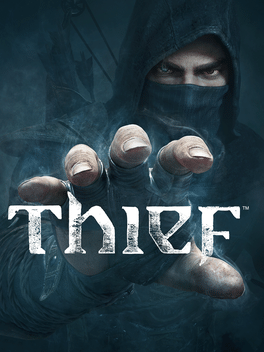
This paper argues that game studies lacks a vocabulary for discussing simulated illumination, and that such a vocabulary can be built by surveying existing lighting practices from three sources: computer-generated animation and film, architectural lighting, and the interactive properties of games themselves. Its central claim is that light in games is not merely decorative. Using the survival-horror title Silent Hill 2 and the stealth game Thief as its primary case studies, the author shows that illumination shapes narrative meaning, guides the player's attention, modulates mood and risk, and in some cases directly drives gameplay and non-player character behavior.
The analysis draws on Sharon Callahan's five objectives of digital animation lighting, which the author finds useful for reading Silent Hill 2's pre-rendered cut scenes and its low-key approach to horror, while noting that the free navigation of games exceeds the fixed-frame assumptions of film. The paper also draws on research into non-visual effects of light on cognition, mood, and decision-making, arguing that Silent Hill 2's dim environments may encourage quick heuristic responses suited to reflexive combat. Lindley's ludology-narrative-simulation taxonomy is used to map which lighting knowledge applies to which aspect of game design. The argument is supported by reference to designer statements from Konami and Thief's developers, describing the tuned sensory system that governs AI visibility, which depends heavily on the player's lighting state.
The paper's distinctive contribution is its emphasis on player-driven illumination, such as the choice of whether to use a flashlight, and on the self-reflexive awareness that interfaces like Thief's light-state indicator cultivate. The sources cited are largely qualitative and drawn from designer interviews, developer postmortems, and cinematography texts. The paper presents itself as a conceptual framework and foundational survey rather than an empirical study, and it does not report survey data or controlled experiments.
DiGRA · 2016