1 free read left. Create a free account for unlimited reading + AI research.
Create free accountWhitepaper DiGRA
1 free read left. Create a free account for unlimited reading + AI research.
Create free accountWhitepaperDiGRA
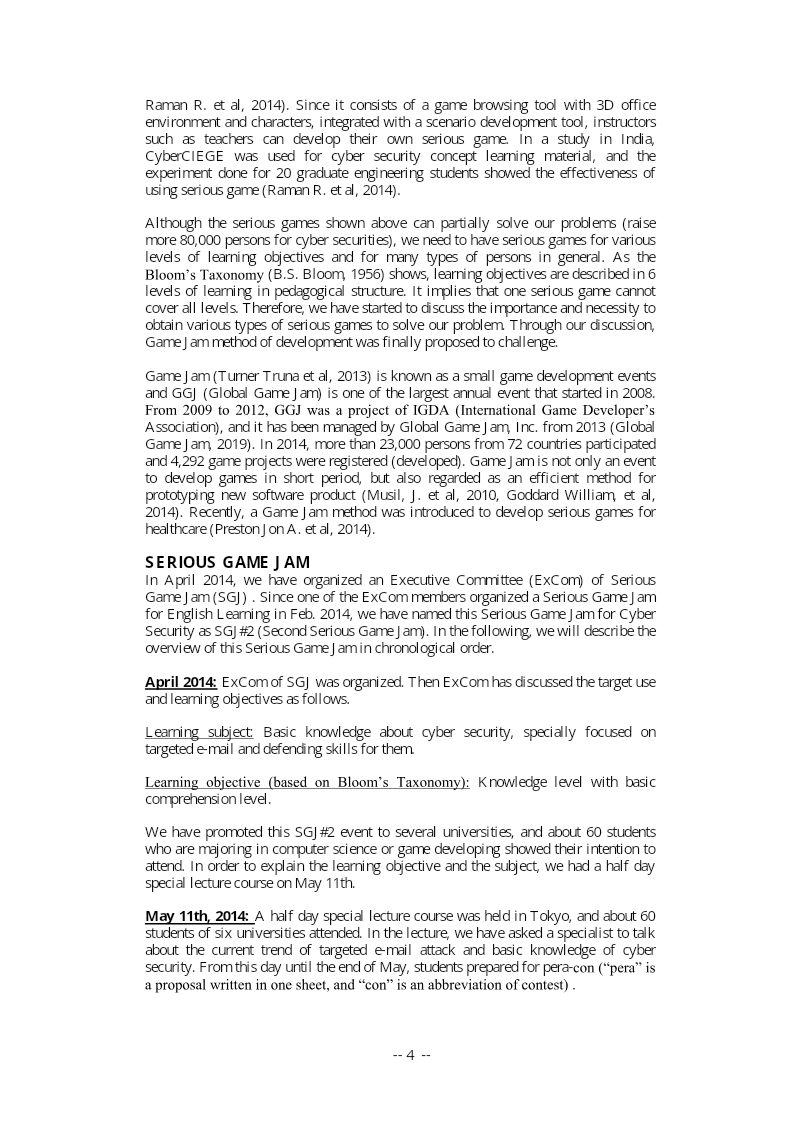
The Global Game Jam manuals do not account for the topic research and subject-matter expert input that serious game development requires.
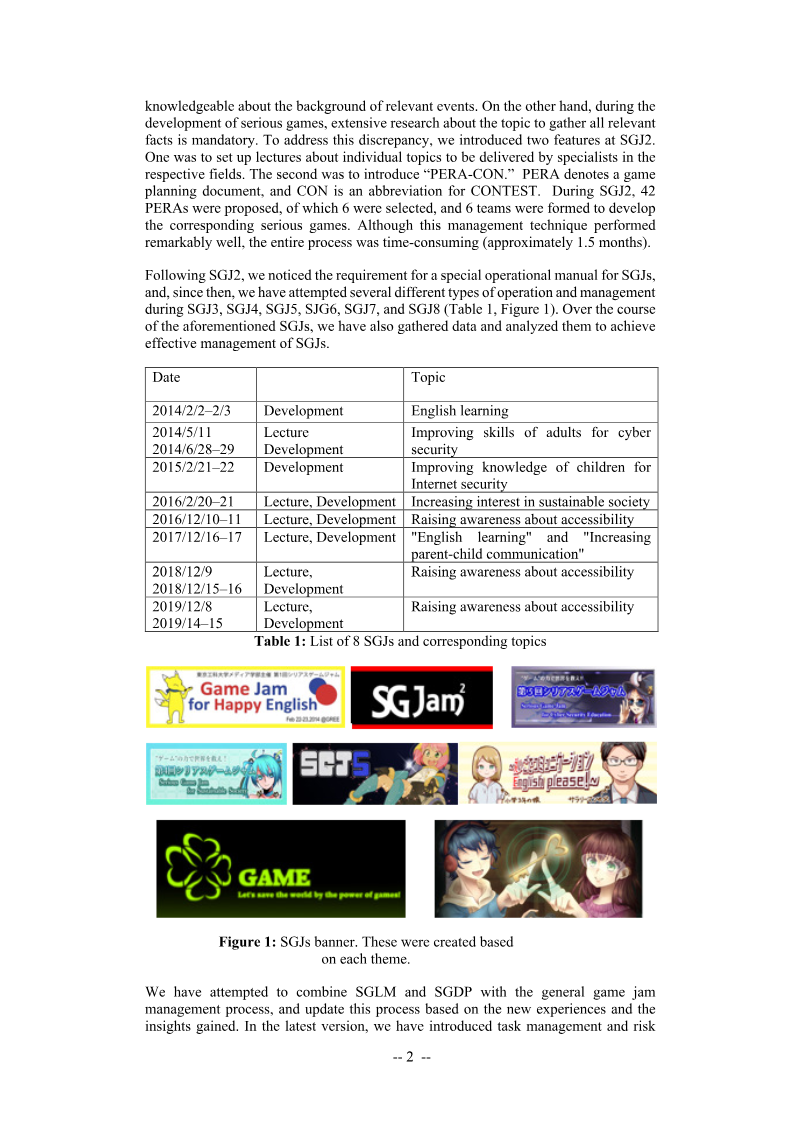
The Serious Game Jam operation manual responds to a practical gap: early serious game jams borrowed their structure from the Global Game Jam, whose manuals do not account for the topic research and subject-matter expert input that serious game development requires. Drawing on eight SGJ events held since 2014, the work proposes a structured prototype manual organized into preparation, expert lecture, and development phases. Its central aim is to give organizers defined missions and timelines for producing serious games within a short jam format, rather than leaving the process to ad hoc planning.
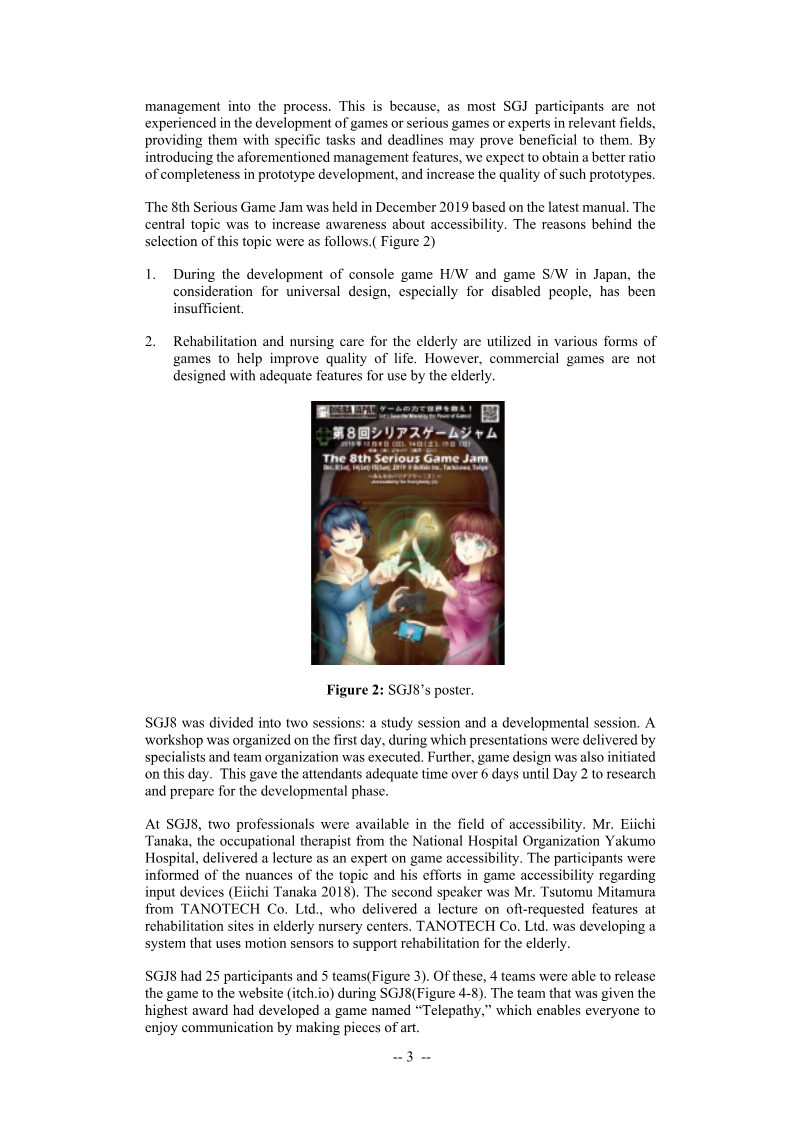
The evidence base reflects modest but instructive outcomes. Team sizes in early events averaged between roughly 4.3 and 5.2 participants, falling to 4.6 in SGJ7 after a pre-workshop team-formation step was introduced. Attendance across events ranged from 26 to 55 people, with between zero and five completed games per event. The SGJ8 event, held in December 2019 and themed on accessibility, drew 25 participants across five teams, four of which completed and released games on itch.io. The findings point to the mission-based deadline structure and expert involvement as the format's core elements, though quantitative outcome data remains limited to participation and completion counts.
The manual's scope covers the preparation phase, including implementation plan options, topic selection, executive committee roles, venue arrangements, and recruitment; a timed mission schedule for the two-day development event; and evaluation criteria that assess games on both serious and entertainment dimensions. Its coverage is tied to the SGJ series and its eight events between 2014 and 2019.
Experience from SGJ8 prompted a revision that added two missions, bringing the total to eleven, and required start times, not only due times, for each mission. The revision also clarified certain tasks, such as building an itch.io page that requires a PC, and the division of roles on development day. The conclusion is that organizers should adapt the revised manual to their own format, whether onsite or online and with varying numbers of development days, and update it iteratively as events generate further evidence.



DiGRA · 2023

DiGRA · 2023



DiGRA · 2023

DiGRA · 2023



DiGRA · 2023



DiGRA · 2023



DiGRA · 2023



DiGRA · 2023



DiGRA · 2023



DiGRA · 2023



DiGRA · 2023

DiGRA · 2023
DiGRA JAPAN · 2020