Sector Report: Flanders & Brussels 2024
20 Aug 202512 pages~2 min full read
Key insights
4 slides
Company count
The sector grew to 160 companies by 2024.
Antwerp hosts 23 firms and Brussels 21. The report covers development, publishing, services, portals, and accelerators.
Key number
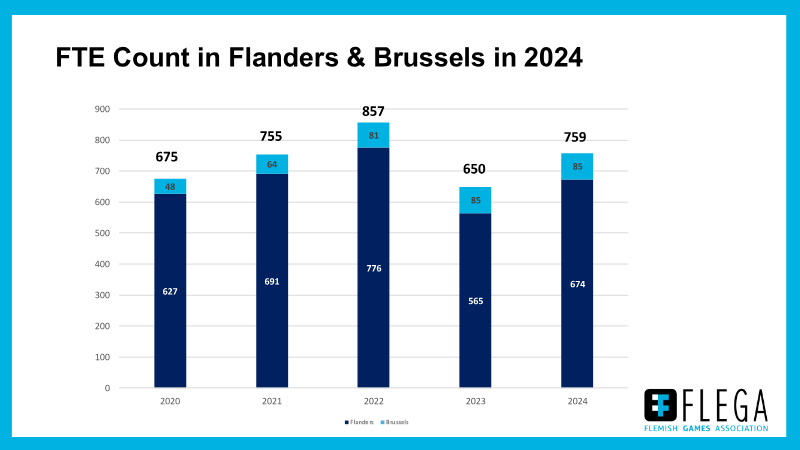
Employment rose from 600 FTEs in 2020 to 857 in 2024.
This represents a growth of roughly 43% over five years.
Turnover
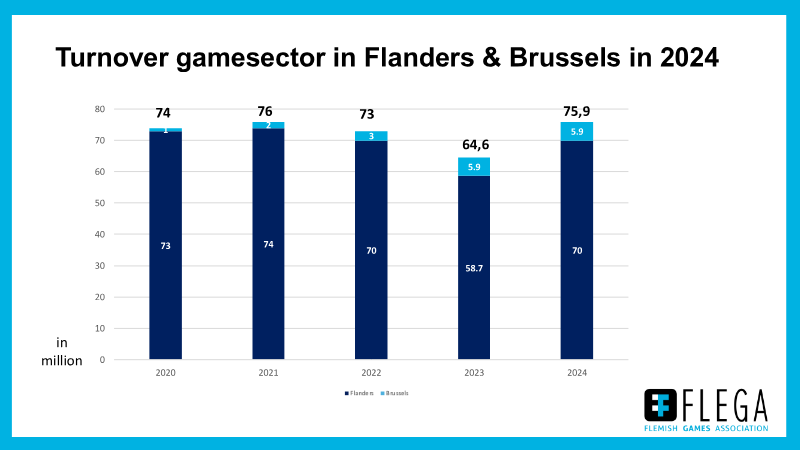
Annual turnover reached €75.9 million in 2024.
This is a 17% year-on-year increase from €64.6 million in 2023. Total economic output has grown by approximately 18% since 2020.
Size distribution
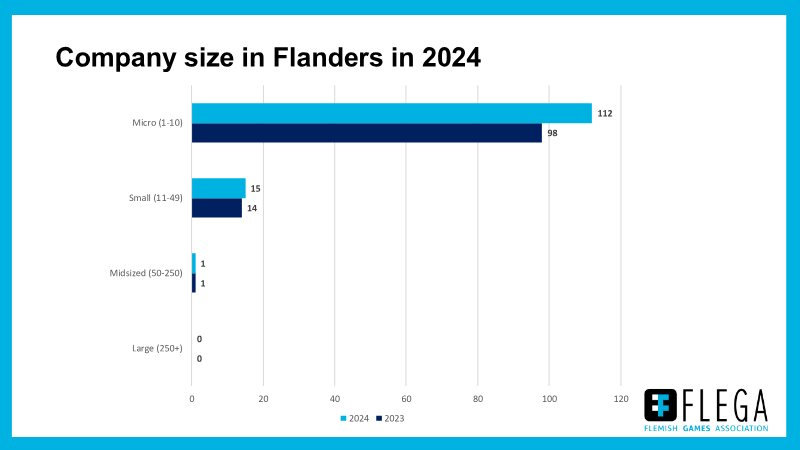
Micro-enterprises account for 112 of the 160 total firms.
Only 15 companies are classified as small, one is midsized, and none are large. The landscape is heavily skewed toward micro enterprises.
1 / 4
Ask AI about this report
Summary
The report presents a comprehensive snapshot of the videogame sector in Flanders and Brussels for 2024, focusing on company activity, employment, and financial performance. It documents a total of 160 companies operating across development, publishing, services, portals, and accelerator/incubator roles, with a notable concentration in Antwerp (23 firms) and Brussels (21). Company size distribution is heavily skewed toward micro enterprises, accounting for 112 out of 160 firms; only 15 are small (11–49 employees), one midsized, and none large.
Employment figures show a steady rise in full‑time equivalents (FTEs) from 600 in 2020 to 857 by 2024, reflecting a growth of roughly 43% over five years. The sector’s turnover has also expanded, reaching €75.9 million in 2024 compared to €64.6 million in 2023, marking a 17% increase year‑on‑year and an overall rise of about 18% since 2020.
Geographically, the sector is concentrated in the western and eastern parts of Flanders, with a smaller but growing presence in Limburg. The data exclude Wallonia due to delayed reporting, indicating that the figures represent only a partial view of Belgium’s overall videogame landscape.
Methodologically, the report aggregates company counts, employment numbers, and revenue figures from industry registries and self‑reported financial statements. The analysis covers the period 2020–2024, providing a trend view that highlights sustained growth in both human capital and economic output within the Flemish‑Brussels videogame ecosystem.
Cite this report
Citation
Generating citation…