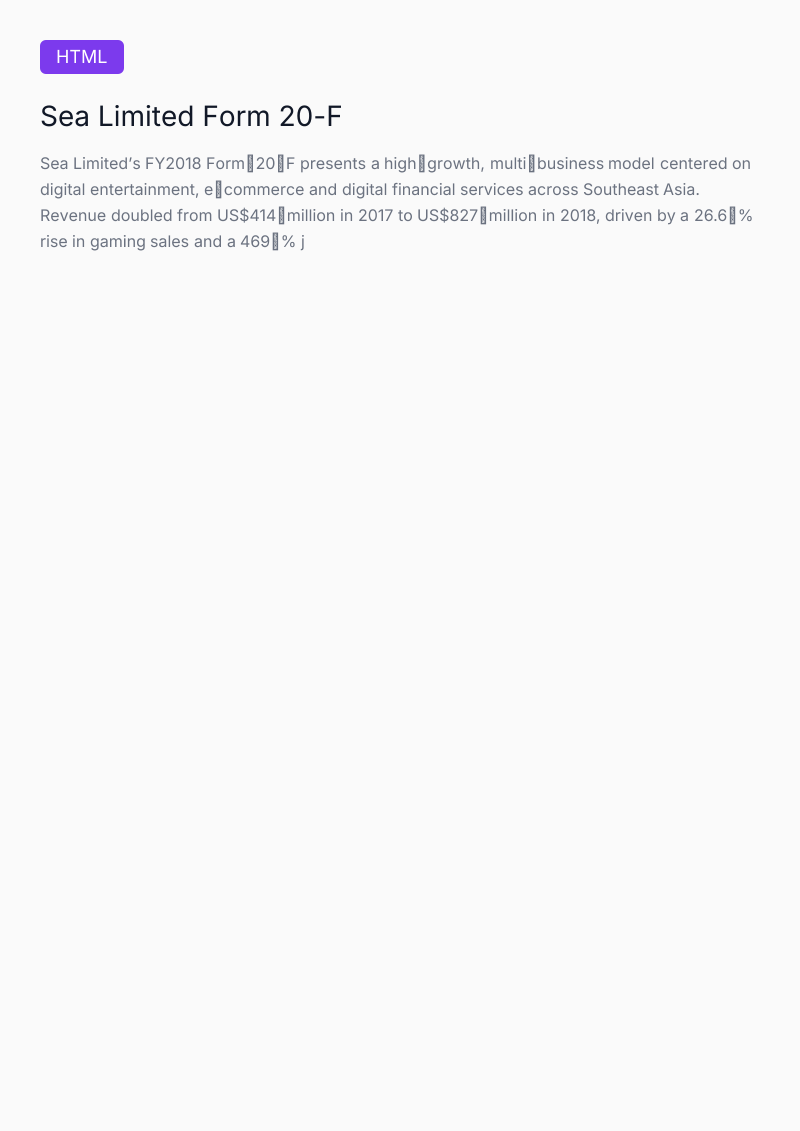
Sea Limited’s FY2018 Form 20‑F presents a high‑growth, multi‑business model centered on digital entertainment, e‑commerce and digital financial services across Southeast Asia. Revenue doubled from US$414 million in 2017 to US$827 million in 2018, driven by a 26.6 % rise in gaming sales and a 469 % jump in e‑commerce transaction fees. Gross margins fell sharply to 1.8 % due to a 148 % surge in cost of revenue, while operating losses widened to US$961 million as sales‑and‑marketing and general‑administrative expenses escalated. Cash balances rose to US$1.26 billion, largely from convertible‑note issuances and equity offerings, yet operating cash flow remained negative at US$495 million. The company’s balance sheet reflects a growing debt‑equity mix, with convertible notes totaling over US$1 billion and equity dilution from share issuances and conversions.
Risk analysis highlights concentration in the gaming segment, where five titles account for over 75 % of revenue; regulatory exposure spans multiple jurisdictions, including Indonesia’s e‑commerce rules and Taiwan/Vietnam foreign‑ownership limits that necessitate variable interest entity (VIE) structures. Cybersecurity, fraud, and third‑party dependency pose operational threats, while tax uncertainty—including potential passive foreign investment company status—adds complexity for U.S. investors. Governance concerns arise from a dual‑class share structure that concentrates 72 % of voting power in Tencent and founder holdings, limiting shareholder influence. Despite these challenges, Sea Limited’s integrated ecosystem—combining game development, marketplace logistics, and payment infrastructure—offers a competitive moat that underpins its rapid user growth and market‑share leadership in the region.
Sea Limited · 2026
Sea Limited · 2025
Sea Limited · 2024
Sea Limited · 2024
Sea Limited · 2023
Sea Limited · 2022
Sea Limited · 2021
Sea Limited · 2020

Sea Limited · 2018
Sea Limited
Sea Limited
Sea Limited
Ubisoft · 2026
Sony Group Corporation · 2026
Enthusiast Gaming Holdings · 2026
Drake Star Partners · 2026

Aream & Co · 2026
Capcom · 2026

Modern Times Group · 2026
Bandai Namco · 2026
Aream & Co · 2026
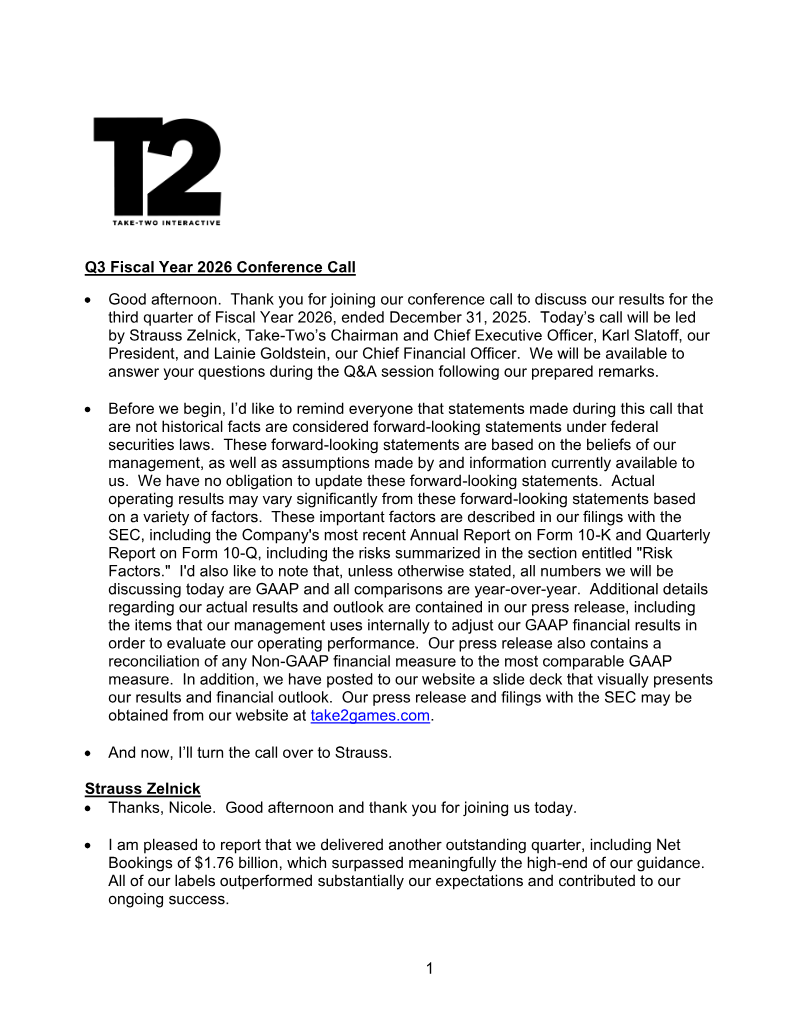
Take-Two Interactive · 2026
Take-Two Interactive · 2026
PCF Group · 2026