ArticleGameDiscoverCo
Scary Baboons, Sim Hits: The State of Quest Discovery in 2026
29 May 20261 pages~10 min full read
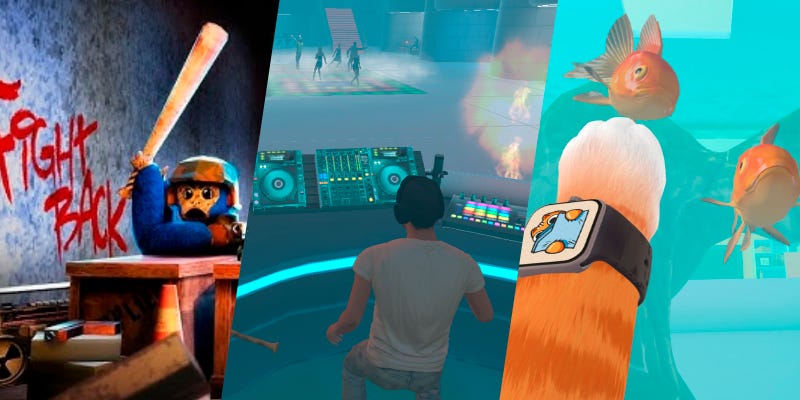
The newsletter examines the Meta Quest VR market in 2026, arguing that the platform remains vibrant but has shifted from early‑stage experimentation to a mature ecosystem dominated by free‑to‑play (F2P) titles and social‑centric experiences. Key data show that seven of the top ten grossing Quest games are F2P, while the remaining titles include long‑standing staples such as Beat Saber, Blade & Sorcery, and Bonelab. Revenue rankings are driven by high‑volume downloads and in‑app purchases, with cosmetics and functional items forming the core monetization mix. Hours‑played charts reveal a dominance of co‑op world spaces—VRChat, Rec Room, and Job Simulator—alongside a single core FPS (Ghosts of Tabor) and several fitness or subscription apps.
The analysis highlights three audience segments identified by Meta’s Chris Pruett: core VR enthusiasts, teens and young adults attracted to social loops, and casual adults preferring natural input. Social media acquisition remains critical; top titles actively promote on Instagram, YouTube, and TikTok, generating short‑form clips that fuel community growth. Discord communities are also pivotal; Scary Baboon’s Discord exceeds 200,000 members and its creator network drives content virality.
The newsletter cites Scary Baboon as a case study, noting its rapid scaling to over one million monthly active users through arm locomotion mechanics, light horror themes, and a shift from PvP to cooperative PvE. Monetization centers on cosmetics, functional items, and upgrade systems, while creator partnerships and short‑form video content sustain engagement. Overall, the 2026 Quest landscape is characterized by high F2P penetration, social‑first discovery channels, and community‑driven growth models.

GameDiscoverCo · 2026

GameDiscoverCo · 2026
GameDiscoverCo · 2026
GameDiscoverCo · 2026
GameDiscoverCo · 2026
GameDiscoverCo · 2026
GameDiscoverCo · 2026
GameDiscoverCo · 2026
GameDiscoverCo · 2026
GameDiscoverCo · 2026
GameDiscoverCo · 2026
GameDiscoverCo · 2026

Epyllion · 2026

Rokky · 2025
Aptoide · 2025

Video Game Insights · 2025

VG Insights · 2025

Vorhaus Advisors · 2025

Sensor Tower · 2025

Aldora · 2025

Video Game Insights · 2025
Video Game Insights · 2024
Video Game Insights · 2024
Konvoy · 2022