Key insights
6 slides
Methodology
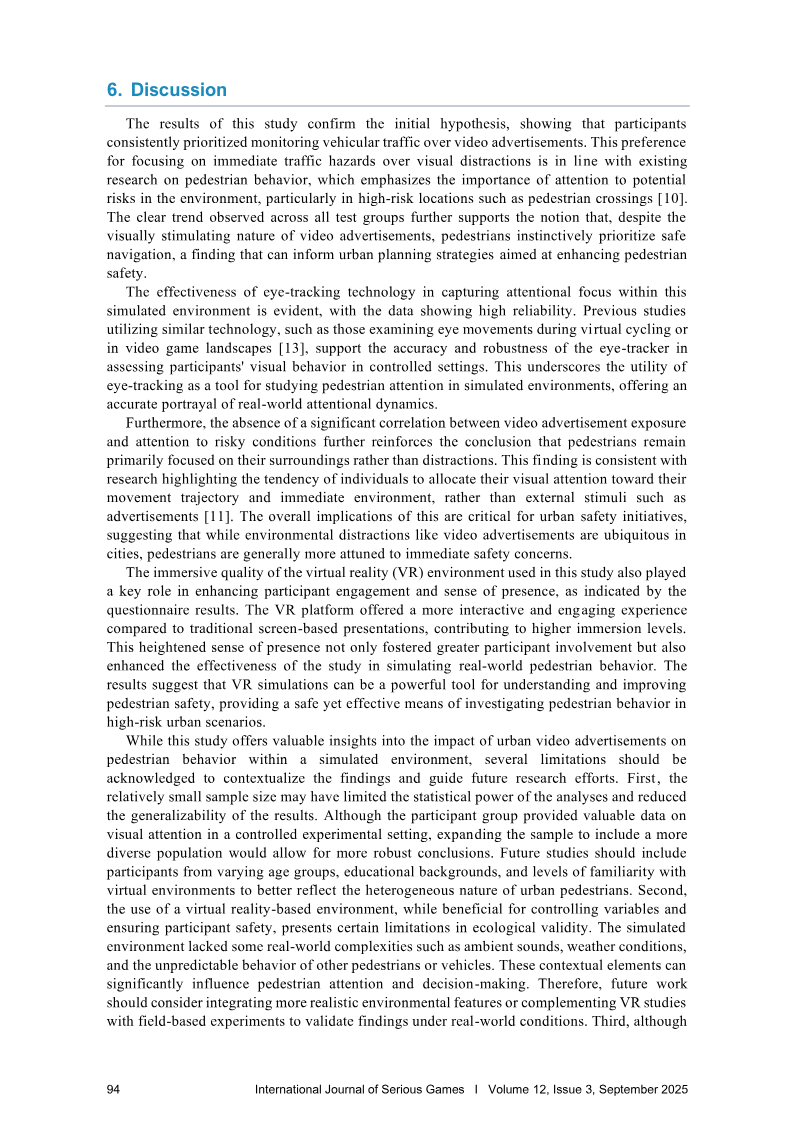
VR simulators offer superior immersion for behavioral analysis.
Virtual reality simulators developed in Unity provide a reliable and highly immersive platform for behavioral analysis.
It's like comparing a detailed flight simulator to a simple diagram; one offers a much richer experience.
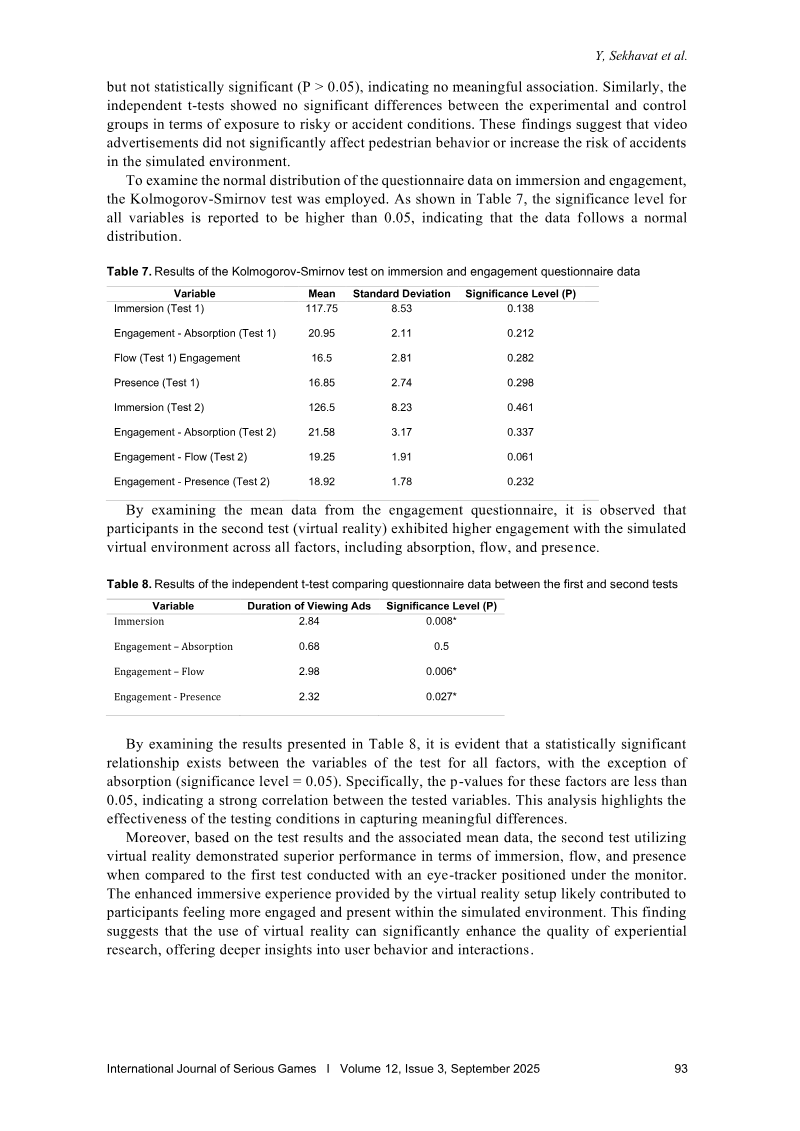
Research tool. VR and eye-tracking offer superior levels of presence compared to traditional screen-based simulations for studying behavior.
1 / 6
- 01A study of 40 participants using VR and eye-tracking technology found no significant correlation between exposure to digital video advertisements and increased pedestrian accident rates.See it on page 14
- 02Pedestrians demonstrate a robust ability to prioritize vehicular traffic over environmental distractions, effectively filtering out non-essential visual stimuli during transit.See it on page 14
- 03Virtual reality simulators developed in Unity provide a reliable, highly immersive platform for behavioral analysis that offers superior presence compared to traditional screen-based simulations.See it on page 13
- 04Human cognitive processes appear well-adapted to managing urban distractions, as participants consistently maintained focus on navigation and collision avoidance despite varying traffic scenarios.See it on page 1
- 05The research establishes a validated framework for using VR and eye-tracking to inform evidence-based urban planning and infrastructure design.See it on page 16
- 06Future research is required to determine how adaptive behaviors and habituation to urban distractions evolve over longitudinal periods using more advanced hardware.See it on page 15
Ask AI about this report
Summary
Urban environments increasingly integrate digital advertising, raising concerns regarding how these visual stimuli impact pedestrian safety. By utilizing a virtual reality simulator developed in Unity, researchers investigated the relationship between environmental distractions and situational awareness. The study employed a post-test experimental design involving 40 participants, leveraging eye-tracking technology and VR headsets to monitor gaze behavior, movement patterns, and collision incidents across various traffic scenarios. This methodology confirms that virtual environments provide a reliable and highly immersive platform for behavioral analysis, offering superior levels of presence compared to traditional screen-based simulations.
The findings indicate that pedestrians maintain a robust prioritization of safety, consistently focusing their visual attention on vehicular traffic rather than environmental distractions. Statistical analysis reveals no significant correlation between exposure to video advertisements and an increase in accident rates or compromised safety. Instead, participants demonstrate a persistent ability to filter out non-essential visual stimuli in favor of navigation and collision avoidance, suggesting that human cognitive processes are well-adapted to managing urban distractions during transit.
These results provide valuable insights for urban planners tasked with designing safer pedestrian infrastructure. By validating the efficacy of VR and eye-tracking as research tools, the study establishes a framework for future investigations into human behavior within complex urban settings. While current data suggests that environmental advertisements do not inherently jeopardize pedestrian safety, further research incorporating longitudinal studies and advanced hardware is necessary to understand how adaptive behaviors and habituation evolve over extended periods. This work ultimately supports the development of evidence-based urban design strategies that balance commercial interests with the fundamental requirements of pedestrian safety.