ReportNewzoo
Introduction to the Russian Games Market: Opportunities in This Submerged Market
32 pages~77 min full read
Key insights
6 slides
Market Size
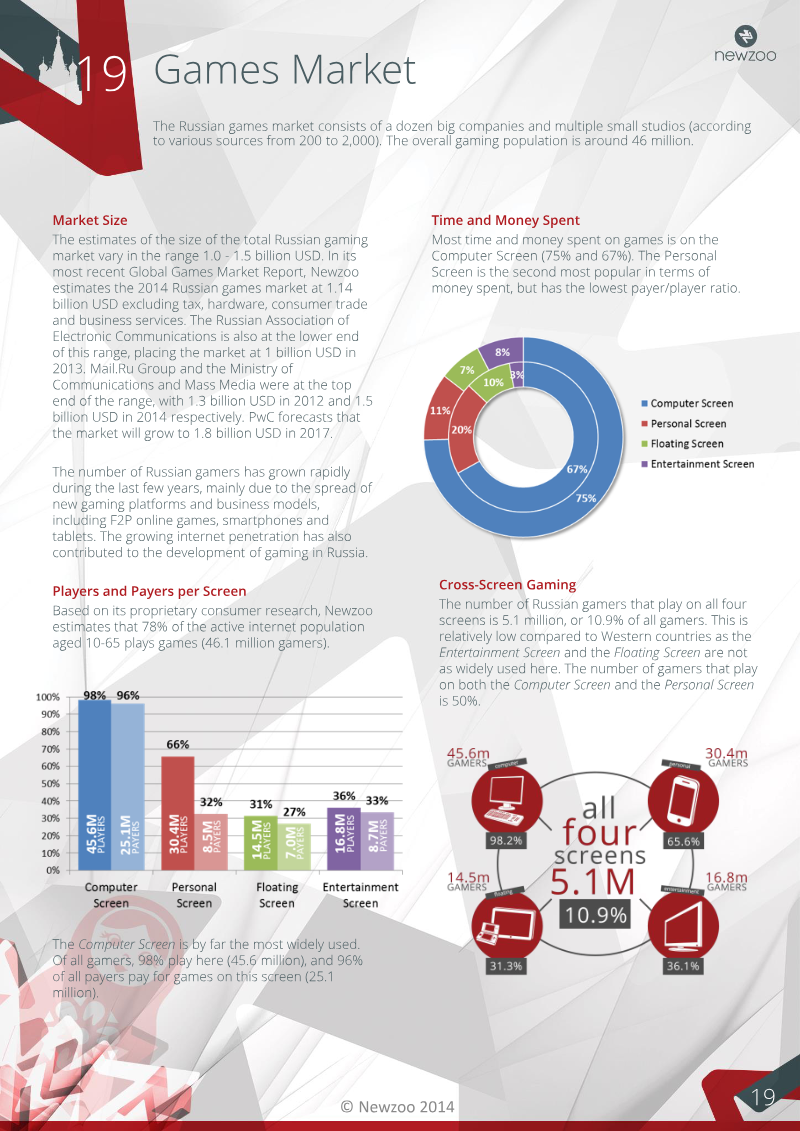
The Russian games market is the 12th largest globally.
The market has an estimated valuation between $1 billion and $1.5 billion. It represents a significant, high-growth sector.
Market Dynamics
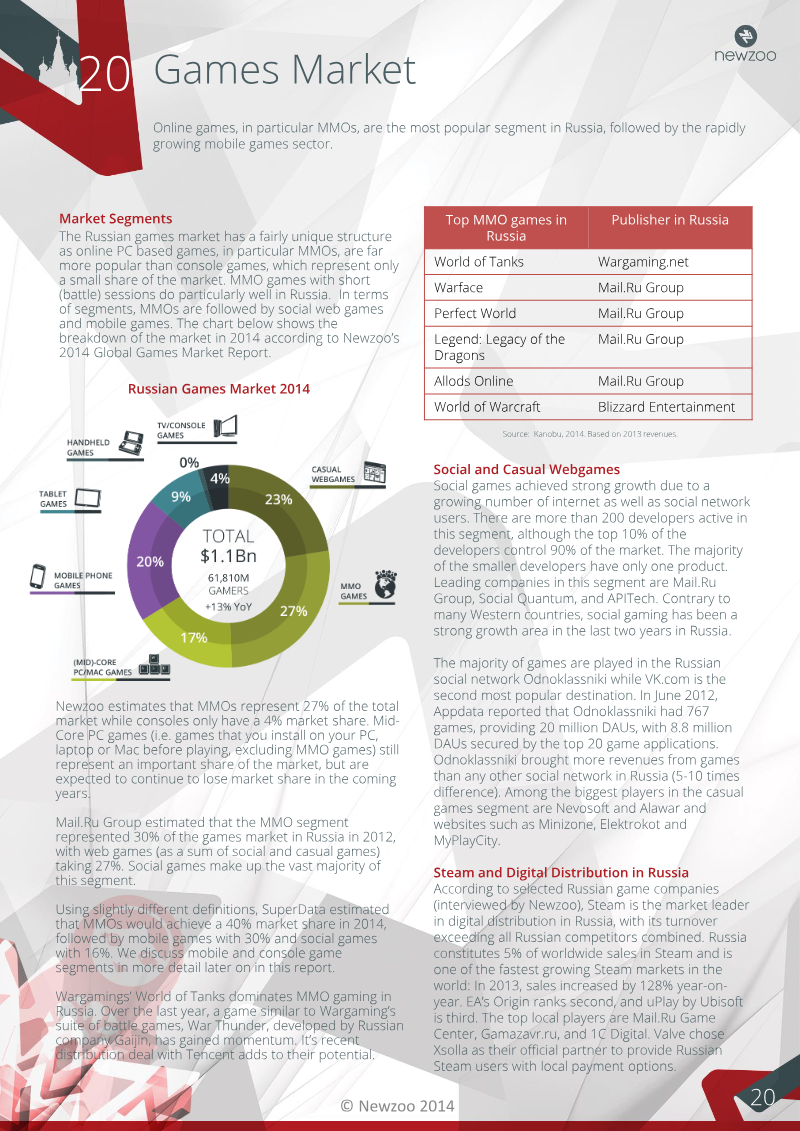
PC gaming and massively multiplayer online titles dominate the Russian market.
Mobile is the fastest-growing segment due to high smartphone adoption and Android dominance. The overall landscape is influenced by computer-centric play.
Regulatory Landscape
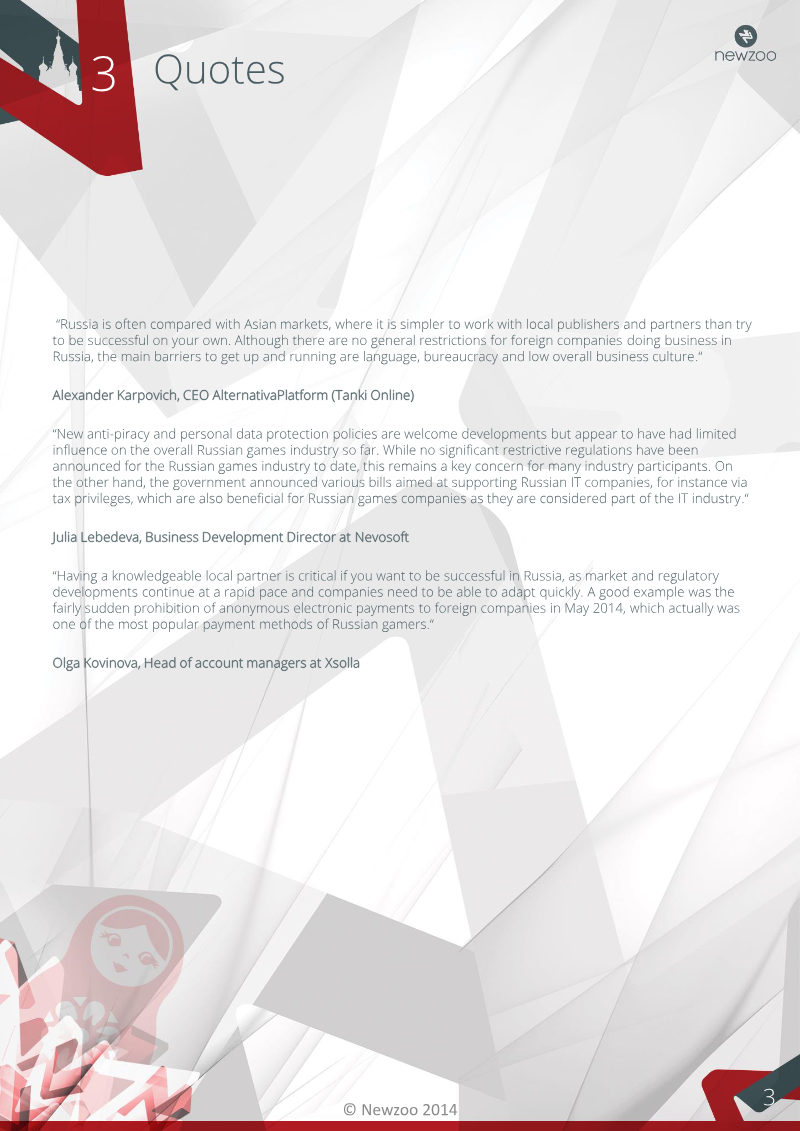
Market entry requires navigating complex regulatory hurdles.
These hurdles include stringent data storage requirements, evolving intellectual property laws, and intricate payment processing regulations. Increasing state oversight also impacts operations.
Local Platforms
Success in the region depends on leveraging domestic platforms for user acquisition.
Platforms like Yandex and VK.com serve as primary gateways for user acquisition and social engagement. The digital ecosystem is heavily reliant on these domestic platforms.
Local Competition
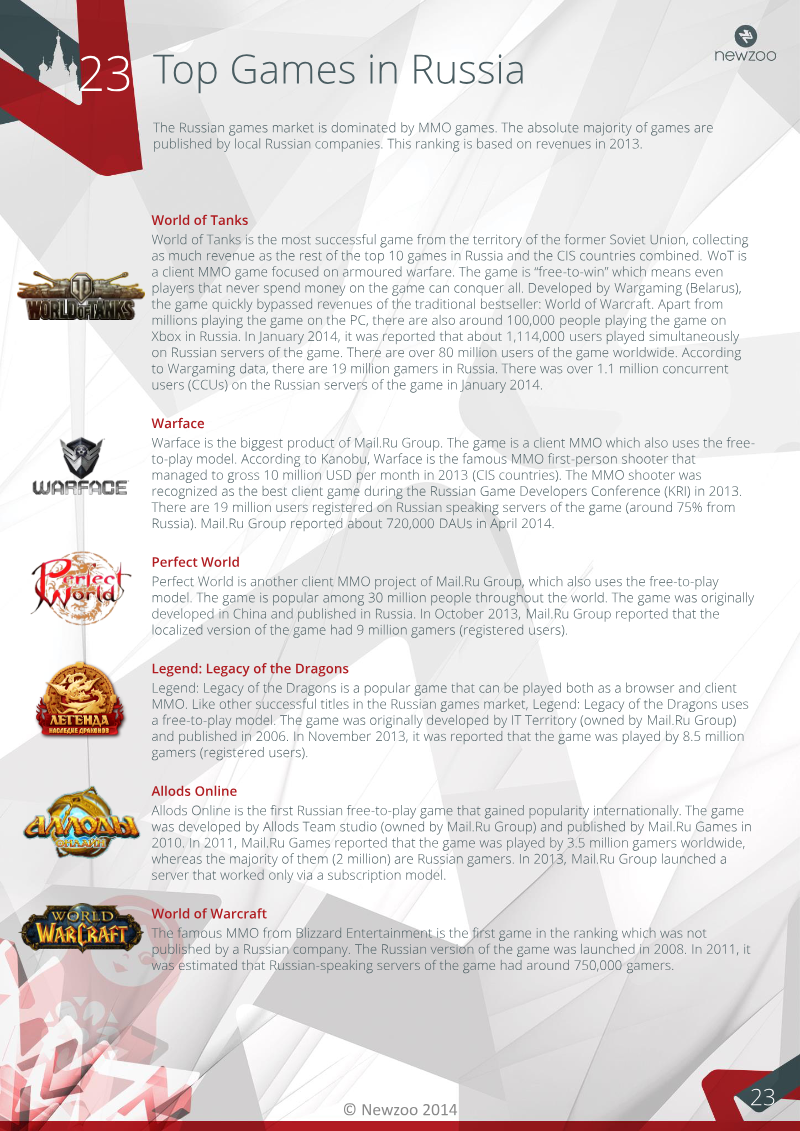
Local industry leaders maintain a dominant market position.
Companies like Mail.Ru Group and Wargaming leverage expertise in free-to-play business models. They capture the domestic audience effectively.
Partnership Strategy
Strategic partnerships with local firms are essential for market success.
These partnerships help overcome language barriers, bureaucratic friction, and unique challenges. They are crucial for effective localization and long-term viability.
1 / 6
Ask AI about this report