1 free read left. Create a free account for unlimited reading + AI research.
Create free accountWhitepaper DiGRA
1 free read left. Create a free account for unlimited reading + AI research.
Create free accountWhitepaperDiGRA
Prior work on retellings concentrates on the stories derived from interactive systems. The paper argues that it underweights player agency and intention.
This research proposes a new theoretical framework for understanding "game retellings," defined as narratives players create about their video game experiences. The central thesis is that these retellings constitute a distinct player discourse that shapes the meaning of the game itself, moving beyond existing theories that primarily focus on narrative gaps in game content. The study aims to explain features of these narrative gaps and demonstrate how player narrativization forms a discourse that influences game interpretation.
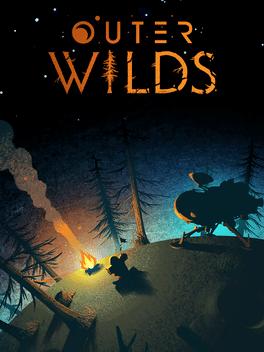
The methodology employs a semiotic and hermeneutic approach, drawing on Umberto Eco's framework and contemporary game hermeneutics. It specifically focuses on "Let's Play" (LP) videos as a form of retelling, selecting a "blind walkthrough" of the open-world game Outer Wilds by the LP player BeccaBytes for multimodal discourse analysis. Outer Wilds was chosen due to its open-world nature and lack of randomized elements, ensuring that player experience is solely dependent on individual choices. LP videos are considered ideal material because LP players often position themselves as common players and aim to provide a complete experience to their audience.
The research acknowledges the diverse forms of retellings (e.g., walkthroughs, speed runs, machinima, mods) and posits that each creates a unique player discourse. However, it does not attempt to generalize findings across all retelling types but rather exemplifies one possibility for analysis to contribute to a more comprehensive game research methodology. The ultimate goal is to explore how player experience and interpretation build new meanings on top of the video game's source text, capturing the intersection of player and game intentions.
Each row is a game or company this document names, each column a document, oldest first. A mark means that document names it. Select a row to see those documents.

DiGRA · 2026

DiGRA · 2026



DiGRA · 2026



DiGRA · 2026



DiGRA · 2026



DiGRA · 2026



DiGRA · 2026



DiGRA · 2026



DiGRA · 2026

DiGRA · 2026



DiGRA · 2026



DiGRA · 2026