Loading the document
Key insights
5 slides
The big picture
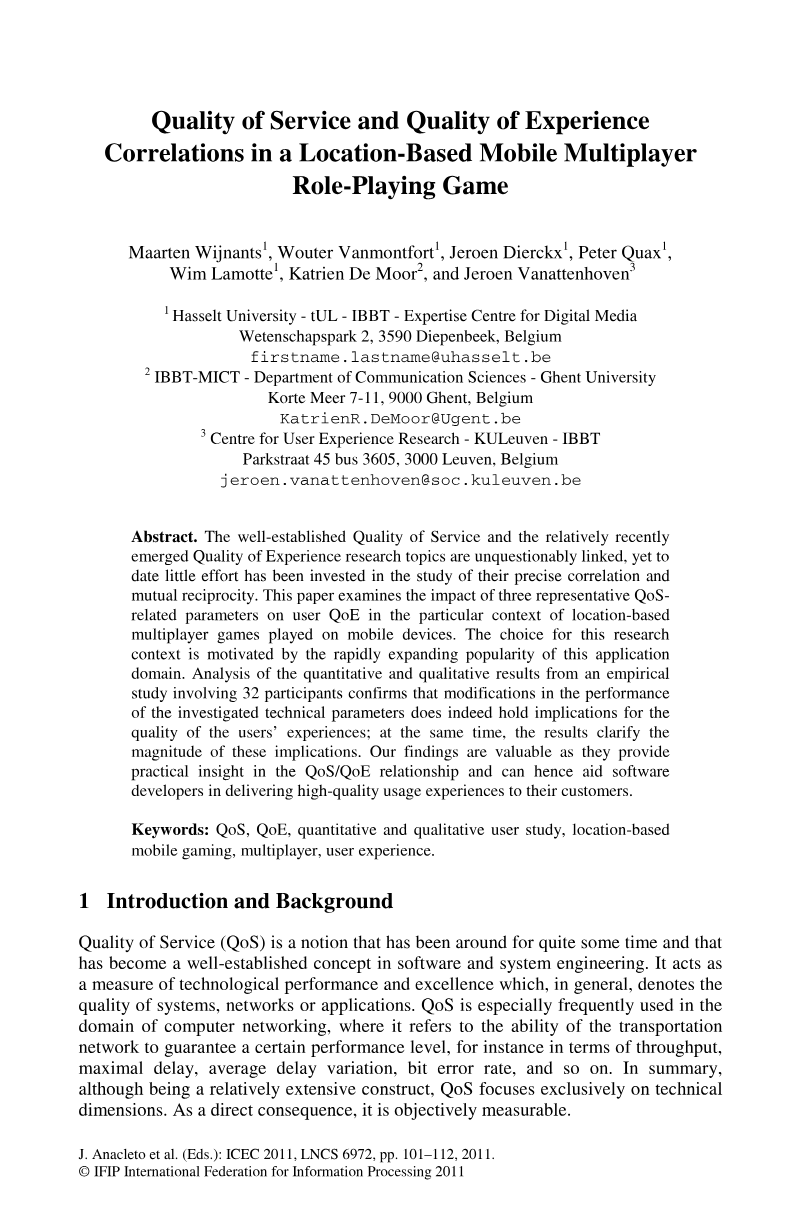
Technical metrics are not enough to measure player enjoyment.
Quality of Service (QoS) metrics, such as location precision and refresh rates, are necessary but do not fully dictate the user experience. They are insufficient indicators of player enjoyment.
1 / 5
- 01Quality of Service (QoS) metrics like location precision and refresh rates are necessary but insufficient indicators of player enjoyment, as they do not fully dictate the user experience.See it on page 1
- 02Voice communication latency is a primary technical driver of player frustration and increased cognitive effort, making it a critical priority for optimization.See it on page 6
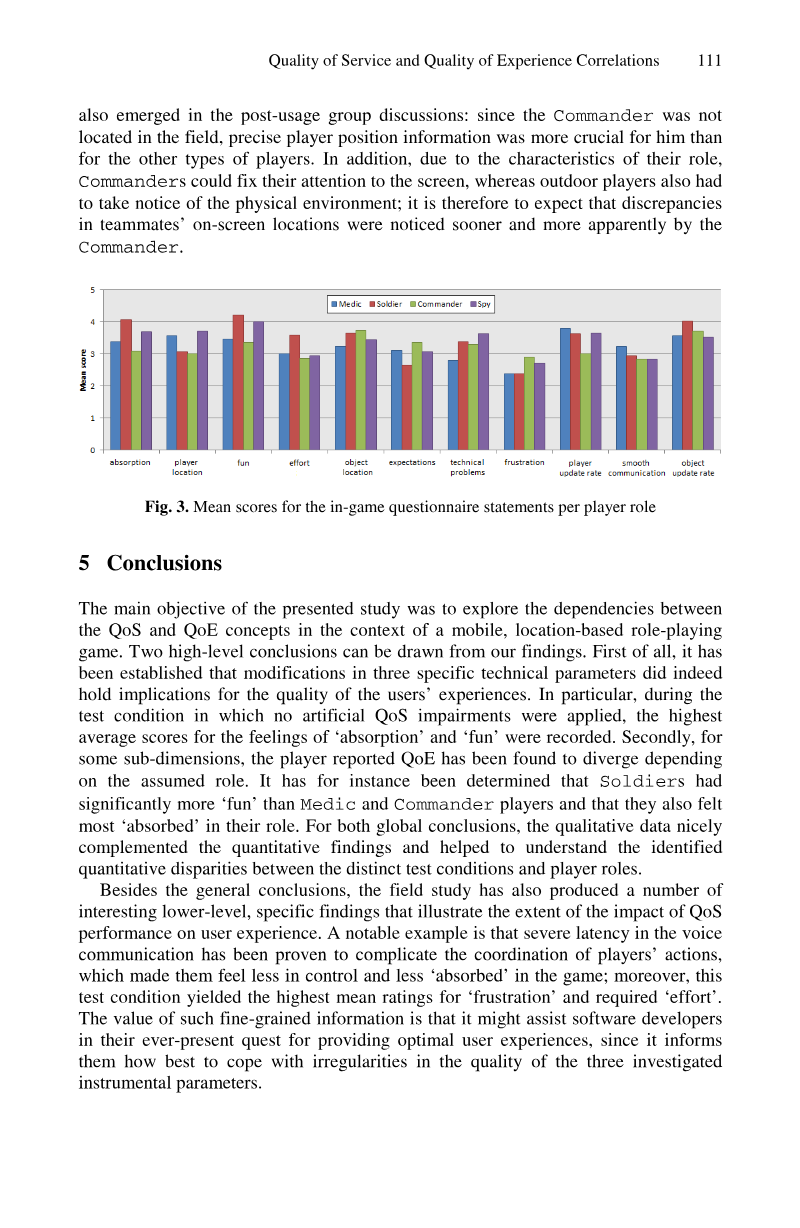
- 03The impact of technical degradation is context-dependent, as players in different roles, such as commanders versus soldiers, perceive and react to network latency differently.See it on page 11
- 04Player absorption and enjoyment can increase over a session despite compromised technical performance, indicating that social immersion and game design act as buffers against poor network conditions.See it on page 12
- 05Developers should prioritize technical resources toward latency issues that specifically disrupt gameplay mechanics rather than pursuing universal technical perfection.See it on page 6
- 06A study of 32 participants confirms that Quality of Experience (QoE) is significantly mediated by individual psychological states and specific in-game responsibilities.See it on page 12
Ask AI about this report
Summary
The relationship between technical performance and user satisfaction in location-based mobile multiplayer role-playing games reveals a complex interplay between objective system metrics and subjective psychological engagement. By analyzing parameters such as location precision, position refresh rates, and voice communication latency, the research establishes that while technical impairments—particularly voice delays—directly correlate with increased player frustration and cognitive effort, they do not dictate the entirety of the user experience. These findings underscore that Quality of Service metrics are necessary but insufficient indicators of overall player enjoyment.
The study, which utilized a hybrid methodology involving 32 participants, demonstrates that Quality of Experience is significantly mediated by individual player roles and psychological states. Commanders and soldiers perceive technical degradation differently, suggesting that the impact of network latency or location distortion is context-dependent based on the player's specific in-game responsibilities. Furthermore, the data indicates that player absorption and enjoyment often trend upward over the course of a session, even when technical performance is intentionally compromised. This suggests that non-instrumental factors, such as social immersion and game design, can effectively buffer against the negative effects of poor network conditions.
Ultimately, the research provides a framework for developers to prioritize technical optimizations that most heavily influence user retention. By recognizing that player satisfaction is not strictly tethered to technical perfection, developers can better allocate resources to address the specific latency issues that most severely disrupt gameplay while leveraging psychological engagement to maintain user loyalty. These insights highlight the necessity of balancing infrastructure stability with the design of immersive, role-based mechanics to ensure a high-quality experience in distributed mobile gaming environments.