Hasselt University
Organization2 reports
2 reports, presentations and talks by Hasselt University in the Game Industry Library, the newest “The Social Maze: A Collaborative Game to Motivate MS Patients for Upper Limb Training” (2012).
Documents
Whitepaper4 pages
The Social Maze: A Collaborative Game to Motivate MS Patients for Upper Limb Training
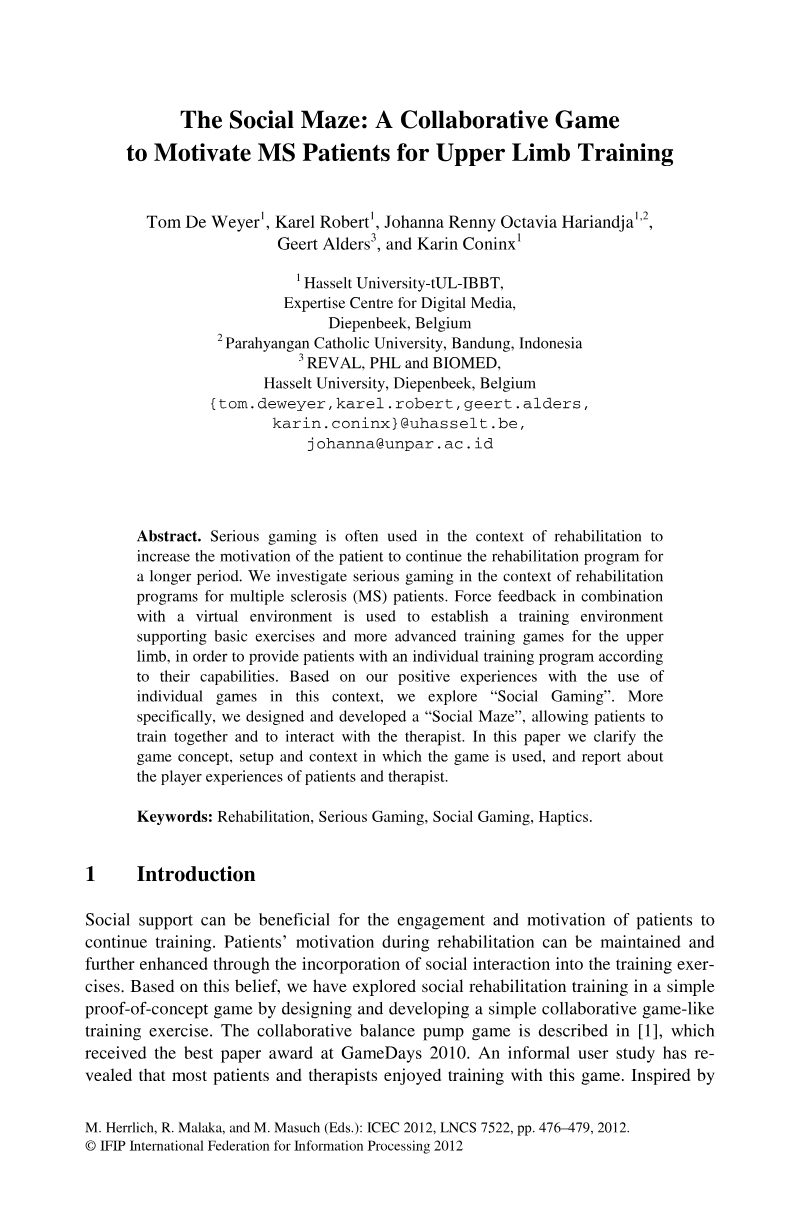
The Social Maze explores the integration of collaborative serious gaming into upper limb rehabilitation for patients with multiple sclerosis (MS).
- The Social Maze integrates collaborative gameplay into robot-assisted physical therapy to improve motivation and engagement for patients with multiple sclerosis.
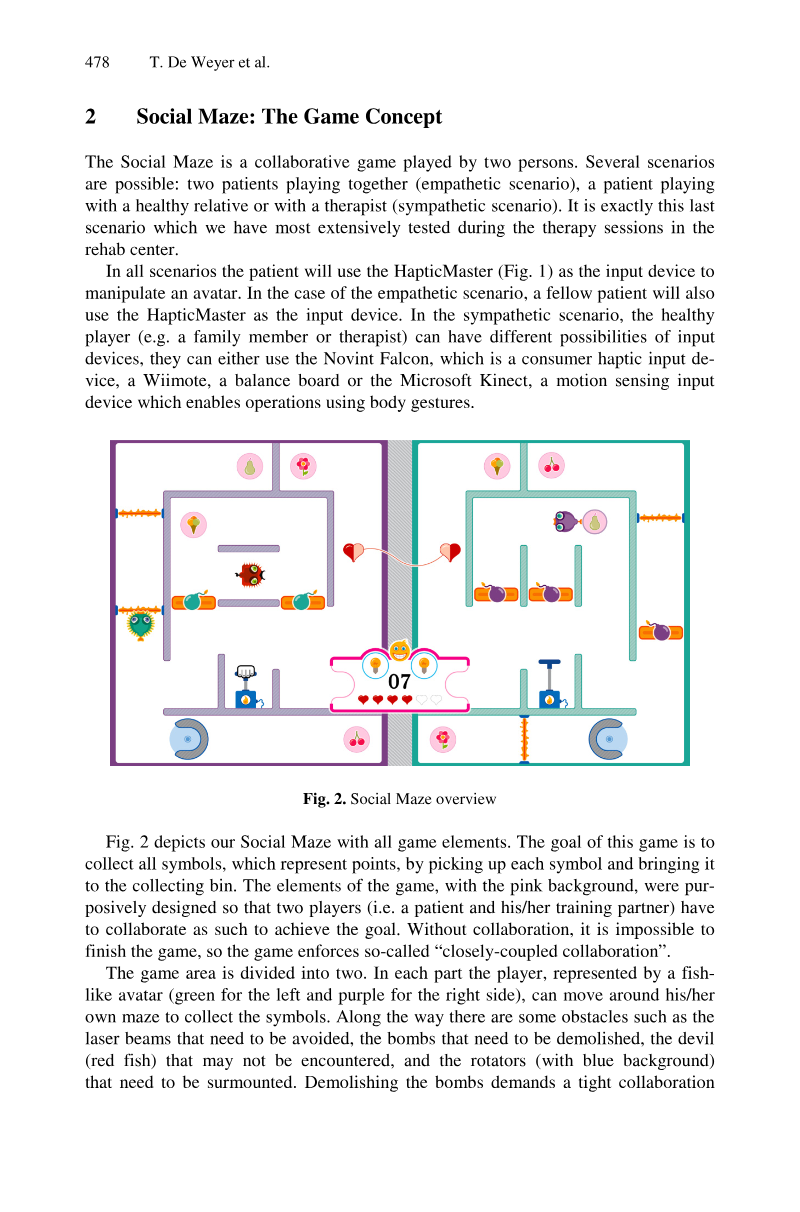
- The system utilizes a 'closely-coupled collaboration' model where two users must coordinate to navigate a virtual maze, avoid obstacles, and collect symbols.
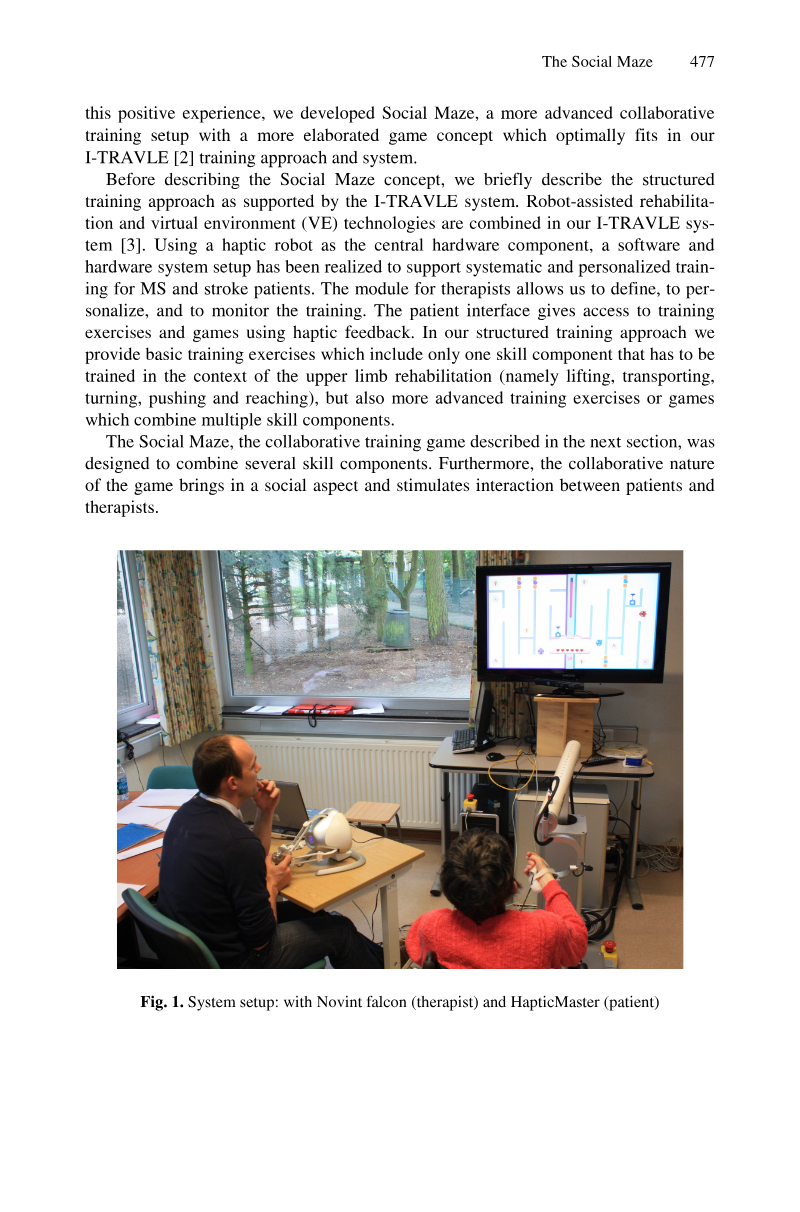
- Hardware integration includes the HapticMaster for the patient, while partners can use diverse input devices such as the Novint Falcon, Wiimote, or Microsoft Kinect.
IFIP International Conference on Entertainment Computing (ICEC)Jan 2012
Whitepaper12 pages
Quality of Service and Quality of Experience Correlations in a Location-Based Mobile Multiplayer Role-Playing Game
The relationship between technical performance and user satisfaction in location-based mobile multiplayer role-playing games reveals a complex interplay between objective system metrics and subjective psychological engagement.
- Quality of Service (QoS) metrics like location precision and refresh rates are necessary but insufficient indicators of player enjoyment, as they do not fully dictate the user experience.
- Voice communication latency is a primary technical driver of player frustration and increased cognitive effort, making it a critical priority for optimization.
- The impact of technical degradation is context-dependent, as players in different roles, such as commanders versus soldiers, perceive and react to network latency differently.
Hasselt UniversityJan 2011
Do you work at Hasselt University? Get a free report of how these documents are read and cited here.