1 free read left. Create a free account for unlimited reading + AI research.
Create free accountArticle DiGRA
1 free read left. Create a free account for unlimited reading + AI research.
Create free accountArticleDiGRA
It proposes that the studio's production pipeline should be understood as an Actor-Network. The studio itself is framed as a platform shaped by material production realities, industry structures and embedded values.
This paper proposes that the game studio's production pipeline should be understood as an Actor-Network, and that the studio itself functions as a technological platform shaped by material production realities, industry structures, and embedded values. Drawing on Bruno Latour's Actor-Network-Theory, it argues that human and technological mediators, along with tools such as third-party engines, middleware, and management paradigms like Lean, actively transform the ideas and assets flowing through development rather than merely passing them along. The author positions this work as a response to calls for a production studies approach within game studies, aiming to bridge the study of industrial context with the platform studies tradition.
The methodology combines production cultures research, drawing on the ethnographic traditions of John Caldwell and Sherry Ortner, with case studies and interviews with designers in both triple-A and independent sectors. The specific cases examined are Alien Isolation (Creative Assembly, 2014) and Everybody's Gone to the Rapture (The Chinese Room, 2015). A central finding is that these two sectors, often treated as divergent, are interdependent, a condition the paper frames in terms of similar observations made about other creative industries. The paper also contends that the laboratory-like operation of game studios makes Latour's focus on technoscientific structures more relevant than the assemblage theory already applied by some game scholars.
The argument is that the framework avoids three common pitfalls: formalist analysis of games, technological determinism in code and platform studies, and auteur-centred accounts common in journalism. Meanings circulating through industrial practice are shown to be capable of modifying those practices in turn, particularly as the independent scene has demonstrated in recent years. The analysis is further extended to reception and promotion discourses, which the paper treats as a vital interface between industry and consumer and as a means of understanding the game text as a complex cultural artefact.
Each row is a game or company this document names, each column a document, oldest first. A mark means that document names it. Select a row to see those documents.
DiGRA · 2022
DiGRA · 2022
DiGRA · 2022
DiGRA · 2022
DiGRA · 2022
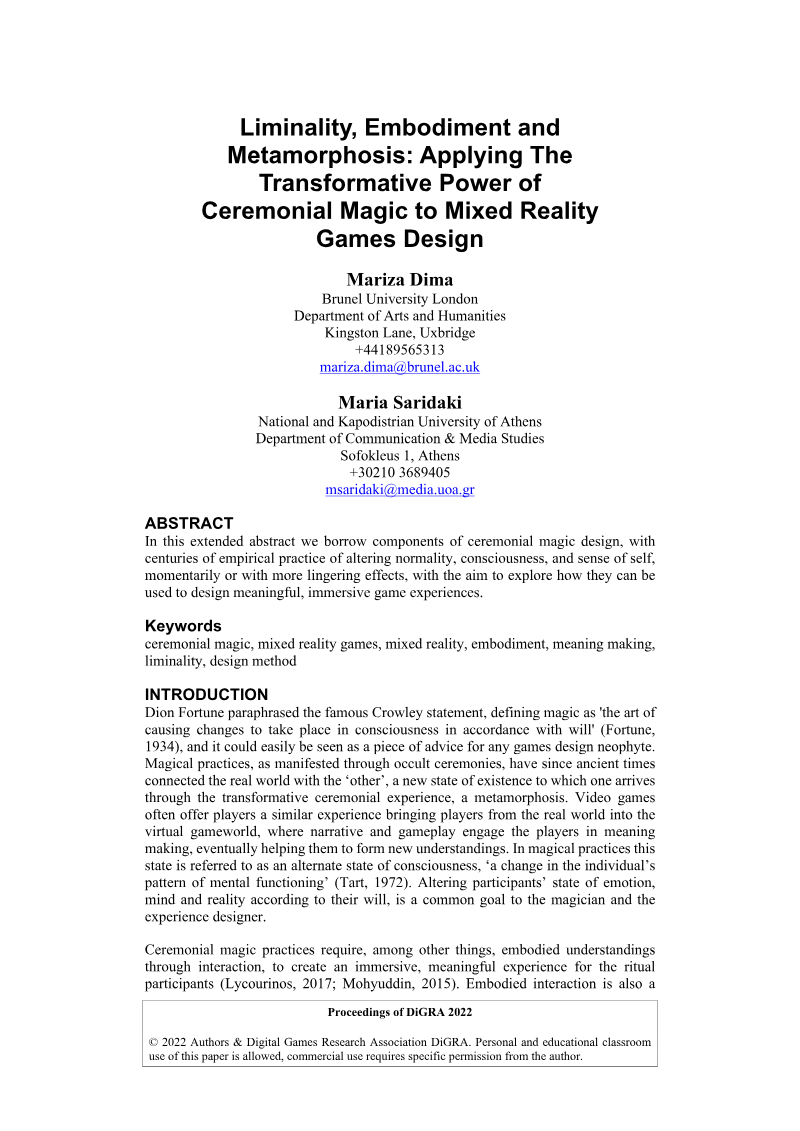
DiGRA · 2022
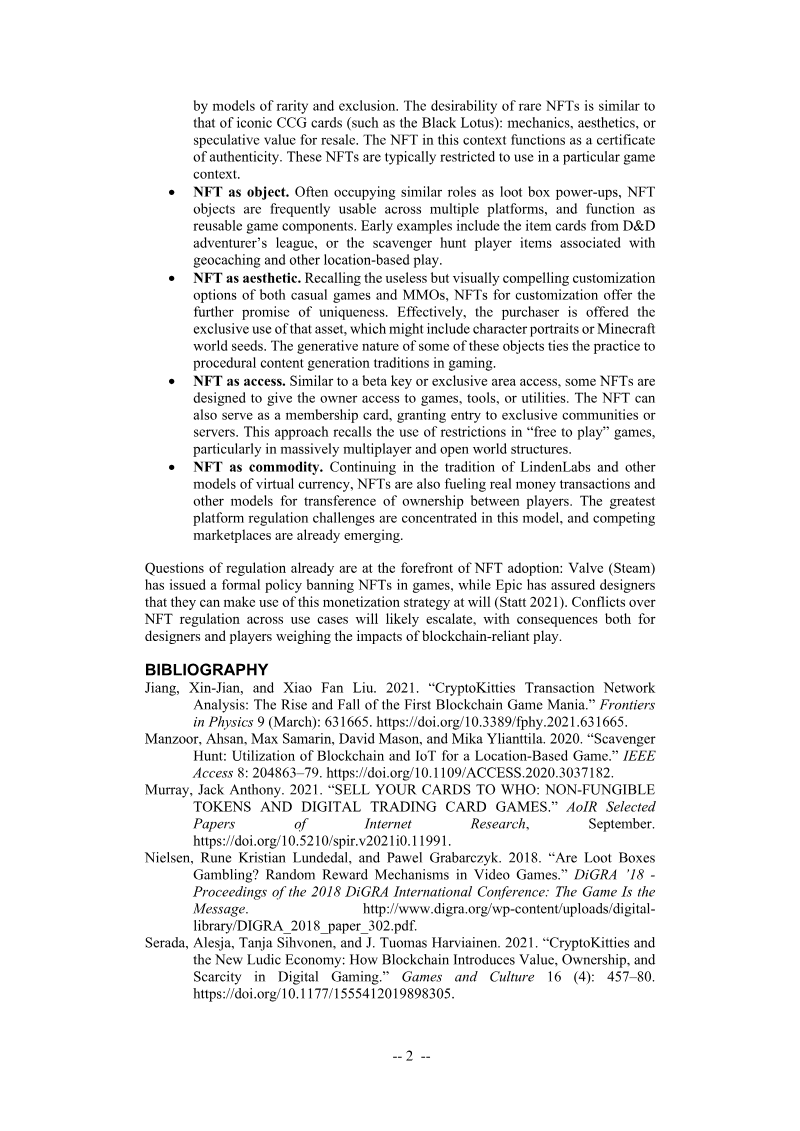

DiGRA · 2022
DiGRA · 2022
DiGRA · 2022
DiGRA · 2022
DiGRA · 2022
DiGRA · 2022

Thomas Brush · 2026