Transcript
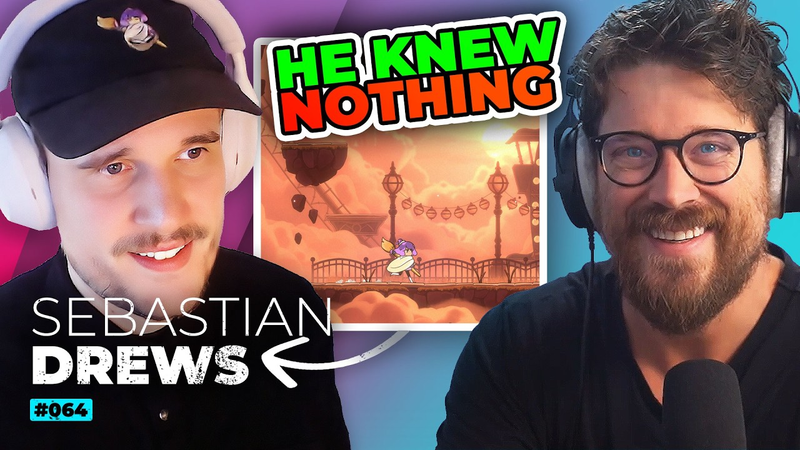
Hey, by the way, there's a reason you keep quitting your games. I've been there. I I really have. It's well, not because you're not talented and not smart, it's because well, yeah, you have a game idea, you started working on it, you were passionate about it, and then suddenly it became bloated, over scoped, and you ultimately lost sight of your original vision for the game. Well, a buddy of mine, his name is Martin Stockhausen, he's the creative director of this awesome game. You've probably seen it, it went viral on X. It's called Into the Unwell. And he gave me his number one strategy
[music]
on how you can stay focused on your initial vision for your game and actually finish it, right? He calls this pillars. You've probably heard about this. This concept of design pillars changed my whole perspective on well, starting my next game, and I'll talk about that in the future. And how I'm going to actually work on that project, stay focused on it, and finish it in a timely manner.
[music]
And it's all about pillars. What does he mean by that? Let's jump
into the conversation. And by the way, guys, I just wanted to let you know the Unreal Fest Chicago just wrapped, and the State of Unreal live stream delivered. If you missed it live, that's okay, go watch the full replay right now. [music] The State of Unreal dove deep into new tools and technology that Epic has been building. It showcased some truly inspiring partner projects and laid out their vision for 2026 and [music] beyond. It was packed with real conversations instead of flashy live tech demos.
[music]
It was honest and insightful, and it was full of actionable info for developers just like you. So, click the link in the description to watch the replay and catch every announcement, reveal, and discussion. Well, let's let's think about what I I know for me, I know for me that when I feel that imposter syndrome, and when I feel the confusion, I have to sometimes what do they say? You lose sight for the the forest for the trees.
Yep.
And the the goal for me is I always have to refocus on like what the pillars of the game are, what the core idea of the game is, and remind myself, no, this is what this game is, this is the core audience, this is the price point, right? Can you talk to me a little bit about this idea of does uh uh pillars? Because uh J. Armstrong talked about this as well. Um I think of them as hooks. So, I I think about visual hooks, mechanical hooks, and story hooks. Those are I I call it the Trinity hook just for for so I can always lean on what's my visual, what's my mechanical, like genre, and then and story. What is What are those three pillars? So, that's how I think about it.
Mhm.
Can you give us some clarity on what you mean by pillars? Cuz J. Armstrong does the same thing with his games.
So, yeah, we we There's a few different paths you can do about this, but we or I set up the pillars early on for the game for for like the to be as the goal post of I wanted the game to be.
Um it's just good to have everyone aligned on something, and then we're if you end up exactly there, it's not super important. The pillars can also change.
Okay.
But but I do think it's it's important to have them, and even if they change, they should change like with clear purpose. Uh we did that for instance, and I think it was for the benefit of the game. Um cuz otherwise, it can be like if you're trying to shoot more on something and it just doesn't work. You have to be certain that you're making a change for the better.
Yeah.
But but I try I try to have few pillars. So, I think we started with four.
Mhm.
Um and even even less you can have if you want to. But I know that we I wanted to have one uh pillar um that was the feel of the game. Uh so, it's kind of in the same vein as you mentioned, but I think uh I think it was the the feeling of the game, and then it was like the moment-to-moment of the game, which is like um fun action co-op action or something like that. And then the third one was kind of like the what's what why do I
want to stay in this game? What do I want to continue playing this game? So it's it's kind of for us it was kind of in that order. And I think you could but depending on the game you make, you could have them in different order cuz I think it's it's actually quite fun and meaningful to to rank them. Uh for instance
Oh, interesting. Yeah, yeah.
Yeah, for for for instance when when we made The Division, you know, the Ubisoft game. Um we we had the core pillars we had we had I think RPG was the top one. And then the second one was like realistic shooter. And that's why you can shoot someone in the head 10 times cuz it's an RPG.
Ah, yes.
If you flip them and it was like a realistic shooter with RPG elements, you can still only shoot them in the head once cuz that's realistic. Um so I think that's kind of interesting to just just see what happens if you flip them around and what's important, which has like more which one is more important for your game. And if they're ever in like they ever compete, you just see it the ranking. Like oh, but this is more important. This is what we're doing. Um so like if it's a narrative game for
instance, I think it's if something like a gameplay mechanic interrupts like the the narrative feel or or the story, then cut cut it or change it.
Mhm. That's good. So are these pillars are they marketing tools? Do you know what I mean by that?
Yeah, but not for us. And I think you're also leaning into like clarify if you if I'm incorrect, but I'm thinking like unique selling points and stuff like that. So yeah, they can be and they definitely I think should be in some sense. But for us um not really. At least at least not in the beginning cuz I think our unique selling point at least going into it was that the art style. And the art style I think is a separate thing from the core pillars even though the art style communicates a lot of things and it's how you play It's It's super important and super vital to the game.
Yeah. Yeah.
I don't think that was ever like
That's That's so interesting to me that the the Cuphead vibe was not a pillar. I I find that
interesting. Um
Yeah.
It's It's I guess it's a It You're talking about design pillars as opposed to a USP, I guess.
Yeah. Yeah, exactly.
Um okay. But so did you have a separate plan or a separate document or a separate meeting about the USPs? So roguelike but Cuphead. That kind of thing.
Yeah. Yeah, kind of. I mean, we we started out we we were like we were having beers and discussed we before we started the studio, this I should say. So we talked about what we wanted to do if we potentially uh started our own studio. Um and then a lot of us were like we we played a lot of roguelites. We love roguelites. It's like it's something that we could do, and we're like that's cool. And then Felix, our art director, and you know, timeline is a bit fuzzy cuz this is a long time ago now, but I know Felix uh the art our art director, he was like he loved Cuphead, and he was like it would be really cool to make
this kind of art style but in 3D. How How would that be in 3D? And we were like that would sounds really cool.
And hard.
And hard, yeah, yeah.
[laughter]
And then exactly. And then with the with the roguelite and then we were like what kind of roguelites do we play? Uh we we all you know, we we threw out a a few examples, and then we talked about but if we made a roguelite, what how would that look like? And then we kind of came up with things like so we let really like Risk of Rain 2 for instance. That's really cool, but it doesn't really have the the in-depth meta progression. But it does have the third-person camera that we which we think is cool, and we really like the uh the co-op aspect. So we're like that's cool. If we take those aspects, and then we take a few aspects from Hades with the with the whole Cuphead aesthetic in 3D like that sounds really interesting. Should we go for that? And then we had I I remember also we like but where who are you? What's what's the you know, what's the what's the what's the fantasy behind this and I were like what if we take we give and we we say this a lot
but what if we give power to the powerless and then we have like so we have like people who are or or characters that have like vices and they have real problems that and we we use them as sort of a game play mechanic that you can like you you drink beer and then you get stronger and stuff like that and we thought that would be really interesting and fun and I usually say this when I talk about how how we design the game is like you create your own box and you have to be within that box but if the box is really you know, the edges are really blurry and and it's shaped really funny and you can have a good time and I think our box is really fun to work in while if you're making a really realistic game you're kind of confined to this box that's just reality. You can't you can't really do anything else.
Can can you explain that again? I don't fully understand the box metaphor.
Uh so like you you you can only do things that are in your world.
The player is you. You you is the player? Or you are the developer when you say
you?
I'm I'm I'm I'm the developer.
Okay, so the developer is boxed in is what you're saying.
Yeah, yeah, yeah, so you can only create this in that universe like like let's say you're making a a Star Wars game then you you can only make things that would fit Star Wars which is you know, a lot of things are bad example but um you can't add things like I don't know I don't know I don't know what doesn't fit in Star Wars everything fits Star Wars but some sort of weird Satan creature that's maybe not doesn't fit even though also one time says see you in hell but um let's assume they don't have religion in that sense. So you can't add it. But in in our game you we can kind of add pretty much anything. Like if we want to add, I don't know, aliens, that would be fine. That would that would fit in the our universe. And um that allows us to be very creative cuz I think it's it's important to have like the box cuz if you if you're totally free and you can make anything, then you can make nothing. I I you know that it's so hard cuz you have nothing to to base
it on. But I think to have a fun box um
That's right. That's right. Well, there's the My dad was I've mentioned this in previous podcast, but my dad was mentioning there was an author who wrote a book. It was it's called like the unicorn western. I'm looking it up right now. And it's basically a western with unicorns.
That's cool.
And the the author, I think he also wrote a book about how to write. And he said it when when you if you can, put put a unicorn in your western. Basically, here's your genre and then immediately put something totally out of place in that world so that you know that the box is flexible.
Yeah.
Is that kind of what you're saying?
Totally. I love it.
Okay. Okay, that's yeah. And that's so hard to do. I don't know why I don't know why it's so hard to do to just be willing to um put something bizarre in your game immediately. Uh there's a lot of I work with clients um and and help them make their games.
And it's so funny how scary it is to them to just quickly make a bizarre decision and put it in the game, especially at the beginning of the development, so that you can flex those muscles, I guess. Um and and you guys had to do that uh with Into the Unwell. How how exactly or what specifically did you do with the game to do that?
So we we um I think we pretty early on we knew that we wanted the game to be like usually I mean roguelites are basically a power fantasy in in some shape or form that because you have to progress a lot and every run is like a progression thing and we kind of thought but okay but so we knew that we have to do that otherwise it's not even a roguelite but we wanted it to be like what would be the opposite of a power fantasy? So then we were like okay so maybe it's you know like like a shark head is an alcoholic or my cat character and then
we have nugget who is like a gambling addict and we we have we took like people who have are down on their luck in the real world we made them our heroes and I think that's really really fun and that sparks so many cool things um so I don't know or maybe that makes sense that's the box kind of and I don't know I I think it's it's it's so fun when when the a game and a game you're working on I should say is like is is fun and it's dark and it's light and dark and you know it's like everything it's it's it's all over the place and it can it can be all those things and through the lens that we have which is kind of silly cartoony I think we we're allowed to like go there go in the this dark like gambling addiction it's not that very sunny subject to touch upon but I think through this kind of silly and and harm harmless lens we can go there and we can be there and it's it's okay kind
of and I think that's very that's very interesting and it's very rewarding
Auto-generated captions from YouTube — names and numbers may be misheard.
Key insights
7 takeaways · ~3 min read- 01Establish 3–4 core design pillars early in development to serve as goalposts, ensuring the team remains aligned and focused on the project's vision.
- 02Rank design pillars by priority to resolve conflicts during development; for example, prioritizing 'RPG' over 'realistic shooter' justifies mechanics like high enemy health in games like The Division.
- 03Treat design pillars as internal decision-making tools rather than marketing unique selling points (USPs), as the latter often involve separate aesthetic or genre-based considerations.
- 04Define a 'creative box' for your game to provide necessary constraints, as total creative freedom often leads to indecision and lack of direction.
- 05Incorporate at least one bizarre or incongruous element into your core genre early in development to test the flexibility of your design box and encourage creative risk-taking.
- 06Use design pillars to maintain a consistent experience, and if they must change, ensure the modifications are intentional and made for the clear benefit of the game.
- 07Balance dark or mature themes, such as addiction, with a stylized aesthetic to allow for deeper narrative exploration without alienating the player through an overly serious tone.
Ask AI about this video
Cite this video
Citation
Generating citation…






















Comments