Loading the document
1 free read left. Create a free account for unlimited reading + AI research.
Create free account
Prior Experience not Required
Key insights
6 takeaways- 01Teams maintain high-quality production cycles by defining their own roadmaps and assuming full accountability for their specific content.
- 02King utilizes autonomous, cross-functional teams that integrate level designers, data scientists, and CRM specialists to eliminate bottlenecks and decentralize decision-making.
- 03To prevent stagnation in live-service titles, teams employ rigorous methodologies including rational level design, collaborative peer reviews, and structured brainstorming sessions.
- 04Hiring strategies prioritize cultural alignment over immediate technical proficiency, with the company actively training candidates who fit the culture but lack specific technical experience.
- 05A modular design approach allows teams to scale features dynamically while preserving the integrity of the overall product.
- 06Transparency and knowledge sharing are maintained through regular sprint and studio-wide demonstrations, which also serve as development forums for junior staff to practice stakeholder communication.
Ask AI about this video
Transcript
you [Music]
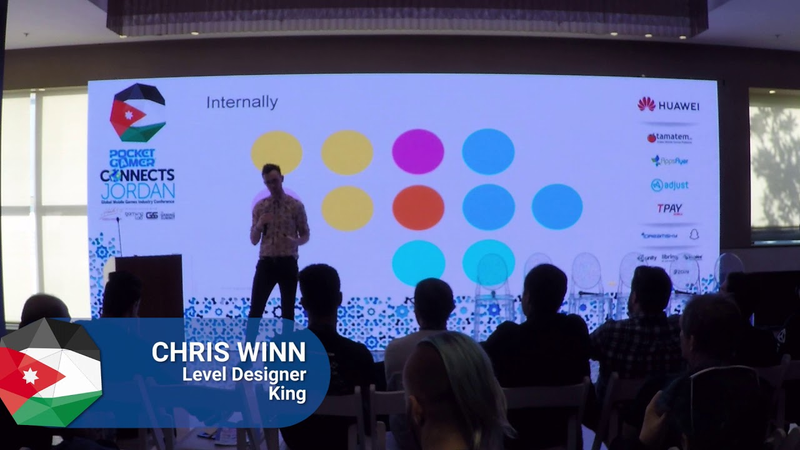
okay why don't talk to my producer that much and why that's okay game production through the perfect team building we're going to go through three different areas we're going to start by talking generally so this is gonna be talking about where we are now it's going to cover the autonomous team structures that we try and create what those autonomous team structures achieve and how they affect the projects will then go over how we've achieved that so we'll talk about what we do what we do internally and what we do externally so what we do within the teams to make autonomous team structures work and what we do externally how we bring many people together if internal is the teams that we have then external is the new I'm expecting this to probably last about 30 minutes and then they'll hopefully be some type of questions who was dying I would like to see oh yes okay before we get on to that a little bit about myself so I am a level /
content designer at King I've been at King for about one year now and level / content design it means you know when you open candy crush and there's all the little numbered nodes on the map was like five thousand of them what each of those was created polished and optimized by hand by one of our levels one of our level teams content teams and we have to do that every single week every single level throughout the game constantly optimizing and trying to get the best out of it we can King is a very content driven company we say content is king that's because if we don't have content we don't have games so it's a high-pressure situation I've been it King for about one year prior to that I was out play for two years and prior to that I did bits and bobs and I've got about four years experience in Tal so I'm still quite young just as important as Who I am however is Who I am not and if you've got any of the old promotional material for this it has to bring his name attached to it that's because this is totally sobering
this talk okay and I got asked to step in at the last minute and there's a feat a lot of differences between myself and Sabrina but the two major ones are that I'm not senior and I'm not a producer and that kind of affects the perspective that I have on this whole thing if Sabrina is looking from a top-down level she's seeing everything she sees the whole forest then I'm a lot closer to the center and I see the trees and I see that one area of the game a lot more clearly I see it a lot more intensely but I don't have the overview so this is kind of going to end up being game production from inside which i think is a slightly different perspective for my vision one of the conditions for taking the taco verson from Sabrina was that I couldn't change the name and this is the name that you have in your booklets which is like totally mega appropriate because I have no prior experience in this talk so that's to piece that together ourselves when I was asked to talk about game production I kind of started by can with an
introspective thought of like what does game production mean to me how does it actually affect me how does it affect me on a day-to-day basis so we're going to talk through that a little bit and to kind of give you an idea of what it feels like to experience game okay and this is gonna get a little abstract but don't worry about it so this is me this is me working at King and this is my team and this is the content team like I say we develop every single level for the game were under a lot of pressure we've got our deadlines every single week how many levels do you guys think candy crush releases a week how many levels does candy crush release a week 345 is for both so it's quite a lot each sort of thing not that much I guess okay normally people like whoa so we're at least 45 levels a week and each of those was created by hand and optimized we also released seasonal content so yeah so it's a team that's under a lot of
pressure but it's also a high-performing team we hit all of our deadlines we find time to create levels we need to make but also to do optimizations around that we optimize the experience we optimize the flow and we were these features that have a noticeable impact okay this is the content team within the content team there is also a lead and this makes it look really hierarchical and it's like not hierarchical but it is good for explaining there's a lead and he's a senior level designer but that means that even though he's a lead he's expected to do everything that we do any role that a level designer does he's also expected to do he creates levels the optimizes then he does everything that's required in addition to that he's also our funnel through which we talk to productions there's green dark represents our producer who for others sabrinapm I mentioned earlier and you can see already that there's if you just look at it this way there's like kind of a big distance between us right like I
don't talk to my every single day my leaped ox might produce something fun once my thoughts and I could go and talk to my producer but I don't really need to I don't need to speak to reputation isn't in every conversation and that creates teams that end up feeling really autonomous we're not running everything by Sabrina's not involved in every conversation we define our own road maps we define what we're going to be doing and it's all better than there's a conversation and it all it goes through a process but in general we're trusted we're trusted to do what we think is right for the game and we're trusted to make use of our own expertise we're trusted as experts with our content and like I said we're a high pressure team though so we're a high pressure team that's allowed to be autonomous which is lucky that it works out like West I said well high-performing but we're autonomous if we were left to our own devices and we weren't experts and there wasn't trust then it all fall apart and there won't be levels in candy crush and the million people would sign on and it all just
explode so it's really kind of lucky but this all works out the way it does but I don't really like that phrase very much I don't really like saying that it's lucky because it obviously isn't it isn't lucky that has worked out this way these teams were created by someone they put individuals together in a way that would allow for autonomous structures to take place when you when I started to realize that the original name of the talk that I was given started to make a lot more sense like game production through the perfect team building like I started to realize that the production that had take place it happened sort of before it happened in the way that they put these people together it happened in the choice of which people would be in the content team and that was allowing us to be autonomous so we got to talk a little bit about that because that's pretty cool it's pretty cool that we've managed to create these teams that are capable of being high-performing without also being overseen at all points and we're going to talk through how we've achieved that
both internally and what we've done externally so internally is talking about team ducks don't least talk about hiring you know go through each these areas one time eight minutes so internally the easiest way to explain what we do internally is to is to talk about the team structure and to talk about who the people on the team are and then it will kind of hopefully so I already said that I have two years of experience in game design so I come at level I'm a level design that I have that two years a game design experience and follow another year I've only been a king for one year so I'm approaching it for my specific perspective next to me is a junior level designer who's under King for six months experience we've got another member of the level design team who's been at King for seven years so
they've been at King for a long time they've seen a lot of different games which is different to anyone else in the team and they've got a lot of experience coming from back they also originally they started in marketing and then transitioned into level design so they started working in comparator insights which is again completely different and gives them another perspective which is unique from any other members of the team we've got a lead that I already mentioned lead on farm heroes also lead on a smaller team Farkus champions but what's important is the variety amongst us which I kind of skimmed over though we've got someone with a lot of experience of King games we've got someone of experience for a variety of different companies someone who's worked on large teams and work on small teams like what's important isn't that we're all members of the content what's important is the things that differentiate us the things allow us to be a very team the thing that it was different perspective on top of that we also all have different mindsets we and some of us are very data-driven we work very slowly methodically to build learnings some of us prefer if we've
come from smaller teams for example we prefer to work more quickly we prefer to be very player centric we some of us are very community driven like we're all coming from different perspectives like we're not just people who've been in the games industry for 20 years or whatever like we're all a really young team but the fact that we have these different perspectives means were capable of having informal conversations but we're not just level designers like next to words we've also got our business performance manager and we've got a data science team but that's that literally right next to us and they're a member of the contact pot as well so this creates this sort of over here culture where we overhear things from one another so my last week the data scientist was looking at through levels in the game we can adjourn or whatever they saw a level 300 is particularly journey but they can just turn to us and ask us why we don't think that is they can turn towards and they can use our expertise to to facilitate what they're doing so we can go and look we can look at level 300 and we can say hey this is the first time we
put tomatoes in the game or whatever it's this the first time we put tomatoes in the game maybe that's why and then it works the other way as well like I can say level 500 is the first time we've put in sheep and we've got this environment where experts can just bump into each other and organically conversations can happen and suddenly were all creating something that's better at any one part but similarly we've also got an agile coach scrum scrum master right in the center of the team they're involved in all these conversations or they overhear the conversations which mean that when it comes to facilitating our agile responsibilities our planning sessions and retrospectives they're more informed than they would be otherwise and all the way over here on the circle you can hardly see we've got the customer relationship management team so this is their embedded within the content team and again they're facilitating and helping to make sure we're all making the best thing we can their talk they're talking to existing players they're talking to potential tech players they're talking to resurrected players and they're trying to just make sure
that everything is of high quality is it could be if I'm talking to my lead about how we're going to approach end of content they can say hey if you're going to make changes how are we going to notify the players about that and then they can they can modify and they can help us to improve and then the data scientists can come in and say well what tracking do we need and suddenly were all we're all experts we're all working together we're all meshing we've got the development pods if you work in games you know that these guys they're working from briefs which have come from game design and level designers but those Brigham's often leave questions but by being right next to us they can allow those questions to be answered it's not about stopping blockages it's about accepting the blockages happen and resolving them quicker and a lot of that goes the conversation and then all the way down in this bottom corner like really far away there's actually a big gap like here in back docks all the way down that is where our producer lives that's what Sabrina sets and the reason that she's so far away is that she
understands the her job isn't to be involved in the conversations it's to make sure that the right conversations are happening it's not to talk to everyone it's to make sure that when I need to talk to a data scientist that that conversation occurs listening to talk to see our own if that conversation goes we've got all these different people and they're contributing different things and the right conversations of the right time but there's more than just one team king uses a sub team structure where we break the game's down into pods so we're always working on like five things at once like farm heroes isn't just content farm Heroes is for different teams and maybe these guys are working on a farm pet all these guys are working on some other things that we're going to push up and what's important is that it's really easy to lose sight it's really easy for communication to fall down and there's so many different people involved and that's why we have a lot of processes in place to make sure that communication
occurs every two weeks we meet up and we have a sharing session where we all talk through what we've been doing we talk through the game and again that allows expertise to meet each other it also allows we've let different members of the team it's not just the leads that are talking we let the juniors talk and the juniors represent their game it means that we feel confident and we allow our game to represent who we are it means that we we feel responsible for the games were correct so yeah I've talked about a little bit about expertise we have a structure to the let's act let's talk to each other we have a structure that's teams feel empowered we're defining our own roadmaps we're defining what we're going to work on and that means that we are rewarded when they go well we follow them through the whole development cycle and more importantly we're also accountable if I don't deliver something and I'm respect if I CRM and data science are all working on something together and we've all discussed it and we've had these face-to-face conversations then I can say well I need
to be done on Friday and they only stand being injured on Thursday and then I needs to do on Wednesday and it means that because we're having face-to-face conversations we're accountable to each other and we make sure okay so that's all I've said all I've got to say about internal and here's a really quick summary which just kind of goes everything I said so we're having bury teams with complementary skill sets of I vote so by having very teams of complementary skill sets and diverse points of views a structure which encourages prioritizing highlights communication and production styles but focus on that in the right conversation happen we achieve a working environments diverse sacred challenging an over here culture and high quality image showing our products and all these things are super important and we achieved them just through the structure the reporting place through the way that we allow people to screen each other of teams which are power empowered the warden accountable mhm nozzle ok ok so that's internally next we're going to talk a
little bit about what we do externally and this is mainly focused on hiring process since again as I'm not producer I'm not super informed on all the hiring decisions but what I can talk about involved in interviews and such but what I can talk about are our values so these are the five values that came holds itself - I'm not gonna go through them I'll take pages but the general idea is the the employer the employees as a entity like king conforms to all of these five things and when we're doing interviews we're always making sure that we're assessing people based on these five different factors so every single interview that you get at King and every single interview for every level from junior interns to senior whatever every Institute's based on one of these things so I might do an interview that's specifically trying to assess you on whether you can have Karen craft whether you can be humble and open and we're always making sure that there's an outcome that we're going from it
similarly if someone doesn't display one of these traits we'll make sure the future interviews go into that thing so if in interview one you don't display humble and open or where we raised some concern about it into you two can focus on that area going to be three you can focus on the area and we make sure we get like this really holistic view of everyone that will bring into the company this takes a long time the minimum number of interviews that we do is five it can take multiple months my interviews I think over eight before I got a mid-level job so you can take quite a while that means that by the time that we have people coming into the company we're confident that they're good culture fits and we know that we can invest in them and we can start to skill them up straightaway a way to think about it and the way that we're encouraged to think about it is using two axes where you can think about how capable a member of a potential candidate is and you can think about how strong of a culture fit they are and a lot of the time this allows you to break it down into four different areas where you've got effort
it may be your first candidate who's low on team culture fit and low on capability another candidate who's a perfect culture fit but again low capability a third candidate who is low on culture behind capability in number father's mind by and it's pretty common that when you come on interview you can work out which these areas a candidates going to fit into and then you can start to assess the based on that candidate one is perhaps just not interviewing for the right level they might be interviewing for a mid-level role or they're potentially may be better suited for a junior role but what either case they're not a good values that are not good for capability that means we're probably not gonna hire them candidate for is smashing it in both regards like their I capability their high culture fit there's nothing they're doing wrong like they're excellent we might even move them up to the next level we might integrate their interviewing as a mid-level way what I think is worth interviewing them as a senior by the way we don't really need to talk about them that much what's much more likely is you end up with these kinds of people where
you've got someone that fits into one of these two categories and the way that we're instructed to think about it in the way that we like to proceed is to always err on the side of candidate number two we prefer to err on the side of someone who is a strong value spit that's because we know that we can teach you craft if your capabilities are slightly lower we know that we can teach craft we can skill you up in that regard but it's much harder to teach values as much hard that person that you own person it's also pretty off common for us to pivot and interview if they're coming out as low capability a good value step perhaps you're actually just a game designer but you interviewed as a level designer or at you perhaps you're a UI artist you interviewed as to the eyes you know we can move people around and we can try and put you in the place that makes sense it's also not hard and fast rule it's pretty common that if if a project needs someone that's just going to hit the ground running straight away well maybe we'll look at someone if you know you're kind of in the middle on value spit but we need someone who's just going to come in and just smash your
straight away then it's pretty common we might go for number three you know it's like not a rule it's just the way that we prefer to do a project so by understanding what we're trying to create and having a commitment to it while having hiring strategies which prioritize candidates they're a good fit and by assessing people based on cultural fit and adapting the Institute's made sure that we're getting the best out of the candidate we can create groups of individuals for aligned they have the same both the same base values it means that they're aligned of creating the same great product and we can also ensure that we have teams that we immediately want to invest into immediately want to make people as skilled as possible we want to send them on training even though they've only either we sometimes have people who've only been in the company a month they're still within probation but we'll send them on training but they've been through this process and what we're confident that they're going to all right
super duper quick run-through flux net King and how we've created those things in theory we've discussed where we are and how we've got that we tried to do as quickly as we can but yeah that's kind of everything that I had to say okay so we started slightly later so ten minutes questions go yeah okay so the question is about creativity and there's two halves one how do we assess it
creativity in an interview setting and two how do we ensure that we're releasing innovative content even though we're making 45 lots a week so one at a time how do we assess creativity in interviews a lot of the time it's done through either written tests or through thought experiments so it's pretty common especially if you're an interview for game design position that will describe a scenario to you and we'll ask you to explain your thought processes how you approach it for example you're working on a match three game and you've been asked to version two of a certain feature so let's just say hard level labeling which is the idea that we label levels that are really hard and this is something we're doing quite a lot of titles you've been asked to do a veto on that and you've been asked to do a v2 that's specifically going to increase game rounds and we'd see how you'd respond to that question so and again in these scenarios it's just best to talk through all of your working to version two of hard level labeling is going to increase game rounds perhaps you could do an event where
you collect stars from hard levels and then we can give you some reward when you get to the end of it perhaps we can do a v2 of hard level labeling where we actually label the easy levels and we see how that has an impact on game rounds perhaps people are more willing to play when they know they're about to hit an easy level you can sort of see if when you explain your thought processes how creates how your mindset works where crivit creativity comes up and you can start to get a good sense of how people approach problem solving I think that's sort of what we're doing right like your design is about problem solving it's about communication so are you solving a problem like on to the second bit which is about how we make sure that's creativity in content even though we're releasing 45 Italy just does that answer the first time all right in terms of how we make sure we're releasing interesting content every two weeks a few parts to the answer a one is through structure kind of whether we label our levels we label what kind of level there are for example is it a level with loads of
exploding stuff in which case you knows okay exploding level is it a really puzzly level is it a level which is we dig through levels is something we do quite a lot we've got like a wall and if I make matches next to it and you dig through it you dig down and dig our flow and you can put these families and then you can assign different blocks those families so for example this episode really needs an exploding level that users sheep less then we can look back when we can say when is the last time we didn't explode any level the user sheep and it's kind of like taking the approach of rational game design wait rational level design where you really break you down into component pieces and just see how that structure pans out and if you look back over a long period of time you can start to get an idea of if you're repeating yourself very often the other way to do it is through large teams which focus on cooperation no level in any King game has been looked at by one person like we're on a team of not sure exactly I can't say exact numbers but the important thing is that we have a bunch of level designers who are all looking at every single thing
that goes in I don't put something in my it's right that means that we've got an increased chance of spine when something's being repeated so it's kind of structural thing there even when things get through we have people looking to check and the other thing is always just expanding the tools that we have kandi has a guard like over 50 different blockers like they're always adding new ones and that means that they're always getting new tools to play with so allow people to be creative by giving them loads of stuff have structures in place that allow you to spot repeats and plan a creative content coming up and have multiple people are looking everything yeah that kind of an when we're approaching a larger feature work whether that's meta features a new events or whatever or if we're approaching level based features like new blockers or whatever then you'll try and get as many people as possible to gather from different disciplines and we have brainstorming sessions we've got certain structures we like to follow but
we're always investigating new ones one thing we like to do to warm up is we'll say how do we make this as bad as possible for example I want to add a new feature and I want to add the worst feature possible we'll do that as like a warm-up session and then we'll sort of use that as a basis to to work on what we actually want it but yeah we do we do brainstorming sessions we try and get as many different disciplines as we can involved it basically every single yeah sure yeah yeah yeah yeah yep yep [Music]
yeah no that's a fair that's a fair question so the question is what do we do we have a long hiring process how does that affect churn of applicants and how do we deal with that it's a good point and it's something that has been discussed a lot we used to do seven interviews we lowered it down to five for that reason and I guess a lot of the time it's just about finding a balance we need to make sure we have confidence about the people were bringing in but we also need to go as quickly as we can and we have been known to act but like the project or the process with sometimes we can do three interviews in one day and when you start getting to that point you can really bring the time down you can make it take place just in two weeks rather than multiple months the other thing that we do on it let me try and work out where I'm comes from yeah yeah
okay the other thing that's worth thinking about as well is because we're a company where we change our processes quite a lot and we change up what we're aiming for obviously it's fast moving market we might make slight adjustments and that can also have an impact in the hiring process sometimes someone's in the pipeline and the role might change and we've just got away to keep them as informed and up-to-date as possible originally we're hiring for this but would this also make sense for you to really want to bring you on but we're having to pivot slightly on the role that we're hiring for and we've been known to do that as well so we can expedite the project just put in so we can expedite the process but in situations where we can't it's just about keeping people up to date and just making sure there's a constant stream of communication occurring because the worst thing that can happen and the reason people journal all the time is because they think we've forgotten about them so just making sure we're actually keeping people up to date even if the roles changing even if the company's changing yeah that goes a long way as well it sounds special postulate right okay cool all right okay
is there probably time plate one mall generals go anything - yeah why not I sure sure sure yeah yeah sure that made sense and so we're talking a lot about autonomous team structure but what happens when it goes wrong it's a great question so one of the things that we're lucky about is that it's fairly easy to spot those problems when they're coming up in advance and to be able to pivot on the scale or scope of the project that we're going after so for example if if we've got this autonomous teams and we
realized that something perhaps isn't going to hit deadlines where you will reassess the scope the project will remove things we design everything with multiple different scales in mind so that means that here's the version that's going to go out if if it's perfect but if we have to start removing things then we should own the needs of the product the things that we're gonna remove first and it's kind of its kind of a problem that solves itself as well because if you're in this autonomous shape where you've got people talking all the time then you actually end up having a really good understanding of where the project is where the prop where the features that were working on are that you can spot when these things are going to occur and you can adjust appropriately you can rescale you can we Stoke and bringing different pods on like I said we have three multiple different pods are working on farm at the same time if we need to we'll bring pods together we'll move people around to make sure things are in the right place at the right time so yeah I agree like it's a problem that occurs when you have like these teams that are autonomous but the autonomous dot on me also creates all the benefits that kind of outweigh it as well yeah yeah okay
fantastic yeah sure so in terms of transparency like we've got a bunch of tools that we use whether it's email slack just having conversations but the most important thing is the processes that we've got processes we've got in place at the end of every single sprint we have sprint demo where we get every single member of all the different pods together to explain what they've been working on in to allow X book I wrote that and then every month we have a studio demo where we get all the different projects within London together and they'll talk through what they've been working on as well so we managed to have transparency and communication both within the pod within the games within the projects but then also between projects as well as within the studios
yeah yeah I mean one of the things that is actually a real benefit of it is the because a lot of these things are just internal like we get we're comfortable allowing a junior member of the team to represent where the part is working on like I have junior we'd have juniors that come in and describe what the content team has been working on for the past month and because it's all internal there's very little risk there like it's a fairly safe space where we can allow allow people to learn and allow people to skill up so yes there's risks but I think because we're doing it in a safe place like those risks are minimized it allows people to actually scale up more quickly like it allows allows people to get to a point where they can communicate in stakeholder conversations or externally and they get to that point because we let them practice another practice record regularly okay thank you
[Applause]
Summary
King maintains a high-performing game production environment by utilizing autonomous, cross-functional teams that integrate diverse roles such as level designers, data scientists, and CRM specialists. By embedding these experts within single units, the organization fosters organic communication and decentralized decision-making, which effectively eliminates bottlenecks and reduces reliance on top-down management. This structural autonomy empowers individual teams to define their own roadmaps and assume full accountability for their content, ensuring that high-pressure production cycles remain both efficient and high-quality.
Hiring strategies prioritize cultural alignment over immediate technical proficiency, reflecting a belief that values are more critical for long-term success than specific skill sets. While candidates possessing both attributes are preferred, the company actively invests in training individuals who demonstrate strong cultural fit but lack technical experience. To sustain creative output and prevent stagnation, teams employ rigorous methodologies including rational level design, collaborative peer reviews, and structured brainstorming sessions. These practices ensure that innovation remains consistent across live-service titles.
Project management relies on a modular design approach, which allows teams to scale features dynamically while preserving the integrity of the overall product. Transparency is upheld through regular sprint and studio-wide demonstrations, which facilitate cross-project communication and knowledge sharing. These internal forums serve a dual purpose by providing a low-risk environment for junior staff to develop stakeholder communication skills and gain experience in project representation. Through these integrated processes, the company successfully balances rapid production demands with professional development and creative excellence.