1 free read left. Create a free account for unlimited reading + AI research.
Create free accountWhitepaper American Journal of Play
1 free read left. Create a free account for unlimited reading + AI research.
Create free accountWhitepaperAmerican Journal of Play
Steve Wilcox argues that in edutainment, fun only delivers content. Praxis games instead have mechanics that themselves embody domain-specific knowledge.
Steve Wilcox's "Praxis Games: A Design Philosophy for Mobilizing Knowledge through Play" argues that serious games should move beyond the "edutainment" model, in which fun serves merely as a delivery mechanism for content, toward games whose mechanics themselves embody domain-specific knowledge. Grounded in situated praxis, feminist epistemology, and situated learning theory, the author contends that praxis games engage players' rational curiosity through meaningful action-outcome relationships, training them to discover and optimize real-world personal, cultural, and professional practices rather than simply memorize information.
The argument is developed largely through design examples and a set of five heuristics, among them evidence-based rules, guided discovery, and decision optimization. Allergory, which recreates food-allergy social situations from interviews with food-allergic children, serves as the central illustration, alongside Depression Quest, science.net, and ZombiePox. The author also reviews health care games, including Burn Center, the Oncology Game, SurgeWorld, and Night Shift, noting that the Oncology Game study reported more correct answers among players than nonplayers. Contrasting cases such as Spent, whose poorly grounded design reduced empathy in a small study, reinforce the claim that grounding rules in research is both a design necessity and an ethical imperative.
The scope spans serious games broadly, with particular emphasis on health care education and social realism in games, including Dys4ria, Stasis, Cart Life, and Papers, Please. Its evidence is predominantly qualitative and design-based, and its conclusions remain largely theoretical. The author acknowledges that social realism helps players understand situated knowledge but does not by itself teach them to act on it, a gap the work leaves for further validation.
Each row is a game or company this document names, each column a document, oldest first. A mark means that document names it. Select a row to see those documents.
American Journal of Play · 2025
American Journal of Play · 2025
American Journal of Play · 2024
American Journal of Play · 2024
American Journal of Play · 2024
American Journal of Play · 2023
American Journal of Play · 2022
American Journal of Play · 2022
American Journal of Play · 2021
American Journal of Play · 2020
American Journal of Play · 2020
American Journal of Play · 2019
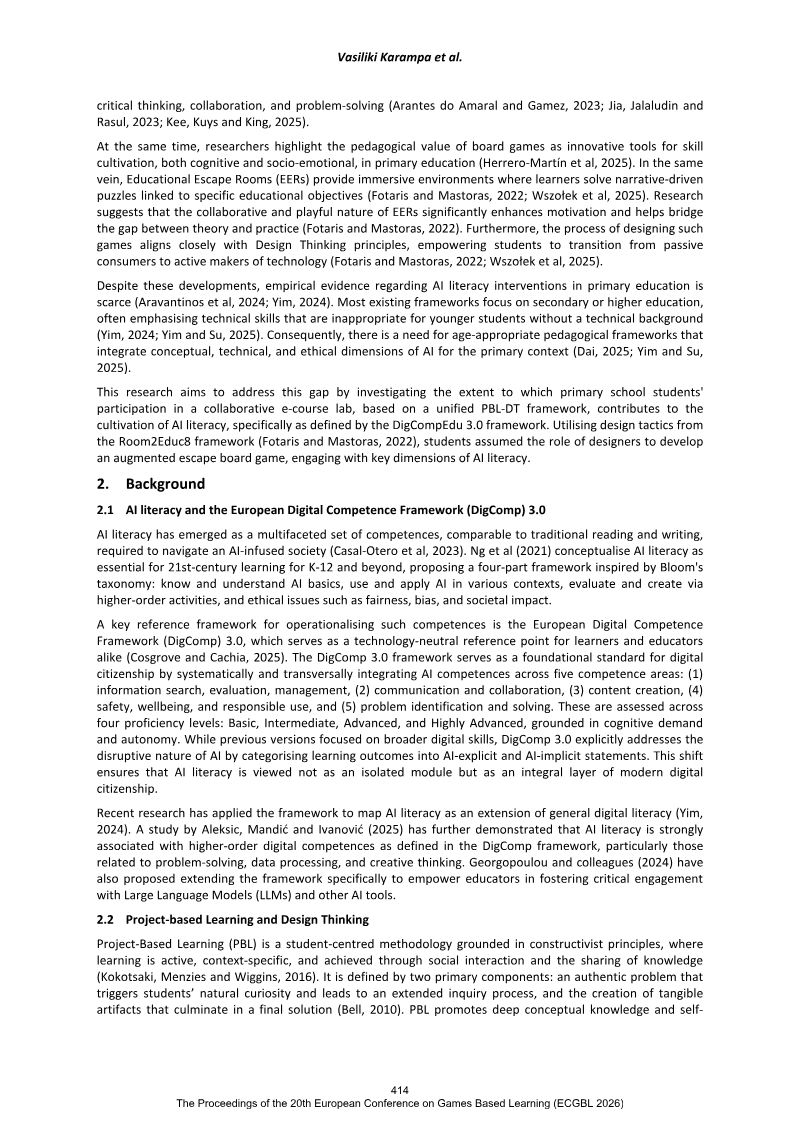
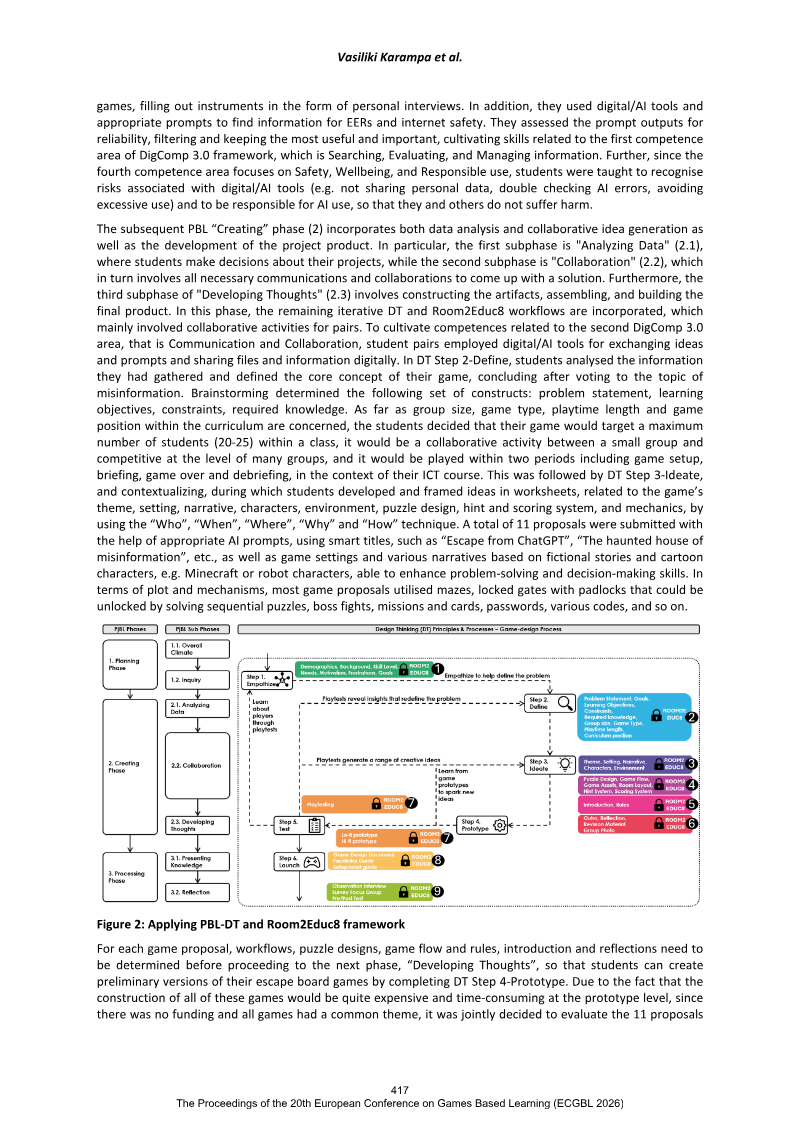
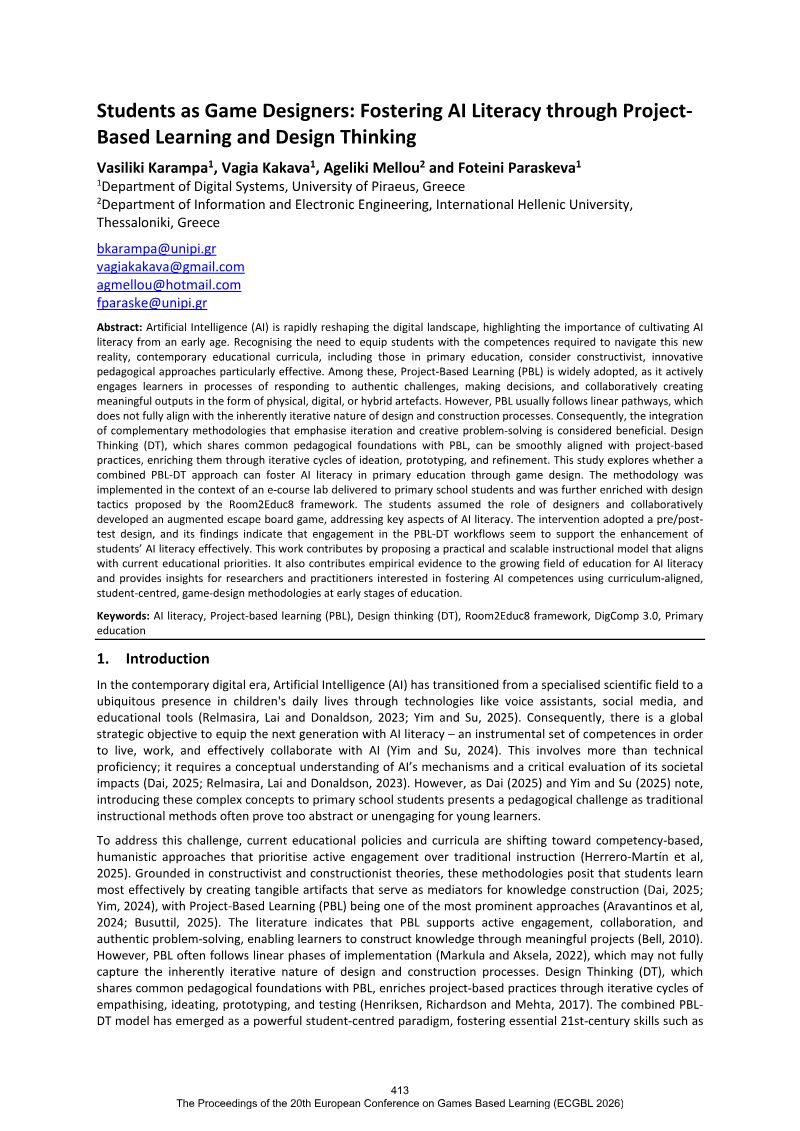
European Conference on Games Based Learning (ECGBL) · 2026
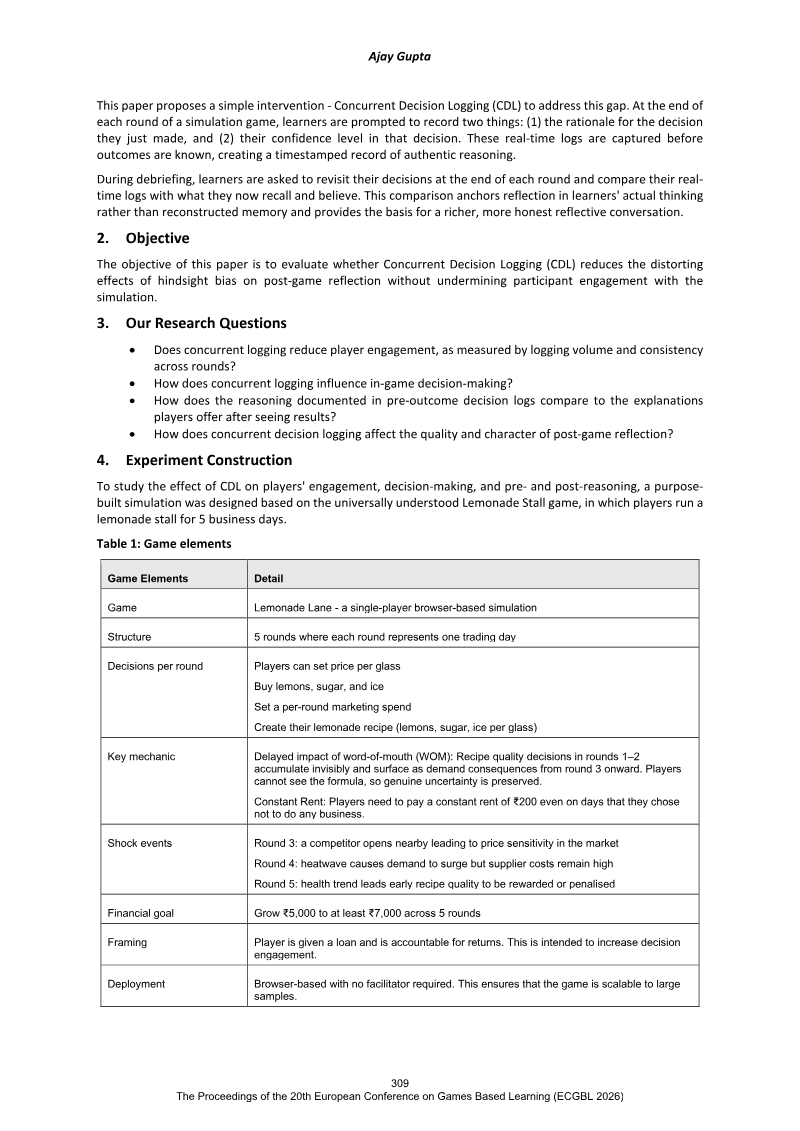
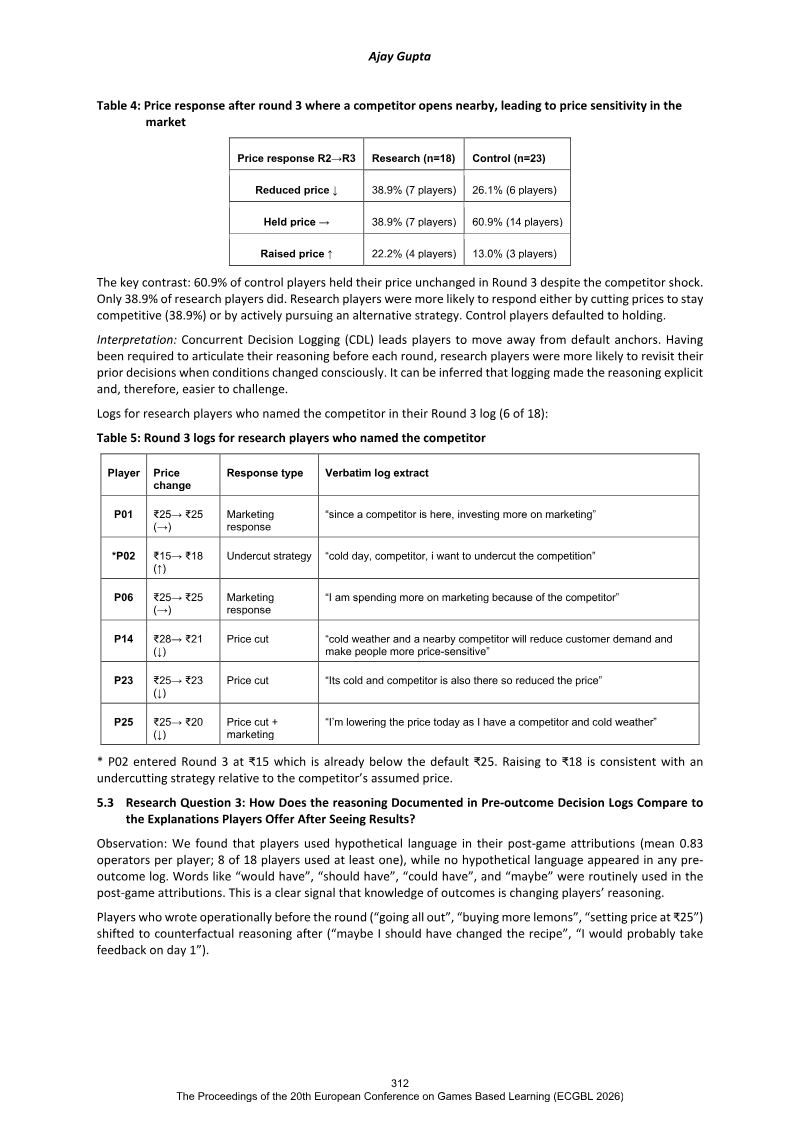
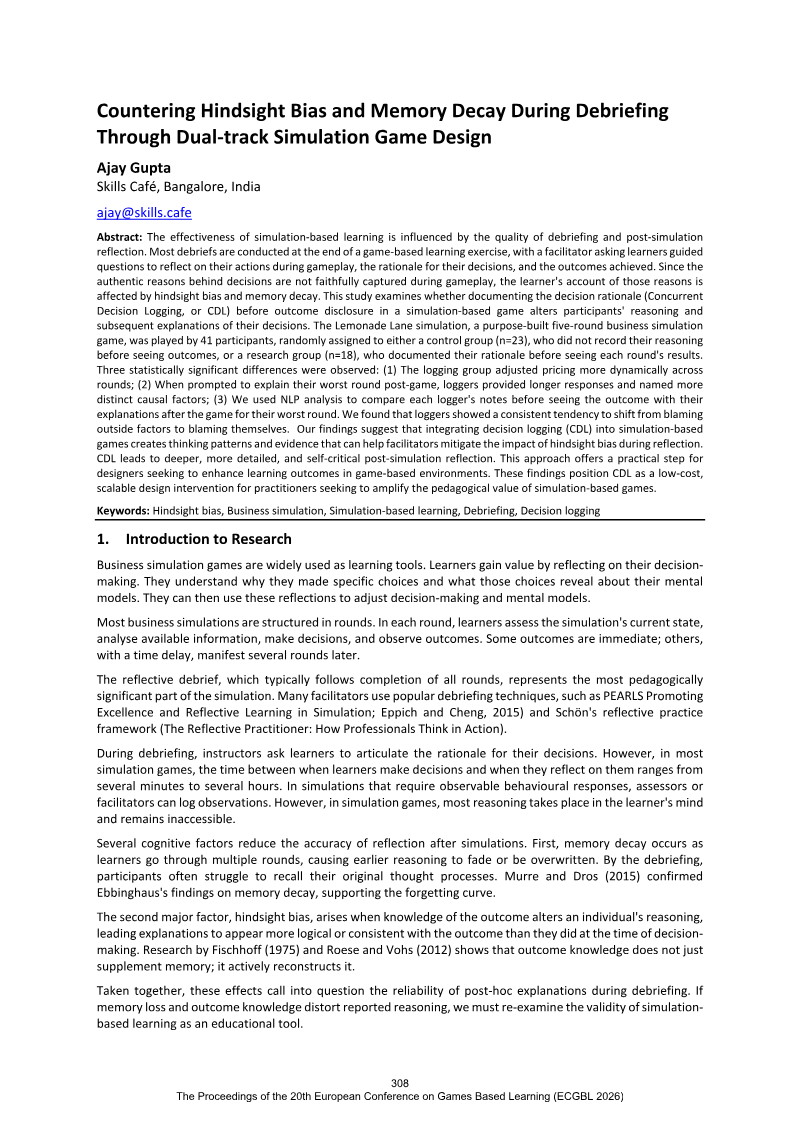
European Conference on Games Based Learning (ECGBL) · 2026



European Conference on Games Based Learning (ECGBL) · 2026