1 free read left. Create a free account for unlimited reading + AI research.
Create free accountArticle DiGRA
1 free read left. Create a free account for unlimited reading + AI research.
Create free accountArticleDiGRA
It asks how economic incentives and barriers alter those representations.
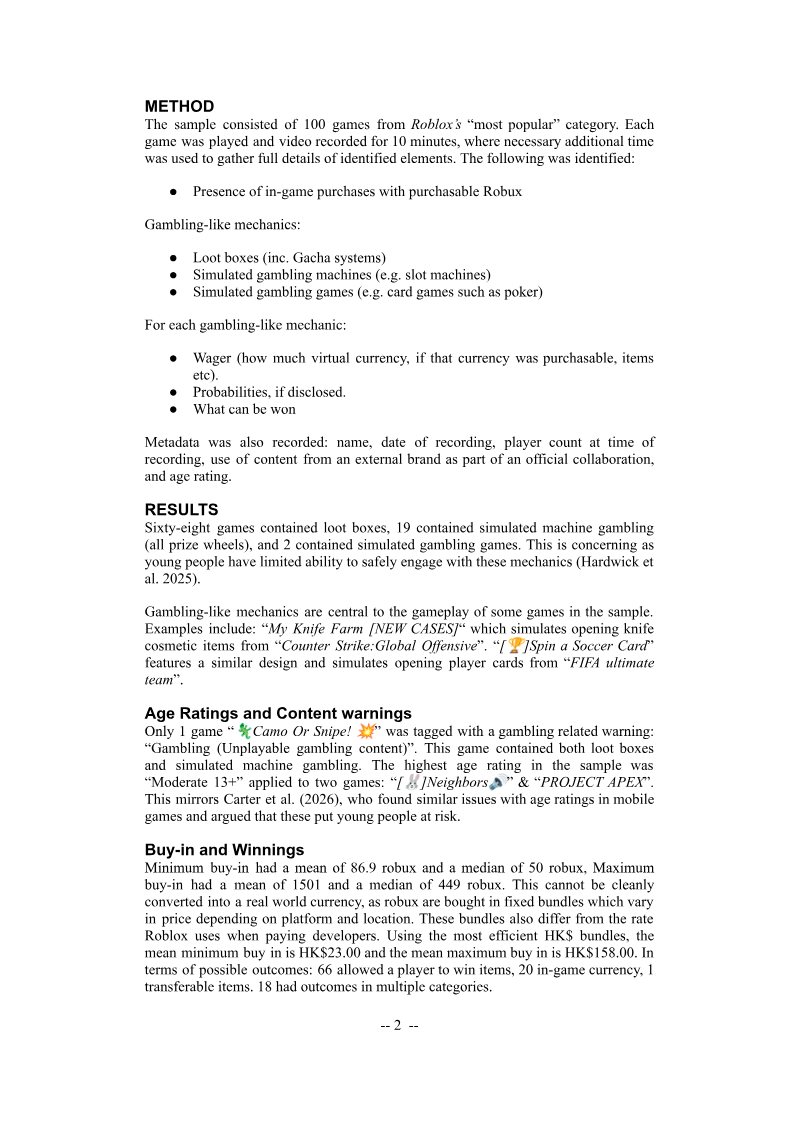
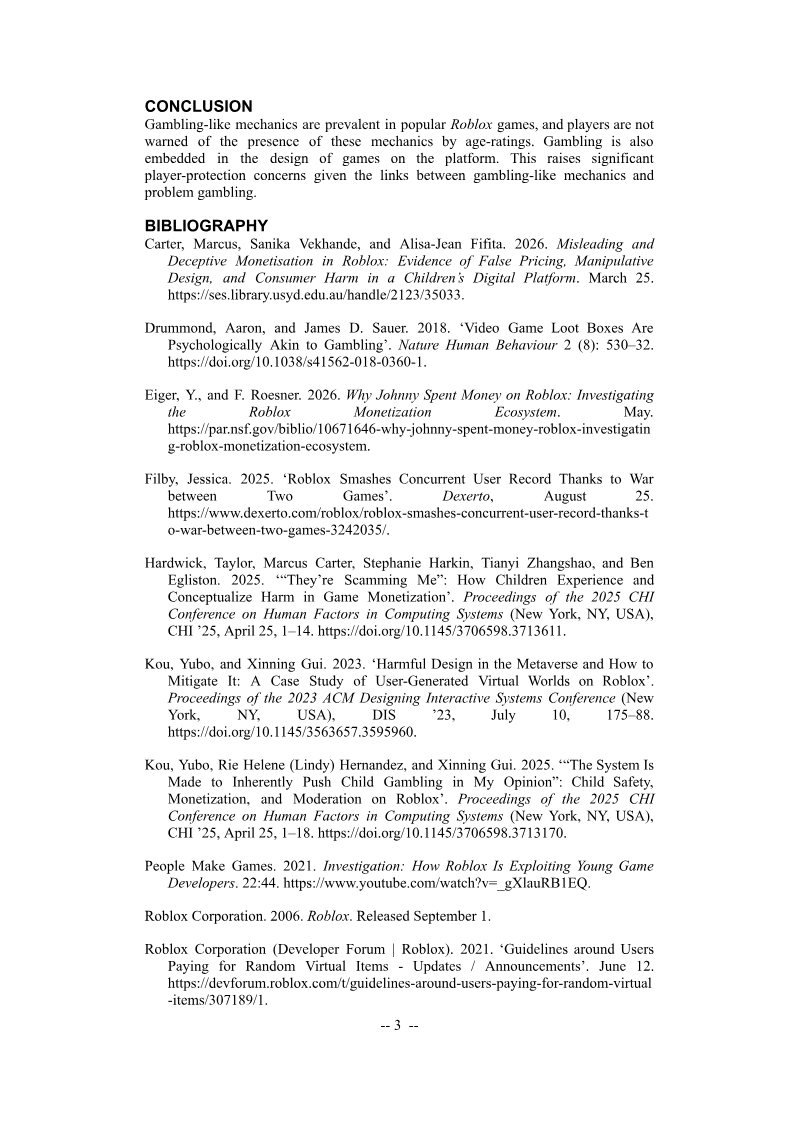
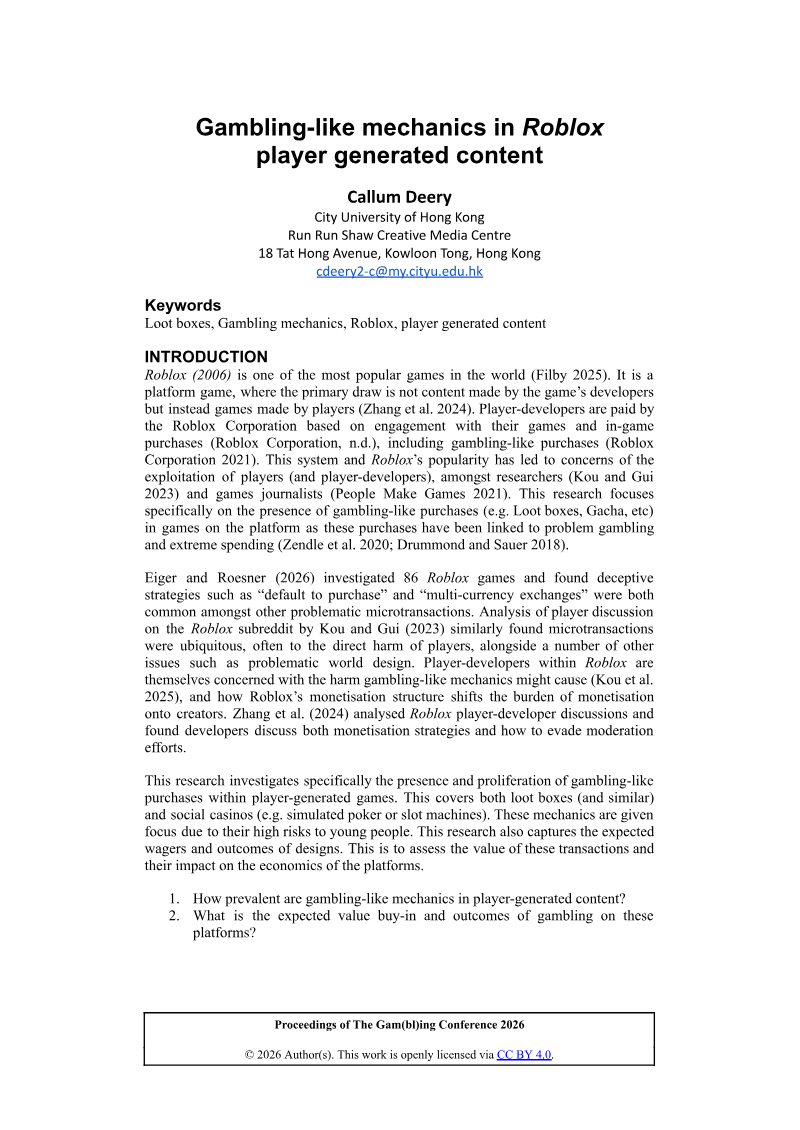
The study investigates how Roblox's monetization systems influence memory-making practices in post-conflict digital environments, specifically focusing on user-generated games (Yugoblox) that reconstruct the Yugoslav Wars. It argues that platform capitalism dictates which historical representations become economically viable and culturally visible, thereby entangling collective memory with commercial optimization in post-conflict contexts. The research addresses concerns about aggressive microtransaction logics and unmoderated social interaction in sensitive historical settings on platforms with young user bases.
The methodology involved mapping Roblox's monetization infrastructure, including game passes, developer products, subscriptions, paid access, private servers, engagement-based payouts, and immersive ads, based on the platform's regulatory framework. This taxonomy was then applied to Yugoblox games to observe the implementation or avoidance of these tools when selling access to a traumatic past. Additionally, an inductive thematic analysis was conducted on player and creator conversations about monetization on Roblox and Discord.
Preliminary findings reveal three key dynamics: the normalization of memory commodification, creators' liminal position between hobbyist and entrepreneur, and the strategic value of historical accuracy. All games are freely accessible, but promotional sales and bundle offers on Discord normalize monetization as an integral part of community participation, with users internalizing and enforcing economic logic. Creators, while framing their work as a "side gig," also organize into "studios" and engage in entrepreneurial practices like advertising and recruiting promoters, despite precarious compensation. Despite efforts to maintain historical accuracy in game design, creators face player requests for historically inaccurate content, highlighting a tension between historical simulation and identity representation, especially when national belonging is perceived as a purchasable asset.
The research concludes that on Roblox, engagement with the Yugoslav past is mediated through normalized consumerism and entrepreneurial performance. While historical accuracy serves as a strategic asset for game promotion, memory work becomes structurally intertwined with commercial optimization. This suggests that platform capitalism determines which representations become economically viable and thus available, a critical transformation in post-conflict contexts where collective memory has significant political implications for reconciliation and historical understanding.
Each row is a game or company this document names, each column a document, oldest first. A mark means that document names it. Select a row to see those documents.

DiGRA · 2026

DiGRA · 2026



DiGRA · 2026



DiGRA · 2026



DiGRA · 2026



DiGRA · 2026



DiGRA · 2026



DiGRA · 2026



DiGRA · 2026

DiGRA · 2026



DiGRA · 2026



DiGRA · 2026
DiGRA · 2026