Loading the document
1 free read left. Create a free account for unlimited reading + AI research.
Create free account
Panel: Game Developers Life Lessons
Key insights
6 takeaways- 01Developers should prioritize demonstrating unique perspectives during the hiring process rather than relying on generic applications to stand out in a competitive industry.
- 02Aspiring independent studio founders should first gain foundational experience at established companies to master operational best practices and mitigate the financial risks of entrepreneurship.
- 03Mitigating regional funding constraints and market instability requires securing strategic international partnerships and conducting deep research to identify specific market gaps.
- 04Success in the modern gaming market requires balancing artistic vision with commercial viability by prioritizing core mechanics and data-driven decision-making over fleeting trends.
- 05Sustainable project management must replace unsustainable labor practices like crunch, which are typically the result of poor scheduling rather than creative necessity.
- 06Navigating the fragmented global gaming landscape requires sophisticated ad-monetization strategies and the use of diverse marketing channels to manage the high costs of user acquisition.
Ask AI about this video
Transcript
you this is an important panel it's about passing on information to you about how of the light the life of a games maker a game maker so I'd like this panel to be quite interactive so I've got plenty of questions too many questions actually I think we're gonna be good at we could talk for hours so I'll try and be selective however your questions are more important than mine so if you have a question if something comes up that you want to know about you can raise your hand of course also at the end I'll leave plenty of time for questions too so as we go make a note maybe and at the end I'll I'll I'll make sure that you can have some time to ask your questions okay so this is a panel called game developers life lessons and that could account for many things but hopefully it'll be practical about being game developer but talk a little bit about the business of it and the life of being
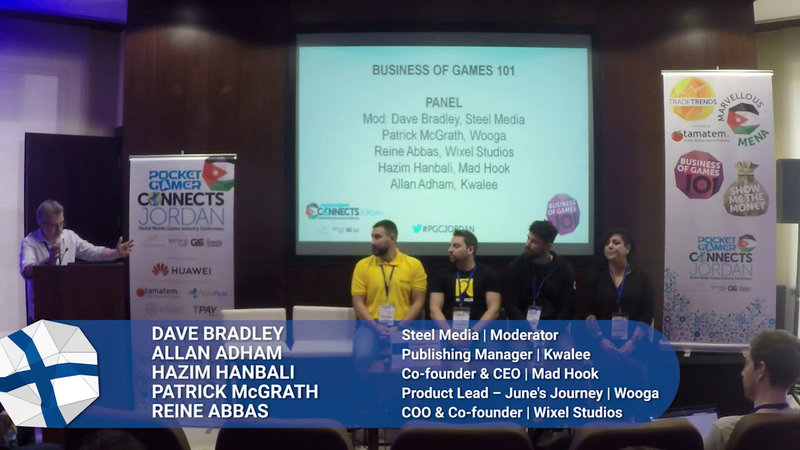
a game developer and give you a realistic insight into what it's like to work in this industry so I think probably first off to get things rolling I like Easter each of you in turn to introduce yourselves your name and and what you do for a living a little bit of a summary of your experience and how you got into it as start start here start here with you with you Alan hello my name is Alan I am a publishing manager at quali we are a hyper casual publisher effectively I look for hyper casual games for us to publish on a worldwide basis I've worked at companies like EA codemasters Play demek so I've kind of been across console mobile PC cool no that's good that's that's those hello my name is husband Hanbury I'm CEO of mad hook I've been working in the game industry for 10 years now I worked in many studios
most of them closed before madhawk I used to worked for tomaten I worked there for five years we developed games there then we moved on into publishing then I decided to leave to open my own company and I started my company me and my partner brahim is sitting there in the middle we started literally in the basement after that we joined an incubator here and the business part the hdu so far we created unpublished around seven games our games we do self-publishing basically we develop the game and buy a publisher to ourself we do user acquisition the whole nine yards that's it thank you great Thank You Patrick Patrick McGrath I'm a product lead Wooga specifically for a game called Jun's journey hidden object game so no not not as casual as these other folks here yeah
my background is worked for quite a diverse number of companies like NCsoft z2 rest in peace ea and Zynga so - and right now hello my name is Reina birth I'm CEO of Fox Studios a gaming company in Lebanon we started in 2008 and we still going on I'm still working and also I'm CEO of speak attack and Academy we teach kids and teens how to create their own video games before all this I was working with the Japan in Tendo between Lebanon and the US and because of this I started my journey as an entrepreneur in gaming so tell you what let's stay with you right now let's go from there yeah yes sorry I gotta throw you in there first so let's start yeah let's give people a bit of an
insight into how because there are many people here who perhaps in the early stages of their career in this so how did you get your big break in the games industry how did you get to work in this exciting industry I I was a visual artist so I had masters and visual arts and I jumped from animation to graphics and one day someone told me that did Japan you know that Japan did you should depend Institute of Technology and yes they opened a small studio in Lebanon they want an artist and a meter and the game designer so I lied I said little I innocent like that I'm really good in game design I did really big research too so I can really survive the meeting and I started my career in video games as an artist and then because I was working with a really big team 30 developers I started to learn
coding by myself and I cried a lot of nights because it's really hard to to learn coding by yourself especially back then we didn't have the ebooks or anything online so and because of that I was after that head of our department and then head of department and this is how I started and then interpreting oh that's good well we'll come back to the idea of launching your own studio and things later but just on that note then just come back the other way Patrick is is is bluffing your way in your first interview the way to get into the industry how do you get your big break how did how did you get your big break that's not I mean there there is a little oh that's a that's a pointed question that's a very big question like um I would say don't outright lie but I mean some you know like accentuate
your strengths show show the shows are the qualities that you have I think really from all the the studios and all the companies that I've been at there's kind of some like fundamental aspects that we really look at like there's a lot of technical stuff that can be taught but there's just some fundamental things they like Drive and passion these things if you're not driven or passionate not many people are gonna hire you like we can we can teach how to you know code C sharp or can teach you I UX these types of things but there are some fundamental aspects that no matter what you you just need to definitely show that in any interview how about you said how did you get your big break what was the the moment where you you've got your place in the industry well I got fairly lucky I had someone reach out so my background is investment finance and so I was taking a break and getting my masters and I randomly got called by
someone that just said hey there's this great Korean video game company that would like to hire a corporate finance guy said all right well video games is something I love I never thought I'd do it as a as a job and and yeah so I mean for me it was just sheer dumb luck but never looked back like I always loved games and it was it was really good to get into this cuz I'll tell you finances well I want to ask the same question of these guys but well you've got the mic obviously Luger is a is a very big very big European mobile games developer so people looking for a break in that kind of industry how do you go about recruiting people now well that's really interesting so we're in Berlin we're about 230 people but I mean as of last week we're represented by 44 different countries around the world so I mean we really hire internationally cuz again
it's one of these fundamental things like we meet different perspectives in a studio like if it was just an old German studio they'd be making our types of games right so like the different types of people and the different cultures and the different ways of viewing things is very important to us so we really want to have a very diverse and multicultural game teams because we think that that's the best way to make these these casual games cool that sounds good um has him tell us about your big break in the industry when did you get started basically in 2009 I graduated from Princeton University and electronics engineering but I had a huge passion for 3d art and specific and for games the general I I had every constant that was created since Atari so one of my friend called me and he told me there's a gaming company here in Jordan and they are looking for for someone to work with them so I was surprised because we there was no gaming industry here none so I
went there the job was just customer support for a web-based game I started that and after that I started working more on my 3d skills and we decided they introduced me to unity was unity 2.6 very very earlier version and we decided to create an MMO on on the web it was a total failure but learn a lot of mistakes right yeah well that that's how I joined the industry great great out of interest how many people here are working with unity yeah that's right it's about it's about 60% of all games are made in unity right now that's interesting thanks has even I'm gonna come back to you shortly to talk a little bit about running an independent studio but about Allen do you want to just tell us how you got started industry how did you get your big break I studied games design at University it was a choice between crime scene investigation and games design my parents wanted me to go for but I I got
a degree in it and then actually studied for a master's in it as well and from there I applied applied applied to all the different kind of games companies around the country even abroad didn't want to do it but happy to to try and do anyway landed a job at EA for year and a half and then moved on from there to code masters where I work for about three years on various kind of different titles like formula wander grids if you like racing games sure you know turn off white now and then I've kind of moved from there on to I did a bit of commercial work on PC with some of the bigger triple-a studios and now I'm kind of back into the mobile space so it's it's a case of what I found was when I was kind of applying and trying to get in the industry is as kind of what Patrick mentioned was about showing your passion is you can always be taught stuff but when a developer or publisher is talking
to you for an interview if you are applying everywhere is be sure to show your passion for the industry please do your homework there's nothing worse than asking you if you played our games and you go yes I started have you know so it's always a case of make sure you do the homework there as well it's a case they want to know what your insights are into the industry everyone's got a unique perspective so they want to know what you've got - what to say so that was kind of how I got to industry and that's great advice absolutely perfect thank you and of course you their work name some and some some big triple-a studios that you work for but I see if I could just go back to house even for a moment and then Rayna I come to you afterwards what's the biggest challenge of working for an independent studio so you you work you run an independent studio now what lessons have you learned going it alone well it depends it depends on situation so some some suffer from let's say technical problems there they are in the first step they can they are technically incapable to finish the
game then it comes to game design then once you finish the game there is user acquisition there's a so many stuff I think one of the main problems here is financial support for once you don't have some financial support you don't have time to learn so yeah I usually urge people to work for companies and learn in these companies before opening an indie studio this way you will learn on their pockets instead of learning yes and you will get lots of experience from people who were there and did the mistakes and you just take the results so that's it that's good and ready because you you are as you said earlier on an entrepreneur you run studios what are the challenge is there and what did you learn everything is challenged because I'm doing all this from Lebanon so we don't have anything there electricity no internet so it's a big challenge but I wasn't I was not nagging you know I
started in 2008 and it was a crazy idea to start gaming company from from the start you know in a region where there's no gaming industry and so at the beginning was really hard because we were doing gay independent games and putting all these games online it was successful but we wanted to start you know to gain money so we started at word games so we started to search for clients and this is how we started we had two two teams one team producing our own video games till now we're doing this and we have another team where we started to do at work aims big clients from the region and now international so this of course money in the region is the biggest challenge that's why we had two services you know one service one our own publishing games and this is how
we survived till now and we released really successful titles example the last one is Santo and the letters to teach kids and teens to teach kids how to read and write Arabic and it helped us to have two partners from outside Lebanon so we had games without borders and go long game labs and its really successful the game and now they are using this game to teach in Spain Spanish and also and you asked English so so are they are using our game to teach other languages so I think partnership with big outside of the region will help you to you know to survive and to to make your your startup and then your company bigger and yeah that's good you touched on a couple of topics there that I I think we might come back to that these are the types of games and genres of games and also the need for partnerships I want to talk a
little bit now about running a games business people here are obviously interested in developing games but how to make a business out of that and remember if anyone has any questions at any point you can throw your hand up I'll stop talking and ask you so let's let's anyone could take this who wants to leap on this um here's a is a big question how do you get money to make a game where as patters up as a person here finance a games what's the advice that you would give them anyone want to take that go for it well it's it's not easy if you are looking for an investor no one will give you money because you're not making money as simple as that in my case I made a tiny exits from tomato so I financed my my own company so that's my case but I think the best way is to work for a company and dick Saturday at first to build a small capital to start thus one another thing is to create sort trying
to create games in order to be to generate some money in order to sort a business now now publishers are now working with the nd developers especially hyper casual publishers and they are offering financing instead of just revenue share in order to the for the studio's to be able to create their games so there's many ways to get money but unfortunately in the MENA region it's it's not easy and most investors for example they are afraid of getting a live investing against they think it's risky business but it has a huge returns and of course it's it's continuously changing so that's there that's why they are afraid to invest but in the other hand publishers all over the world are now connecting small studios wherever
they are and investing in them in order to get games so I think first maybe not the easiest way but a way to start is to start making games and sending them to publishers right because it right absolutely and the indie game scene is huge but there is opportunity there actually those on the panel who are publishers Alan Alan perhaps and what do you suggest what is the best way for an indie developer to pitch to a publisher what what are you what are you looking for when you publish games um so when we're looking for games the idea is that especially in hyper casual it doesn't take very long to create a game or a at least a prototype what we ideally look for is just a game with a solid fundamental game mechanic implemented into the game it doesn't need to be visually polished as you need to have all the bells and whistles of all the fancy artwork and animation it just needs to have this core element that people will be able to recognize and then come back to that is effectively what we look for and then
from there it's okay so we will help we're a choir we actually chat to you what a time we'll give you our advice we kind of give you we sometimes give you a better resources from our team to kind of look at videos give you gameplay ideas the head of development is a huge part of the quality publishing process we sit down with him for a lot of games and he'll give you some in-depth feedback it may not work for that game but the nature of fiber casual if it doesn't work Bennet lose that kind of take the lessons on board from the previous game applying them to the next game and over and over and over again the next thing you'll find is you'll find a hit and the best part is it's a case of these publishers are here now especially quality it's not just a case where half deal money it's a case or after your games it's a case we want to be working with these developers now Africa a long-term period we know that developing games isn't cheap if you've got a great game we want to be able to help you find a commercial model that works for you guys so you can can continue to making games yeah great
um yeah a couple of you guys have mentioned hyper casual games there Rana talked about educational games what kind of trends in gaming do people need to be aware of should they be choosing a genre to develop in that that's gonna be particularly big or something at the moment does anyone have any insight Patrick what do you think I mean the worry there is that there's over saturation and you're just competing with a lot of people ya even talking about getting funding in hyper casual is so much different than in casual gaming where hasn't kind of touched on it we're going and working for a big company and kind of understanding kind of the complications of these games because they are quite complicated at least in in casual so you can go and develop a game and understand the business models that you're trying to try to employ because at least from a casual standpoint and when you're looking at the consolidation around the market you
know big players I mean like Softbank or $0.10 like they just they're buying everybody or I mean even like so Wigga was purchased by play chica but that's because they understood like the business model and saw the promise that we had and ultimately that's what an investor is after they want to buy something that has promised to really grow and so being able to understand what your own games business model is and how that growth looks like helps that but I would say from sorry because your original question was trends other than consolidation I I think that at least in the casual market what we're just going to consider continue seeing lots of consolidation okay interesting we're kind of well over halfway through and I want to leap onto some other things but before I do does any want to leap in on that question any trends that you're burning to tell people about that they should be be mindful of actually every day we are
getting a trend even hyper casual games are now changing on getting more depth in order to increase retention so I think there's any I'm kind of guy that think that has an ended developer we are working on casual games and hyper casual games but I believe you should try to work on things that are not in the market you find the gaps in the market and try to fill them this way you won't compete with the the big words in the market and you might get the chance to compete yeah in fact a number of you have mentioned already the passion and drive is the most important thing so working on a project that you believe in is more important than trying to make it I could make a cheap version a fortnight or something like that right yes but these days if you don't have some money for marketing whatever you do you can't succeed because they're the other companies will spend more and they you
would do no we won't appear on the ranks simple as that right right um I want to leave some time at the end for questions I think that'll be important so let me skip ahead now I would like to dispel some myths so myths that people have about the games industry and I'd like to hear what the reality is from from you folks so here's a question are you gonna get rich being a game developer it wasn't take that and yeah you probably shouldn't get into this if you're just after money good go do something like fine answer some some high paying job like that or I mean a lot of people here and we keep coming back to passion like you do it because you love it it pays pretty well like you're not gonna be struggling but yeah to get rich I mean well I suppose that's why you'd start your own company [Laughter] and obviously you don't like this is
well because your motivations for making educational games for instance presumably come from a different source I guess rather than just making money not everything we're doing is education games yeah yeah sure so we're doing all kind of games it depends or on client or no target users I think data shows that developers are you know are gaining money from different ways you know sometimes they are selling other developers you know skills or you know or engines or anything so there's a lot of ways to them money in this industry but it can't be one of your targets but of course you not only you need to be passionate to have passion you have to take a risk so it's a big risk and I know you will ask us about fun it's fun during you know the producing producing
the game but it's not fun to be a developer sometimes it's really you have really big you know obstacles you know the market the user the trends it's the risky you know Road you need to be here to have passion to pay to be patient and I think also the team is really important to have really skilled people in your team not everyone should be developers not everyone should be artists you know you need some people to have skills and marketing business development you know all kinds of skills so it can be a really small team but you need many skills and many experience you know so you can't do everything alone yeah that's great in fact I'll give you an example no please please because I really I I was part of many game jams in the region as a judge or mentor or
anything so a lot of developers teams they start with the technology or the software to start the game so that's why I was talking about the team you need me at least three skills or two skills you have the game designer and he's really oh she's really a really important of the team the design the art and the development so it's really you have the gameplay is really important the game game mechanics the idea the story maybe so it's very important to educate people in the region about this so yeah it's not about only the coding part you know sure absolutely there's many ways into the games industry right from all sorts of angles the industry like any other requires people to have all sorts of different skills and come into it absolutely and in fact I couldn't I can say that I i've enjoyed 25 years of being a games journalist there's also a way in through that route as well so in fact on that note then you you raised it there we can talk more about the the skills evolve if you like but i yeah you absolutely preempted me there with a
question so my next myth the games industry is always fun you guys are just playing games all day right is this true or false yeah I play games starting 11 11 p.m. every every night I need to play games not the only because I love playing games I'm a gamer too you know to see to be updated to see what's happening and I'm a console gamer so it's fun I need to play a lot of games and like I said it's fun to create games to think about the story the concept maybe you know it's fun but yeah I play a lot of games every day and it is great one reason the big fundamental reason that we do play a lot of games is to understand what's working at the moment if you look at across the variety of
genres in particular hyper casual Jean there are specific fundamentals in the games that are working and if you it's actually take some time to look at the top charts and actually look at what has been working over the past month or so you'll quickly find trends between these titles for what's actually working and this is one of the reasons that quality as a company they do post idea that you should be playing hyper casual games you should be playing games competitors games as well as the games internally because your idea is the bigger knowledge base you can kind of build the better the games become but yes lots and lots of games and everything all that but also while we're talking about about fun there's also the games industry has a reputation of working people very hard as well there are concerns about about crunch in the games industry in there and how Studios record either developers to work very long hours how do we feel about that is that is that true as well does crunch exist is that true yes as a journalist I'm sure you you've
written about it but yeah III think crunch is it's more of a mismanagement issue it's not having the proper expectations of what deadlines are and and not yeah aligning with like a producer on how long it takes to get these things and and being realistic I mean this is I think the last time I crunched was I won't say the company but it was I don't know five years ago okay and so I mean so it's been a long time and I mean there's a lot to learn from that and just really try and just set expectations like get the the try and get as honest as as a timeline as possible because I mean there's always like a game team is always kind of managing stakeholders above managing the stakeholders below and yeah I mean the became team is the one that suffers in the long term but you just you really
have to fight stakeholders because you know you go to execs they want it yesterday we've always and so this is where crunch happens because people will try and promise that and you just can't live up to these expectations and so at least in my experience it's just mismanagement on expectation building and now make sense has ended you know there's no crunch times there in game development because that's the normal yes but but yeah as he said before it's all about passion if you are doing it because you are passionate about it then it's not working it's just fun yes that's the main important thing but there's always crunch times and the problem is it's continuously changing every every day I wake up I check the revenue from yesterday at 6 o'clock I sent amar amar Azam goes to the office around five o'clock in the morning leaves the office around 7:00 at night
and then it's it's it's continuous never-ending but you you you need to know when to stop you need to know when what are the limits cause okay with you more more you would get more money but we want to have time to live so yeah exactly do you need to know what to stop there is a there's a saying in English if you get paid to do something you love you never work a day in your life and that's a good way to think about it so we have about eight minutes left I have some more questions but don't leave it all up to me does anyone want to ask a question of our panel we have a lot of experience here in the games industry however we have a question down here maybe now that I think perhaps there is a mic there we go so that we can hear if if you do have a question we're gonna give you a mic it means that also our translators could pick it up and it doesn't think it was this general game hey so you guys have a lot of diverse experience in video games a few years ago the industry just exploded right and you had people who had never played games before and now
they were playing everyday on mobile device and whatever and it brought like this entirely new population into games do you think over the last year or two those gamers have become more sophisticated with time we will talk we touched on this a little bit right with hyper casual and casual games even that has shaped like what hyper casual means what casual means has started to change it like that's my impression of it but you guys are the experts what do you think yeah I mean I can touch on the casual side for sure like the sophistication of our users has certainly gone up I mean I'm I'm on a game right now that our target audience is over the age of 55 and 75 percent female right and this is a top 100 game a lot of times and in like a US App Store so it's it's uh yeah as you said it's certainly broadened who is a gamer and I mean many of these people don't
even consider themselves gamers write it like this they've just gotten into this and this is entry level but still their level of sophistication is catching up very quickly with with anyone in this room so I think it's it's interesting to see how broad it's going and then at the same time how it's going so back in the day we had gamers and non-gamers but now with all the hyper casual games and even with games i babji it converted the non consumers to consumers so basically these people are now playing games they they never played before but now I think they will we'll look for different games because you can't play the same game to the rest of your life but once you start playing games you will look for another game store I believe the audience of gamers are increasing day by day and there is no limit to on age or female or female or all males everyone is playing games so yes I think they are exploding
just as well as like if you were to look back a couple of years to where it is now the market has completely fragmented so from where it was before Mobile's have become cheaper that the high-end specs have become more accessible so mobile as a genre itself will have obviously become more diverse open and got bozo murmurs hyper casual wasn't really around a couple years ago now it's a huge genre on the market we have streaming coming through in the next 12 months or so which is allowing people to play console games on on their mobile devices this could be another huge shift within the mobile industry it's a case of as things become more accessible I think it's naturally just going to diversify the article games industry brain-eater Johnson we're talking about a game for female what's the game doing for female Jews journey Joon's journey
it's a hidden-object game yeah everyone go download it so females usually means they they play these kinds of games I think females can play all old types of games it's just our our audience really resonates with this specific game yeah okay so you're smart you can't find things thank you I said I also played you in journey by the way so I'm the great thank you do we have any mother oh this gentleman over here thank you very much thank you guys I have a question to mr. Haysom you talk about starting capital in Jordan can we know about roughly number about this and the second thing what is the best business model maybe it's a very long question but just brief the best business model in Jordanian games companies basically in
order to start a company I think there is no specific number we started I started financing the company month by month but I think we only needed like five year to start our company because at the third month we saw the generating revenue but this is our case we have because we have very good experience but in other cases you might need around 50k just to start breaking even or maybe maybe a lot higher talents here are challenging you can get talents the competition on the talents is very high so you need to pay a bit higher salaries and also you need to train your your employees in regarding the business model I don't understand you mean the business model for basically in our case we we depend on ads monetization we we creates free games and we get money from the ads but
the problem here is that you need to spend a lot in order to get users to play your games and then get your money but I get your money back so you need some money in order to do some advertisement we were lucky at the the first year because Google featured the one of our games and that that's how we got most of the or downloads at the early stages and no money we generated from this era we used it to market the other games and we kept going if Google didn't feature our games I think I might I might not be sitting here I think yeah there's one of our problem he mentioned that he he can't find skills why because we don't have education in gaming until now okay so there's no education in gaming in our region there's we have maybe in Jordan or I don't know where maybe in Abu Dhabi but I don't think so
the gaming lab so this is the big our biggest problem we need education and gaming so we can find skills you know in many you know many skills in many different ways so we're trying we're trying to push education we're trying to start game design in universities game development this is really important to find skills and we will take less time to train you know these skills or freshers graduated and gaming so now this is our biggest problem to find skilled people in gaming great great thank you now we've had--we've maybe you got time for maybe one maybe two more questions if you push it does anyone have a another question to ask out oh oh those are the two them love this this gentleman here first and then this is a personal question maybe can you talk about some of the dark sides of the industry like personally like I'm sure
it's not all rainbows and happiness yeah we can give you one example when you have four banks calling you every day no it's really dark twas the darkest part and this you know really I was hiding home you know for maybe for two months at the beginning of my Korean entrepreneurship and gaming so sometimes we don't have what may be one dollar in your pocket but that's why I said you have to be patient you have to be to have passions to continue as maybe as a person as a CEO for two businesses and gaming so yeah this is a really dark dark thing Thanks I would also yeah I mean you you touched on the the initial aspect of needing money to start but also yeah I mean
there's like a pretty big hurdle to compete as there's this more consolidation more and more wealth is being spread out to these smaller developers and like you spend you know tens or hundreds of thousands or maybe even millions of dollars per day on marketing right and so how do you compete with that is an indie or how do you compete with that without having you know one of these big you know ten cents behind you or you know some other large company so I mean that is not to make like a dreary situation out of it but I mean this is something that certainly I think overlooked Tony what we just I'm gonna interrupt me there just because we're right at the end and I've got a little alum here we have a few seconds leeway so I wonder did you you said you had a question as well so did you did you I don't want to very quickly see if we can get perhaps a a very brief one final question in what I will say is that after this of course my panelists are here at the conference so if you see them around I hope you don't mind
perhaps people can approach you and and and also if you have something that you know that ask him private maybe find find people around the corporate center exactly exactly exactly yes all right excuse me what do you think is the best marketing channel to pitch your games is it you pitch an advertisement or Google advertisement or Facebook advertisement based on my experience maybe it's not the best but we use Facebook and Instagram it's cheap and fast but you need to experiment it depends on on the game itself so we need to do some campaigns here sometime campaigns there for exam for example I think for PC games I think YouTube is maybe stronger I think I'm not sure but in our case for mobile casual games Facebook and Instagram Isabel this is the best okay Patrick you good for it and will gonna piggyback on that like the the
audience certainly will determine which channel like resonates with them really hyper casual of course Facebook and Instagram works for them and probably tick tock or whatever new stuff I mean the the the two biggest no matter what is Google and Facebook so it's pretty good places to start but then after that depending on your budgets just getting creative and understanding the audience and where they are absolutely oh yeah go for it yeah please yeah so the way that we operate is a case of Facebook Instagram is paramount and then obviously you can start looking out other other options you can obviously use that intermediaries such as my iron sauce they have like great options there that will show you coming channels that might be worth looking into that's always a good option to explore cool I'm gonna leave it there I should oh one more thing oh yeah there's also the media in my case I always use things to attract
media yeah so that way I really save a lot of money because always maybe the story of something you know something innovation of the game maybe in the story in the gameplay or something to to know you know to attract the media so it was always my my case and it's helped media is really important in newspapers anything yeah so yeah it will help thank you on a big fan of the media so that's actually on that an interesting example of what you just said there is a there's a British publisher called no more robots who had a game called not tonight you might remember it but basically that's become known as the brexit game because it's a piggybacks on local politics so I'm gonna have to wrap it up there where we're a minute or two over so I've been day badly from steal media and I'd like to everyone to put their hands together for Raina Patrick has even Alan [Applause]
you
Summary
Breaking into the game industry requires a combination of technical proficiency and a proactive, research-driven approach to career development. Aspiring professionals should prioritize demonstrating unique perspectives during the hiring process rather than relying on generic applications. For those aiming to establish independent studios, gaining foundational experience at larger, established companies is a critical strategy. This approach allows developers to learn operational best practices and navigate industry pitfalls using external resources before committing to the financial risks of entrepreneurship.
Sustaining a studio in the current market demands a shift from purely creative pursuits to a model that balances artistic vision with commercial viability. Success relies on focusing on core mechanics, assembling multidisciplinary teams, and securing strategic international partnerships to mitigate regional funding constraints. Because the industry is a high-risk environment, developers must prioritize data-driven decision-making and long-term sustainability over the pursuit of fleeting trends. Furthermore, internal project management must be refined to eliminate the reliance on unsustainable labor practices like crunch, which often stem from poor scheduling rather than creative necessity.
The global gaming landscape is currently defined by a diverse, sophisticated player base and the rapid expansion of mobile gaming. While this growth offers significant rewards, it also introduces intense competition and high costs associated with user acquisition. Navigating this fragmented market requires sophisticated ad-monetization strategies and a willingness to experiment with diverse marketing channels beyond traditional platforms. Ultimately, the industry remains a challenging sector where success is contingent upon deep market research, the ability to fill specific gaps, and the patience to endure the financial instability inherent in modern game development.