1 free read left. Create a free account for unlimited reading + AI research.
Create free accountWhitepaper DiGRA
1 free read left. Create a free account for unlimited reading + AI research.
Create free accountWhitepaperDiGRA
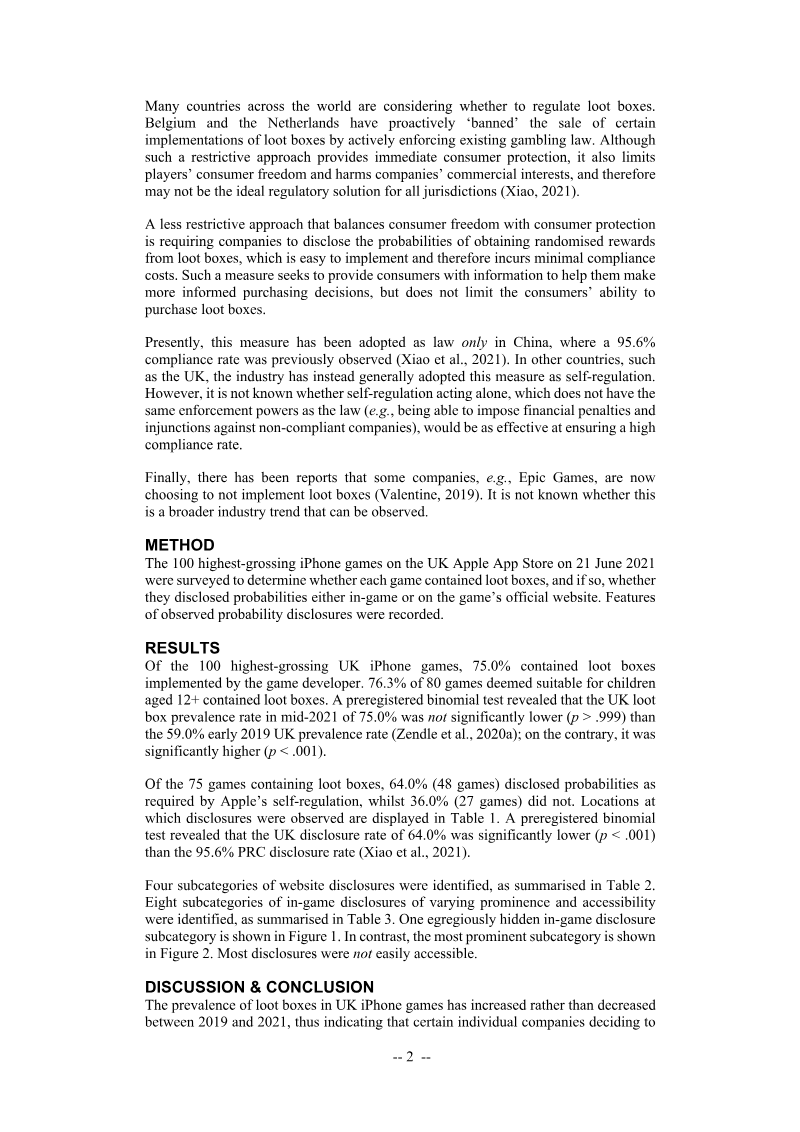
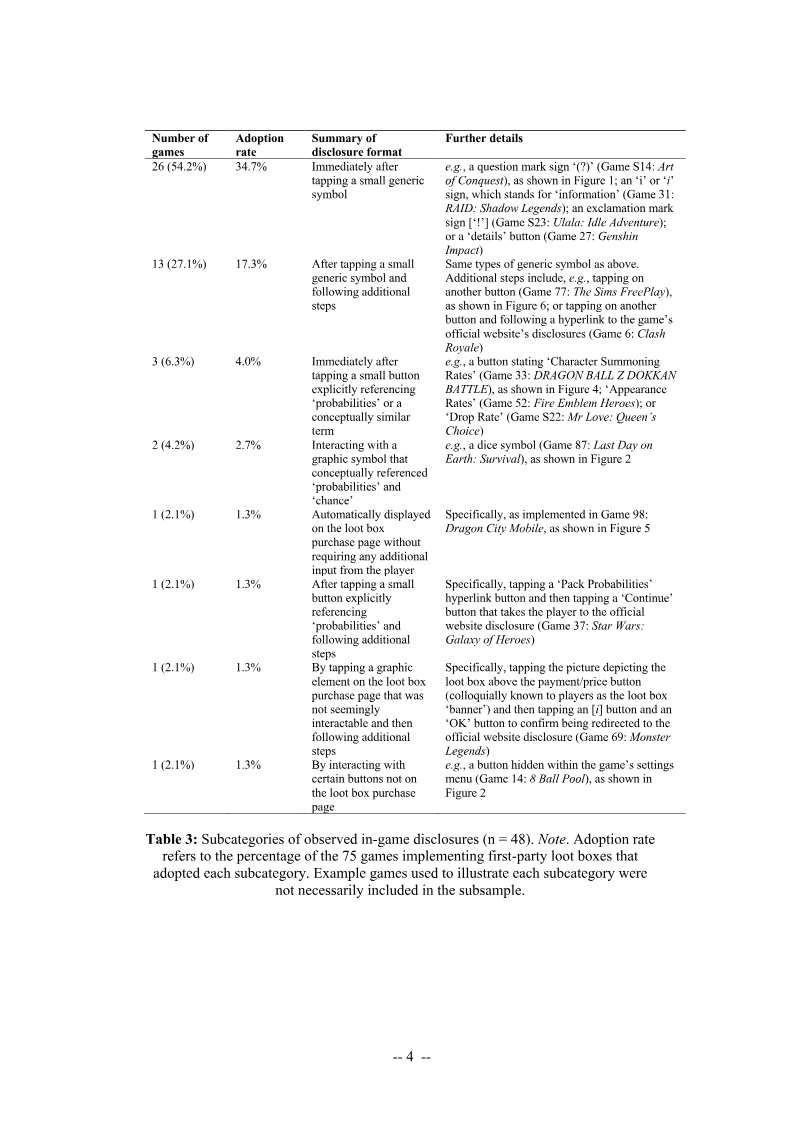
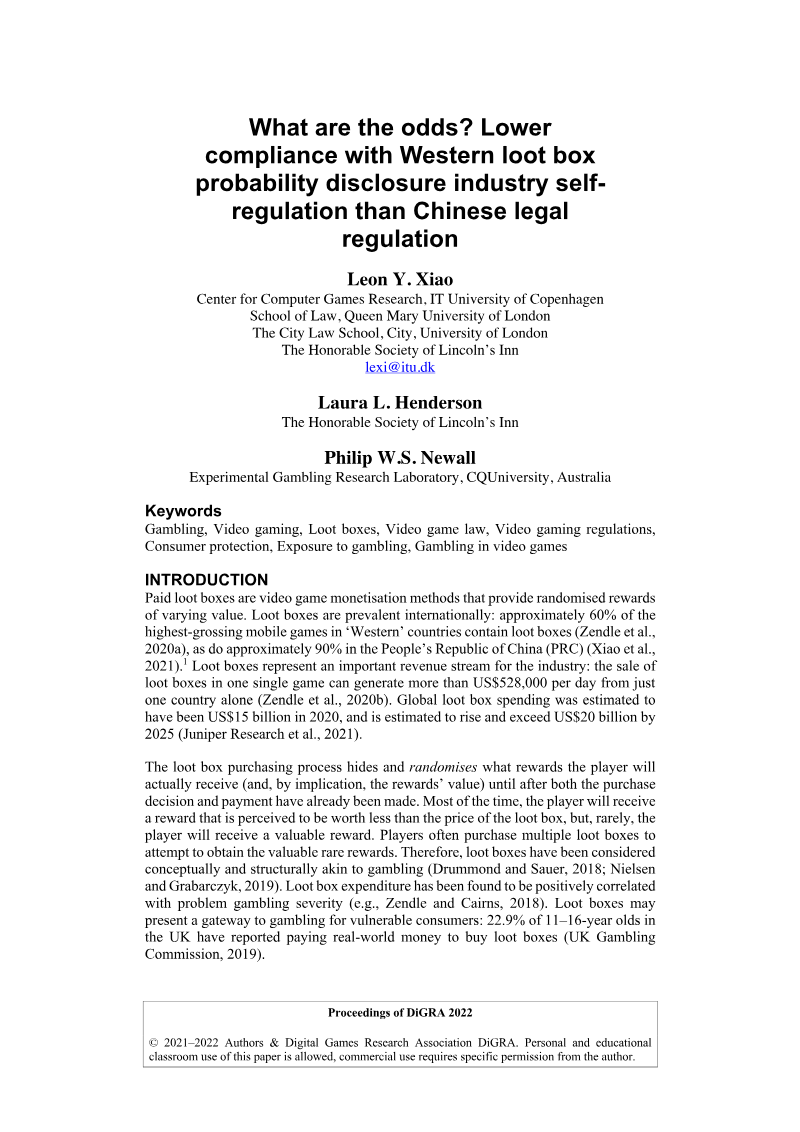
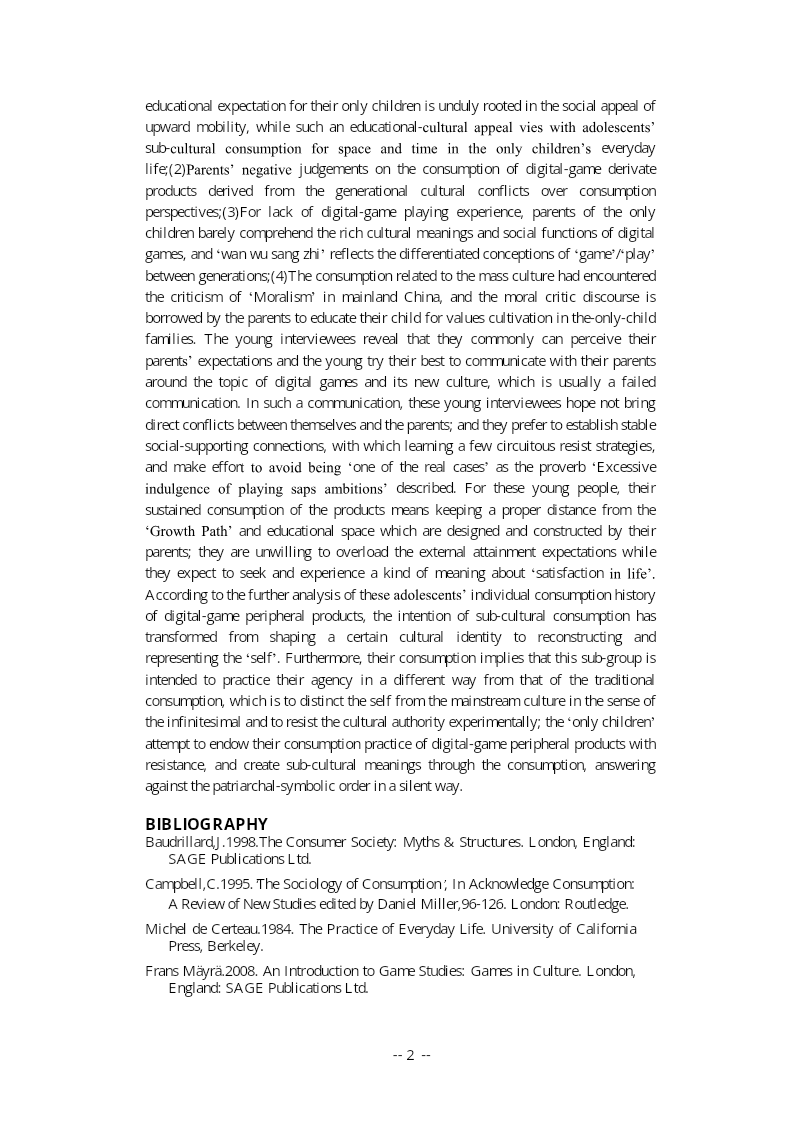
The PRC is the world's largest video game market and the only jurisdiction legally requiring loot box probability disclosures. Existing evidence largely comes from WEIRD samples.
This study examines whether the positive correlation between paid loot box purchasing and problem gambling found in Western countries also appears in the People's Republic of China, and whether Chinese players perceive legally required probability disclosures as changing their spending. The authors note that the PRC is the world's largest video game market, that gambling is largely prohibited there apart from state lotteries and casual family wagering, and that it is the only jurisdiction legally requiring loot box probability disclosures. The work is motivated by concern that existing evidence comes largely from WEIRD samples, limiting its applicability to non-Western contexts and to forthcoming regulation.
The authors surveyed 879 participants online, a sample that was predominantly male (80.7%), student-aged (63.8% students), and young (mean age 23.0). Using preregistered Spearman's rank correlation tests, they found no significant relationship between loot box expenditure and problem gambling among those who had gambled in the previous year. Two weak but statistically significant positive correlations emerged: between loot box spending and gambling engagement over the previous 12 months, and between spending and impulsiveness. The authors suggest that the muted findings may reflect the limited appeal of lotteries, the only legal commercial gambling product in the PRC, to younger gamers, whereas gamified electronic gambling forms more closely resemble loot box mechanics.
Regarding disclosures, 84.6% of loot box purchasers reported seeing probability information, yet only 19.3% of those who saw it said it led them to buy fewer loot boxes and spend less. The authors conclude that disclosure alone appears insufficient as a consumer protection measure. They argue that Western findings should be extrapolated to other jurisdictions with caution, and that stronger interventions, such as spending limits, reduced reward complexity, and broader ethical game design measures, may be necessary.



DiGRA · 2023

DiGRA · 2023



DiGRA · 2023

DiGRA · 2023



DiGRA · 2023



DiGRA · 2023



DiGRA · 2023



DiGRA · 2023



DiGRA · 2023



DiGRA · 2023



DiGRA · 2023

DiGRA · 2023
NEXON Co. · 2023