1 free read left. Create a free account for unlimited reading + AI research.
Create free accountWhitepaper DiGRA
1 free read left. Create a free account for unlimited reading + AI research.
Create free accountWhitepaperDiGRA
Scholars explain why players enjoy games that cause sadness, fear, anger, and frustration. Players adopt a fictional stance or lusory attitude that brackets these feelings from real life.
This philosophical paper by Nele Van de Mosselaer examines why players enjoy videogames that cause negative emotions such as sadness, fear, anger, and frustration. The author notes that scholars typically explain such experiences through two layers of player emotion: those tied to the game's fictional world and those arising from its rule-based challenges. The central argument is that in both cases players adopt a fictional stance or a lusory attitude that brackets their emotions from real life, which resolves paradoxes such as the paradox of tragedy, the paradox of horror, and the paradox of failure. Because these emotions can be dismissed with the reminder that "it's only a game," the author concludes that the developer's responsibility for such misery is relatively trivial.
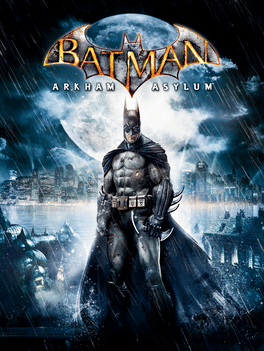
The paper's main contribution is the identification of a third category of player misery that is qualitatively different from the first two. This category arises when developers deliberately create elements that players do not perceive as part of the game, so the bracketing effect fails. The author offers three illustrative cases from single-player games: fictional glitches presented as real, as in the Scarecrow encounter in Batman: Arkham Asylum; hidden rules that make a player's choices seem to have effects they do not, as in inFAMOUS; and mistaken perceptions of both fiction and rules, as in Undertale, where a character remembers actions the player believed had been erased by reloading a save file. In each case, the resulting frustration, fear, or anger is treated as real-life relevant rather than paradoxical or easily subdued.
The analysis is conceptual rather than empirical. It draws on a set of established works in game studies and philosophy of fiction, including Juul, Walton, Carroll, and Yanal, and it relies on a small number of example games rather than systematic data, surveys, or player samples. The arguments are therefore theoretical, and the three categories are proposed as a framework rather than tested across a broad range of titles or player populations.
Each row is a game or company this document names, each column a document, oldest first. A mark means that document names it. Select a row to see those documents.

DiGRA · 2026

DiGRA · 2026



DiGRA · 2026



DiGRA · 2026



DiGRA · 2026



DiGRA · 2026



DiGRA · 2026



DiGRA · 2026

DiGRA · 2026



DiGRA · 2026



DiGRA · 2026

DiGRA · 2026