Updated Mar 17, 2026 by PlayWay
Legal · June 1, 2019
Published by PlayWay
PlayWay S.A. maintains a corporate governance framework characterized by a centralized management structure and significant deviations from the Best Practice for GPW Listed Companies 2016. As of late 2018 and early 2019, the organization opted out of several transparency and technical standards, including the provision of five-year searchable financial data and the live broadcasting or recording of General Meetings. These omissions are attributed to the high costs of implementation and a lack of necessary technical infrastructure. Furthermore, the company operates without formalized internal systems for risk management, compliance, or internal auditing, delegating these responsibilities directly to the Management Board and existing staff. The governance structure is led by a Management Board of one to five members serving five-year terms, where the President holds a tie-breaking vote. While the company maintains a Supervisory Board and an Audit Committee, it does not currently implement a formal diversity policy regarding age, gender, or education for its governing bodies. The Audit Committee, restructured in early 2019 following personnel changes, adheres to strict independence criteria to ensure impartial oversight. This includes a dedicated auditor policy that prohibits contracted firms, such as 4AUDYT sp. z o.o., from providing forbidden non-audit services. Operational control remains concentrated, with the Management Board overseeing both strategic direction and day-to-day risk mitigation. Despite the absence of certain formalized corporate protocols common among listed entities, the company fulfills its statutory obligations through regular committee meetings and adherence to basic voting quorums. The overall approach reflects a lean organizational model that prioritizes direct board oversight over the establishment of specialized, independent internal departments.
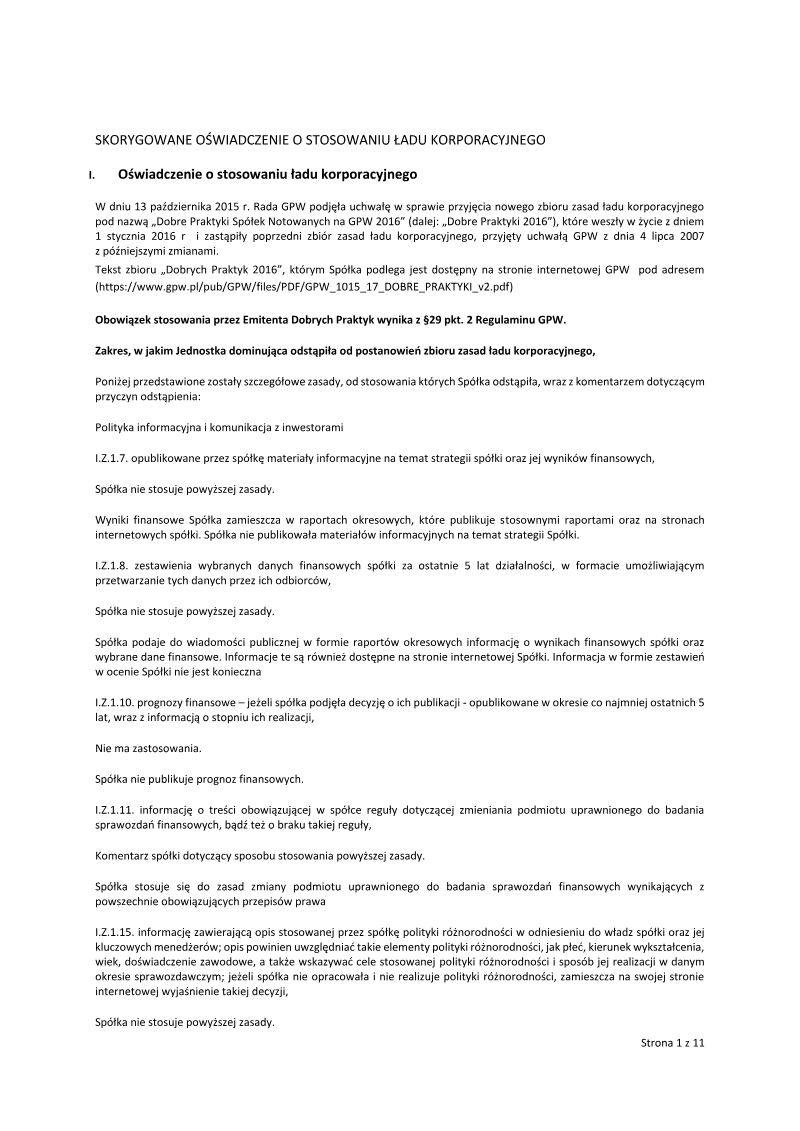
SKORYGOWANE OŚWIADCZENIE O STOSOWANIU ŁADU KORPORACYJNEGO I. Oświadczenie o stosowaniu ładu korporacyjnego W dniu 13 października 2015 r. Rada GPW podjęła uchwałę w sprawie przyjęcia nowego zbioru zasad ładu korporacyjnego pod nazwą „Dobre Praktyki Spółek Notowanych na GPW 2016” (dalej: „Dobre Praktyki 2016”), które weszły w życie z dniem 1 stycznia 2016 r i zastąpiły poprzedni zbiór zasad ładu korporacyjnego, przyjęty uchwałą GPW z dnia 4 lipca 2007 z późniejszymi zmianami. Tekst zbioru „Dobrych Praktyk 2016”, którym Spółka podlega jest dostępny na stronie internetowej GPW pod adresem (https://www.gpw.pl/pub/GPW/files/PDF/GPW_1015_17_DOBRE_PRAKTYKI_v2.pdf) Obowiązek stosowania przez Emitenta Dobrych Praktyk wynika z §29 pkt. 2 Regulaminu GPW. Zakres, w jakim Jednostka dominująca odstąpiła od postanowień zbioru zasad ładu korporacyjnego, Poniżej przedstawione zostały szczegółowe zasady, od stosowania których Spółka odstąpiła, wraz z komentarzem dotyczącym przyczyn odstąpienia: Polityka informacyjna i komunikacja z inwestorami I.Z.1.7. opublikowane przez spółkę materiały informacyjne na temat strategii spółki oraz jej wyników finansowych, Spółka nie stosuje powyższej zasady. Wyniki finansowe Spółka zamieszcza w raportach okresowych, które publikuje stosownymi raportami oraz na stronach internetowych spółki. Spółka nie publikowała materiałów informacyjnych na temat strategii Spółki. I.Z.1.8. zestawienia wybranych danych finansowych spółki za ostatnie 5 lat działalności, w formacie umożliwiającym przetwarzanie tych danych przez ich odbiorców, Spółka nie stosuje powyższej zasady.
internetowych spółki. Spółka nie publikowała materiałów informacyjnych na temat strategii Spółki. I.Z.1.8. zestawienia wybranych danych finansowych spółki za ostatnie 5 lat działalności, w formacie umożliwiającym przetwarzanie tych danych przez ich odbiorców, Spółka nie stosuje powyższej zasady. Spółka podaje do wiadomości publicznej w formie raportów okresowych informację o wynikach finansowych spółki oraz wybrane dane finansowe. Informacje te są również dostępne na stronie internetowej Spółki. Informacja w formie zestawień w ocenie Spółki nie jest konieczna I.Z.1.10. prognozy finansowe – jeżeli spółka podjęła decyzję o ich publikacji - opublikowane w okresie co najmniej ostatnich 5 lat, wraz z informacją o stopniu ich realizacji, Nie ma zastosowania. Spółka nie publikuje prognoz finansowych. I.Z.1.11. informację o treści obowiązującej w spółce reguły dotyczącej zmieniania podmiotu uprawnionego do badania sprawozdań finansowych, bądź też o braku takiej reguły, Komentarz spółki dotyczący sposobu stosowania powyższej zasady. Spółka stosuje się do zasad zmiany podmiotu uprawnionego do badania sprawozdań finansowych wynikających z powszechnie obowiązujących przepisów prawa
otu uprawnionego do badania sprawozdań finansowych, bądź też o braku takiej reguły, Komentarz spółki dotyczący sposobu stosowania powyższej zasady. Spółka stosuje się do zasad zmiany podmiotu uprawnionego do badania sprawozdań finansowych wynikających z powszechnie obowiązujących przepisów prawa I.Z.1.15. informację zawierającą opis stosowanej przez spółkę polityki różnorodności w odniesieniu do władz spółki oraz jej kluczowych menedżerów; opis powinien uwzględniać takie elementy polityki różnorodności, jak płeć, kierunek wykształcenia, wiek, doświadczenie zawodowe, a także wskazywać cele stosowanej polityki różnorodności i sposób jej realizacji w danym okresie sprawozdawczym; jeżeli spółka nie opracowała i nie realizuje polityki różnorodności, zamieszcza na swojej stronie internetowej wyjaśnienie takiej decyzji, Spółka nie stosuje powyższej zasady. Strona 1 z 11
Walne Zgromadzenie i Rada Nadzorcza podejmuje decyzje personalne w odniesieniu do wyboru członków organów Spółki oraz kluczowych pracowników. Informacje dotyczące członków organów Spółki są dostępne na stronie internetowej Spółki. I.Z.1.16. informację na temat planowanej transmisji obrad walnego zgromadzenia - nie później niż w terminie 7 dni przed datą walnego zgromadzenia, Spółka nie stosuje powyższej zasady. Koszty zapewnienia transmisji są wysokie. Statut Spółki nie przewiduje transmisji obrad. I.Z.1.20. zapis przebiegu obrad walnego zgromadzenia, w formie audio lub wideo, Spółka nie stosuje powyższej zasady. Statut Spółki nie przewiduje konieczności sporządzania zapisu z obrad w formie audio lub wideo. Koszty zapewnienia zapisu audio lub wideo są wysokie. I.Z.2. Spółka, której akcje zakwalifikowane są do indeksów giełdowych WIG20 lub mWIG40, zapewnia dostępność swojej strony internetowej również w języku angielskim, przynajmniej w zakresie wskazanym w zasadzie I.Z.1. Niniejszą zasadę powinny stosować również spółki spoza powyższych indeksów, jeżeli przemawia za tym struktura ich akcjonariatu lub charakter i zakres prowadzonej działalności. Nie ma zastosowania. Spółka nie uczestniczy w indeksach giełdowych WIG20 lub mWIG40. Obecna struktura akcjonariatu nie przemawia za stosowaniem tej zasady. Zarząd i Rada Nadzorcza II.Z.10.3. ocenę sposobu wypełniania przez spółkę obowiązków informacyjnych dotyczących stosowania zasad ładu korporacyjnego, określonych w Regulaminie Giełdy oraz przepisach dotyczących informacji bieżących i okresowych przekazywanych przez emitentów papierów wartościowych; Komentarz spółki dotyczący sposobu stosowania powyższej zasady.
spółkę obowiązków informacyjnych dotyczących stosowania zasad ładu korporacyjnego, określonych w Regulaminie Giełdy oraz przepisach dotyczących informacji bieżących i okresowych przekazywanych przez emitentów papierów wartościowych; Komentarz spółki dotyczący sposobu stosowania powyższej zasady. Ocena po raz pierwszy zostanie przedstawiona Zwyczajnemu Walnemu Zgromadzeniu za 2016 rok. II.Z.10.4. ocenę racjonalności prowadzonej przez spółkę polityki, o której mowa w rekomendacji I.R.2, albo informację o braku takiej polityki. Komentarz spółki dotyczący sposobu stosowania powyższej zasady. Informacja o braku polityki zostanie po raz pierwszy przedstawiona Zwyczajnemu Walnemu Zgromadzeniu za 2016 rok. Systemy i funkcje wewnętrzne III.Z.1. Za wdrożenie i utrzymanie skutecznych systemów kontroli wewnętrznej, zarządzania ryzykiem, compliance oraz funkcji audytu wewnętrznego odpowiada zarząd spółki. Spółka nie stosuje powyższej zasady. W Spółce nie zostały wdrożone sformalizowane systemy dotyczące kontroli wewnętrznej, zarządzania ryzykiem, compliance i audytu wewnętrznego. Zarząd Spółki dokonuje bieżącej oceny ryzyka dotyczącego funkcjonowania Spółki i zarządza tym ryzykiem. Zadania z zakresu kontroli wewnętrznej, compliance, jako badania działania w zgodności z prawem, oraz audytu wewnętrznego sprawują organy spółki w zakresie swoich statutowych kompetencji oraz pracownicy Spółki bezpośrednio podlegający pod Zarząd, odpowiedzialni za funkcjonowanie określonych działów.
dania z zakresu kontroli wewnętrznej, compliance, jako badania działania w zgodności z prawem, oraz audytu wewnętrznego sprawują organy spółki w zakresie swoich statutowych kompetencji oraz pracownicy Spółki bezpośrednio podlegający pod Zarząd, odpowiedzialni za funkcjonowanie określonych działów. III.Z.2. Z zastrzeżeniem zasady III.Z.3, osoby odpowiedzialne za zarządzanie ryzykiem, audyt wewnętrzny i compliance podlegają bezpośrednio prezesowi lub innemu członkowi zarządu, a także mają zapewnioną możliwość raportowania bezpośrednio do rady nadzorczej lub komitetu audytu. Strona 2 z 11
PCF Group S.A., operating as People Can Fly, maintains a high level of transparency and shareholder engagement while navigating the transition toward full compliance with the Best Practice for GPW Listed Companies 2021. As of early 2023, the AAA game developer adheres to the majority of governance standards regarding board independence, internal systems, and shareholder relations. The company facilitates electronic participation in general meetings and provides bilingual broadcasts to ensure accessibility for its investor base. While it recently established an internal audit function and committed to a five-year external audit cycle, certain gaps remain in formalized risk and compliance departments, which the company intends to address in future reporting cycles. The primary areas of non-compliance center on formalized ESG strategies and diversity policies. The company currently excludes environmental and social issues from its formal business strategy, arguing that its operations as a software developer have a relatively low environmental impact. Furthermore, the company has opted not to implement a structured diversity policy for its Management or Supervisory Boards, preferring to maintain flexibility in recruitment by prioritizing specialized professional qualifications over specific gender or age metrics. Despite the absence of a formal policy, the company emphasizes a commitment to gender pay equality and merit-based advancement. Regarding executive compensation and related-party transactions, the company follows established standards for transparency and oversight. Remuneration for the Supervisory Board remains independent of short-term financial results, and procedures are in place for external valuations of significant transactions. Although the company’s statutes do not currently require General Meeting approval for all related-party transactions, it maintains rigorous internal oversight through the Supervisory Board. These governance practices reflect a balance between meeting the regulatory expectations of the Warsaw Stock Exchange and maintaining the operational agility required in the competitive global gaming industry.
11 bit studios S.A. demonstrates a high level of alignment with the corporate governance standards established for the Polish capital market, though it maintains specific, intentional deviations based on cost-benefit analyses and strategic priorities. The company’s governance framework emphasizes a clear division of responsibilities between the Management and Supervisory Boards, prioritizing transparency in investor relations and strict adherence to internal audit and risk management protocols. While the company supports diversity and independence within its leadership structures, it currently opts out of several technical and linguistic recommendations, such as providing video transmissions of general meetings or maintaining a comprehensive English-language website, citing high implementation costs and a lack of significant shareholder demand. Shareholder relations are characterized by a focus on long-term growth over immediate capital distribution, as evidenced by a five-year suspension of dividend payments to fund strategic investments. Although the company facilitates shareholder participation through traditional means, it rejects the implementation of real-time electronic voting or bilateral communication during general meetings. Furthermore, while conflict-of-interest procedures and oversight of related-party transactions remain robust, the company does not fully comply with formal remuneration reporting standards. It has declined to establish a dedicated remuneration committee or a comprehensive remuneration policy report, choosing instead to provide only partial disclosures within its periodic activity reports. The scope of these governance practices reflects the company’s status as a listed entity on the Warsaw Stock Exchange during the 2016 fiscal period. The overall strategy balances the necessity of regulatory compliance with the practicalities of a growth-oriented business model. By maintaining rigorous internal controls and supervisory oversight while bypassing certain non-mandatory technical recommendations, the company aims to protect corporate interests and ensure operational efficiency without incurring what it deems unnecessary administrative expenses.
PCF Group S.A. maintains a framework of corporate governance that aligns with the majority of the Best Practice of GPW Listed Companies 2016, though it maintains several strategic deviations rooted in its organizational structure and recent transition to public markets. As of late 2020, the company’s governance model is characterized by a single-member Management Board, which precludes a formal division of responsibilities and centralizes risk management, compliance, and internal audit functions. Rather than establishing dedicated internal units for these oversight roles, the company relies on the direct supervision of the Management Board and the Audit Committee to ensure operational integrity. A significant area of non-compliance involves the absence of a formalized diversity policy. The company prioritizes merit-based recruitment and professional qualifications over specific gender or age targets for its governing bodies. Furthermore, technical and historical limitations impact transparency; the company does not provide real-time public broadcasts of General Meetings or a five-year historical financial data set in a processable format, citing its recent adoption of International Financial Reporting Standards as the primary cause for the latter. Regarding shareholder rights and executive compensation, the company adheres to statutory guidelines but bypasses certain optional recommendations. Notable exceptions include a share nominal value of 0.02 PLN, which is significantly lower than the recommended 0.50 PLN, and the lack of a dedicated compensation committee. While a formal remuneration policy is in place, stock-based incentives currently lack a minimum two-year vesting period. Despite these omissions, the company maintains standard protocols for managing conflicts of interest and ensures that significant related-party transactions follow established legal requirements, even in the absence of specific internal bylaws requiring additional Supervisory Board approval.
PCF Group S.A. demonstrates a governance strategy that balances standard public company transparency with the specific operational realities of a high-end AAA game development studio. While the firm adheres to the majority of the 2021 Best Practices for GPW Listed Companies, it intentionally diverges from several key recommendations regarding environmental, social, and governance (ESG) integration and board composition. Specifically, the company rejects formalized gender diversity quotas, such as the recommended thirty percent threshold for management and supervisory boards, opting instead for a merit-based recruitment model. Furthermore, it does not currently publish detailed ESG performance metrics, citing the relatively low environmental impact inherent to the digital entertainment industry. Operational governance reveals a reliance on lean internal structures, which results in certain compliance gaps. The company lacks dedicated departments for internal audit and risk management, preventing the Supervisory Board from providing formalized assessments of internal controls. While the firm maintains robust investor communication and independent oversight, it does not yet offer electronic participation in general meetings or provide preliminary financial estimates. These omissions are attributed to perceived technical and legal risks, though there is a stated intent to evaluate electronic meeting capabilities in the future. Recent adjustments indicate a move toward closer alignment with regulatory expectations. The company committed to implementing live broadcasts of general meetings and has updated its internal regulations to require supervisory review of all management board resolutions. Future incentive programs are expected to incorporate both financial and non-financial objectives, ensuring that executive compensation remains tied to long-term sustainability. Overall, the governance profile reflects a transition period for the developer as it matures within the public market while maintaining its focus on technical excellence and meritocracy over rigid administrative frameworks.