LegalPCF Group
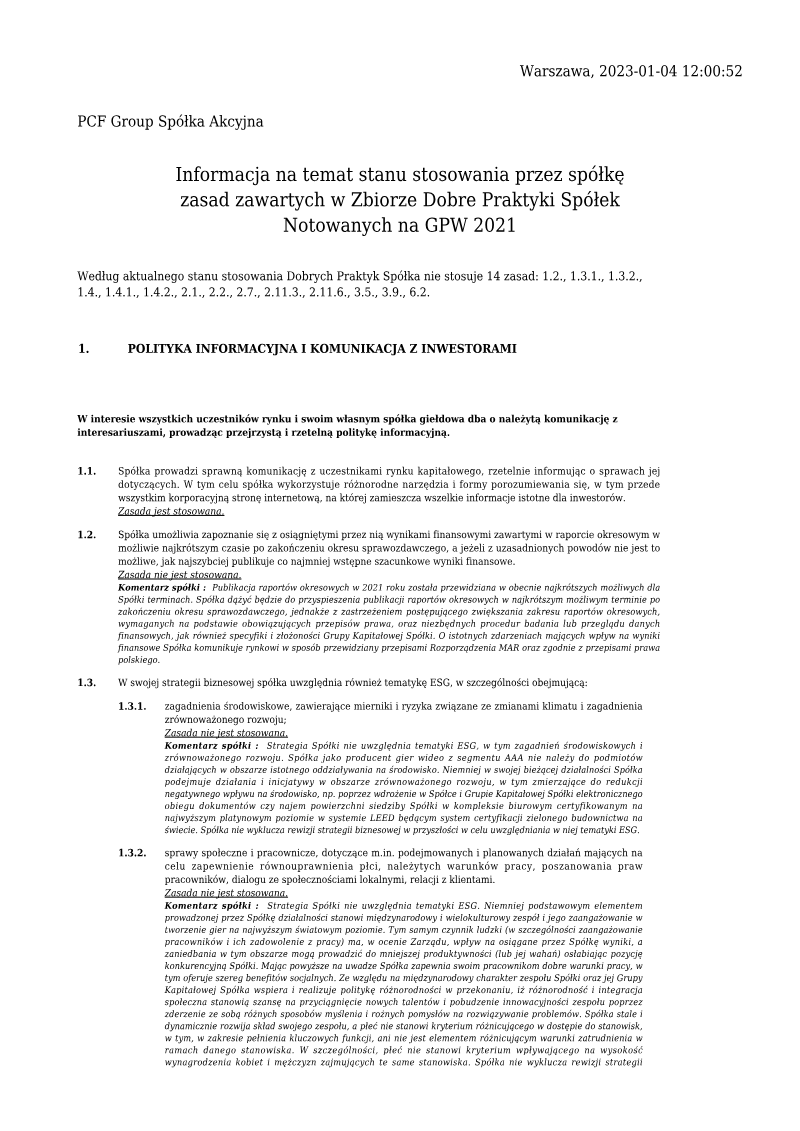
Informacja na temat stanu stosowania przez spółkę zasad zawartych w Zbiorze Dobre Praktyki Spółek Notowanych na GPW 2021
4 Jan 20239 pages~38 min full read
PCF Group S.A., operating as People Can Fly, maintains a high level of transparency and shareholder engagement while navigating the transition toward full compliance with the Best Practice for GPW Listed Companies 2021. As of early 2023, the AAA game developer adheres to the majority of governance standards regarding board independence, internal systems, and shareholder relations. The company facilitates electronic participation in general meetings and provides bilingual broadcasts to ensure accessibility for its investor base. While it recently established an internal audit function and committed to a five-year external audit cycle, certain gaps remain in formalized risk and compliance departments, which the company intends to address in future reporting cycles.
The primary areas of non-compliance center on formalized ESG strategies and diversity policies. The company currently excludes environmental and social issues from its formal business strategy, arguing that its operations as a software developer have a relatively low environmental impact. Furthermore, the company has opted not to implement a structured diversity policy for its Management or Supervisory Boards, preferring to maintain flexibility in recruitment by prioritizing specialized professional qualifications over specific gender or age metrics. Despite the absence of a formal policy, the company emphasizes a commitment to gender pay equality and merit-based advancement.
Regarding executive compensation and related-party transactions, the company follows established standards for transparency and oversight. Remuneration for the Supervisory Board remains independent of short-term financial results, and procedures are in place for external valuations of significant transactions. Although the company’s statutes do not currently require General Meeting approval for all related-party transactions, it maintains rigorous internal oversight through the Supervisory Board. These governance practices reflect a balance between meeting the regulatory expectations of the Warsaw Stock Exchange and maintaining the operational agility required in the competitive global gaming industry.
PCF Group · 2026
PCF Group · 2026
PCF Group · 2026
PCF Group · 2026
PCF Group · 2025
PCF Group · 2025
PCF Group · 2025
PCF Group · 2025
PCF Group · 2025
PCF Group · 2025
PCF Group · 2025
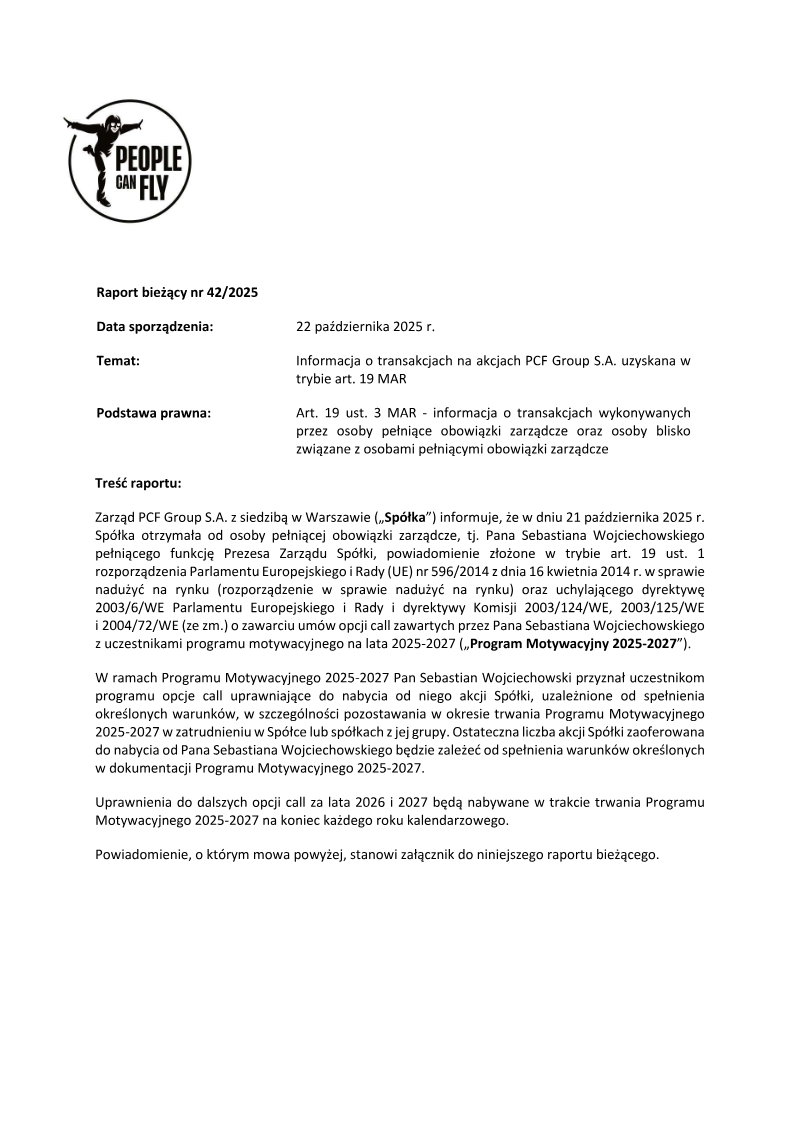
PCF Group · 2025
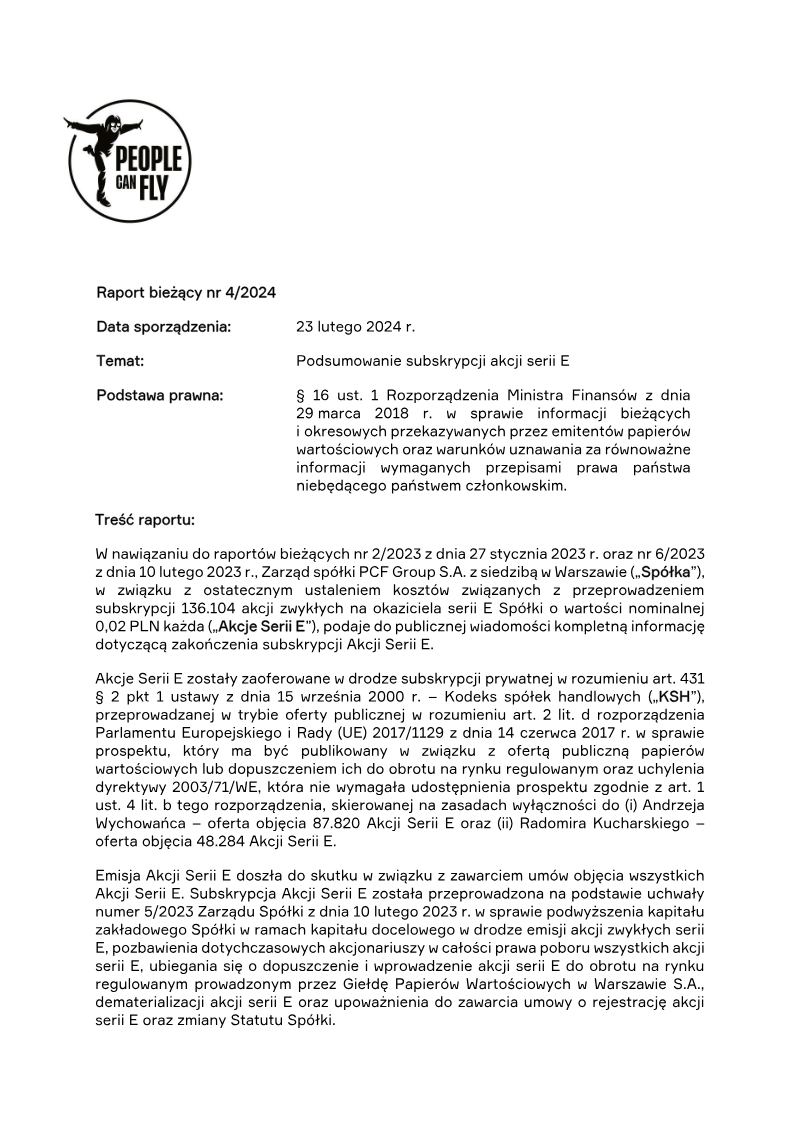
PCF Group · 2024
PCF Group · 2023
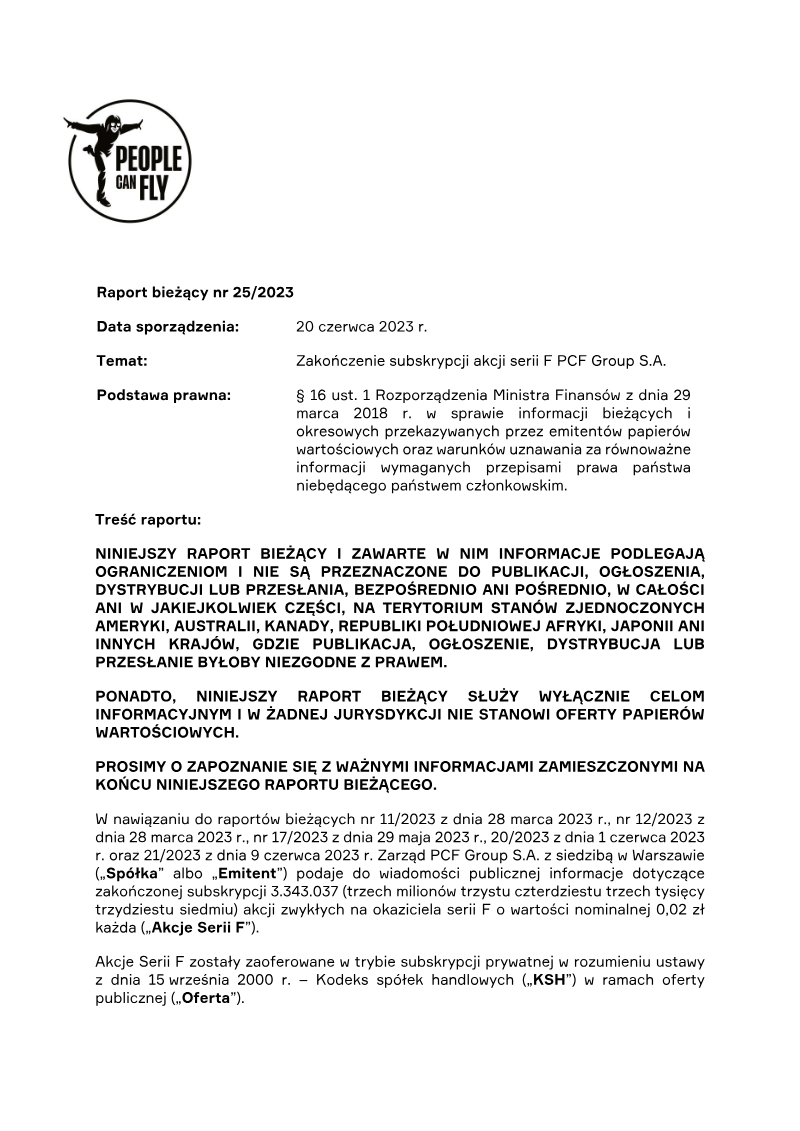
PCF Group · 2023
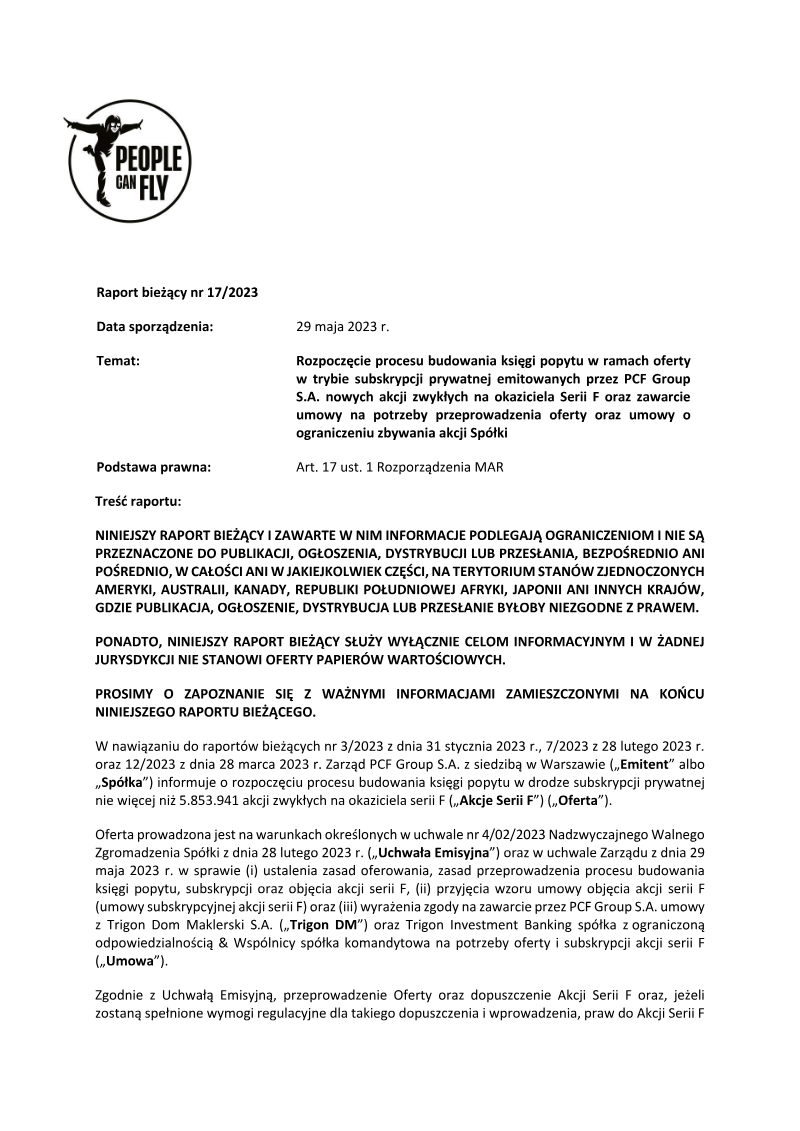
PCF Group · 2023
PCF Group · 2022
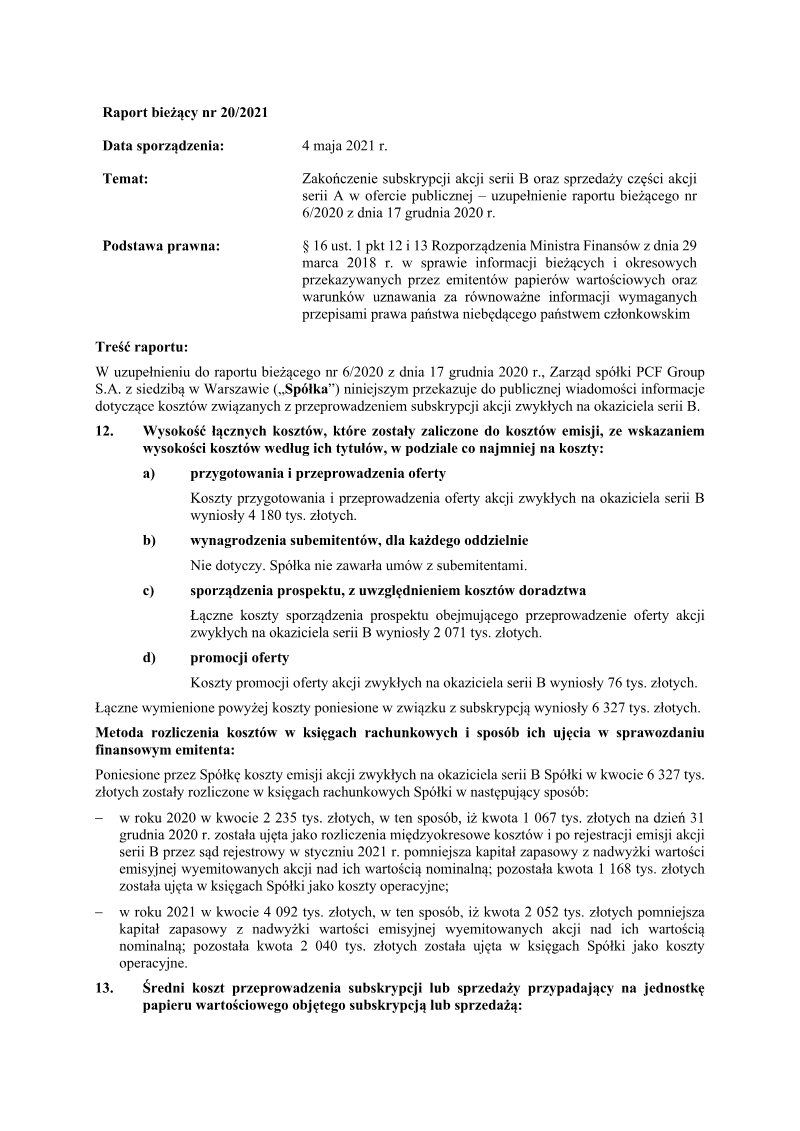
PCF Group · 2021
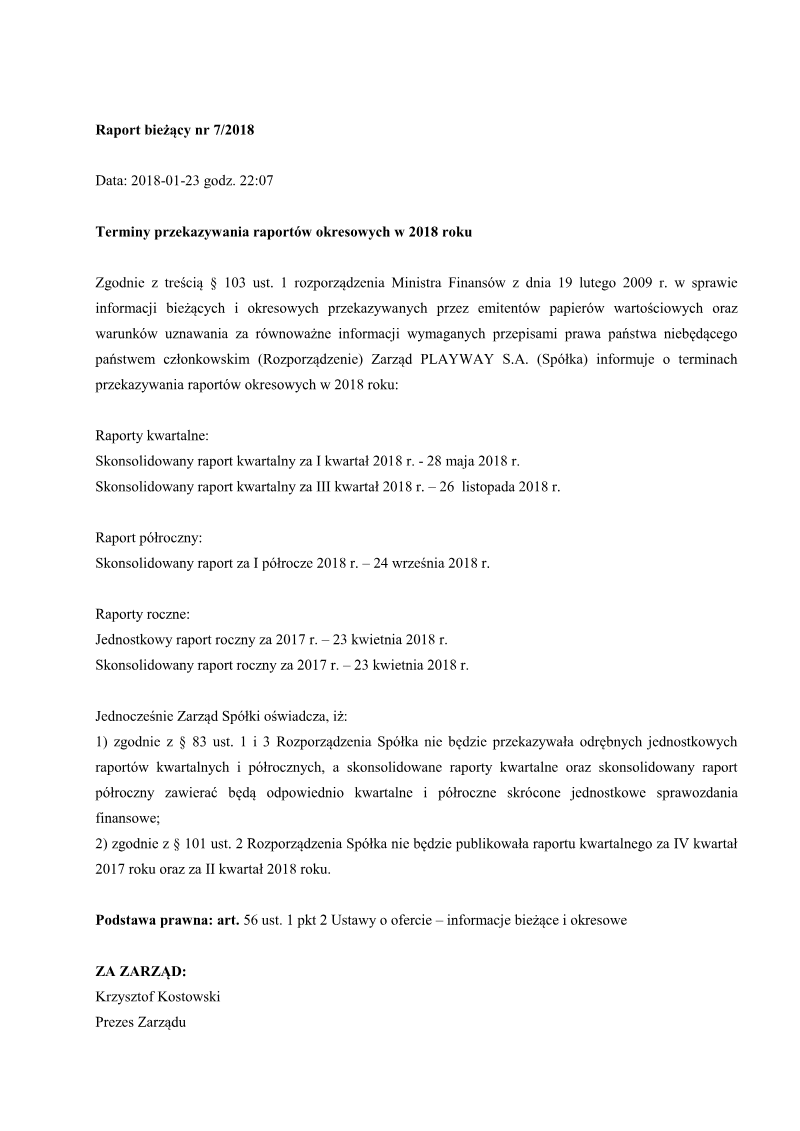
PlayWay · 2018
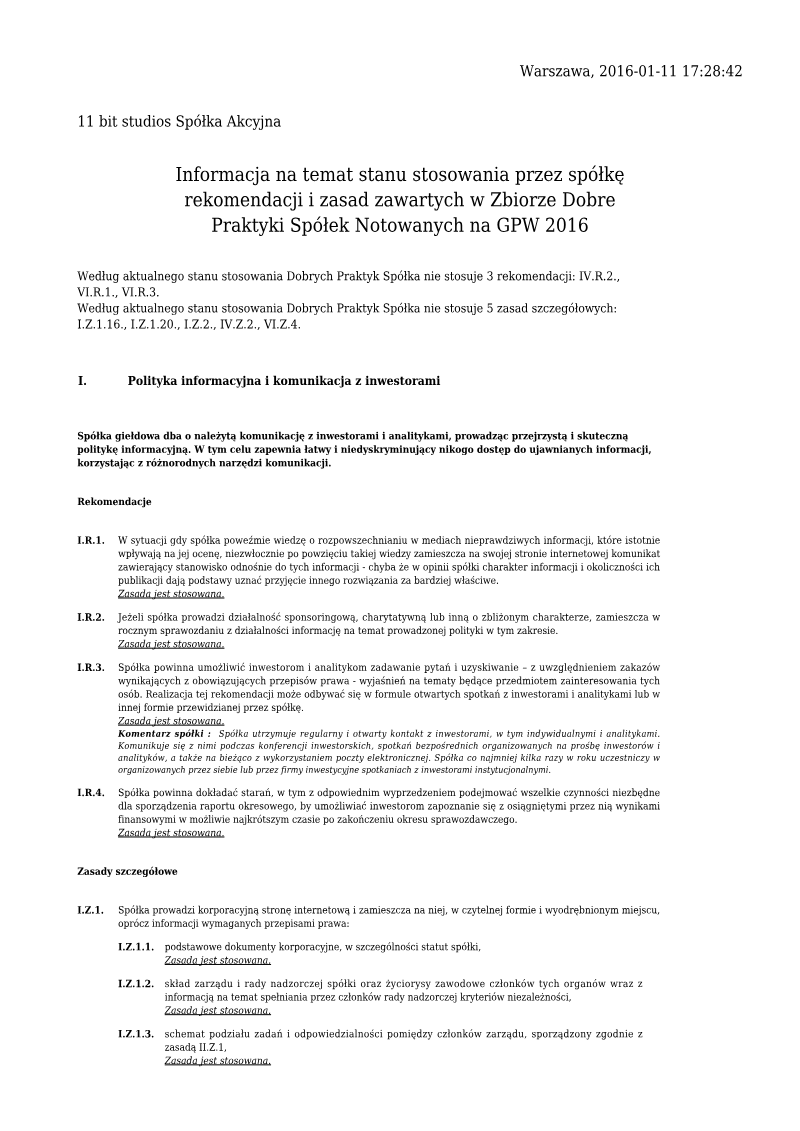
11 bit studios · 2016
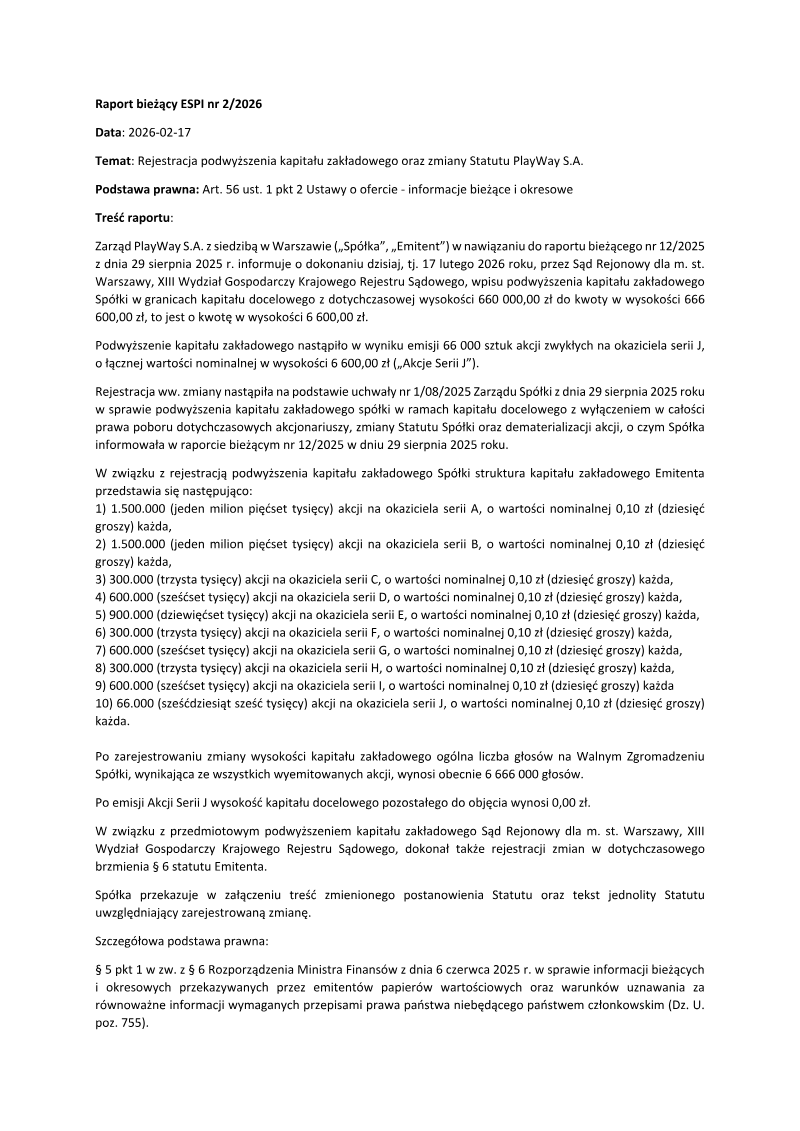
PlayWay · 2026
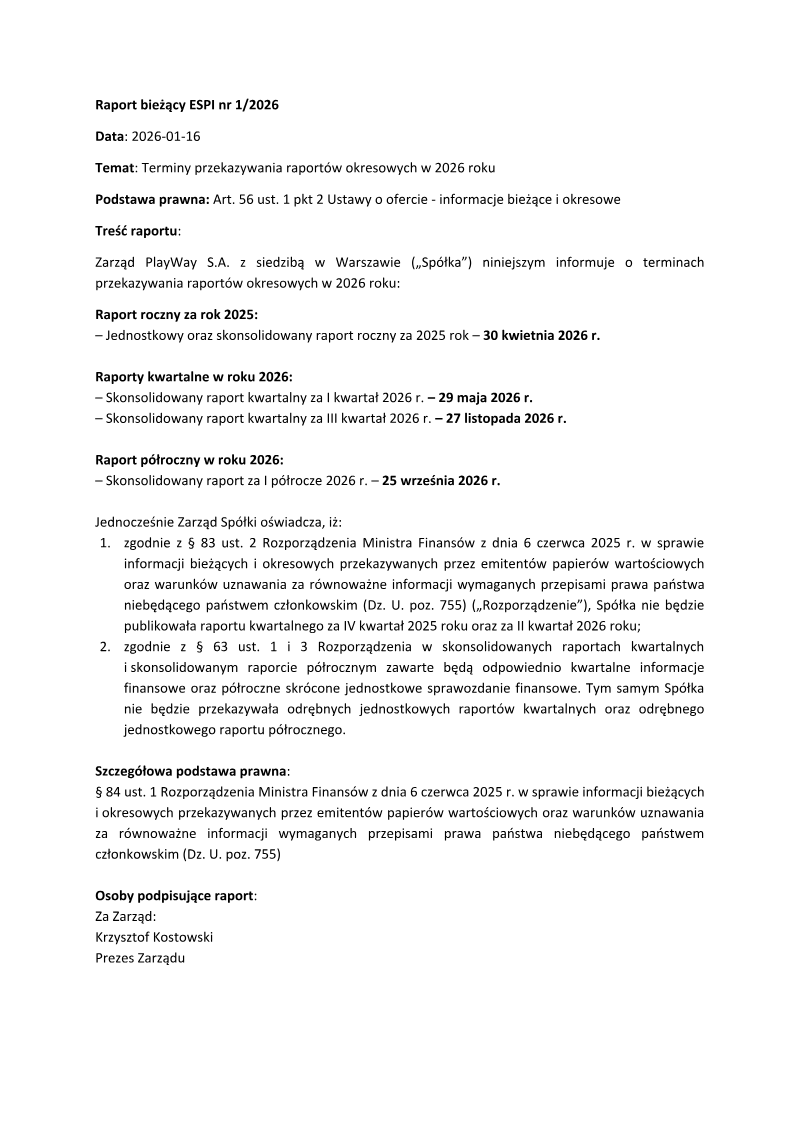
PlayWay · 2026
11 bit studios · 2025
11 bit studios · 2025