Legal11 bit studios
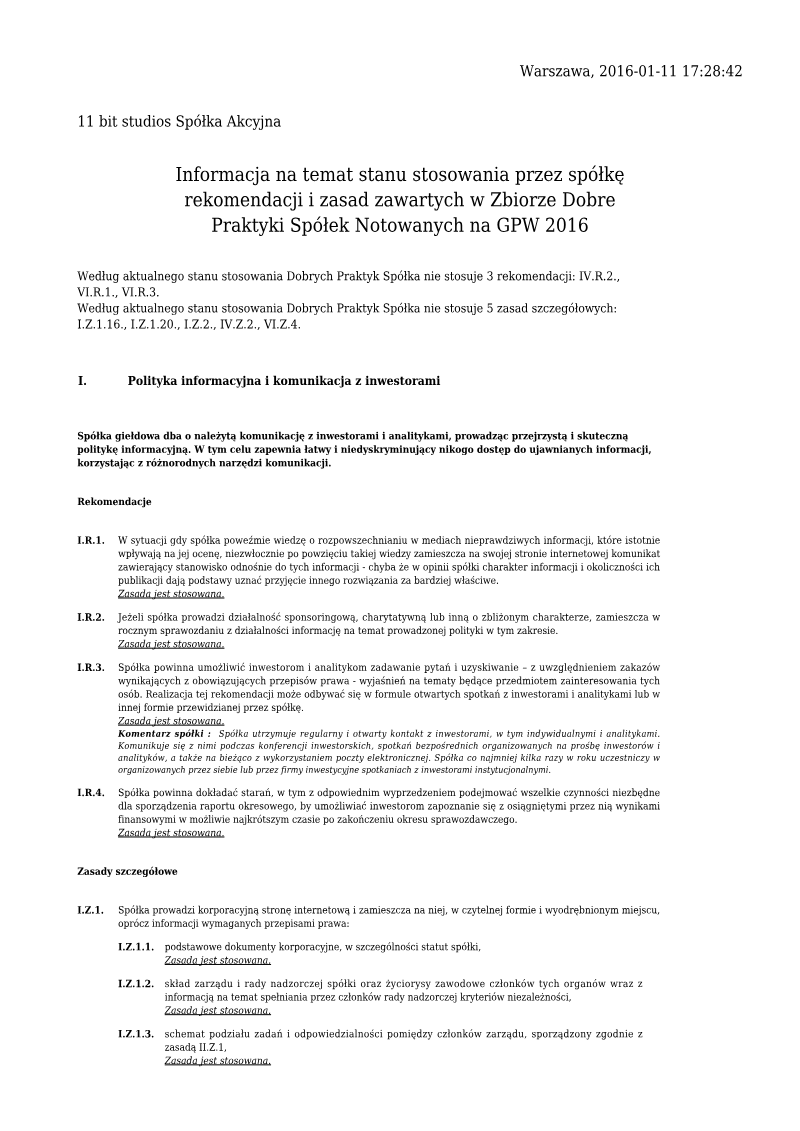
11 bit studios S.A. Corporate Governance Compliance Statement (WSE Best Practices 2016)
11 Jan 20169 pages~28 min full read
11 bit studios S.A. demonstrates a high level of alignment with the corporate governance standards established for the Polish capital market, though it maintains specific, intentional deviations based on cost-benefit analyses and strategic priorities. The company’s governance framework emphasizes a clear division of responsibilities between the Management and Supervisory Boards, prioritizing transparency in investor relations and strict adherence to internal audit and risk management protocols. While the company supports diversity and independence within its leadership structures, it currently opts out of several technical and linguistic recommendations, such as providing video transmissions of general meetings or maintaining a comprehensive English-language website, citing high implementation costs and a lack of significant shareholder demand.
Shareholder relations are characterized by a focus on long-term growth over immediate capital distribution, as evidenced by a five-year suspension of dividend payments to fund strategic investments. Although the company facilitates shareholder participation through traditional means, it rejects the implementation of real-time electronic voting or bilateral communication during general meetings. Furthermore, while conflict-of-interest procedures and oversight of related-party transactions remain robust, the company does not fully comply with formal remuneration reporting standards. It has declined to establish a dedicated remuneration committee or a comprehensive remuneration policy report, choosing instead to provide only partial disclosures within its periodic activity reports.
The scope of these governance practices reflects the company’s status as a listed entity on the Warsaw Stock Exchange during the 2016 fiscal period. The overall strategy balances the necessity of regulatory compliance with the practicalities of a growth-oriented business model. By maintaining rigorous internal controls and supervisory oversight while bypassing certain non-mandatory technical recommendations, the company aims to protect corporate interests and ensure operational efficiency without incurring what it deems unnecessary administrative expenses.
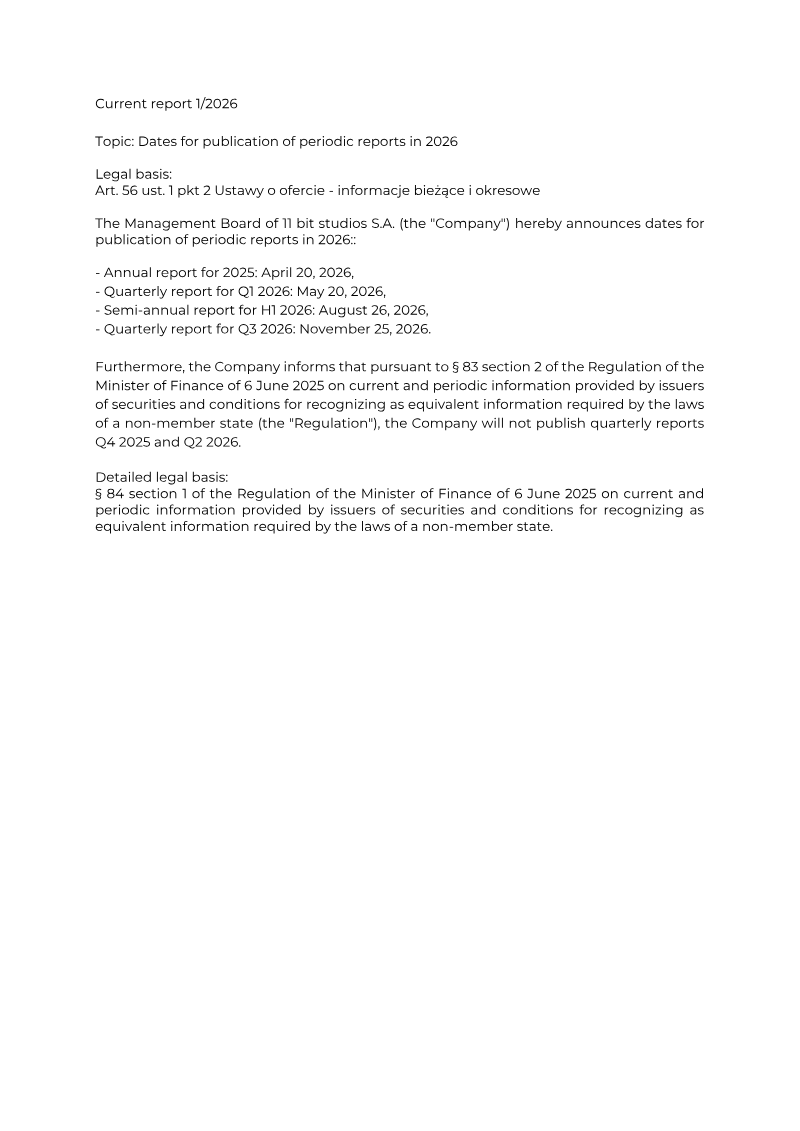
11 bit studios · 2026
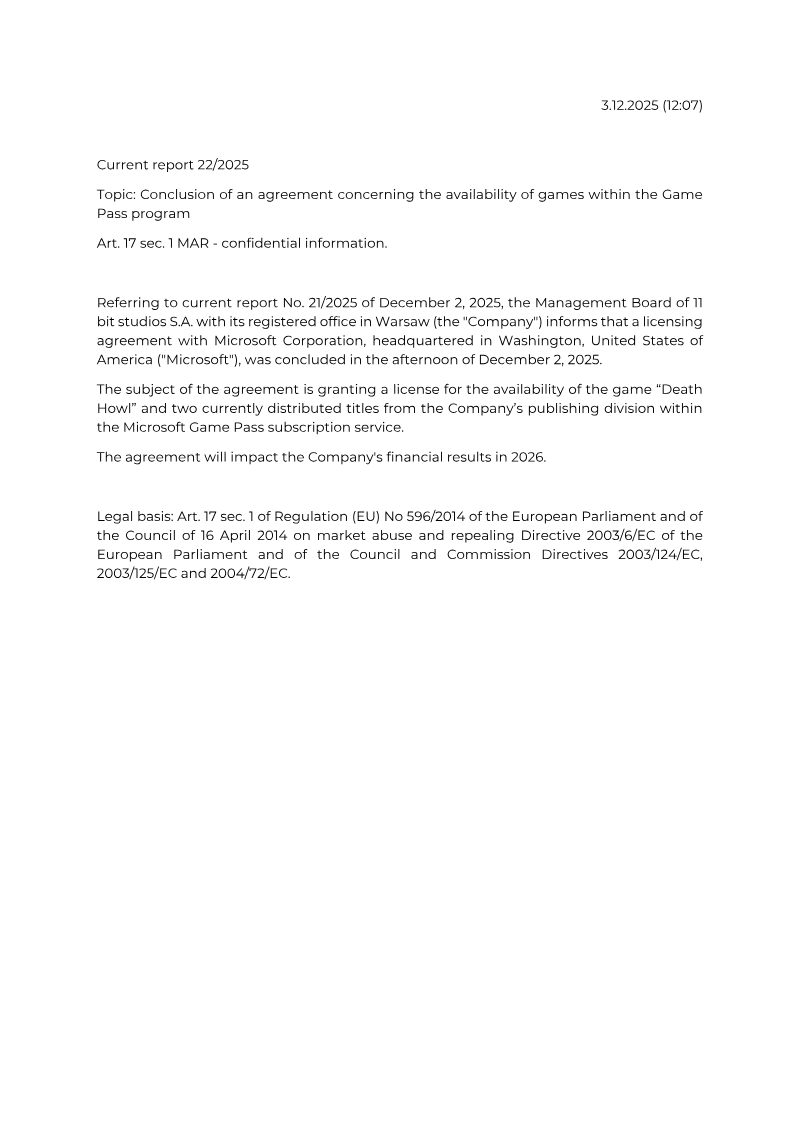
11 bit studios · 2025
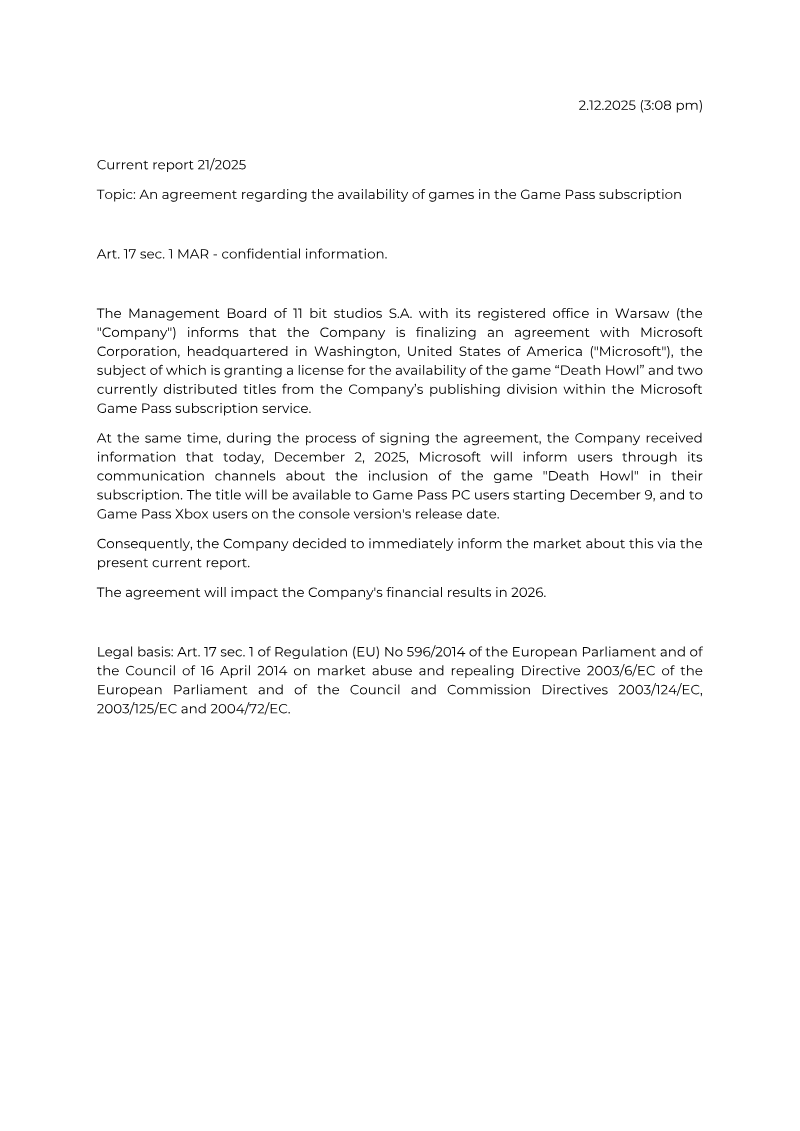
11 bit studios · 2025
11 bit studios · 2025
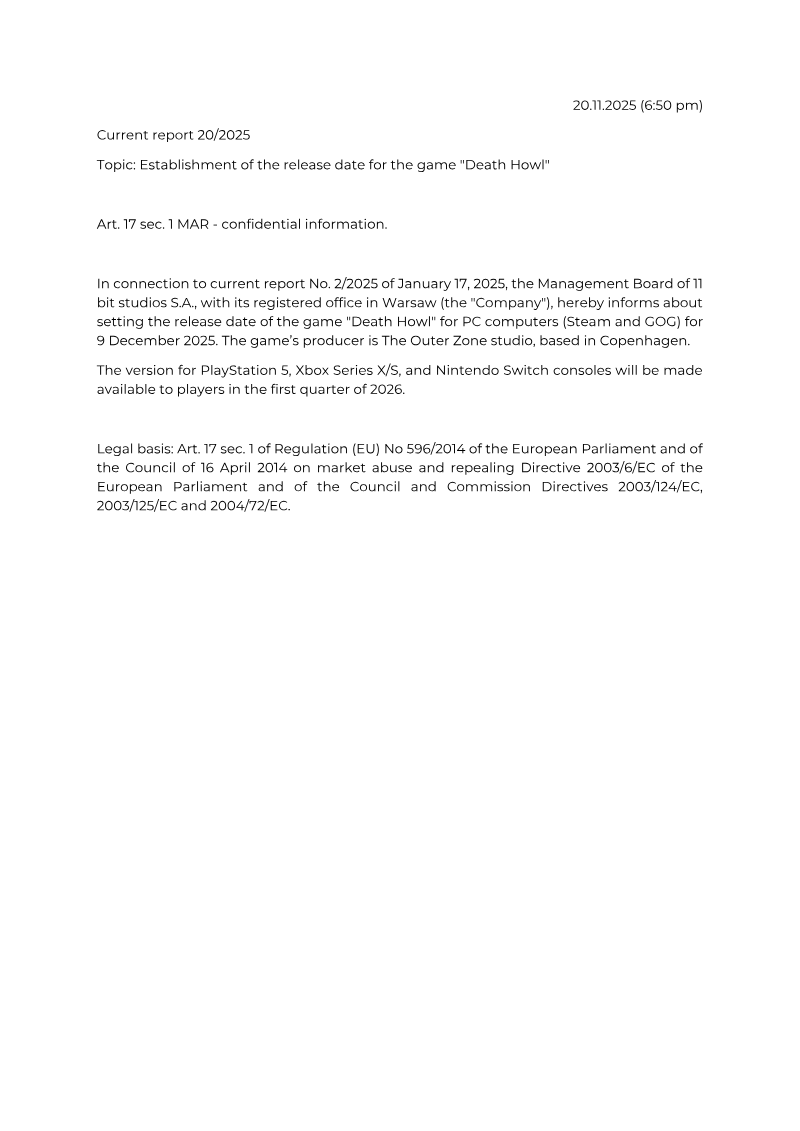
11 bit studios · 2025
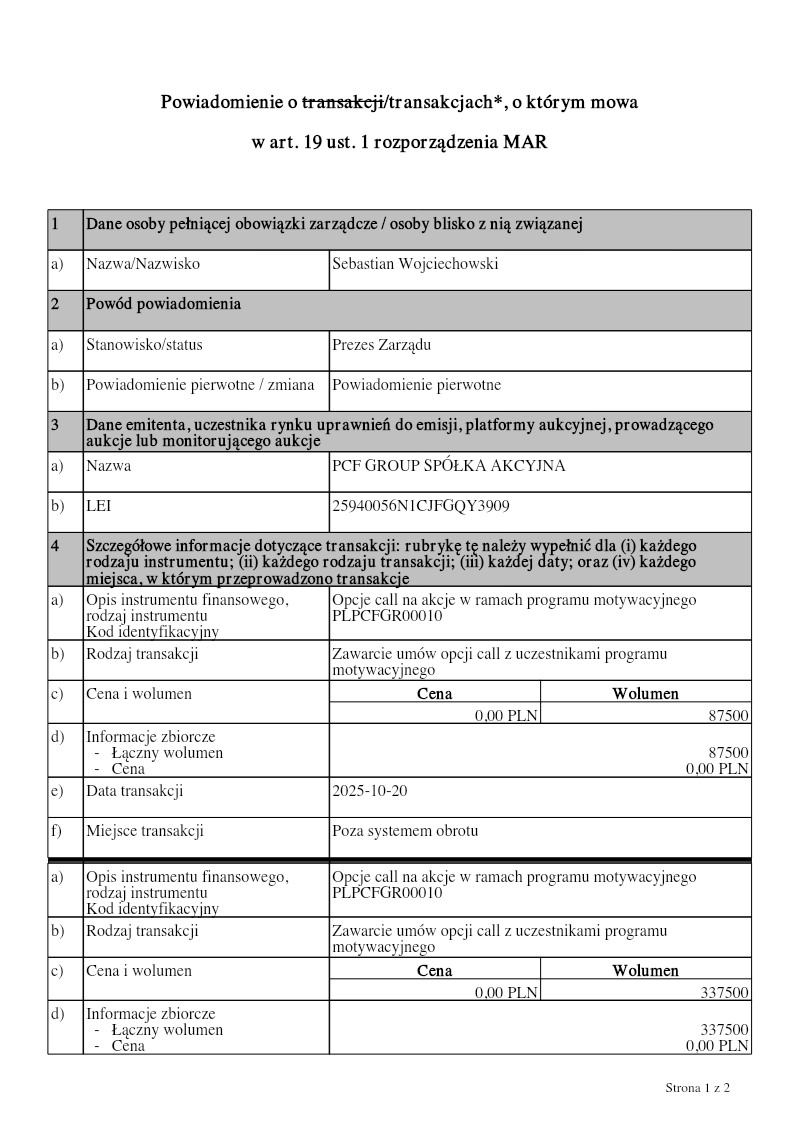
PCF Group · 2025
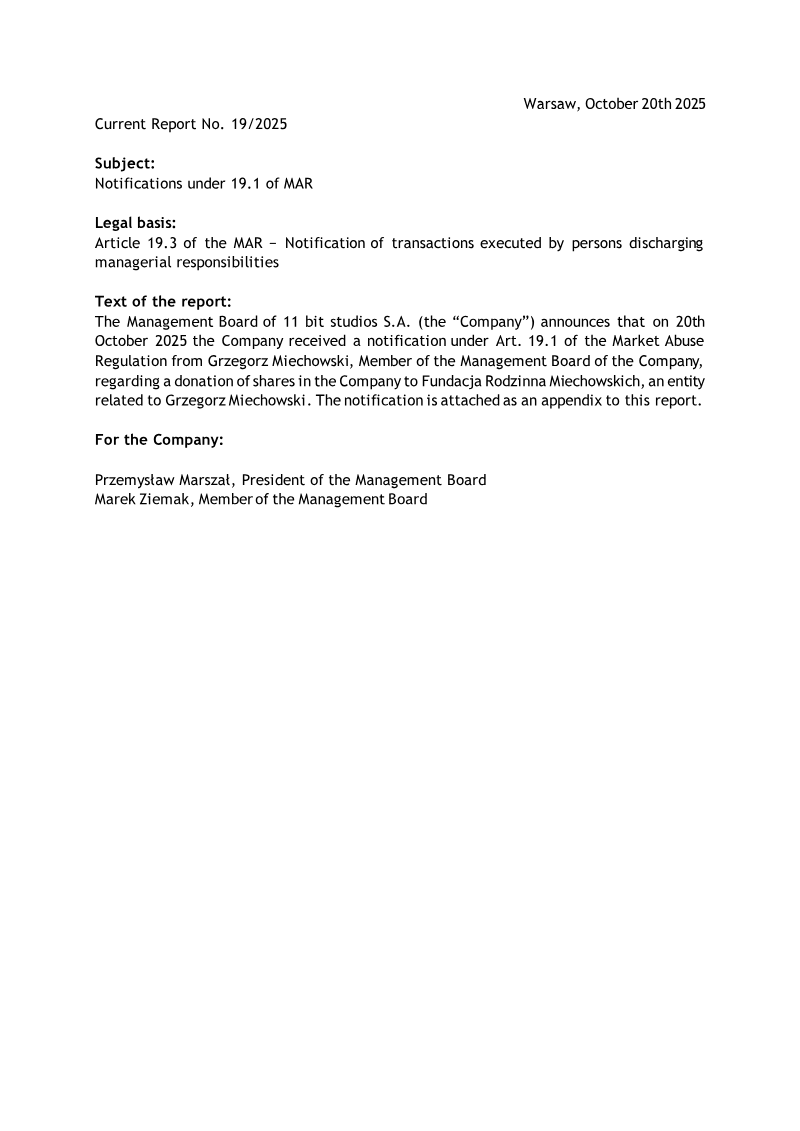
11 bit studios · 2025
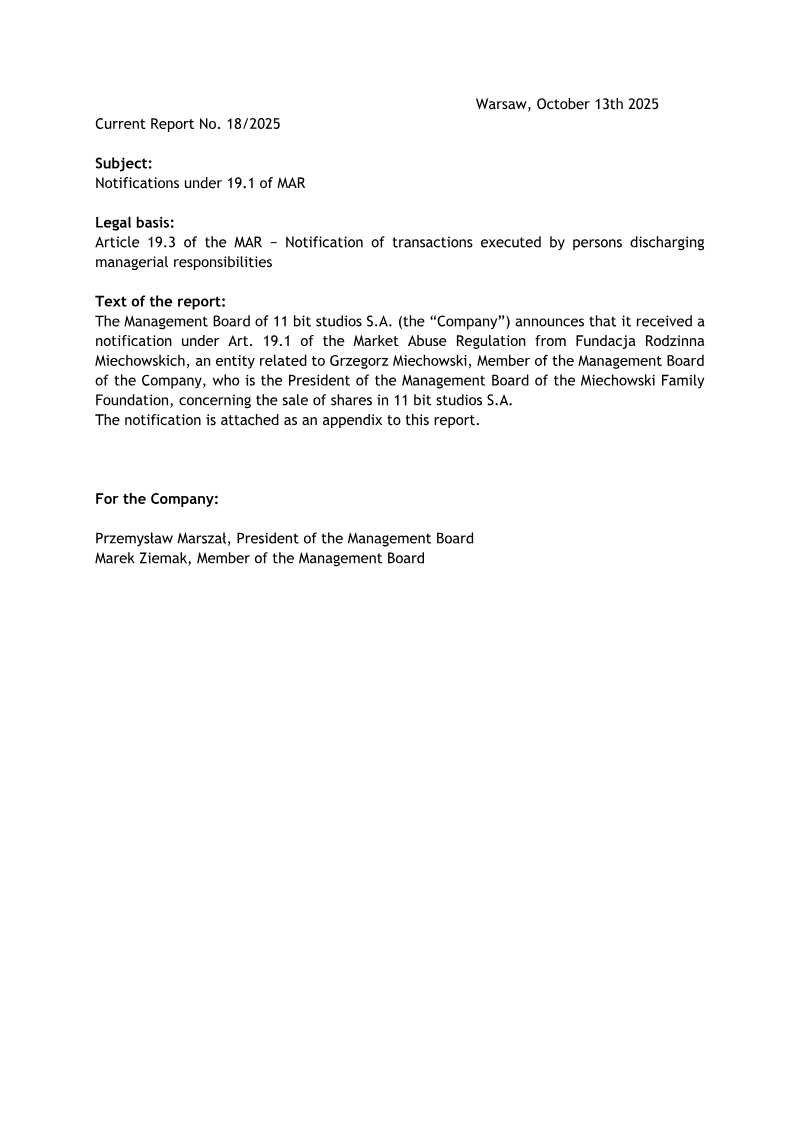
11 bit studios · 2025
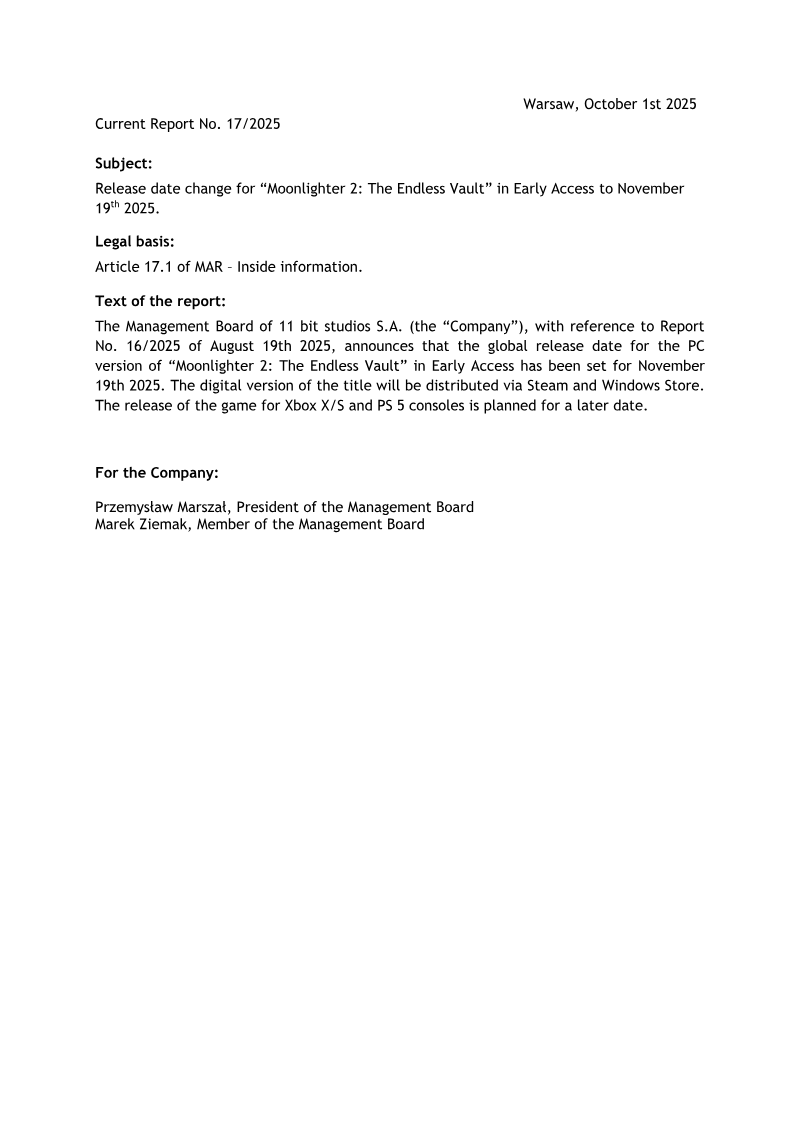
11 bit studios · 2025
11 bit studios · 2025
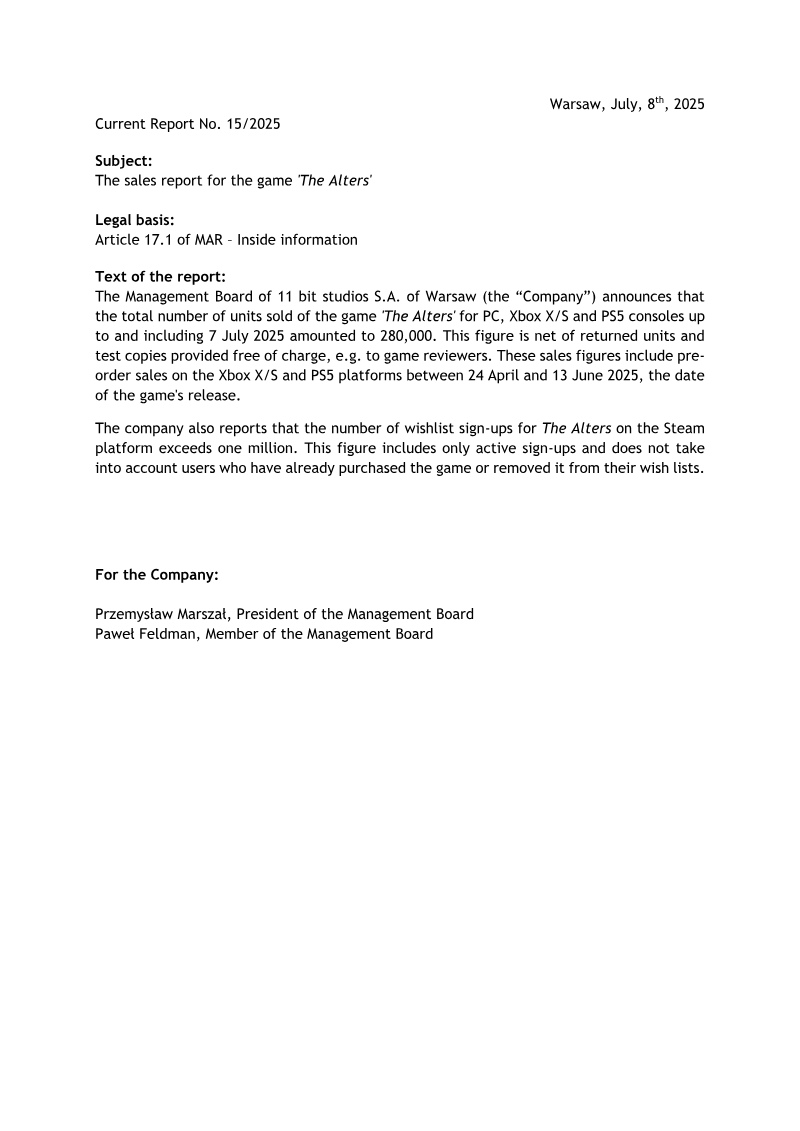
11 bit studios · 2025
11 bit studios · 2025
PCF Group · 2024
PCF Group · 2023
PCF Group · 2023
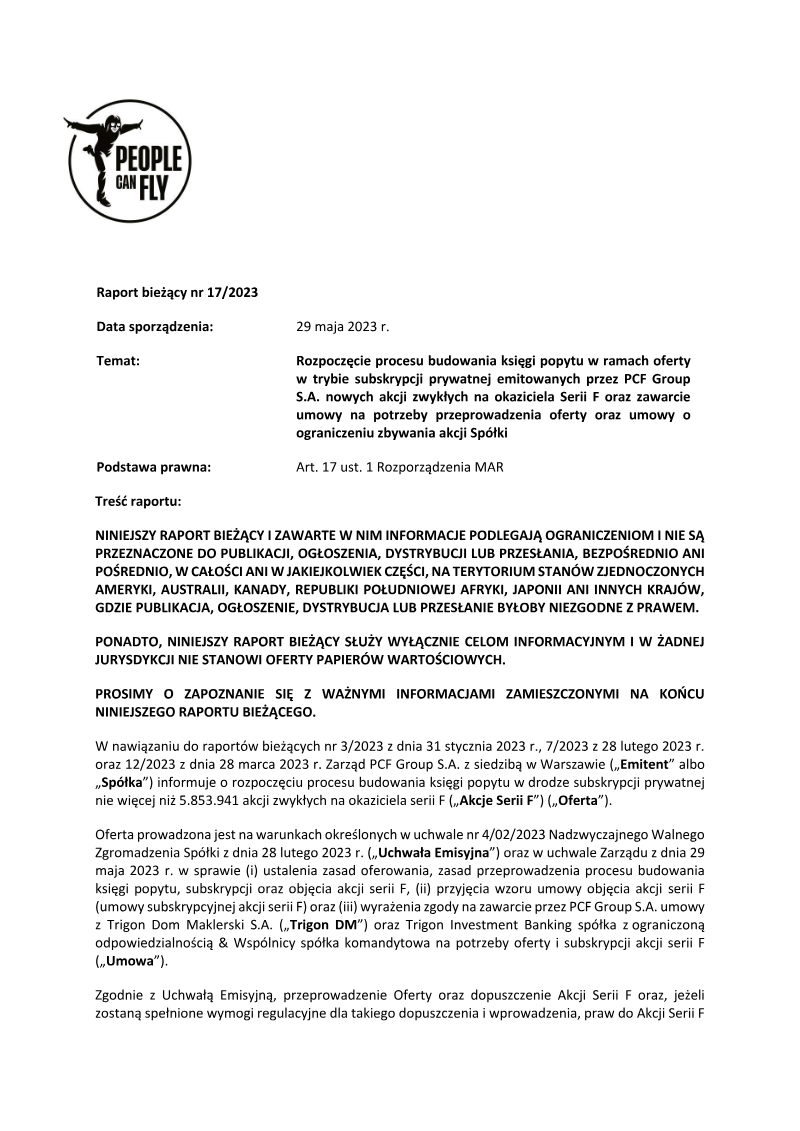
PCF Group · 2023
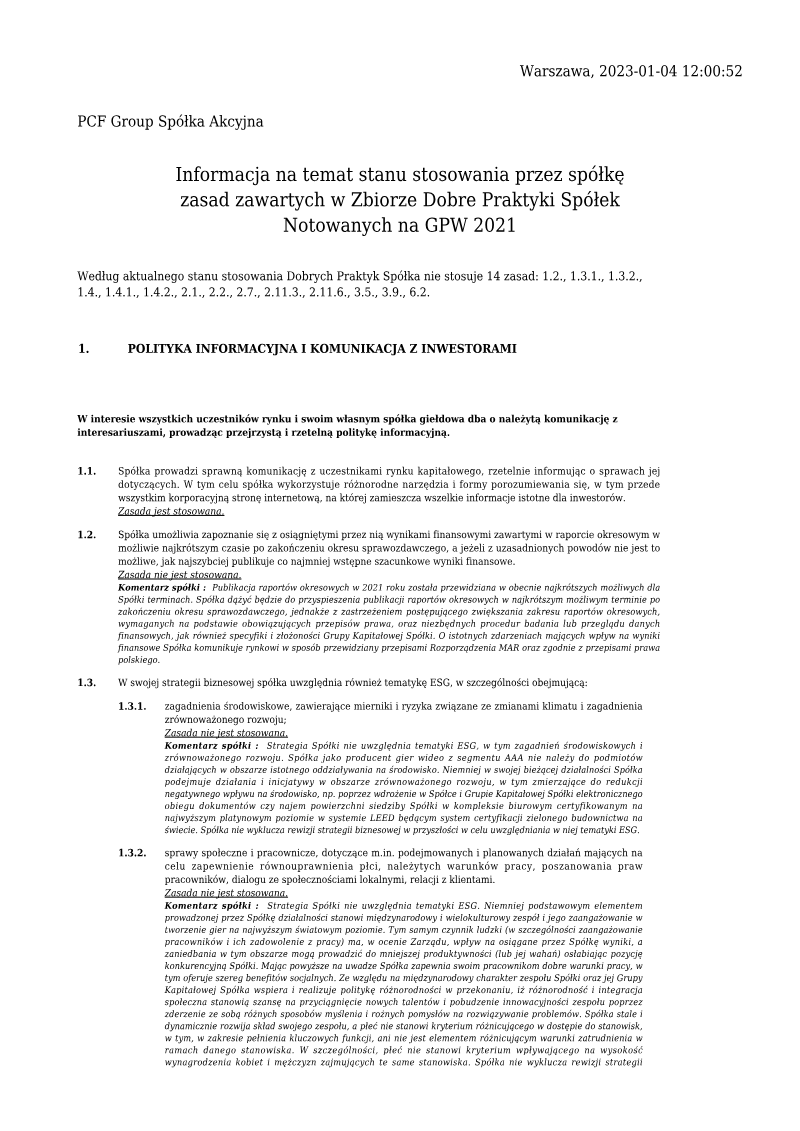
PCF Group · 2023
PCF Group · 2022
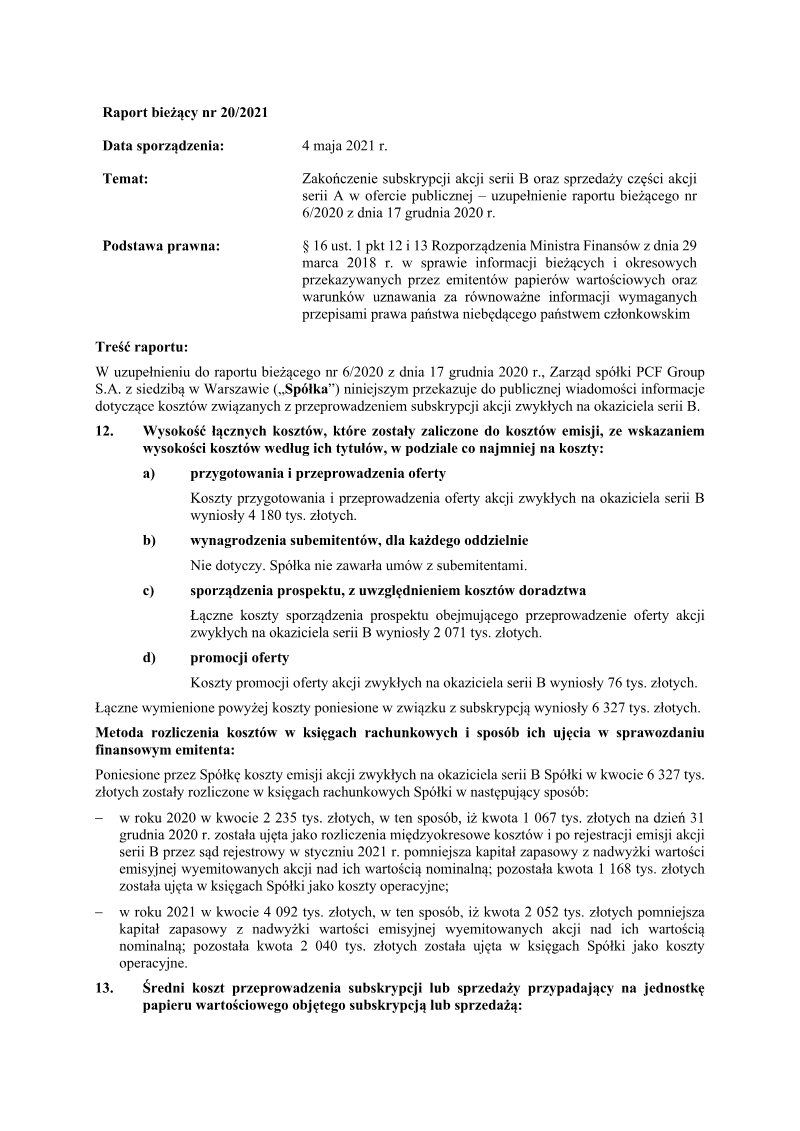
PCF Group · 2021
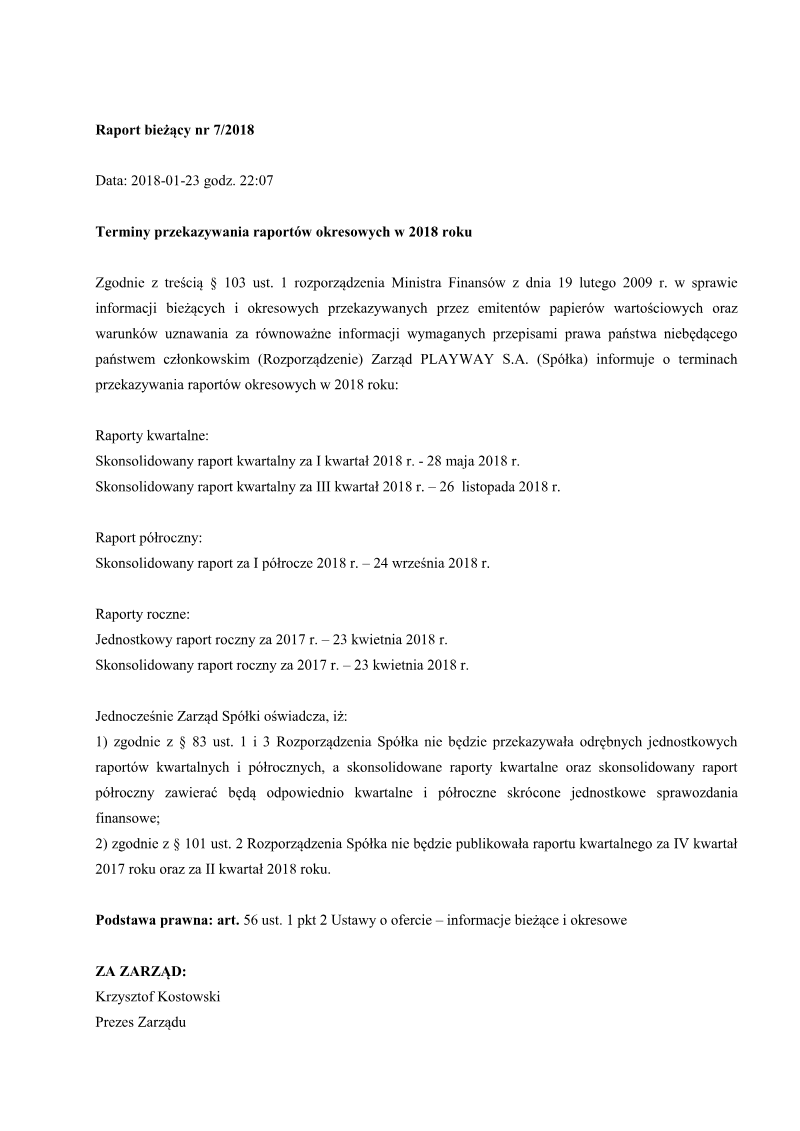
PlayWay · 2018
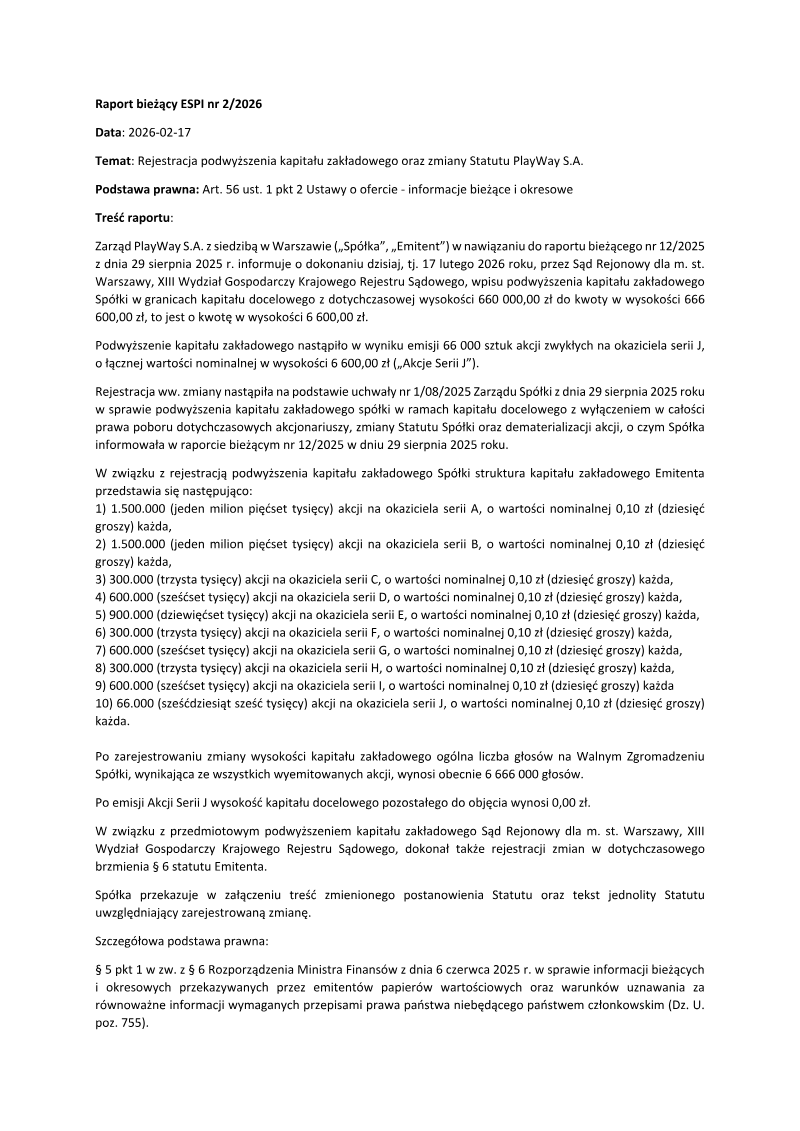
PlayWay · 2026
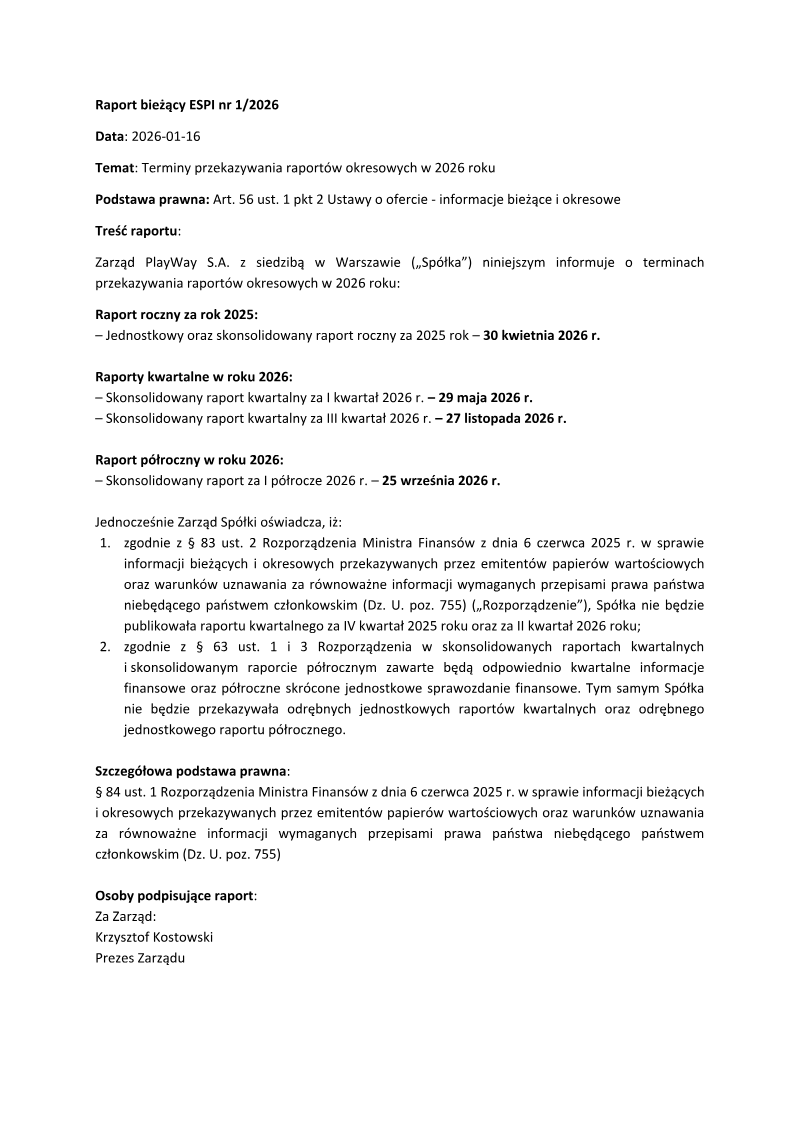
PlayWay · 2026
PCF Group · 2025
PCF Group · 2025