1 free read left. Create a free account for unlimited reading + AI research.
Create free accountArticle DiGRA
1 free read left. Create a free account for unlimited reading + AI research.
Create free accountArticleDiGRA
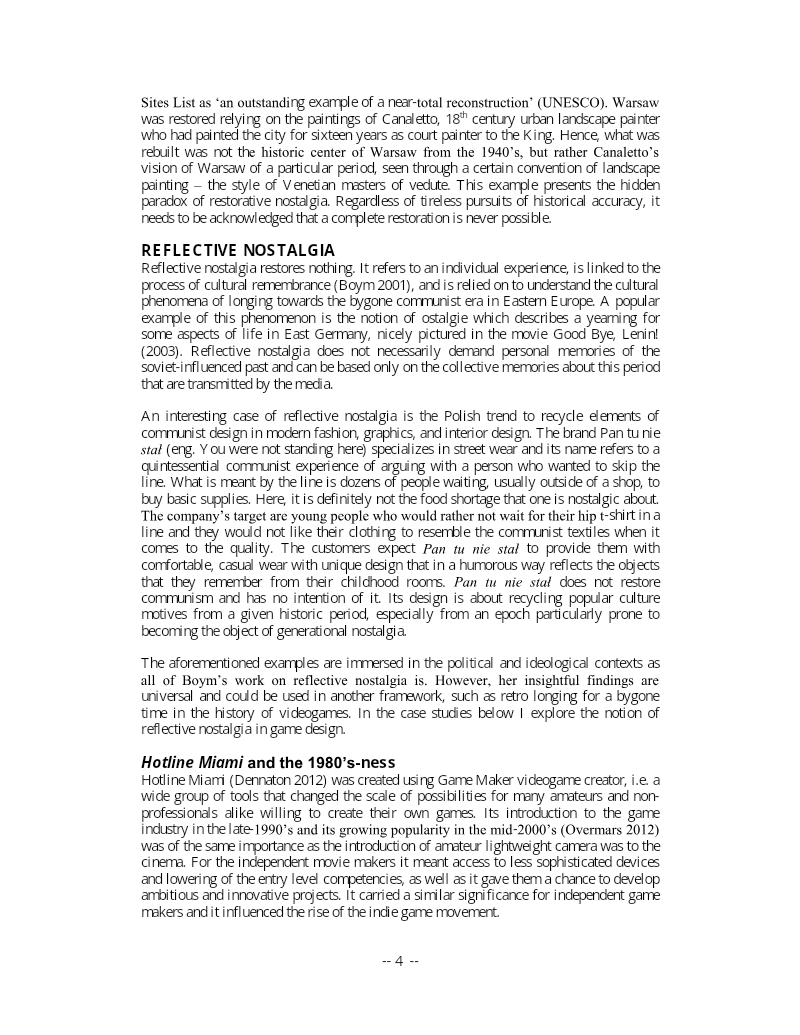
It holds that restorative nostalgia's aim of perfect historical accuracy is inherently unattainable. Reflective nostalgia openly embraces the gap between past and present.
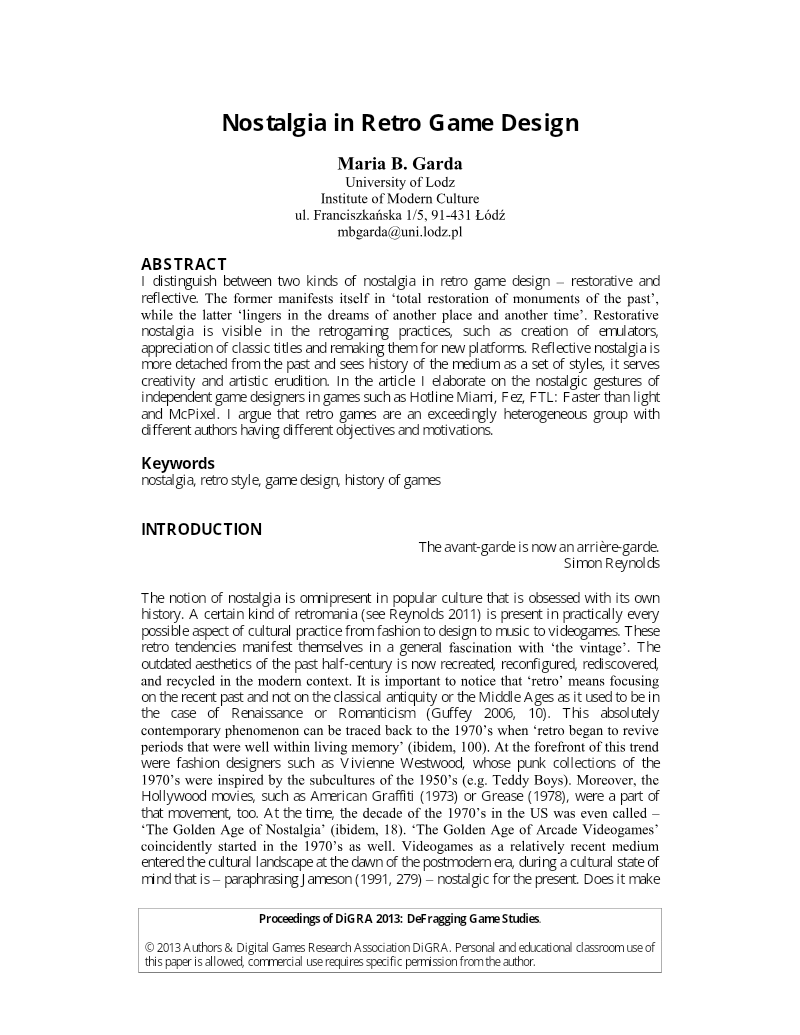
Nostalgia in Retro Game Design examines how contemporary games draw on the aesthetics and conventions of earlier videogame eras, arguing that the category of "retro" games is far from uniform. Building on Maria Garda's distinction between restorative nostalgia, which seeks faithful preservation or recreation of the past through emulation, re-releases, and retrogaming, and reflective nostalgia, which treats the medium's history as a repertoire of styles to be creatively recombined, the analysis contends that these two impulses frame very different design goals. It also contends that the loose use of the "retro" label obscures this difference and offers little analytical value.
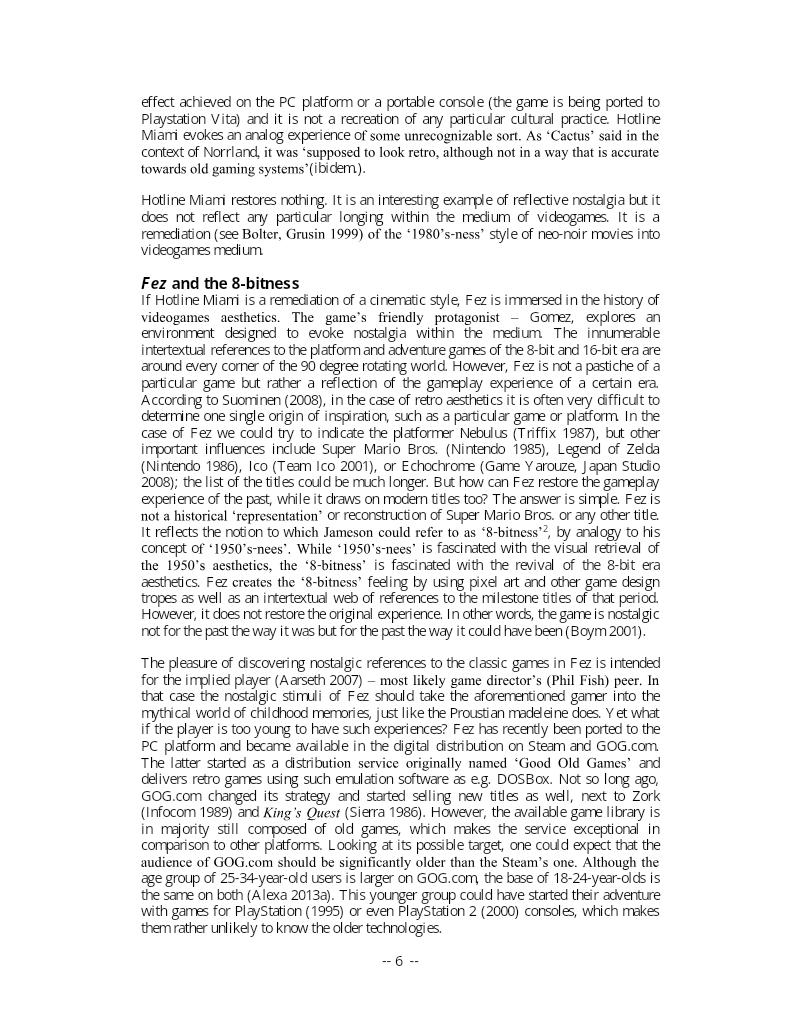
The text's central argument is that restorative nostalgia's aim of perfect historical accuracy is inherently unattainable, while reflective nostalgia openly embraces this gap. Hotline Miami is presented as a case of reflective nostalgia that remediates the look of 1980s neo-noir cinema rather than any specific gaming practice, producing an analog feel that is deliberately not faithful to older hardware. Fez similarly functions as an "8-bitness" pastiche that evokokes how the past could have been, and its popularity among younger players who lack direct memories of earlier systems is explained through collective and detached forms of nostalgia. The discussion of McPixel, an intentionally archaic homebrew game, extends this reading, characterizing it as an "arrière-garde" that looks back over videogame history.
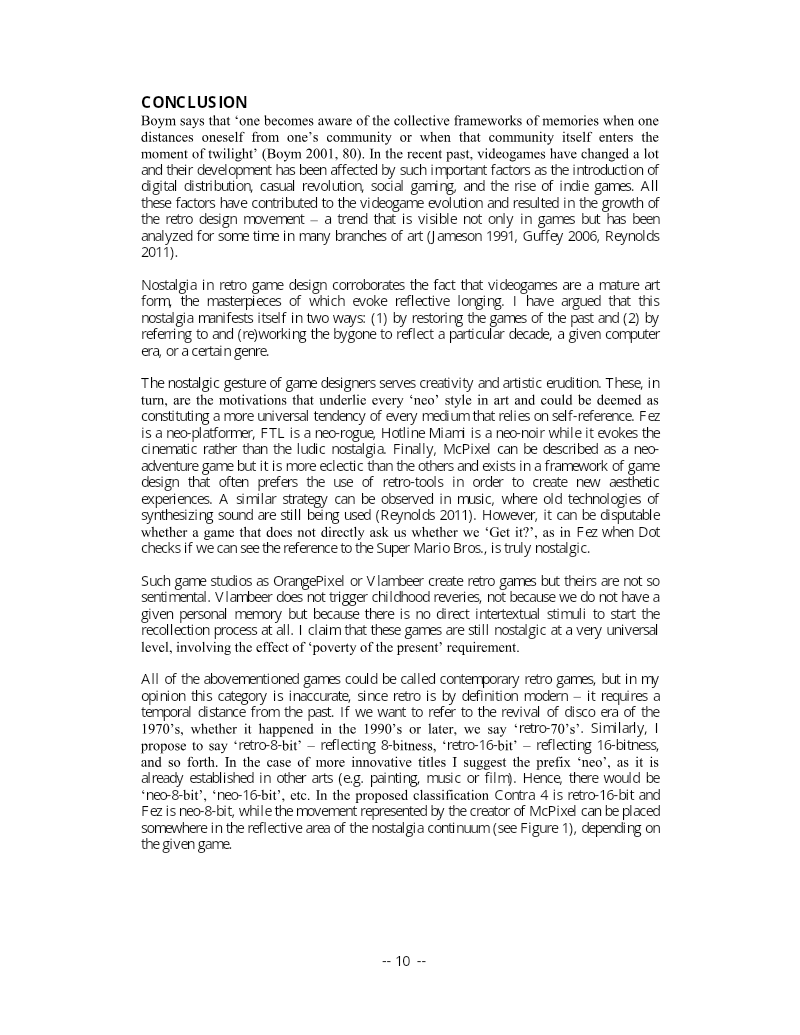
The analysis concludes that retro game design has matured into a self-referential art form and proposes the terms "retro-[X]-bit" and "neo-[X]-bit" to classify games along a continuum of nostalgic orientation. Its claims are largely interpretive and theoretical, resting on close reading of individual titles rather than quantitative evidence, and the text leaves open whether the retro trend will fade or consolidate into a lasting aesthetic.
Each row is a game or company this document names, each column a document, oldest first. A mark means that document names it. Select a row to see those documents.
DiGRA · 2020
DiGRA · 2020
DiGRA · 2020
DiGRA · 2020
DiGRA · 2020
DiGRA · 2020
DiGRA · 2020
DiGRA · 2020
DiGRA · 2020
DiGRA · 2020
DiGRA · 2020
DiGRA · 2020
Thomas Brush · 2026