1 free read left. Create a free account for unlimited reading + AI research.
Create free accountArticle DiGRA
1 free read left. Create a free account for unlimited reading + AI research.
Create free accountArticleDiGRA
This paper is a theoretical investigation into the concept of rhythm within digital gameplay theory, framing rhythm as a dichotomy between stable form and changing flow. Its central question asks whether rhythm signifies organic consistency or endless alteration, and it uses this distinction to illuminate the relationship between player agency and algorithmic control. Rather than presenting empirical data, the work is a philosophical and literature-based inquiry, drawing on a broad range of thinkers spanning linguistics, philosophy, and media studies to position gameplay as a site where the player's rhythms confront those embedded in the game.
The paper's analysis establishes that rhythm appears throughout game studies, often invoked to describe repetition in play and interaction. It distinguishes between two levels of analysis: a micro-level account, exemplified by work on "game feel" that measures the synchronicity between bodily input and on-screen response, and a broader ecological account that connects rhythm to algorithmic control and to everyday life as a source of localized resistance. The author argues that while sensorimotor and proprioceptive studies reveal important design insights, they leave untouched the more abstract and socially charged dimensions of rhythm, which the paper seeks to address.
Central to the argument is the claim that gameplay involves overlapping and alternating rhythms operating at different scales, durations, and forms, including those of interaction, playthroughs, and narrative. Rhythm is characterized as sense-making through embodiment, attunement, and affect rather than through conceptual meaning, and as having the capacity to reach the pre-subjective ground of human existence. The paper contends that merely identifying repetition in a system does not explain rhythm itself, and that a richer philosophical account is required.
The scope of the work is conceptual and theoretical, situated within English-language and continental philosophical traditions and centered on digital games rather than a specific geographic or historical period. It is presented as an extended abstract for the 2020 DiGRA proceedings, and its structure proceeds through a review of game-studies literature, a philosophical grounding in rhythm theory, and finally an examination of subjectivity and the tension between player freedom and algorithmic constraint.
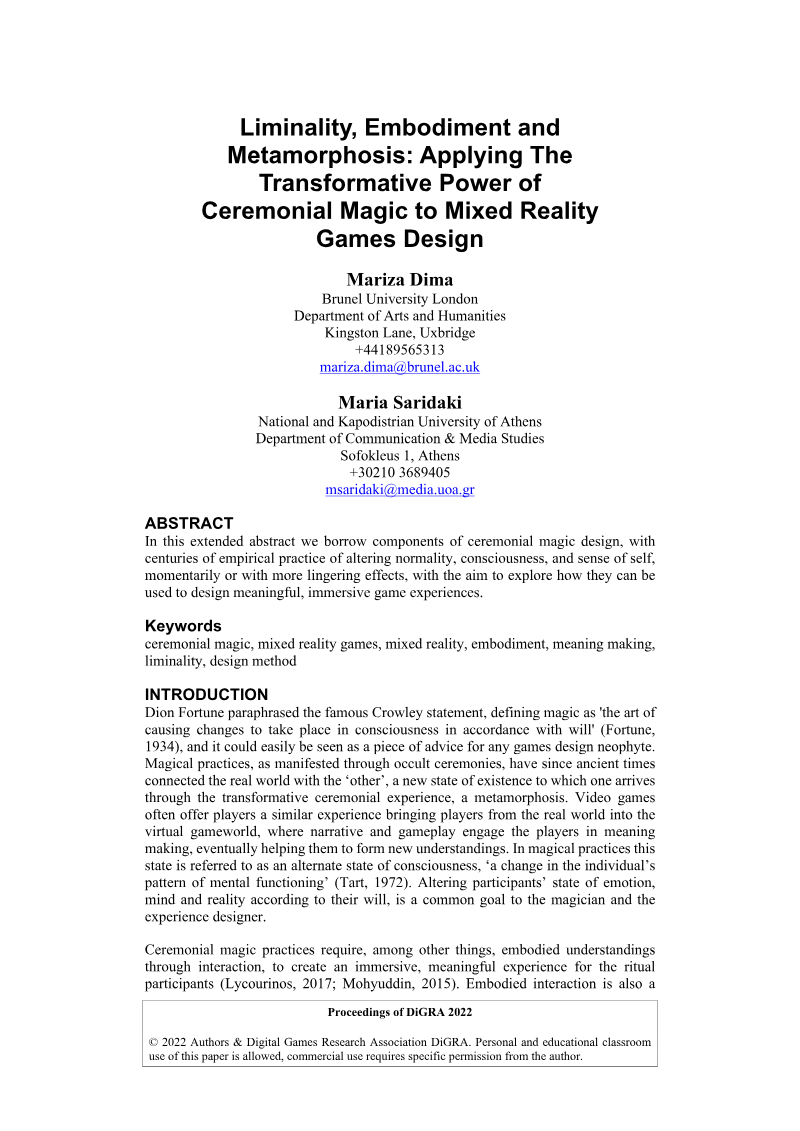
DiGRA · 2022
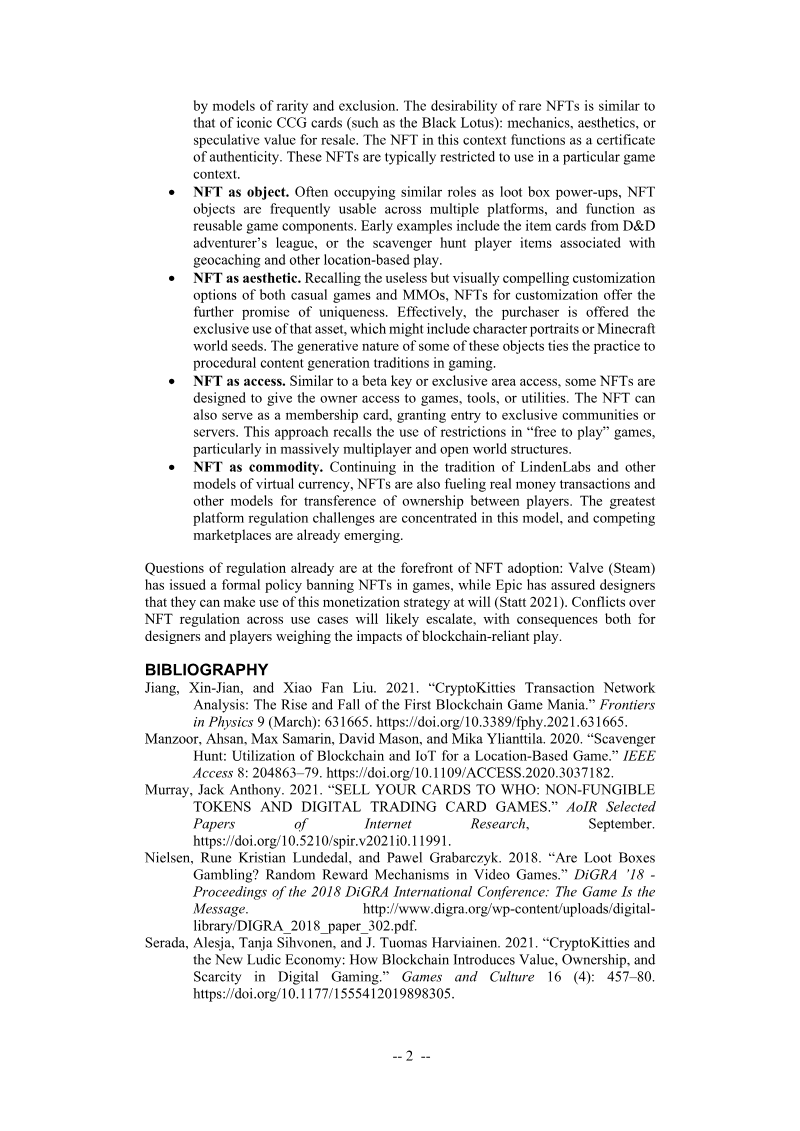
DiGRA · 2022
DiGRA · 2022
DiGRA · 2022
DiGRA · 2022



DiGRA · 2022
DiGRA · 2022
DiGRA · 2022
DiGRA · 2022
DiGRA · 2022
DiGRA · 2022
DiGRA · 2022
PocketGamer.biz · 2025