More from Foundations of Digital Games (FDG)
View all

Whitepaper
Towards Custom Quest Tutorials: Identifying and Addressing Players' Cognitive and Performative Struggles in Games
Association for Computing Machinery · 2025

Whitepaper
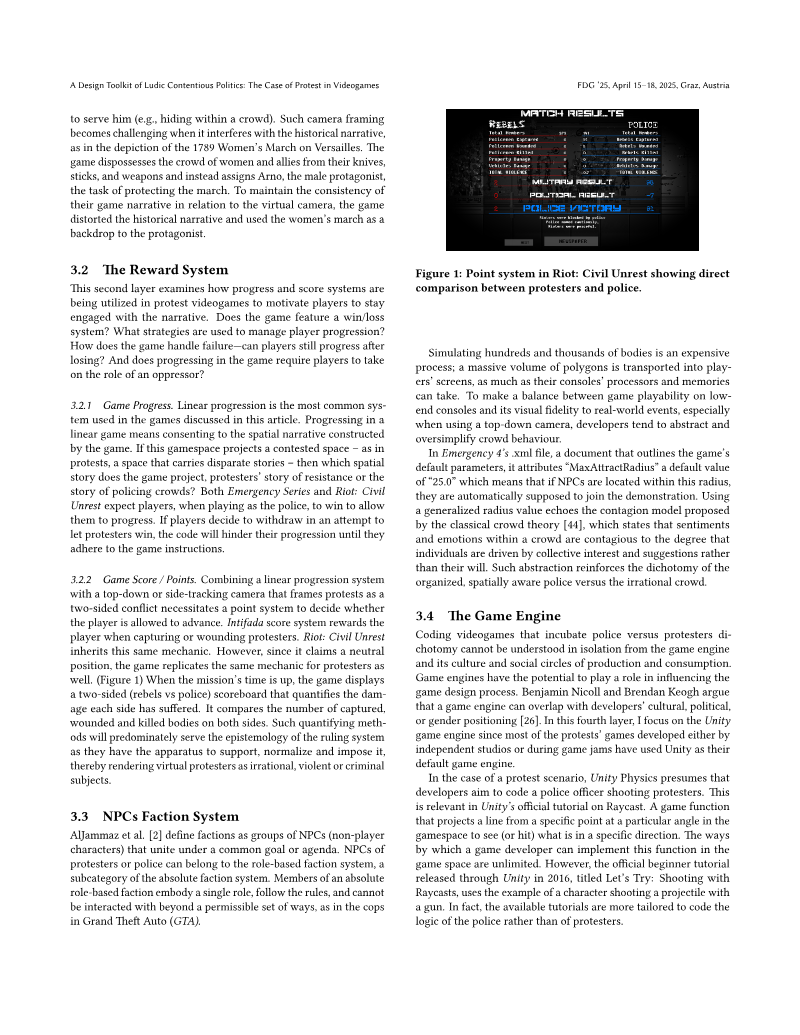
A Design Toolkit of Ludic Contentious Politics: The Case of Protest in Videogames
Association for Computing Machinery · 2025
Whitepaper
Serious Gaming Meets Audiology: Developing a Video Game for Auditory Testing
Association for Computing Machinery · 2025
Whitepaper
Elevating Game User Research with a Guided Interface for Data Analysis
Foundations of Digital Games (FDG) · 2024
Whitepaper
Playing with Prejudice: Do Colour Scheme and Hypersexualization of Women In Games Influence Player Decisions, Perceptions, and Avatar Appeal?
Foundations of Digital Games (FDG) · 2024
Whitepaper
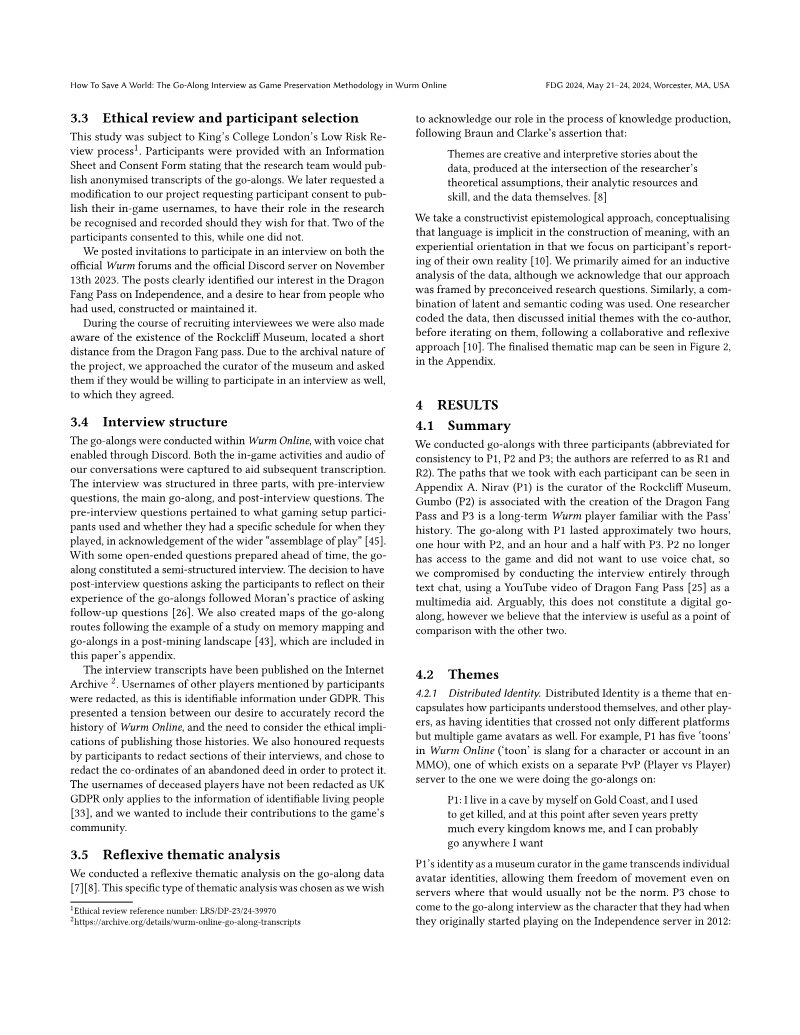
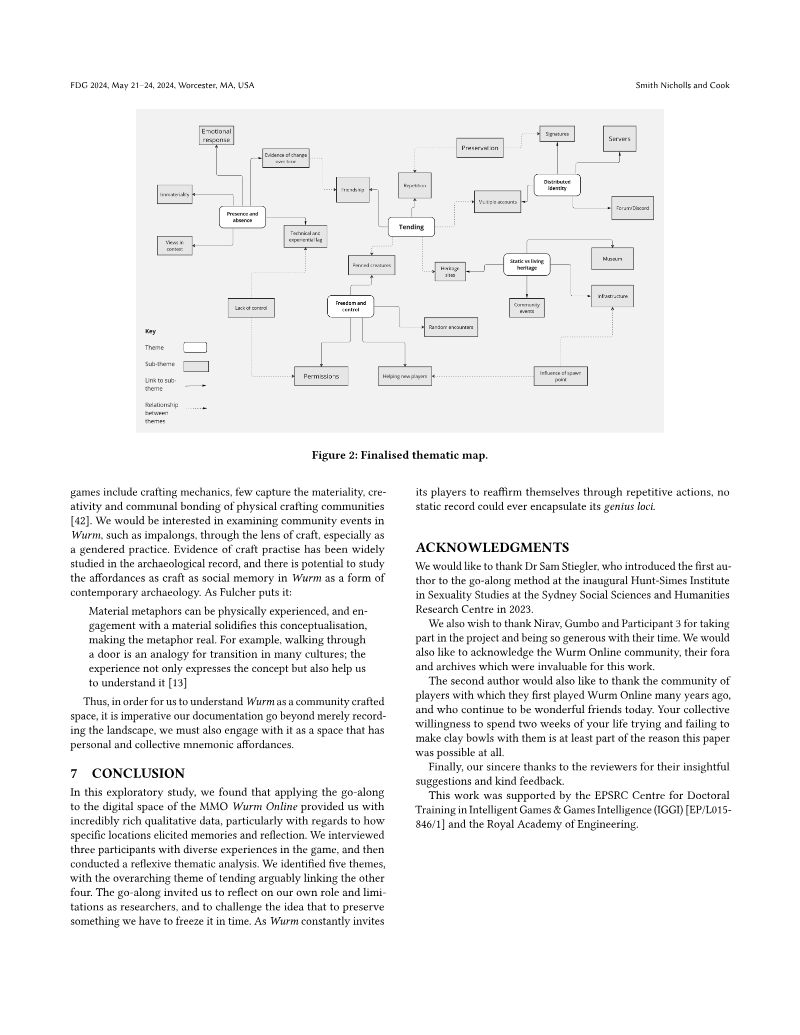
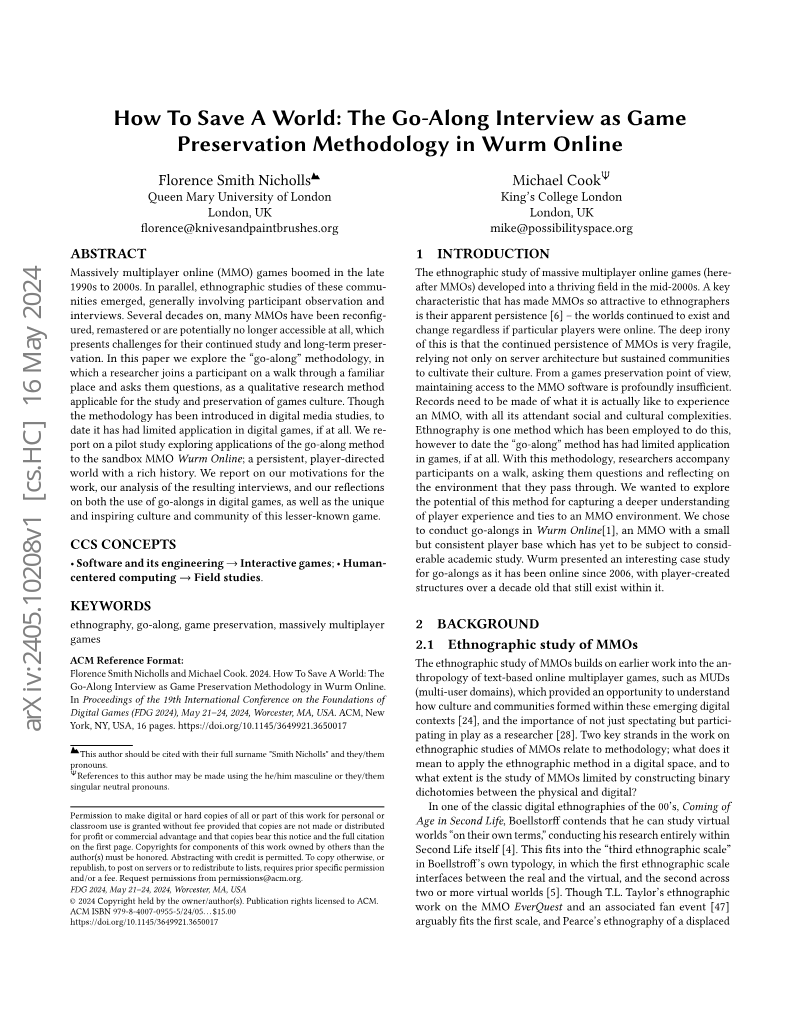
How To Save A World: The Go-Along Interview as Game Preservation Methodology in Wurm Online
Foundations of Digital Games (FDG) · 2024
Whitepaper
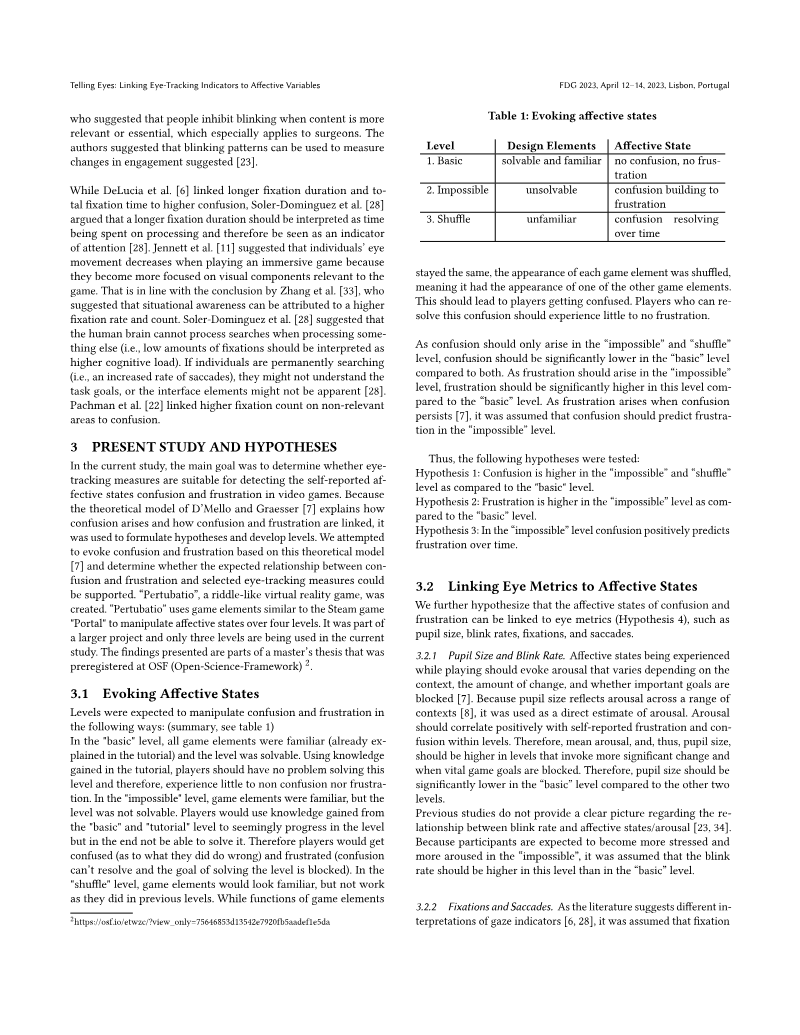
Telling Eyes: Linking Eye-Tracking Indicators to Affective Variables
Foundations of Digital Games (FDG) · 2023
Whitepaper
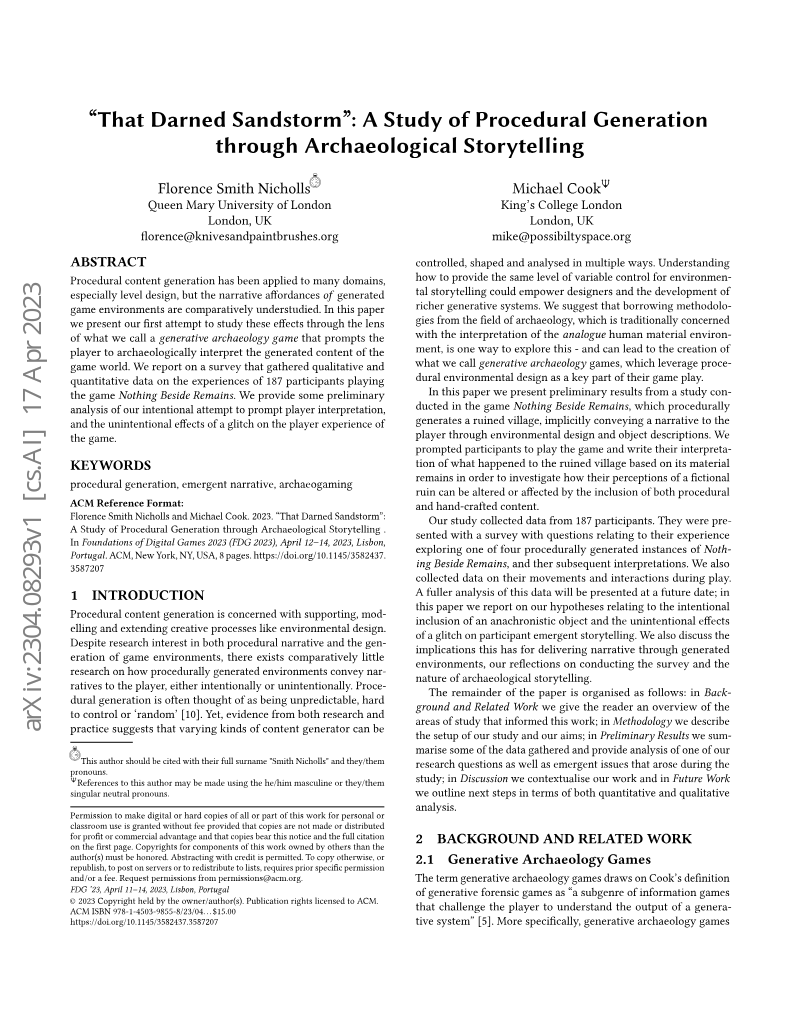
“That Darned Sandstorm”: A Study of Procedural Generation through Archaeological Storytelling
Foundations of Digital Games (FDG) · 2023
Whitepaper
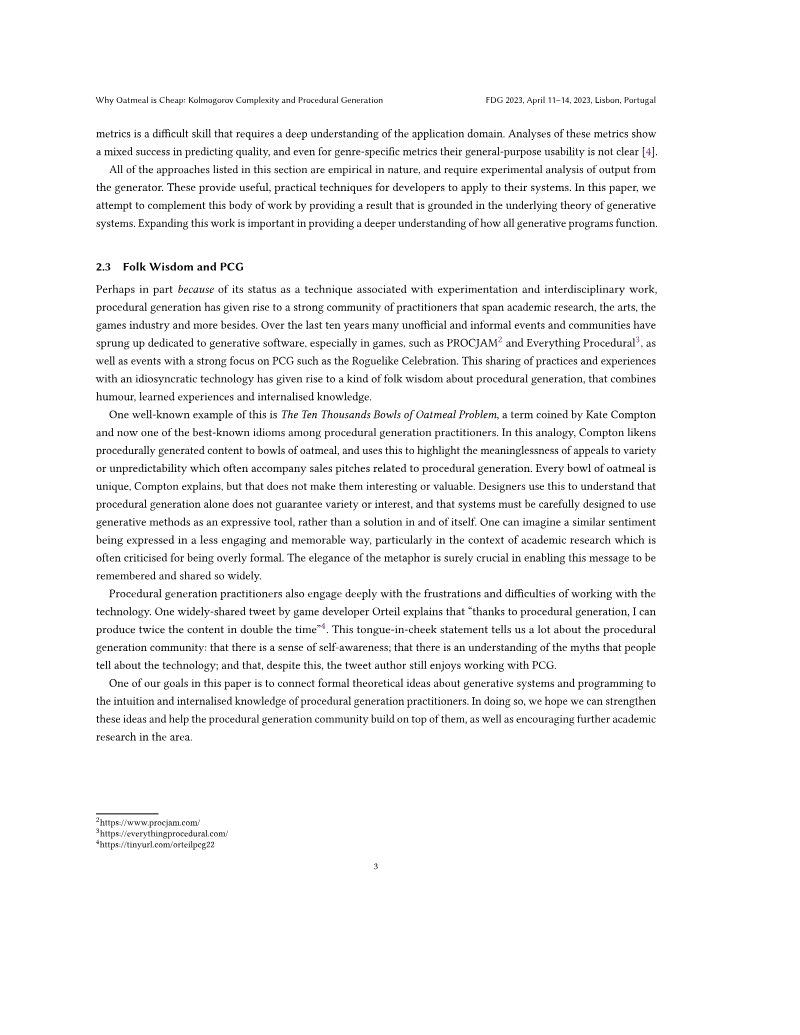
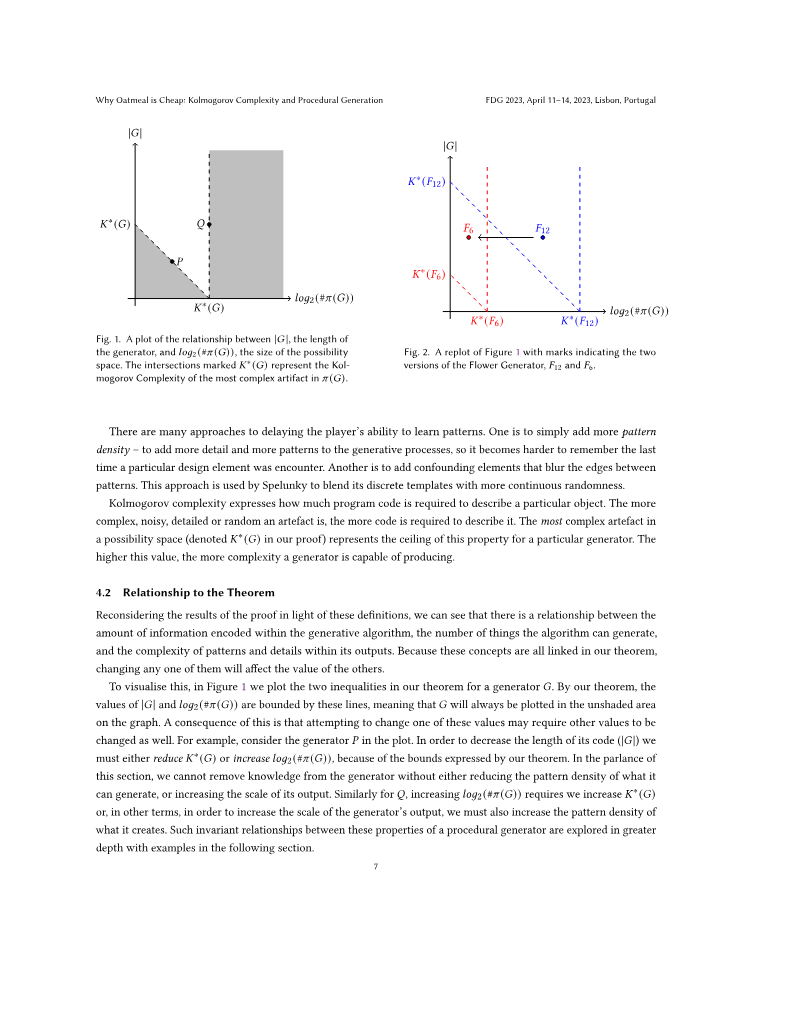
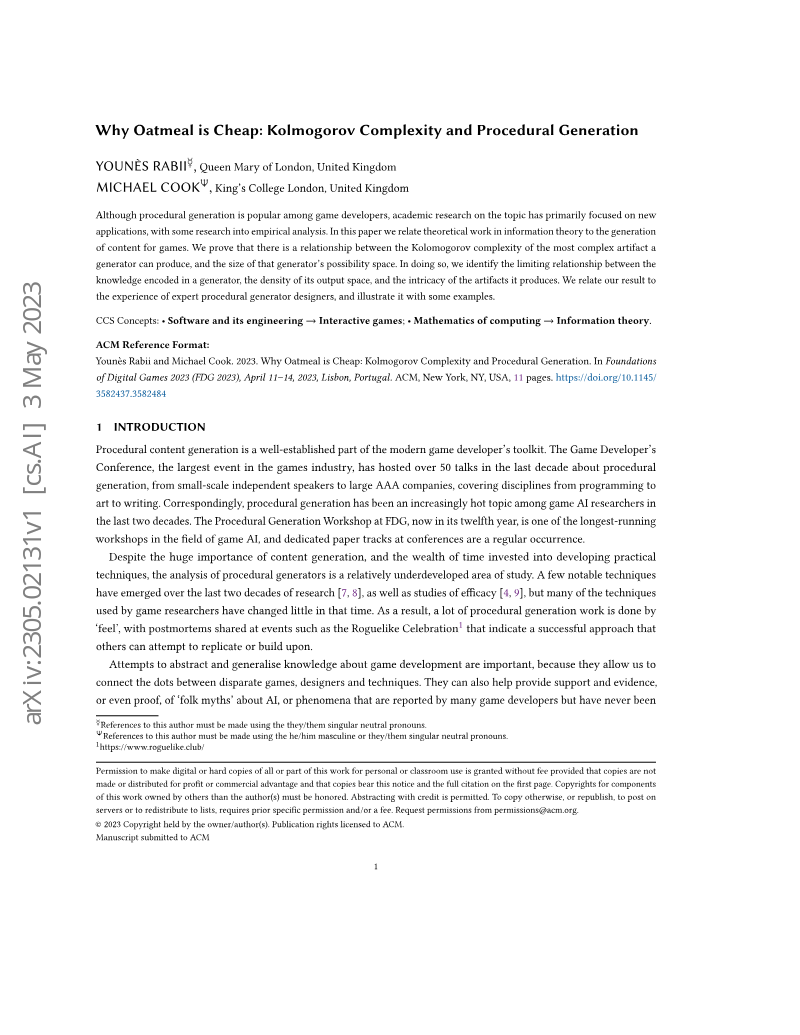
Why Oatmeal Is Cheap: Kolmogorov Complexity and Procedural Generation
Foundations of Digital Games (FDG) · 2023
Whitepaper
Multiplayer Tension in the Wild: A Hearthstone Case
Foundations of Digital Games (FDG) · 2023
Whitepaper
Designing for Playfulness in Human-AI Authoring Tools
Foundations of Digital Games (FDG) · 2023
Whitepaper
Re-trainable Procedural Level Generation via Machine Learning (RT-PLGML) as Game Mechanic
Foundations of Digital Games (FDG) · 2023