1 free read left. Create a free account for unlimited reading + AI research.
Create free account
Making characters and places that people believe in
Key insights
7 takeaways- 01Prioritize granular, lived-in details and human imperfections over macro, top-down world-building to foster deeper player immersion.
- 02Design levels using the architectural principles of 1960s brutalism, which utilize complex flow and the tension between public and private spaces to create authentic, navigable environments.
- 03Implement 'hidden' pathing and strategic signage—modeled after museums and retail environments like IKEA—to intuitively guide player movement through game spaces.
- 04Use commercial iconography and familiar visual cues as a diegetic 'heads-up display' to ground players in a specific time and place.
- 05Develop believable characters by allowing them to make irrational or out-of-character decisions that reflect the inherent complexity of human behavior.
- 06Structure narratives to be circular, encouraging players to revisit earlier content with new knowledge gained from later gameplay.
- 07Maintain narrative depth by ensuring every character has a sustainable backstory and leaving select plot threads intentionally unresolved to evoke a sense of mystery.
Ask AI about this video
Transcript
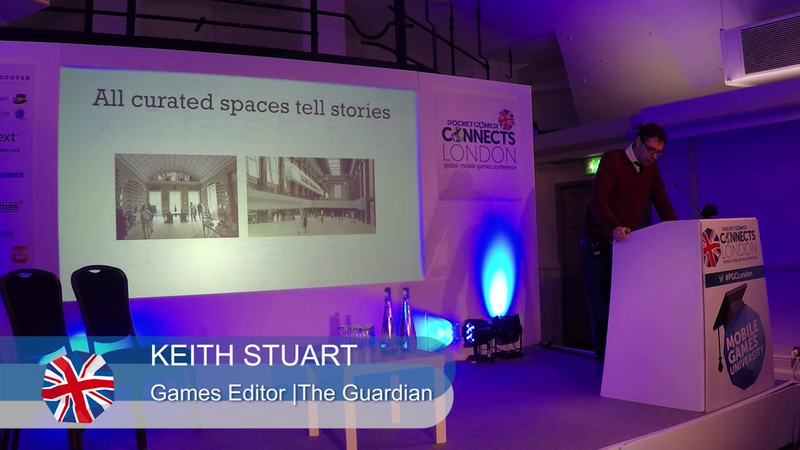
[Music] right hello hi everyone yeah my name is Keith Stewart I am the video games editor for The Guardian newspaper and but I am also daram I'm also an author my first novel boy made of blocks is out now in all go to shop and an on amazon and all those other places well in fact into the e-book is 199 at the moment so to fight nads called boy made of blocks and I wrote it really i spaced semi-autobiographical e on my own life is my autistic son and minecraft and the stories about that so I've kind of had a lot of experience really in thinking about video games as a narrative medium I started out in game development in there in the mid-90s then moved into game journalism and I've written a novel which kind of moves around and talks about video game design and telling
stories through through video games so it's been something I've been obsessed with all the way through my life now I'm writing my second novel now and one of the things I've discovered about storytelling and I'm hoping this is relevant to some of you in the room who are working on narratives in games is that the imperfections are really really important i think when we create worlds and we create characters we often take start off with a kind of a macro view to restart off almost like with a google map view of our story and of the people that we want to inhabit it and I want to try and encourage you to maybe take the opposite view and to start in the gutter and work upwards I think it's the imperfections and the flaws in people in the worlds that we create that are the important things and I'm going to explain this to you maybe in a way that it's kind of palatable and at least interesting I hope so and yeah yeah that was that was a slide-out space to share all the way through that bit i'm just spoken about so so yeah i'm going to
give you eight reasons why imperfections are really really important I'm places to look for them when you're out and about in the world the first thing I think we should do is story writers is mate worlds that Phil lived in and that tell their own stories and I think that failed utopia's are really really fascinating places to get ideas from I don't know if you have lots of recognizes but it's Robin Hood gardens in popular popular in East London and it was designed by incredibly interesting architects called Peter and Alison Smithson in the late 1960s and I think they were kind of frustrated game designers Peter and Alison they created Robin Hood gardens almost as like an exponential space so it was a place to live in but they designed it they tried to define what they call streets in the sky so they wanted to take these math populations that we had in the 1960s there was dispossessed you're in the wall and create spaces for them that were kind of playful that they could project their own stories onto so if you
look at what we heard garden for lots of people look at this and think it's an urban nightmare but they did things like design the walkways really really wide they made sure the walkways allow people to congregate and to talk all the front door ways in Robin Hood gardens face inwards towards each other so that when you come out of your flat in the morning the idea was that if your neighbor was coming at the same time you were forced into interactions with each other there's a kind of a circularity to a lot of brutalist 1960s planning so they often have these kind of town centres in the middle so they were always thinking about getting pedestrians together and creating flow I think that has got really interesting analogs with game design in fact the original Halo game several members of the team were actually I used to be architects and they were heavily inspired by brutalist and sixties not planning when they when they created halo if you if you look at a really great halo level there's often lots of flow that the the emphasis is on flow so getting people from one place to
another there's lots of interconnecting paths lots of underpasses and overpasses in halo maps this one's really heavily inspired by brutalist architecture because Britain because a 60s town planning was all about facilitating movement so even though it failed as a concept in the real world because unfortunately where you have helped planning based around these our edifice is you will you often created shade and darkness and it was quite intimidating from people i think they're really rich in possibilities for us as narrative designers to explore just over the road from here is obviously the barbican centre i think if you go and if you get a chance during the day or while you're here to explore the barbican centre and look at how it uses pathways walkways lots of different layers lots of different places to look at I think it's really inspiring as a means of learning about spaces as narrative I also think it's really
important when we're creating places in stories to create polarizing spaces great things that mean something to people even if it's ugly I was speaking to Mary Shepherd meta net software who designed a brilliant game n plus plus and she was heavily dessert inspired by the book 101 things i learned architecture school by matthew frederick and he talks about creating something polarizing because it gives people something to respond to so when you create game worlds when you create buildings when you create places make sure they're things that people either love or hate because the mediocrity in fiction is it just doesn't work this is something I really learn as well when I was writing my book my book boy made of locks is based in Bristol and all the places that I was really interested in when I walked around Bristol I lived there for four years with a kind of in-between spaces the liminal spaces so in my book there's lots of like crappy pubs and rubbish neglected parks and
awful modern estate because those are the places I kind of related to and I was really worried actually when my book came out that people who lived in Bristol and love Bristol would read my book and think it was a massive insult because I sort of focused on all these places but I've been getting lots of messages from people who have said I live in bristol I really really recognize the city from what you've written from what you've written which is really really nice because I have kind of focused on that the in-between places of Bristol not not all of its beautiful architecture so I think that's really important as designers to think about the uglier areas of the world because those the worlds that Express character another great example is mass effect mass effect the designers of the port hanshin area on the planet of nivara were heavily influenced by brutalist architecture as well so yes so I've got this idea that we should think about fails utopia's when we're designing wells because I think they're the most exciting things brutalist architecture meant to be a place where people could socialize and get together
and create communities but it turned into almost kind of like horror when you look at when you look at places now like Robin Hood gardens now that everybody's left it looks like a place of like desperation and darkness and I think that's really interesting so yeah when you're exploring cities as a narrative designer and as an author I think it's worth seeking out these places i want to i want to just look at again Robin Hood gardens of you notice a lot of 60s a lot of sixes architecture have this design where they would have this sensual kind of almost circular area in the middle and all the living around it because they wanted to separate people from traffic so that all the traffic was at the other side the roads with the other side and the parking with other sides but people looked over this circular area why is this relevant to game design well this is cargo this is one of the best matter what multiplayer maps in there call of duty modern warfare and it's exactly the same design if you look it's designed you have these routes along the sides that you have this kind of circular area in the middle it's
pretty much a brutalist map but turn it somewhere where you can run around and shoot people and have fun so so yeah so the first thing I'd say is look at brutus architecture architecture because it's really interesting and it tells its own stories let's move forward I'd also encourage people when you are out about when you're exploring the world to go to curated spaces any curated spaces whether that's museums or art galleries or stately homes because they sound as if they're going to be really really boring but they're not they're fascinating because any space where someone's try to impose a story on an architecture should be interesting to us storytellers especially storytellers who make spaces in inter tib world because you need to think about spaces something your players will explore so whenever I go to a new city I'll often try and seek out the most boring-looking museums or the metal the
weirdest stately homes because those are the places you often learn interesting things until is the most interesting at museums and most inspiring museums I've ever been to were the Museum of broken relationships in Los Angeles which is basically they've gone around and has relics donated to them have failed of people's failed relationships love letters things like that and they displayed them in LA there's also one in Zagreb in croatia as well and also the museum of medieval torture instruments in amsterdam is absolutely fascinating giving a chance to go to Amsterdam see that it's really interesting and tells us a lot so I think yeah curated spaces are brilliant to look at as a designer and it's a thinker of narrative in in games and the way to the better on the left is stourhead house the National Trust property and like that seems like the most boring mundane thing you can possibly do go to the National Trust property but I really love them because they're all about attention between the
public and the private most national trust properties are still inhabited by their by the hour Socratic families that kind of semi own them so all of their personal trinkets surround you along with these kind of great works of our amazing works of art like there's lots of games brazil our heads house so you have this kind of tension between what people want to say about themselves personally in these spaces but also what the National Trust wants to say about our history and I found that fascinating i use that kind of idea a lot when i when i right also landscape gardening some really interesting ideas are very useful to game designers as well if you look at most stately homes with their gardens a lot of them declined by capability Brown who had this idea of the serpentine style of landscape gardening where you have a very smooth transition as a pedestrian around the gardens and he would use topography and co pieri to do the earth he had this idea of like hiding and reveal
element of the garden so if you go around the shower head of state certain elements of that gardener hidden from you into the last moment you peek around the corner and see this amazing folly or architectural treasure so I think you wouldn't think if you're designing a shooter that you should go through a stately home but I really think you should because garden design and home design have really interesting things to say to game designers another great place to go if you're interested in spaces in the way that people use them is ikea ikea is an amazing game design written as a shop so the way that I care use these spaces I don't know if you've noticed if you've been to an Ikea and often a lot of people think oh my god like here I can't face it but if you're if you're writing a story with a world in and you want to learn how people use world's IQ is a really good example and they're really tricky in the way they're designed they do stuff like I don't if you've noticed if you've been to ikea they trade these little showrooms to
show you all of their stuff and how it fits into a space so you can appreciate how their beds and their cupboards work together so if you walk into the shop they actually have the larger spaces first so you see these great big rooms using all their best stuff and their most beautiful expensive chairs and tables but as you progress through the shop but spaces they show off get smaller and smaller and smaller so that you start off with this kind of aspiration and you work towards what you can eventually afford so it instills you this idea of kind of beauty and richness as much as ikea can but then it lets you get down to the point at which you can afford stuff ikea also there's places where you can take shortcuts in ikea but they're always hidden from you if you're following the proper route through you have to look back in order to see the shortcuts so because of what they want you to do is go through the whole shop and see everything and i think that's a great game design idea as well like making sure that there's always opportunities for people but they really have to look for them like it also fills
its environment with lots of information there's lots of arrows there's lots of things to tell you how the furniture is made or why they don't have service in the cafeteria and again the idea is to sort of bedazzle you with information because you lots of opportunities and lots of things to look at and what you're supposed to do is oh my god I don't know what to do next but I really need that picture frame that's how they want you to think so it's really fascinating and I think as game designers of what we want to do or what you want to do is get people to engage with your environment and I think there's lots of things you can learn from the way shops use environment to sort of capture people's attention and keep them there another thing that I think about when we're thinking about 50 s and I had to design really my own version of Bristol when I was right in my book is that a cities are very gained like in the though if you think about it a city so if you think about cities like the buildings
never think are the game that's where you want to explore but everything like the branding the billboards the signs they're like the HUD of that game they're the heads up display and its really branding and signs that we use to navigate cities and I think it's interesting as game designers to think about cities in this way don't think of them as a collection of buildings and points of architecture but think of the billboards think of the way that the space is used to advertise to us this is should be a square in Tokyo which is effectively a mass onslaught of branding but it's the branding that tells us about the world and the place that we're in and the time that were in if you think about time square or Piccadilly Circus it's not the building's themselves the iconic that tell us where we are in time its advertising that's on the boards so I think that gets overlooked a lot of time when people are designing worlds or thinking about worlds or describing world feds described in the architecture but the way that we experience worlds often is through the brands but living them like
i always take myself in a city by okay so there's a starbucks you know that there's there's a lloyds bank and then i can all win take myself from that so I think it's really interesting when you're designing a city to think about the HUD of that city to think about the way that we navigate with signs blade one it's a brilliant example of this like Blade Runner is a film at everybody who's interested in video games or design or structure should watch blade runner Orion takes you to the world of Los Angeles through its m.e optics the Los Angeles the future sorry through its semi optics through its signs through its advertising we know where jacket is at all times because of the glowing neon that surround him and and the beauty that creates but it's also a damaged and broken infrastructure the Los Angeles as the future is a nightmarish place that most people have left but the neons left behind we have this beautiful clash of idealism and reality and I think that no one else
really does this like Ridley Scott I think it's really interesting and I think the best games are the ones that have learned from the fact that we understand this is through brands so if you look at the way valve created environments they always have beautiful use of branding and symbols and signs are there's obviously a particular lab lancelin portal also Bioshock when they were created so I insomnia ethanoic retina Bioshock games fall very much in terms of branding and advertising and billboards in the way they created their cities and these things that's often overlooked but they shouldn't be grand theft auto four Grand Theft Auto Rockstar are geniuses at creating brands and identities within their world for his head their drink that they've created sprung so it's a really important part of it like when I was writing boy made of blocks I often used billboards and brand too because they're kind of like hot points their connections people understand them really really well it's all quickly talk
about interiors oh my goodness i'm really really running out of time one thing I way to think about it interiors when you're creating two is it's the imperfections in those interiors that make them live if anyone's seen the film shiny the shining I think there's a really really interesting documentary called I think it's room 237 it's at the scary room in a shining I can't remember about the way that Stanley Kubrick designed the environment of the the Overlook Hotel any the way that it's designed it makes no sense but you could not explore the shining hotel in reality because none of it fits together and Stanley Kubrick did that on purpose to to make us feel uneasy I love the way that survival horror use transitional spaces so in Resident Evil and Silent Hill the way they use corridors is kind of this expression of pension I think is really really interesting whenever you're in a corridor in a survival horror game you know something awful is going to happen and I think that goes
back in some ways to our fear of brutalist architecture in 1960s planning where underpasses are places of dread and fear and possible crime survival horror really kind of feeds off that idea and again it's great fuel if you're looking to create tension using transitional or liminal spaces i think is really really valuable mess is the stuff of life like net creates Gator world when I wanted to describe the families in my book I describe the mess in their living room because I think that tells you everything you need to know about the way people are two great examples i really really love are gone home which is in this corner by full price when they created the house that they're set game is set in Kate Craig the environment designer really thought about cultivating intimacy with characters through their personal objects so there's no people in this world but we understand the people from what they left behind she actually went
on ebay because the gone home is set in the early 1990s k Craig went onto eBay and bought a Sears catalog from the early 1990s and used that as visual reference to get that kind of horrible kind of tacky early 19th feel to all the art to all the lamps and the assessees all the colors all the styles all the textures she wanted it to tell us something about lower middle-class families in America at that time and that's how we learn we learn about the world of alien isolation fuda through the rubbish in debt searches that are left on it on the on the tables around the world and it makes us understand that there are people there they've been killed another great example of using broken ness in a game is that it's dishonored lots of that game you want to explore the environment so full of weird twisted arc artifacts not because you're compelled to do so to pick up collects was because it's interesting I spoke to Harvey Smith the creative director dishonored and he was saying how he told
everybody on the team whenever they went to a museum whenever they went to a different country and when traveling they had to send back at these two photographs of artifacts that they discovered in that in that place may built up it's amazing library of imagery through that call those new masks in dishonor to is based on a battered ring given to the art director Sebastian matan by a relative so he used this kind of old battered family artifact to create this amazing new master Corvo so using mess and describing mess in your game world is really really important I think I've got three minutes now to talk about characters as well and the fact that mess is important in the characters you create interesting people make really weird decisions interesting people get things wrong the worst thing you can do with the character is give them a set of character traits that never allow them to move from those traits this is an image from the wire the HBO television series about police officers in Baltimore houses buncombe McNulty and one of the great things
about the wire is that every single major character in the wire at some point in the five series is it ran for made a decision which was completely an artfully out of character they completely bemused and bedazzled everyone around them and the people watching and that's what gave it it's a reality as human beings we often make ridiculous decisions but even we don't understand and it's really important to get that into fiction like when I was writing boy made of blocks it was really painful sometimes to get the lip my lead character to do dumb stupid stuff but it was really important because it was the way that you could help people believe in them so never think of your characters are on shifting specimen they've got to do things that surprise you and the people playing even if it's completely out character never knowingly right minor characters there's no such thing as minor characters in the human race that it doesn't exist you can create characters that might only be one level or one mission in your game but they've got to have something about them
they've got to be ambiguous weird characters they've got to mean something in that world one this is obviously a scene from Orange is the new black and one of the great things about this program if you could take any single one of these characters and the show could have been about them all of them have this rich and amazing in weird back stories to them and they could have chosen any of them it would have worked exactly as well and that's what you're that's what your games got to do any character in your game I fear has got to have be able to have a game about them and it's not they shouldn't really be in the game or it shouldn't be in your novel or your script or whatever interconnectivity is really really important as well so every character in your world there should be little sort of tendrils of connections between them and the main characters people look for connections in life that's how we work you know we are pattern recognition systems we work on looking for their structures that make sense in our world that pal we navigate that's how we
communicate we look for patterns we're looking for them all the time so when you write the story with that's filled with characters you have to look at the way those characters connect even if it's in really small coincidental ways it's really important that the postman that arise in episode one has something to do with the with the great arm who arrived in Chapter seven that creating those connections is what we look for is readers I'm running completely out time but what I want to say is that all stories of circular when humans started selling stories they were mythologies and mythologies with circular stories whim but they went to the end and went back to the beginning I think a good game or good stories well when you've finished it you want to go back to the beginning and when I said that you should always have connections between characters if you always leave at least one or two loose threads that's really really important people often say oh I love this thing it had these kind of almost everything but are these things that it didn't tie up and they think that's annoying that's actually part of life that's that's got the quality to me
always leave us a few mysteries this is an image from cloud outta spite the film based on David Mitchell's book the characters really connecting that but some of them don't from mysterious reasons well so so yes make things that connect but don't make everything connect leave a few loose strings that when people finish your game or finish your books they go right back to the beginning because great story to circular and they should make you want to re-explore so good endings take us right back to start having learned something useful terrifying or beautiful my name is Keith Stewart that was super fast I hope it made some sense thank you goodbye [Music] you
Summary
The narrative design of video games and literature relies heavily on the integration of imperfections, flaws, and liminal spaces to create believable, immersive worlds. Rather than approaching world-building from a macro, top-down perspective, creators should focus on the granular details of the environment and the unpredictable nature of human behavior. By embracing the "gutter" of a story—the messy, lived-in, and often contradictory elements—designers can foster deeper player engagement and emotional resonance.
Architectural history, particularly the failed utopias of 1960s brutalism, offers a rich framework for game environments. These spaces, characterized by complex flow, interconnected pathways, and a tension between public and private life, provide a blueprint for creating levels that feel authentic and navigable. Similarly, curated spaces like museums and retail environments such as IKEA demonstrate how to guide player movement through "hidden" paths and the strategic use of information, branding, and signage. These elements act as the "heads-up display" of a city, grounding the player in a specific time and place through familiar visual cues and commercial iconography.
Character development follows a similar logic of imperfection. Compelling characters are defined by their capacity to make irrational or out-of-character decisions, mirroring the complexity of real human behavior. Every character, regardless of their role, should possess enough depth to sustain their own narrative, and their lives should be linked through subtle, interconnected threads. Ultimately, effective storytelling is circular; it should encourage players to return to the beginning, armed with new knowledge. By leaving select narrative threads loose and embracing the "mess" of existence, creators can build worlds that feel both mysterious and profoundly human.

















Comments