1 free read left. Create a free account for unlimited reading + AI research.
Create free accountWhitepaper DiGRA
1 free read left. Create a free account for unlimited reading + AI research.
Create free accountWhitepaperDiGRA
It argues that simultaneous play and interaction can make these bonds two-way and communal.
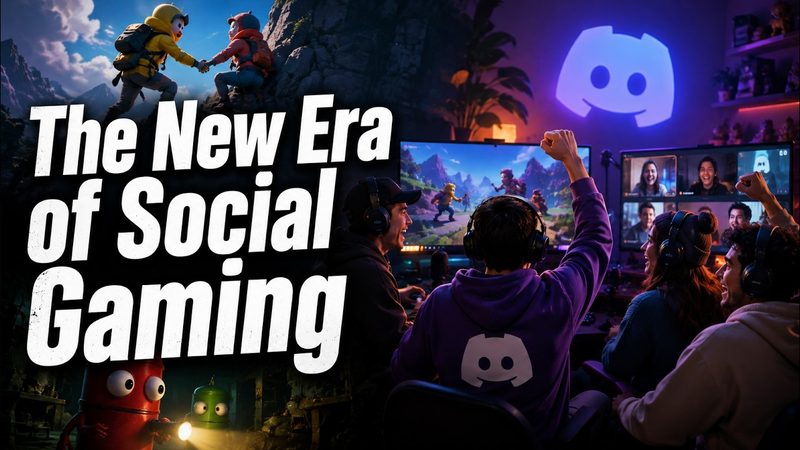
This paper proposes "paracommunity" as a term for self-sufficient online communities of blended play and labor that form around a streamer on Twitch and Discord. Building on parasocial relationship theory, which originated with Horton and Wohl's 1956 work and was extended to YouTube "Let's Play" creators by Kreissl et al. (2021), the author argues that live streaming's simultaneous play and interaction creates a novel space for parasocial bonds to become two-way and communal. The paper is positioned as a longitudinal study drawing on interviews and observation of Twitch streamers conducted between 2022 and 2023, with the argument presented as an ongoing project rather than a completed empirical analysis.
The findings center on how streamers use Discord to sustain audiences between broadcasts, through voting, donations, paywalled subscriber channels, and discussion of production decisions. Streamers report that their relationships with viewers are typically reciprocal: they think about audiences while offline, interact constantly across both platforms, and solicit audience input. Viewers, in turn, form communities defined by shared interest in the streamer, adherence to channel norms enforced through guidelines and moderation, and unpaid collaborative creative work such as art, memes, and edited clips. This diffusion of channel labor across persistent "always-on" communities is presented as a central characteristic of the phenomenon.
The paper's conceptual framework draws on Harmon's earlier use of paracommunity in television news, as well as theories of networked selves, aspirational labor, and microcelebrity, and it situates viewer motivations within existing research on live streaming audiences. The author concludes that paracommunity marks a significant development in parasocial relationships, in which streamers adopt multiple roles as host, entertainer, producer, and role model while viewers simultaneously take on the roles of guests, customers, co-producers, and admirers. The study's scope is limited to Twitch and Discord, and the author acknowledges that the proposed concept requires further empirical validation.
Each row is a game or company this document names, each column a document, oldest first. A mark means that document names it. Select a row to see those documents.

DiGRA · 2026

DiGRA · 2026



DiGRA · 2026



DiGRA · 2026



DiGRA · 2026



DiGRA · 2026



DiGRA · 2026



DiGRA · 2026

DiGRA · 2026



DiGRA · 2026



DiGRA · 2026

DiGRA · 2026
European Conference on Games Based Learning (ECGBL) · 2026