1 free read left. Create a free account for unlimited reading + AI research.
Create free accountArticle DiGRA
1 free read left. Create a free account for unlimited reading + AI research.
Create free accountArticleDiGRA
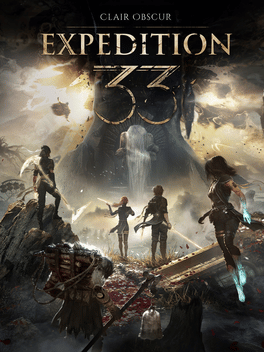
The plot reveals that the characters' world was made by the Dessandre family.
This paper, presented at DiGRA 2026, argues that Clair Obscur: Expedition 33 uses its narrative to explore the question of authenticity in fictional experience. Its central claim is that the game's plot, in which the characters discover their world is a painting created by the Dessandre family, subverts the player's expectations and stages a confrontation between two philosophical positions. The existentialist reading, voiced by Verso, holds that authenticity arises from one's lived being-in-the-world, while the absurdist reading, voiced by Maelle, holds that authenticity is something the subject creates rather than discovers. The final choice between these characters places the decision about the fictional world's authenticity in the player's hands.
The author develops the concept of the "pleasant fictionality dilemma," which operates at a meta level when players evaluate their own engagement with a game. If players regard their experience as authentic, they incur moral and ontological obligations toward fictional characters, as they would toward real people. If they regard it as fake, their pleasure itself becomes questionable. The paper frames this as the core problem underlying all experience of art objects, not only games.
The methodology is a close reading of the game's narrative, enhanced by a hermeneutical approach drawing on Kłosiński's ten-point guide for interpreting digital games. The argument draws on a theoretical base that includes Plato, Descartes, Heidegger, Sartre, and Camus, along with scholarship on metalepsis and emersion in games. The analysis is qualitative and interpretive, focused on a single title rather than on player surveys or broader industry data.
Each row is a game or company this document names, each column a document, oldest first. A mark means that document names it. Select a row to see those documents.

DiGRA · 2026

DiGRA · 2026



DiGRA · 2026
DiGRA · 2023