1 free read left. Create a free account for unlimited reading + AI research.
Create free account
Romantic Dilemmas - How Witcher 3 Builds Character through Choice - Extra Credits
Key insights
6 takeaways- 01The romantic choice between Yennefer and Triss in The Witcher 3 functions as a reflection of the protagonist's internal conflict between his established identity and his aspirational self.
- 02Well-defined character backstories provide the necessary foundation for players to engage in meaningful character definition rather than superficial selection.
- 03Deep emotional engagement in game design is better facilitated by building upon established character history rather than prioritizing total player-defined identity.
- 04By constraining a character's base personality, developers can create more complex and realistic narrative scenarios that would be impossible with a player-defined void.
- 05The industry assumption that blank-slate characters offer the most player agency is flawed, as total freedom often forces developers to rely on broad, shallow moral strokes.
- 06Pre-defined protagonists allow for nuanced, character-driven dilemmas that move beyond the simplistic binary 'good versus evil' choices common in blank-slate RPGs.
Ask AI about this video
Transcript
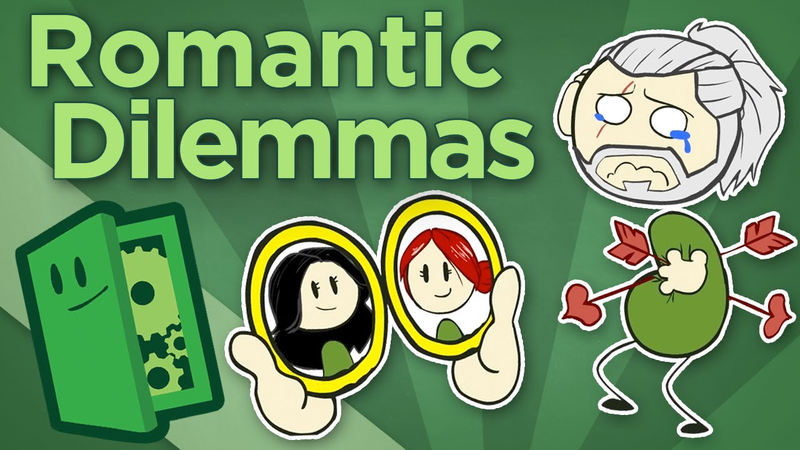
I really, really like BioWare games. Actually, I love them, and I love the romances in them, too. But as I was playing The Witcher 3, I was struck by how it posed to me a question that I'd never been asked in a BioWare game before, and that got me thinking about why that was. What, from an interactive storytelling perspective, let the folks at CD Projekt Red do something that I'm not sure you could do in a BioWare title? Oh, and uh if you haven't played The Witcher 3 yet, don't worry, I'm not going to spoil anything, and you really don't need to have played it to follow the episode, so we're good. In The Witcher 3, you have two long-term romance options, Triss and Yennefer, both of whom the main character has a lot of history with, and both of whom he's been involved with in the past. His relationship with Yennefer is tumultuous, burning, in some ways self-destructive, but always passionate. His relationship with Triss is more tragic, but gentler and less destructive. And now the player has to choose between them. For all the player's history with both of these
characters, that's not a choice they've had to face before. And this gave me pause, not because it's something we've never seen in a game before, but rather because of the subtleties defining the choice. As an example, in most BioWare games, when I have the option to choose a character to get romantic with, I feel as though I'm choosing what I want most. It's almost like picking from a buffet, and that's fine. But as we've talked about before, that's not usually how actual romance goes, especially when confronted with having to choose between two people who you love, each of whom you've parted from due to circumstances beyond your control. And yet here, they managed to provide a perspective on the simple profundity of that choice. In The Witcher, Geralt's relationship with each of these women represents something in himself. Choosing which of these relationships to pursue isn't simply about what I want as a player, but instead, on some level, it's a question of Geralt having to choose between who he is and who he thinks he wants to be. Yennefer is wild and restless and free, a mirror to Geralt himself. Triss is caring and kind and working to make the
world a better place. She's the person that Geralt, below that wry exterior, believes he wants to be. To love Yennefer is to be true to who he is. To love Triss is to become that better man he imagines himself being. Neither choice is wrong, but both options feel like they require giving something up. And the tug-of-war here is great because throughout the game, Yennefer's interactions with Geralt are natural and flirtatious and unbridled. While the interactions with Triss are often more tender and more caring, but they aren't quite as natural for Geralt. And you can feel that watching them. You can see him wanting to be with Triss while also wanting to be with Yennefer. This is a painful, but eminently human, eminently real dilemma. There's the person who drives him crazy and the person who's so much better for him, who he maybe should love. And in being presented with this more nuanced alternative, the player is given a chance to make a far more interesting decision than who do I like best. And in seeing this dilemma play out, we get a deep and meaningful insight into Geralt. And perhaps more
importantly in a game, we as players get to make a profound decision about who this character really is. Who my Geralt chose says more to me about Geralt than who my Shepard chose ever said about them. Which leads me to the truly fascinating part of this from a design perspective. For a long time, the prevailing argument has been that a blank slate character is best for truly interactive storytelling. The theory goes that it allows the player to imbue the character with the most of themselves and provides the most flexibility for the player to craft the character they want. But I think The Witcher calls that into question. By having a purely blank slate to start from, as is the case in many of the BioWare games, where you even choose the character's backstory, you may actually limit the narrative situations it's possible to present the player and thus limit the narrative choices you can give them. I can't put a character in a situation where they're torn between choosing the love for who they are or the love for who they want to be unless the character not only has those aspects of themselves somewhat defined but is also the sort of character who would care about such things and who would care about such a choice. By trying to
let the player make all the choices about the character, we actually eliminate many of the most nuanced and interesting choices they could make because the idea of letting a player make all the choices about a character is a fantasy in the first place. We've never actually done that. If we actually let the player make all the small choices that give a character character, if we let them have truly unlimited choices in every situation to really create a holistic, rounded, realistic person, we'd never build a game. The character's choices would be too divergent. Too much content would have to be created. It's an impossible development task. So, instead what we actually do when we offer blank slate characters in a narrative choice game is we end up letting the player choose the broad strokes. Are they good? Are they evil? Paragon or Renegade? But, these choices are so broad and so divergent that they often force us into odd contortions to keep the narrative roughly the same for most players. And yet, despite all that effort, these choices don't actually define the character enough to present the player with a really nuanced choices involving who their character is. In fact, with
the player making such divergent good or evil choices, it actually may make it impossible to allow them to define the subtle things about a character that really create interesting dilemmas. The choice I just spent half this episode describing doesn't work if Geralt can be pure evil and thus he can't be. Now, of course, having some narrative choice games give us that blank slate hero is great, but it may not be the best answer as a general rule as we've always assumed it to be. Having more of the character laid out for us may afford us the opportunity to create more interesting nuanced choices that we otherwise couldn't dig down to and provide us with the building blocks we need to explore things that are simply impossible to explore if those building blocks aren't there. See you next week.
Summary
The Witcher 3 serves as a compelling case study for how established character backstories can enhance interactive storytelling, contrasting with the traditional blank-slate model prevalent in Western role-playing games. The core thesis posits that by providing a pre-defined protagonist, developers can offer more nuanced, character-driven dilemmas that transcend the simplistic binary choices—such as good versus evil—often found in games that prioritize player-defined identities.
The analysis focuses on the romantic conflict between the protagonist, Geralt, and two established characters, Yennefer and Triss. This choice is framed not as a preference for a specific partner, but as a reflection of the protagonist’s internal struggle between his authentic self and his aspirational self. Yennefer represents Geralt’s natural, tumultuous, and established identity, while Triss represents a more tender, altruistic version of the man he desires to become. Because the game provides a foundation of history and personality, the player’s decision becomes a profound act of character definition rather than a superficial selection from a list of options.
The discussion challenges the industry assumption that blank-slate characters provide the most flexibility for player agency. It argues that attempting to offer total freedom often forces developers to rely on broad, divergent moral strokes that limit the potential for subtle, realistic narrative depth. By constraining the character’s base personality, developers are actually empowered to create more complex, meaningful scenarios that would be impossible to implement if the protagonist were a complete void. Ultimately, the narrative suggests that well-defined characters provide the necessary building blocks for deeper emotional engagement and more sophisticated decision-making in game design.















Comments