1 free read left. Create a free account for unlimited reading + AI research.
Create free account
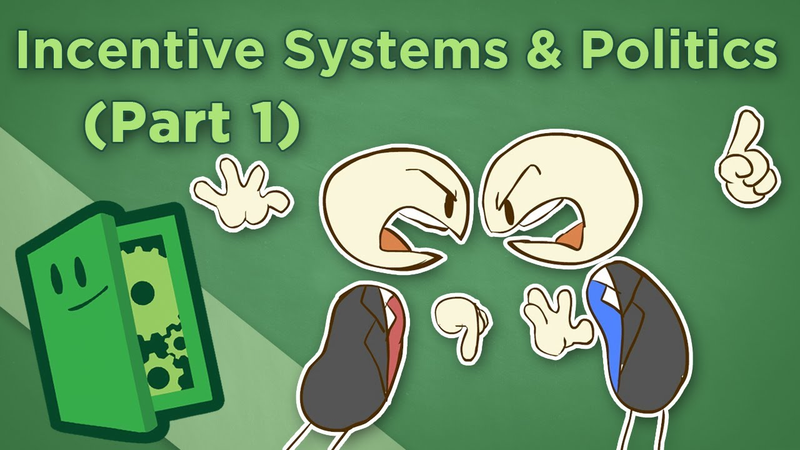
Incentive Systems and Politics I - Making Congress Responsible for Their Decisions - Extra Credits
Key insights
6 takeaways- 01Congressional salaries should be tied directly to the median income of the American workforce to create a financial incentive for legislators to foster national economic growth.
- 02Aligning the personal economic and social outcomes of politicians with those of the average citizen is a necessary step to discourage short-term political gains at the expense of the country.
- 03The American political system functions poorly because its incentive structures insulate lawmakers from the consequences of their decisions, prioritizing brinksmanship over public well-being.
- 04Mandating that members of Congress utilize the same healthcare options as the general public would eliminate the disconnect between legislative voting records and personal coverage benefits.
- 05Current governance structures allow politicians to avoid personal repercussions during crises, such as continuing to receive pay during government shutdowns that inflict economic pain on constituents.
- 06Legislative accountability is often reactive rather than proactive, as evidenced by Congress only resolving FAA furloughs once their own personal travel plans were negatively impacted.
Ask AI about this video
Transcript
[Music] [Music] politics have rules and systems just like any game and as a game designer James can't help but think about how broken our political system is and by broken I don't just mean it's busted I mean it's broken in a game design sense the underlying rules and incentives that govern our politics are just wrong they're completely out of whack in James's career he has spent most of his life setting up systems meant to craft Behavior or motivate people to achieve a goal and if you take the goal of politics to be the betterment of the people living in our country the systems we have are so poorly set up that if a student proposed them to James he'd fail the kid on the spot this either means that a our system has gotten so far out of hand as to not even remotely reflect what it was originally intended to do and we should fix it or B that in the end the objective of our political system isn't at all the benefit of its citizens which means we really need to fix it so we are going to talk about the systems that govern our governance in the next couple weeks we'll be talking about some of mechanics or rules that
dictate how politics in the US plays out specifically filibustering and gerrymandering but this week we're going to talk about incentive systems even if you're not that interested in politics I think this will serve as a practical example of why incentive systems are so important in games as well first let's talk about the most fundamental thing the economy for most of us we're pretty happy with the government if our wages are going up and our buying power is increasing if we can start buying homes paying off our student loans or simply not worry about how we're going to get through tomorrow then the US looks pretty Grand and sure there's a lot more to the economy than that but that's the part that most of us care about in this huge complex system that's generally beyond our Ken so let's give our politicians an incentive to do that let's tie the wages of a senator or congress person to how much your average citizen in the US makes right now the median income for someone working full-time in the US is right around $40,000 per year now most people who are in Congress have worked their whole lives to get there so I'm more than happy to say that they deserve way more than the average citizen makes so let's say we paid them 2 and a half times what the average American brings in that's a
more than most of us manage and it brings them up to $100,000 a year which I think is a decent income a person should be able to live on that even if they have to keep an apartment in DC and so long as we keep it tied to the median income if our Senators and Congress people bring us all up $10,000 like they did over the Clinton years that's a $25,000 raise for them and you know if they can pull that off I'd say they earned it it would align their goals with the goals of the American people and help stop ridiculous things like fighting over the debt ceiling or being unable to pass a long-term budget for the US for 3 years running because anyone willing to risk the economy's well-being for political reasons would really have to put their money where their mouth is there'd be no games or brinksmanship played over things like our national credit rating because it would directly impact the people who right now frequently risk our Collective well-being without consequence in order to gain points with a few of their constituents the same could be done with Healthcare just give every Senator and Congressman whatever healthcare plan the US gives to citizens of their age if that means no plan at all make them do what all of us have to do pay for one or go without I don't care which side of that debate you're on it just pains me to see guys get up on the floor of the
house and rail against government subsidized Healthcare when they're happily taking a deluxe Congressional Healthcare package paid for with our tax dollars that they voted to give themselves that incentive system is just plain wrong it's this idea of consequence-free lawmaking this system of making laws that in essence affects everyone but the person whose job it is to make the laws that throws our entire system out of alignment Congress needs to be less insulated from the impact of their decisions we're not incentivizing them to look out for our best interests we've built a system where Congress people are often presented with a decision to a do this thing that is good for the country but not that great for you or B do this thing which is bad for the country but doesn't negatively impact you at all and actually gives you some small benefit that is a broken incentive system for an almost absurdly brilliant example just remember that one of the few parts of government that continues to get paid during a government shutdown is Congress while millions of government workers around the country were being denied wages and we were all seeing a lack of services Congress continued to have their checks roll in even though they were the ones who shut the whole thing down now when this came to light many Congress people
graciously donated their checks to charity which is great but it doesn't make the underlying system any less broken they could drive the government over a cliff and not feel any direct repercussions for it they couldn't feel any of the pain they were causing the people for whose benefit they were supposed to be governing for another example take the recent FAA Furlow it was an active political drama that cost the country billions of dollars and made the average person spend hours stuck in delays but as soon as the members of Congress all wanted to go home on Congressional recess they put the FAA back to work in a matter of hours so they wouldn't have to wait for their flights they did it it so quickly that part of the law they had designed to do it was still handwritten when it went into effect this sort of power to write oneself out of the consequences of one's decisions makes it impossible to incentivize good governance in each case where this is possible like with wages or Healthcare we're going to have to dig in and root it out but for any of this to work we have to fix one of the core underlying problems with the incentive system and we'll be talking about that next week as for the ideas we've laid out here I just want to mention before we go we're expressing all this in a 6-minute video These are simplified systems I've been describing they don't answer a lot of the problems even within
the categories they're meant to address and in this state there are certainly unanswered problems some of them will create these are just general ideas a way to take a step in the right direction and they're a heck of a lot better than the systems we have right now James has mulled over and actually designed far more detailed and complex versions of these systems and I'm sure someone with more time and an understanding of all the labors they have to work with could go a lot further than that but I wanted to present these firststep Solutions because I think it's important for all of us to think about the systems and the incentives that govern our politics these systems run our lives in a very real way thanks for watching we'll see you next week [Music] a
[Music]
Summary
The American political system suffers from fundamental flaws in its incentive structures, mirroring poorly designed game mechanics that fail to align the behavior of lawmakers with the well-being of the citizenry. When the rules governing governance insulate politicians from the consequences of their decisions, the system incentivizes brinksmanship and self-interest over effective policy. The primary thesis is that by re-engineering these incentive systems to ensure that legislators experience the same economic and social realities as their constituents, the government can be forced to prioritize the collective good.
Key proposals for reform focus on removing the insulation between Congress and the public. One core recommendation is to tie Congressional salaries directly to the median income of the American workforce. By setting legislative pay at a fixed multiple of the national median, lawmakers would have a direct financial incentive to foster economic growth and increase the buying power of the average citizen. Similarly, the system should mandate that members of Congress utilize the same healthcare options available to the general public, thereby eliminating the hypocrisy of lawmakers voting against subsidized healthcare while enjoying premium, taxpayer-funded coverage.
The current structure allows for consequence-free lawmaking, as evidenced by instances where Congress continued to receive pay during government shutdowns or quickly resolved FAA furloughs only when their own travel plans were inconvenienced. These examples illustrate a system where leaders can inflict economic pain on the public without suffering personal repercussions. While these proposed solutions are simplified starting points rather than comprehensive fixes, they represent a necessary shift toward accountability. By aligning the personal outcomes of politicians with the national interest, the political system can be restructured to incentivize responsible governance and discourage the pursuit of short-term political gains at the expense of the country.























Comments