1 free read left. Create a free account for unlimited reading + AI research.
Create free accountArticle DiGRA
1 free read left. Create a free account for unlimited reading + AI research.
Create free accountArticleDiGRA
Aarseth's paper aims to resolve a long-standing tension in the field over what counts as the player. It draws on Hans-Georg Gadamer's claim that games master their players.
Espen Aarseth's paper, "I Fought the Law: Transgressive Play and The Implied Player," seeks to resolve a long-standing tension in game studies over what counts as "the player." Drawing on Hans-Georg Gadamer's claim that games master their players, Aarseth argues that the historical, real player cannot exist without a game, while the game can exist without any actual player. He builds on Wolfgang Iser's concept of the implied reader to propose the "implied player," a role of expectations embedded in a game's structure that the real player must fulfill for the game to take effect. Aarseth contends that transgressive play, where players defy the game's intended rules through unexpected actions, bugs, or exploits, is central rather than marginal to understanding play.
The paper maps the field along two axes: methodological (formal versus informal) and empirical (social sciences versus humanities). Social scientists treat the player as a historical, situated person studied through observation, while humanists treat the player as a construct of the text. Aarseth reviews Jonas Heide Smith's taxonomy of four player models and observes a field-wide preference for active, subversive play, which he defends as analytically important even though it is statistically uncommon.
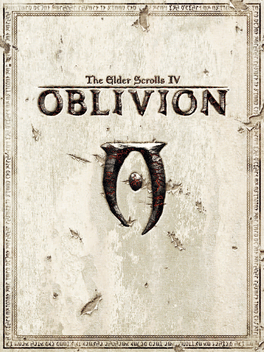
Illustrated through anecdotes from The Elder Scrolls IV: Oblivion, including item duplication exploits, unexplained NPC combat, and an in-game fight with a city guard captain, the paper argues that such moments provide a symbolic counterweight to the constraints of regulated play. Aarseth concludes that these unexpected events, though rare, give players a sense of regaining control over the systems that dominate them.
Each row is a game or company this document names, each column a document, oldest first. A mark means that document names it. Select a row to see those documents.
DiGRA · 2023
DiGRA · 2023
DiGRA · 2023
DiGRA · 2023
DiGRA · 2023
DiGRA · 2023
DiGRA · 2023
DiGRA · 2023
DiGRA · 2023
DiGRA · 2023
DiGRA · 2023
DiGRA · 2023