1 free read left. Create a free account for unlimited reading + AI research.
Create free accountWhitepaper DiGRA
1 free read left. Create a free account for unlimited reading + AI research.
Create free accountWhitepaperDiGRA
Distilling the key insights…
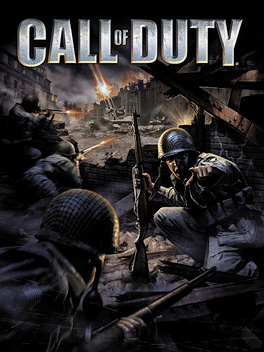
Bart Simon's paper examines how cooperative artificial intelligence in contemporary digital games, particularly Activision's Call of Duty 2, reshapes the relationship between players and machines compared with the competitive human-versus-computer framing established by chess and the 1997 Deep Blue–Kasparov match. Simon argues that single-player games often preserve a "humanist remains" by concealing machine labor behind an illusion of individual human mastery, while cooperative AI foregrounds a "conversation of actions" in which players must continually track and adapt to non-human comrades. The paper frames this as a move toward critical posthumanism, drawing on Haraway, Latour, Hayles, and Baudrillard, and uses Mori's uncanny valley to describe the unsettling yet productive tension this creates.
The analysis rests largely on theoretical argument and qualitative observation rather than systematic data. Simon draws on his own play experience with Jedi Knight and Call of Duty 2, forum discussions in which players describe beating or exploiting game AI, and an informal classroom exercise in which students interacted with chatterbots in an inverse Turing test format. No survey sample, statistical measures, or formal player study are reported, and the paper explicitly sets aside a detailed treatment of what counts as artificial intelligence in games.
The scope is conceptual and centers on Anglo-American commercial games of the late 1990s and mid-2000s, with attention to the broader military and wartime-game genre. Simon's central contention is that cooperative AI opens exploratory space that competitive, Turing-style AI has largely closed, and he proposes that such games function as devices for imagining social relationships, including friendship between humans and machines. The paper was presented at the DiGRA 2007 conference and positions itself as an early step in a larger research program on game sociality.
DiGRA · 2012
Deconstructor of Fun · 2026