1 free read left. Create a free account for unlimited reading + AI research.
Create free accountWhitepaper DiGRA
1 free read left. Create a free account for unlimited reading + AI research.
Create free accountWhitepaperDiGRA
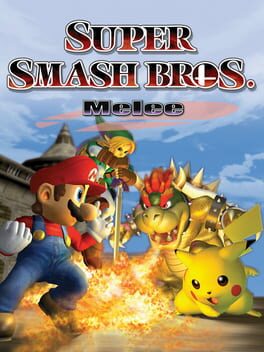
Competitive Super Smash Bros.
This document examines how competitive players of Super Smash Bros. Melee modify the GameCube controller to overcome its design limitations and gain competitive advantage. The author argues that because Melee was designed for the GameCube controller and the controller is no longer in production, with third-party alternatives facing uncertain tournament legality, user modifications have become the primary means by which players innovate on their equipment. The work is positioned as the first half of a broader inquiry into how these modifications shape competitive play, and it is presented as preliminary, with analysis still ongoing at the time of writing.
The research draws on a thematic analysis of controller modification posts gathered from Smashboards and the r/smashbros subreddit, two community forums previously studied in Melee research. From this material, the author proposes a pattern language of five limitation categories: feedback, consistency, performance, mechanical quirks, and ergonomics. Each category pairs a described limitation with an example and a corresponding modification, such as installing tactile microswitches for the Z button, notching the analogue stick gates to aid precise angles, shortening trigger springs to speed inputs, adding capacitors to filter spurious analogue signals, and mounting the controller on a stand to reduce wrist strain. The ergonomic category is supported by reports of injuries and forced retirements among professional players.
The findings indicate that modifications substantially extend the controller's capabilities, transforming a generic input device into specialised equipment that enables techniques difficult or impossible on an unmodified unit. This raises a central question about legitimacy: if third-party controllers are restricted for offering different capabilities, the same reasoning may apply to modified GameCube controllers, and the author asks to what extent hardware should determine what is possible within an esport. The scope of the study is limited to the Melee community and the GameCube controller, and the work does not yet address the broader effects of these modifications on gameplay.
Each row is a game or company this document names, each column a document, oldest first. A mark means that document names it. Select a row to see those documents.
DiGRA · 2022
DiGRA · 2022
DiGRA · 2022
DiGRA · 2022
DiGRA · 2022
DiGRA · 2022
DiGRA · 2022
DiGRA · 2022
DiGRA · 2022

DiGRA · 2022
DiGRA · 2022
DiGRA · 2022
Game Developers Conference · 2020