1 free read left. Create a free account for unlimited reading + AI research.
Create free account
How to Prepare for the Future of Mobile Marketing! | UA Coffee Talk
Key insights
6 takeaways- 01The role of the media buyer is shifting from manual campaign trafficking to strategic oversight as machine learning and automation from platforms like Google and Facebook increasingly handle bid and budget optimization.
- 02Marketing efficacy is increasingly dependent on the scalability and accessibility of the underlying game product, requiring closer collaboration between marketing, creative, and product teams.
- 03Success in mobile marketing now requires a transition toward creative strategy, product integration, and high-level storytelling rather than reliance on granular, device-level tracking.
- 04Privacy-driven changes and the erosion of traditional tracking necessitate a convergence of performance and brand marketing to maintain growth.
- 05Marketers must adopt a holistic approach that influences the entire user funnel, including retention and monetization, by aligning marketing efforts with core product mechanics.
- 06Competitive advantage is shifting to professionals who can synthesize complex data into actionable business strategies and act as liaisons between data science and user psychology.
Ask AI about this video
Transcript
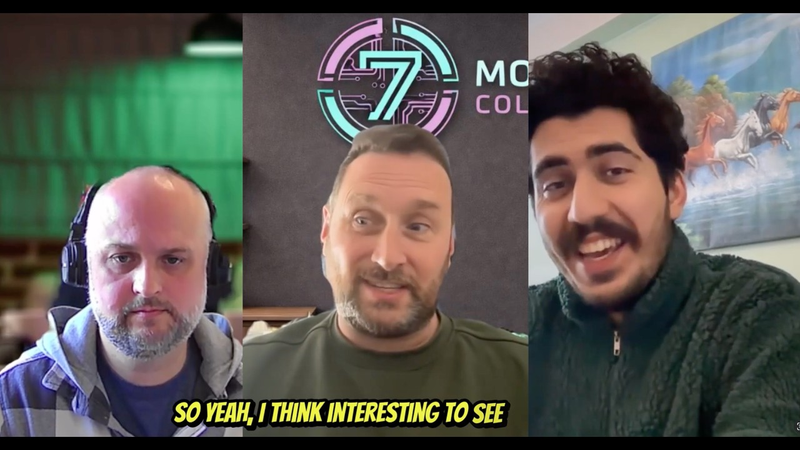
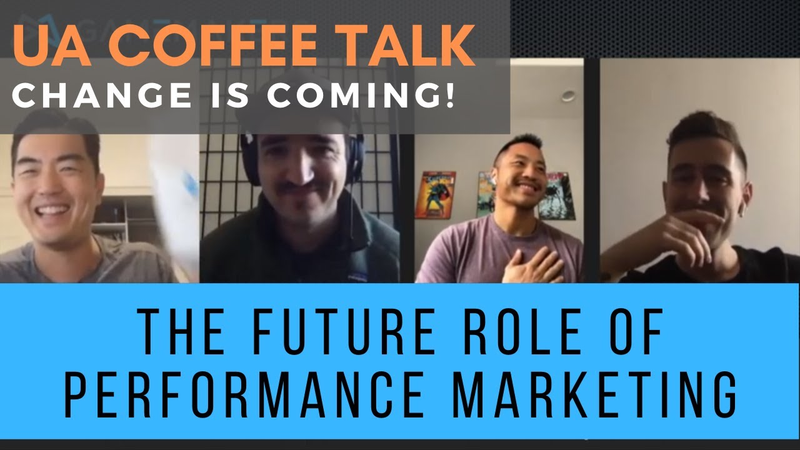
Hey, welcome everybody. We're back with another UA Coffee Talk. As usual, we have our regular host Nebo Radovich and John Lau. And from our last UA Coffee Talk, we have once again Mate Lancaric. So, the topic of conversation today is essentially with so many changes happening with the role and scope of performance marketing, how do we think the role as a UA marketer will change in the short-term and the longer-term future? So, more specifically, we want to focus on three things. One, key trends. What are the trends driving changes in the performance marketing function and as a UA marketer? Second, brand marketing. So, how much do we think brand marketing becomes a part of the overall marketing mix for mobile marketing teams in the future? And third, new skills and how to prepare. So, given the upcoming changes, what skills will current performance
marketers need to develop and how can they be more effective in the future? And so, yeah, before we dive in, you know, what what are you guys drinking in terms of coffee? I've got I saw some hate on some Slack channels about Blue Bottle, but that that's what I'm drinking. Oh, there you go. I do have my my double espresso over here. All right. You got your usual black, John and Nebo? Uh actually not not not black today. Uh I have a Pete's Sumatra with a two drops of agave syrup. So, sweeten it today. Fancy. Fancy. And going overboard with those two drops. Yeah, I got I got an espresso machine in a Starbucks cup, so representing San Francisco. Nice. All right. Well, maybe we could jump right in starting with the trends impacting performance marketing. So, in your opinions, guys, what are the key things happening and what do you guys think will be changing as far as, you
know, the function and the specific role for a UA marketer? And since John just took off, maybe we start with you, Mate? Sure. I can start. I mean I think we can all agree these days the the changes is here and it's it's inevitable and the thing is happening on on Facebook and on Google as well. Like everything is moving towards like this VO value optimized campaigns and purchase optimized campaigns and and what worked before when we had like hundreds of campaigns in in one one account now changed to three or four or five campaigns. So, it's it got much simple simpler these days and with like these algorithms and like campaign budget optimizations going forward I think that the like the huge marketing teams will shrink because nowadays, I mean I can like just by myself manage like 1 million budget on Facebook or Google or with like one or maximum three
other guys like to manage the whole bunch of UA ad networks. And basically like so to managing Facebook and Google with smaller smaller group and then trying to build like bit automations for the ad networks which saves a lot of time. It's is the direction I I see the the UA is going at the moment. Okay. Nebo, what about what about you and are there other trends that you see or I I think we covered this a little bit in the some of the previous podcast, but as as Mate said, everything's getting simpler like machine learning is taking over. Facebook is introducing their own version of UAC. Like they're all the trends are pointing towards like more of a level playing field a situation, simpler tools and and the focus is moving away from having large media buying teams to having bigger creative teams or having like UA working more closely with
product to in order to kind of increase the market the marketing appeal of the game. And the last bit is like consolidation is consolidation is continuing. Facebook and Google are becoming bigger and bigger. It's harder to like leverage ad networks right now than what was the case a few years ago. So, it just everything's kind of pointing towards the same point which is Facebook and Google basically completely taking over. And machine learning again as what they said is is the last one. I'm a lot I think I'm just echoing what Vatin Nipo said. Traditionally, all right, I I think I've said this before in in news acquisition there's only three levers a marketer can really pull. One is targeting, the other one is like bid budget optimization, third one is creatives. And over the last couple years you've seen like both the targeting and the bid budget optimization being increasingly more automated to the point today like what they said, you know, back when I
did I I was introduced for Facebook buying on interest targeting, keyword targeting, and power editor, you know, you needed a team of six people to, you know, manage hundreds of campaigns. Now, you're right, you know, three campaigns, put everything into a bucket and let the algorithm go itself. So, yes, the teams will be smaller, but more importantly is the the function of the role has changed, right? You no longer need a a team of analysts to do these like minute level tinkering to squeeze out the maximum efficiency of all the different things you're trying to achieve. You might need only a few hands to to to keep the things rolling. And then like Nipo said, focus portion of the time into other activities such as working closer with product or maybe doing more user funnel analysis and creative analysis. Um so I'm seeing that shift. So with the current trends happening then what will distinguish
a fantastic performance marketer from a mediocre performance UA marketer? Is it Is there Is it just like the creative process? And I know Matey we talked about your creative framework before but would it just be more around having a process, a framework, or understanding how to come up with winning creatives? Or what what do you guys think in terms of how do you get that alpha or how do you become better at your craft? I think what this eventually is going to lead to is that UA is going to be so like very simple and it's going to be commoditized to a certain extent which is going to bring a lot of kind of experts which might not be really experts because like you know it's simple to do UA so you don't really you don't really need to do much to be good at it. So if you want to be and I had this I had this conversation with Justin Michael maybe you guys know him he's a very active one on LinkedIn he asked me like what makes a great UA manager great. And I think it's basically just
understanding the understanding the bigger picture understanding how the product works how different UA levers impact impact product metrics understanding creative really well and how different types of creative impact like retention ROI etc. And then making sure that you kind of leverage all the available all the available levers to do better not necessarily just UA UA ones but work with the product team work with the creative team test different things be curious test things from different industries etc. Just understanding UA is not enough anymore because there is there won't be much to understand unfortunately and and you know you need to like be you need to be like more versatile and to like understand other things outside of just media buying. If you want to be world class. Uh that's kind of my you know, my way of seeing this. And you need to grow a mustache. And wear a cowboy hat.
One comment from my side, I mean, um as you said um the like understanding the only way doesn't won't work anymore, but I feel like that understanding of like the whole game industry and the business is very much very much important. Like where to spend money, how to spend money, and like spending as spending those UA money as it's your own money because you know, that's really important. And uh yeah, I I would say I would say um like understanding the whole business and how the gaming works with different genres, that's that should be really important and that's the the UA UA people apart. So, I think I'm going to say something that I think a lot of people won't agree with. Um but traditionally in performance marketing, we try to differentiate ourselves from like let's say brand marketers overall, right? But fundamentally, I have a very romanticized version of what I think marketing is. As a marketer, I think it's our job to tell stories. The fundamental difference for me is
that unlike, you know, 50 years ago, it's about how to tell a story on the newspaper or on a 20 years ago to telling the story on a 60-second or 30-second spot on TV, our job today is how do how can we tell a clear and concise story to a consumer in 3 to 10 seconds. The differentiation between us and what we consider as traditional brand marketing is being able to tell that story in 3 to 10 seconds and at the same time measure the success of how well we told that story. So, right now what I'm is as a UA person in the last 5 years, that hasn't existed. I don't think people are focused on telling the story. They're focused on just data, which is not a bad thing per se, but now once that data either starts to go away, you don't have access to that data, or let's say you have less visibility in that data, then you kind
of have to default back into what a traditional definition of a marketer is is understanding how to tell great stories. Whether that is storyboarding or working with the creative team to coming up with different creatives that makes sense that can drive higher IPMs. It's not okay just to say that my job is to AB test creatives. No. My job is to be empathetic enough to put myself in the shoes of the user and understand for my user target, what can I create to get them to drive to that click. And I'm not talking about click creating click-baity titles and stuff like that, but when I work with some startups and do some consulting, I always say like what is something that you want to communicate to your user in 3 seconds or less, and how can you achieve that, right? So, I think a great UA marketer moving forward needs to have that mindset a little bit more. Definitely keep that analytical capability, but just the analysis part is no longer enough now.
Yeah. Why why would you say like a lot of people won't agree with you? I mean, this is like really really important, and and what you just said, I mean, the understanding of your target audience and what resonates well, it's very very important, and that's that's how you can say that story and like I've had arguments with people about this. Oh, okay. But I like I I literally had like UA professionals Really? Okay. in in in our world that has told me like, "Well, it's not my job to worry about creatives." And and then I I like I'm I'm at a loss when I hear something like that, but There you There you go. That's That's how you differentiate between let's say mediocre UA managers and the other ones. But, well, not saying that they are mediocre, but I see it more as like a a philosophical difference or view. I I think it's more like for them they're more of like for me it's like, "Okay, then you're more of a data analyst, right?" Then you're I wouldn't
I wouldn't really define you as a marketer. And then to to Nebo's point is about working more with product. I think for a UA manager, you have to be on top of telling a better story is to really understand user funnel analysis. Not only how to bring the user in, but how to keep the user in. I think that is going to be also very important. But, thank you for for validating my point, my friend. All right, guys. Let's now shift over to brand marketing, right? And so, I think historically, especially gaming companies, brand has been generally has not been very like much of the budget or have much of a role in terms of the marketing function, especially at mobile free-to-play game studios, but you know, it sounds like Nebo, if I'm right about networks, sounds like you guys are shifting a bit more to brand. It seems like with the current trends happening that some people are making the argument that brand's going to become increasingly more part of the
overall function. So, I just wanted to get your thoughts in terms of what do you guys think as far as how much does brand marketing become part of the the marketing function, and if so, how much? Like, what percent of budget and things like that do you think it it becomes in the future? Yeah, that's correct. I mean, we started exploring brand marketing a little more. And I think one one thing that's important to to mention here is that brand marketing for like brand marketing you need to have a product that's accessible to like large or larger audiences. So brand marketing doesn't always work. Like if you have a you know if you if you have like a niche product or like a core game it's much harder to like be successful with brand marketing unless there are some very specific like core niche audiences or like niche and media outlets etc. So the main the first point here is if your product is Tetris and you want to like you know Tetris pretty much doesn't need like you don't need a tutorial in Tetris. Pretty much every single person in the world knows
how to play Tetris. It's a very accessible product, right? And then you can apply some of these top of the funnel strategies like strategies like brand marketing because they could work. The other thing with brand marketing is like if you use the kind of user acquisition or performance marketing you have to like look at brand marketing you want to work because it takes longer. You need to build brand awareness. You need to make sure you understand where and how like you're doing brand marketing in order to succeed. And I think most performance marketers don't have patience to do that. And kind of like my third point on like why potentially brand marketing could become bigger is that what happens if what happens if device ID really goes away, right? Like if you're not able to analyze performance marketing efforts at the user level then it pretty much becomes brand performance, right? So understanding brand marketing and understanding like alternative strategies to do UA is going to be really helpful because pretty much performance marketing might be done in the same way brand marketing is done or perform brand performance
marketing is done right now with like doing a lot of lift analysis, understanding incrementality, understanding where the users are coming from etc. So so you know if you tick all of these boxes like you have a product like your company or like a company has a product that's accessible enough brand marketing can absolutely work and I think more dollars will move into that direction. The the bit is if Facebook and Google become too expensive for a lot of for a lot of developers, brand marketing might become more attractive of an option. Think about maybe seriously like they you guys probably read a bunch of their kind of case studies on on podcast marketing like radio ads. They did a lot of like brand marketing things because their product is again accessible and you know, it could be that other channels are just too expensive for that type of product and they have to explore other strategies. That's my view on it. Hopefully it makes sense. Uh it makes sense, but you know, for me as a as a UA manager, I would definitely
like choose spending uh more on on the traditional performance marketing channels. Yeah, absolutely. So, it's it's a different strategy. If you have a game that's making like I don't know $100,000 a month, you can completely rely on on performance marketing. But, once you start kind of expanding your audience, uh you have to look for alternative strategies. And and and brand marketing is one of them, right? If you want to If you want to spend $10 million a month versus like $100,000 a month, brand marketing becomes a very very attractive option. Simply because it's hard to spend that money efficiently on on on performance marketing channels. And again, what happens if like the device ID goes away? Like how efficient are you going to be on uh at tracking your performance marketing efforts? You know, that's that's a big unknown right now. Uh but, it might happen that all the marketing becomes brand what brand marketing is today.
So, if that happens in 5 to 10 years, who should be running the the free-to-play mobile marketing team? Should it be a performance marketer or a brand marketer? Uh I mean I mean depends. I think it should be a performance marketer, because it's such a data intensive job. You need to understand what's going in the product as well. Not not just on the on the marketing side of things, but things will change. And I think it it's beneficial for all of us here to understand how brand marketing works. Because that might be one of the that might be one of the future states, right? Like where brand marketing just become more dominant as a result of removal of performance marketing kind of levers like device ID. So when you are talking about like brand marketing, what kind of like brand marketing activities you are talking about? TV ads, podcast, radio, out of home. Anything else? I mean all of it. I mean even like back in the machine zone we did pretty much
all of these and we measured them in a performance marketing way. It just the way you measure it is using probabilistic methods and not deterministic methods, which is device ID. So it's a little different, but like there are ways a lot of big advertisers actually like measure their brand marketing, right? So it's not it's not really it's not that like hey 50% of all the money is being wasted. It's better tracked, better measured. It's just not, you know, measured at device level, which is very convenient when you're doing performance marketing. But again, what happens if that goes away? Are you going to start like considering doing more brand marketing because you don't have like the same level of granularity of data on the performance side? Maybe, right? I mean I'm trying to also to kind of provoke your you guys a little bit and to see what your opinion are. see that. So I mean there's there's a couple things you can define like what brand marketing is, right? There one one thing you could say is there's post install brand building,
post install brand affinity. Right? Uh a user who's already playing your game, but how can you build that brand loyalty within that user? I think that is within the realm of what a performance marketer can do. Right? When you're doing re-engagement, retargeting campaigns, that's part of that process. Uh and then there is the kind of new user brand recognition, which is what I guess we we here would traditionally define as brand marketing, buying on TV, recognition, but let's look beyond gaming for a second, right? What if you are like one of the video messaging apps. Discord just launched a lot of features that rival Zoom, for example. Does it make sense for them to go out there and do a bunch of performance marketing buying on Facebook, or can they actually do some brand campaigns where they can't do deterministic measurement, but for me, I think it makes sense, right? With the shelter-in-place world right now, and the recognizability of Discord, and
just saying, "Hey, we have these new features." I think that there's certain areas where brand marketing has a very, very good fit. And to Joe's point earlier about in 5 years, is it going to be a brand marketer and a performance marketer, I honestly believe that that distinction will not be there in 5 to 10 years, right? It's just are you a marketer? That's it. You We've already seen performance marketer needing to pick up more skill sets that is traditionally more aligned with what a brand marketer is, and then brand marketers finding themselves today having to be much more data-driven and much more data-centric than they were let's say 5 years ago. So, if anything, you're seeing this kind of meeting in the middle of what a marketer is. What's happening in my point of view is a redefining of what a digital marketer is in our world. And there is not going to be a a clear distinction between, "Oh, you are brand,
I am performance, I do this, you do that." I think it's going to be a lot of We're going to be doing a lot of the same things. And going back to what I say, it's really just coming back down to like, are you telling a story well and effectively and driving incremental value? Well, from my point of view, you know, um if I'm um making a decision if like spending 1 million or or 2 million for for brand or or traditional UA at the moment, then I would go for the traditional UA anytime. In 5 years, well, I don't know what's going to happen next year. Um so I don't know. I don't know, but then I'm definitely open for like exploring and trying to understand more not only brand, but any other UA methods that that are going to be there. Just because again, as you said, like it's not going to be brand UA, I don't know,
or media buying is it's going to be just marketing. Definitely. So then last kind of area would be new skills and how to prepare for the coming changes as far as UA. And so I wanted to really understand what you guys think is going to be necessary. We've kind of talked about this a little bit in terms of like potentially having to be more holistic, probably having to have a wider set of skills, but uh if you guys could talk about what you what specific skills do you think people are going to have to develop and what specifically that they'll have to do to be able to get better. And I can kind of you know, and it seems like when I think about this, I kind of think about it in a few ways. One is in terms of like depth, like how deep will performance marketers have to go from like a data analysis perspective, right? So are they going to have to be able to you know, figure out their own how how to come up with their own multiples model or ROAS yield curves or even down to the trying to determine how much
margin that that you're trying to get from users and building your own cash flow you know model and then in terms of like breath in terms of not only having marketing skills but also product skills so that you understand exactly how the product works and how to optimize products so there's like the depth component the breath component and then for me there's also the strategy component so I mentioned before that we talked with Monte in terms of having a creative framework but I think that from a strategic perspective will the future performance marketer not only have to have a framework in terms of creative optimization but also in terms of like a growth framework right understanding whether it's funnel or all the different key things that impact growth for the product and I that's something I haven't seen from a lot of UA marketers right and like having a model that you would have at a company like a Facebook or other companies that would show you exactly how growth is impacted by
different things that you do at the product level as well but all right so just like handing it over to you guys what do you guys think? You're answering your own question. First of all I think it depends on the size of the company too so if the larger company you are maybe the there's going to be a lot more separation in function but I think from a you're 100% correct in terms of the depth and breadth right so if you go back to at least when I started doing UA my day-to-day is really come in pull my reports do channel level optimization do campaign level optimization do and a lot of it is working with numbers right just looking at the spreadsheet or some type of reporting and then tinkering. Now moving forward some of the new skill sets that we we talked about is doing more on the creative side and understanding like how is the creative
how does a creative come together? How do we drive a a work with a creative team and understanding their the flow? How do dictate creative direction to drive better user conversion on the impression level. And then on the on the far side that the down the funnel to Nebo's point is working much more with our product teams to analyze the user funnel, right? A lot times we talk about creating LTV models and it's UA's role to calculate what our recoup and break even points are and so on and so forth, but that a piece that's always been missing within the UA realm is how do we keep that user in our funnel? How do we retain that user? From a traditional perspective, that's always been product shop, right? We bring that user in and then uh we focus on top of the funnel and then the product will focus more on like everything else. Now,
I think now what you're what I'm seeing is marketers have to better understand the entirety of the funnel from bringing that user on, how we keep that user engaged, and then how we get that user come back if they were to churn out. And that becomes a much more product-centric role and working much closer with product to define KPIs. So, why should UA define what our ROAS targets should be? If anything, should be a collaboration with product to figure what those goals should be. And I think a lot of teams are going to shift towards that. A lot of people are going to have to learn how to do that. I know, for example, Network, Nebo, they've been doing this for years. But most teams beyond Network has not. So, learning how to collaborate with these other teams, but also operating in tandem is going to be something that's that's most marketers are going to have to learn to do.
I think we we touched this not sure if during or after our last last discussion like the way UA managers should be also able to talk to the C-level guys and the C-level and executives about like budgeting and and LTV curves and and draws and like all the overall overall strength spend or or growth or scale strategy to point the the whole business into into the growth direction. So basically not only working very closely to the with the product team but also like with the as you mentioned with the creative team and understand the the creative flow and also like connecting the creative team with the product teams where everybody's on the same page and I'm not sure like how how UA teams can can build like their own growth yield curves and and everything. I mean like like moving to the data science you mentioned that would be amazing. I mean I have
admit I don't even know how to SQL and and to these kind of stuff. So that's something that I need to definitely learn in the future. But like data-centric and then creativity that's definitely something on the on the UA play that should be considering Yeah, I mean I agree with with Matej's and and John's points. Basically I I have like three different kind of categories of like future UA professionals. One is kind of creative plus plus, the other one is product plus plus and the third one is like data plus plus. Basically people will move away from media buying like or their focus for media buying they'll focus in one of these kind of categories. It's either going to be like understanding creative really well and working with you know, being like UA creative professional, understanding the product really well and being kind of product UA professional, or understanding you know, the plumbing process and data really well and being kind of data analyst UA
professional. Um And and what this is going to basically you know, you'll have UA professionals to understand really well how to like build creative, where creative gets served, what's the performance by placement, what's the performance by network, etc. And then help the the creative team help inform the creative team what are the kind of creatives that need to be built. The role of the product UA professional will be to kind of bridge the gap between product and UA and and help product So, just to give you like one background story, it's like I I see products products pivoting away from their original kind of gameplay because they're coming up with different ad concepts that are working really well. And they're now changing the product to like implement some of the ad ideas in the game. Uh maybe you saw like Hero Wars or like Wildscapes. They're doing that right now where they're basically implementing misleading ads in the game gameplay. That's basically where like the product UA person is going to play a very important role. It's like, "Hey, let's find highly converting
concepts on the ad side of things and then try to implement them in the game to improve the retention, monetization, whatnot." And the last one is the data like the data analyst UA professional, which is going to be in charge of or basically just building all these uh you know, LTV models, making sure that in case again like device ID goes away, that there are systems in place that help you understand where and how the money's being spent. That's how I see it. And the focus will definitely move away from media buying itself because it's going to get slightly easier and will require less time. Maybe we could break down these these areas a little more specifically, but from your perspective as far as depth and when I mean depth, maybe more depth around data analysis, you know, quantitative analysis, things like that. How deep should someone should a UA marketer be? Like, how much should they rely on the data science team versus themselves doing all, you know, the kind of analysis and modeling? Like, what what what do you guys think? Should they
move deeper on the data side in the future or should they in the 5 to 10 years from now, given current trends, they should still rely on some type of data science, data engineer type of person? I think depending working with a data science team is I don't see an issue with that. But, from a UA perspective, like you need to at least understand how the model is derived. Right. What are the variables that go in? And I I have what I've seen is a lot of marketers, they don't care. Like, they say, "Hey, someone else creates a model. Just give me a goal and I'll hit it, right? I did my job." And I think that's a fundamental mentality that needs to go away like today. Is this I did my job type mentality. And by the way, we can we can talk about this in the future, but the the models I see to get res like yield targets and stuff like that, they're all very simple. No, I I I know. I know. It And And they're not even like that difficult to come Like, the math
behind it is not that I think really what it is is like understanding like how is the LP the model derived. Right, right, right. Right? And how that maps out into whatever like break-even goal you have or or or ROAS goal you have. Like, if And And when I say understanding it, I'm not saying Most most marketers can understand the math behind it, but the willingness to even look into it is not there for some people, and I think that's important. And I think Mate had a really good point about marketers being much more engaged with the executive level. I think for me I'll broaden that definition a little bit uh saying that marketers or uh performance marketers need to better understand a broader business goal of the company. And what I mean by that is a lot of different companies have a lot of different business goals. So, if you are a mom-and-pop startup studio and your goal is to uh break even, right? You're pre-revenue, you want to achieve
profitability and sustainability very, very quickly, how you approach UA is going to be very different compared to a company that's trying to go public. And your business goals are very, very different. The way you measure is going to be very, very different. I've worked at both of these type of companies and I've seen friction within the UA team where people take the mom-and-pop uh gaming startup mentality and trying to apply that to a company that's trying to go public. And that fundamentally doesn't work because the business goal is different. The way you buy is going to be different. And I think understanding what the broader business goals are, having that communication with the executives, having very honest conversation with the executives about, "Okay, if you want me to achieve this growth goal, what it means is that this is how it's going to impact the margin." And have and being up front about that. I think that those are some of the communication skills that marketers are going to have to pick up. And then in terms of breadth, I mean,
Nebo, I know you mentioned there's like there's potential focus on there is potential focus on creative, there's potential focus in terms of getting deeper in skills on product side. Is it realistic to think that one UA marketer could be good at all those different things or should they specialize in one of those in some of those areas? What what what do you guys think? Nebo can. Besides Nebo, can the normal human being I mean, you almost as you can do everything you want. Yeah. Yeah. That's where my like strength lies. I mean it's hard like you know, just understanding all these things without like a lot of experience in each you need to have like a a very specific background to be able to understand creative product and data. And I think there's you know, being specialized in each one of these has its benefits, which is why I would leave the data science team or let the data science team continue what doing what they're being best,
which is come up with models and whatnot because there's a reason why most like most ROSS models are simple because most like large majority of UA people don't really understand complex math and that's why you need to use multipliers and you know, or just like a simple outputs like in whatever like whether that's you know, some sort of report that the data science science team builds or an email or whatnot that give you the answer what the kind of ROSS is going to be. So I would leave that to like the data science team because there is much more kind of knowledge that you need to have to be able to build sophisticated models that work. But in 5 to 10 years, does that is that data science team get sucked up by Facebook and Google? Yeah, so so that's that's the point I wanted to bring up earlier. It's like a lot of those things you mentioned are going to be I think are going to be changed by microservices like you know, you you said you mentioned like you're doing modeling, you know, they might be just done by like an external tool. You had like a few you mentioned a few
different things that could be easily done by some third-party service. And in that case, you know, the focus is going to probably move more towards strategy, working with product etc. and less on being super nerdy about doing your job. We'll see. But yeah, Facebook and Google are like purposely trying to make everything easier so you don't have to deal with it and they can have more control and you know, higher margins. Okay. Basically, like those three those three points are the areas. I think like it's all about like what do you prefer, I would say, because I for for my for my perspective, I prefer more to to lean into the the creative level more than like to, you know, working with the with the product guys. Well, I obviously working with them as well, but like going very deep in in the creatives, that's that's my kind of thing. I think for me, let's say if you're leading a performance marketing team, typically what happens is if you're at a
senior uh maybe like a senior director or like even head of performance marketing level, you're no longer doing the day-to-day trafficking or campaign management, right? Because you're a little far removed and what I see is with a lot of the UA team leads, uh the necessity to be more of a jack-of-all-trades. So, to Nibo's point, maybe you're not just creative plus plus or data plus plus or product plus plus. Maybe you're creative plus data plus product plus. So, you have an understanding of how each function works and you can actually have engaging conversations with those separate teams so that you could it's almost as if you're acting more of a strategic liaison now for your underlying UA team uh with the other functions in the company um and being able to communicate and bridge those gaps. That's kind of what I'm seeing in in more of a creative leadership role. So, maybe we could end on just this final point about as a UA marketer
today, given the trends happening, given what we've talked about in terms of skills, whether it's creative plus plus, product plus plus, or whatever, what should people be doing right now to prepare for the kind of future the the future role of a UA marketer in 5 to 10 years? What should people be doing today? Starting with you, John. Um There you go. I think um, pray. No. Um, that one uh, no. No, honestly, understanding going uh, understanding how to be more empathetic to be able to put yourself in the user's shoes is going to be very important more and more, especially with the brand and performance coming together. That's going to be much more important going forward. It's no longer okay just to say I'm I'm an analyst. I have the analytical ability to break things down. You need to be able to tell a story and tell a story well. And then on the flip side of that is to
really focusing on how to create great creatives to drive better conversions. We already talked about how platforms are taking the ability uh, the the targeting ability or the optimization ability away from the marketer. So, your remaining lever is that first impression that you're making with the user and how to optimize that in a great way. That's That's what I think. Just uh, just a quick quick comment. I think um, like as a as UA marketers, like what is really important and that I I mentioned this before, you still need to really deeply understand your target audience so you can you can tell the story, you can, you know, acquire those users. And this is this is not going away. So, this is really important, you know, to see what's what they're resonating well with your target audience, who they are, what are their um, interests and everything. So, yeah, this is going to be very Well, it's it's still important and it's not going any uh, any way.
Yeah, I mean, I agree uh, with everything they said. I would just bring one more like uh, share one more point so just understand the product really well. And don't get fooled by the fact like it's easier to do UA right now or like to manage campaigns because there is fewer campaigns and fewer levers. Uh, just focus on other things. Understand the product, understand creative, how each one of those impacts retention, monetization, uh cost, and you know, that's going to help you in the future whatever that future is. So, um yeah, that's my kind of motivation. I I actually had a very interesting conversation with uh a chief product officer at the company yesterday, and uh one thing she said that I I can really jive with is the fact that she said product managing or on the product side of things, it's really about optimization, right? You're optimizing uh uh different efficiencies within the user life cycle. And when she put it in that way, I was like, "Oh, wow. Okay. From a UA perspective, that's kind of
what we do, right?" So, there's a lot of different alignment there. And going back to what I was saying about the whole storytelling, the reason why I'm really focusing on that and being uh being able to put yourself in the place of the user is because that's not genre-specific. Right? If you could do that well in gaming, you can shift over to e-commerce and plug into that and be able to do the same thing. Understanding product under- being understanding what your user needs are. What we've seen is initially performance marketing started in gaming, and then you see this kind of like gaming uh professionals going to other industries. So, we know that a lot of us will not stay in a single genre. So, looking at what are the skill sets that are not specifically gaming, but that can apply to gaming, uh gig-based economies, you know, last mile logistics, um travel, and so on and so forth. It's going to be important, and I think a lot of marketers have to ask yourself what those skills are.
Awesome. All right. Well, I think that's it. I mean, the one thing I think that would might be useful and practical for people and I don't know if it makes sense to follow up on this would be to actually create a very specific like skills matrix, right? So, like uh the creatives uh you know, creative Yeah. data, product, and have very specific skills in under each bucket around what practically or specifically should people learn in order to gear up for the future, but I I don't know. May- May- Maybe we can work on on kind of a future coffee talk or something, but work Yeah, we can work on that then, but we need to be sure that uh we keep that updated because I think like what's what's going to what's going to be there now uh not going to be there in in 1 year, 2 years, or or maybe 3 years or 5 years or 10 years, so it's going to be a long long run. Yeah, and I think the one other thing maybe we could talk about in the future is if this role to to the point that we didn't talk about too much yet is in terms of what does it mean to be more strategic as a UA marketer, right? And
so, whether that's uh again a creative framework or your growth framework, growth equation, what does that look like? What would be a specific way of developing something like that for a free-to-play mobile product? Maybe that's something we could also touch upon in the future, but for now, thanks guys. Uh another UA coffee talk in the books. Thank you very much, guys, and until next time, catch y'all later. Thank you very much. Thanks. Bye. Bye.
Summary
The mobile marketing landscape is undergoing a fundamental transformation as machine learning and automation consolidate the technical aspects of ad management. With platforms like Google and Facebook increasingly handling bid and budget optimization, the traditional role of the media buyer is becoming obsolete. Consequently, the industry is shifting away from manual campaign trafficking toward a model that prioritizes creative strategy, product integration, and high-level storytelling. Success in this new environment requires professionals to evolve into strategic liaisons who can bridge the gap between data science and user psychology.
This evolution is driven by significant privacy changes and the erosion of granular, device-level tracking, which necessitates a convergence of performance and brand marketing. Marketers can no longer rely on simple data analysis to drive growth; instead, they must adopt a holistic approach that encompasses the entire user funnel. By developing a deep understanding of product mechanics and business goals, marketers are better positioned to influence retention and monetization. This shift demands a broader skill set, requiring professionals to collaborate more closely with creative and product teams to craft narratives that resonate with target audiences.
Ultimately, the future of user acquisition lies in cross-functional expertise. As technical tasks become commoditized, the competitive advantage shifts to those who can synthesize complex data into actionable business strategies. While brand marketing is gaining importance, its efficacy remains tethered to the scalability and accessibility of the underlying game product. To remain relevant, practitioners must move beyond the tactical execution of ads and focus on the strategic alignment of creative output with long-term business objectives, ensuring that marketing efforts are deeply integrated into the core product experience.