1 free read left. Create a free account for unlimited reading + AI research.
Create free accountArticle GameRefinery
1 free read left. Create a free account for unlimited reading + AI research.
Create free accountArticleGameRefinery
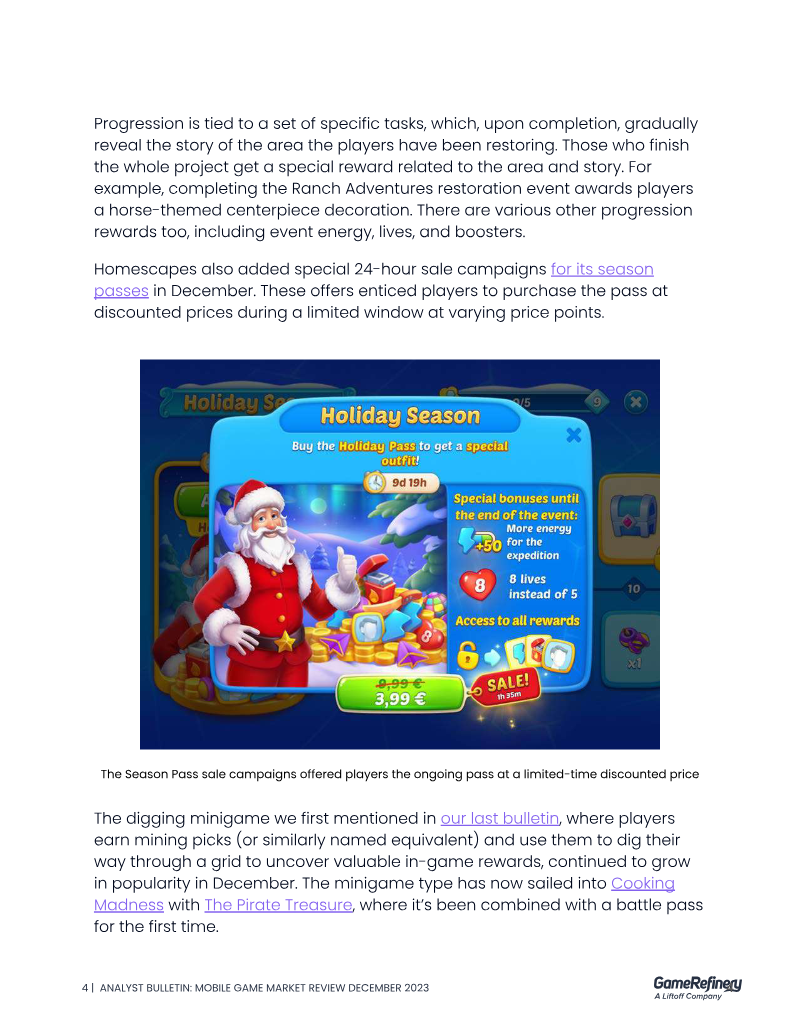
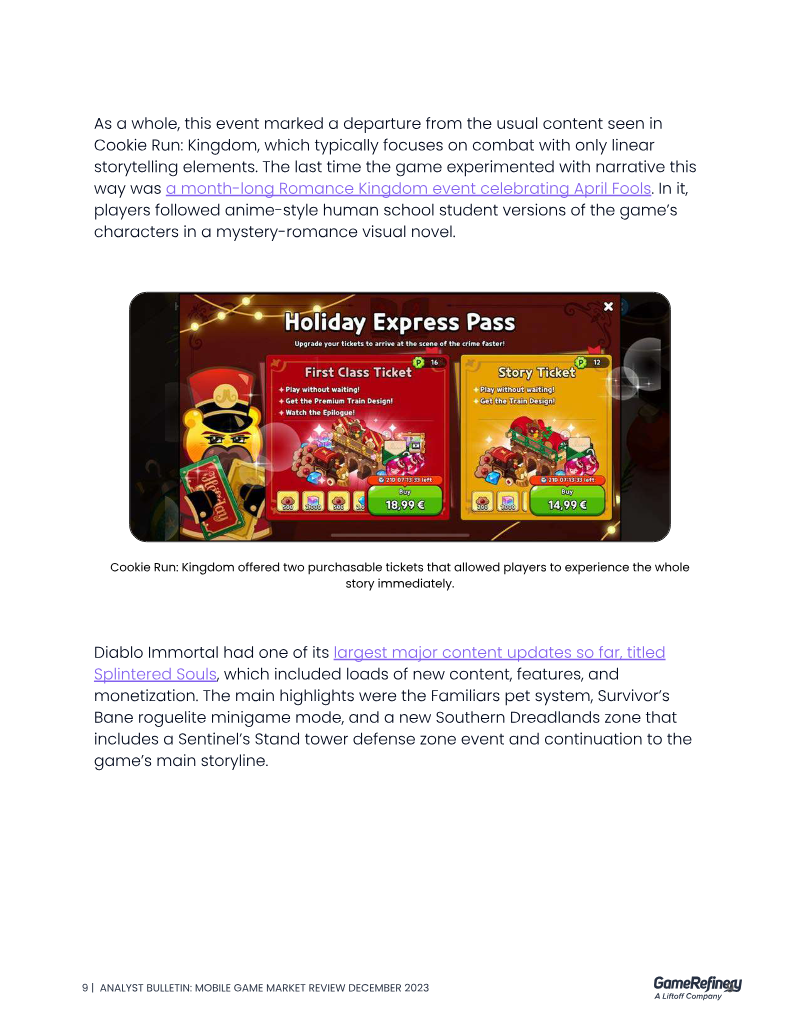
These systems offer exclusive, time-limited rewards that encourage immediate participation.
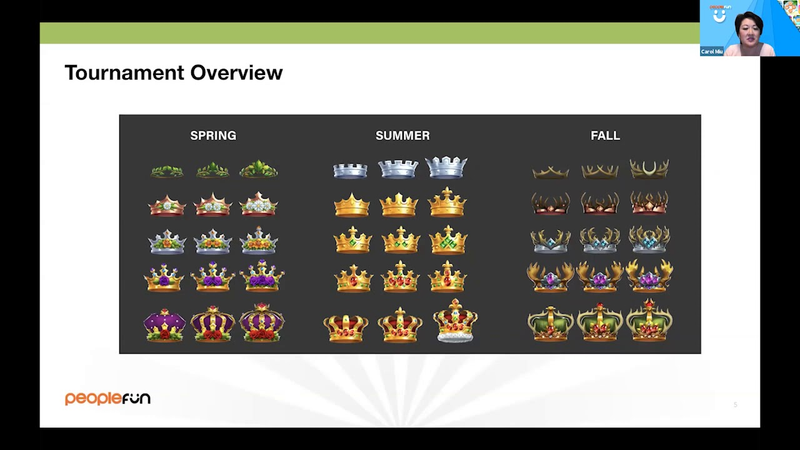
Season-based systems have emerged as a primary strategy for mobile game developers to maintain user engagement and combat content fatigue. By implementing thematic, time-limited events that align with real-world holidays or recurring cycles, developers can introduce exclusive content that creates a sense of urgency. This approach effectively incentivizes player participation and provides a structured framework for long-term retention.
Common implementations of these systems include the use of seasonal currencies, which are earned through specific activities and spent in limited-time stores, and battle passes that offer tiered rewards to encourage consistent play. Other tactics include aesthetic user interface updates, event-specific in-app purchase bundles, and periodic progression resets that refresh the gameplay experience. These methods allow studios to deliver significant content updates with varying levels of resource investment, ranging from simple visual changes to comprehensive mechanical overhauls.
To navigate the complexities of these live operations, developers utilize competitive intelligence tools, such as specialized live event trackers. These platforms allow for the analysis of over 35 different event types, providing data on revenue impact and download performance across the mobile gaming landscape. By comparing specific features and bundles, developers can refine their own seasonal strategies based on industry benchmarks.
While currently concentrated in the gaming sector, the principles of season-based engagement offer significant potential for non-gaming applications. By integrating seasonal challenges, thematic UI changes, or time-sensitive offers, developers in other categories—such as dating, fitness, or retail—can leverage the same psychological drivers to boost user acquisition and drive ongoing engagement. Success in this area requires continuous monitoring of performance metrics and a proactive approach to analyzing competitive trends.

GameRefinery · 2026
GameRefinery · 2026

GameRefinery · 2026

GameRefinery · 2026

GameRefinery · 2026
GameRefinery · 2026


GameRefinery · 2025
GameRefinery · 2024
Liftoff · 2024
GameRefinery · 2023
GameRefinery · 2023

GameRefinery · 2023