1 free read left. Create a free account for unlimited reading + AI research.
Create free accountWhitepaper DiGRA
1 free read left. Create a free account for unlimited reading + AI research.
Create free accountWhitepaperDiGRA
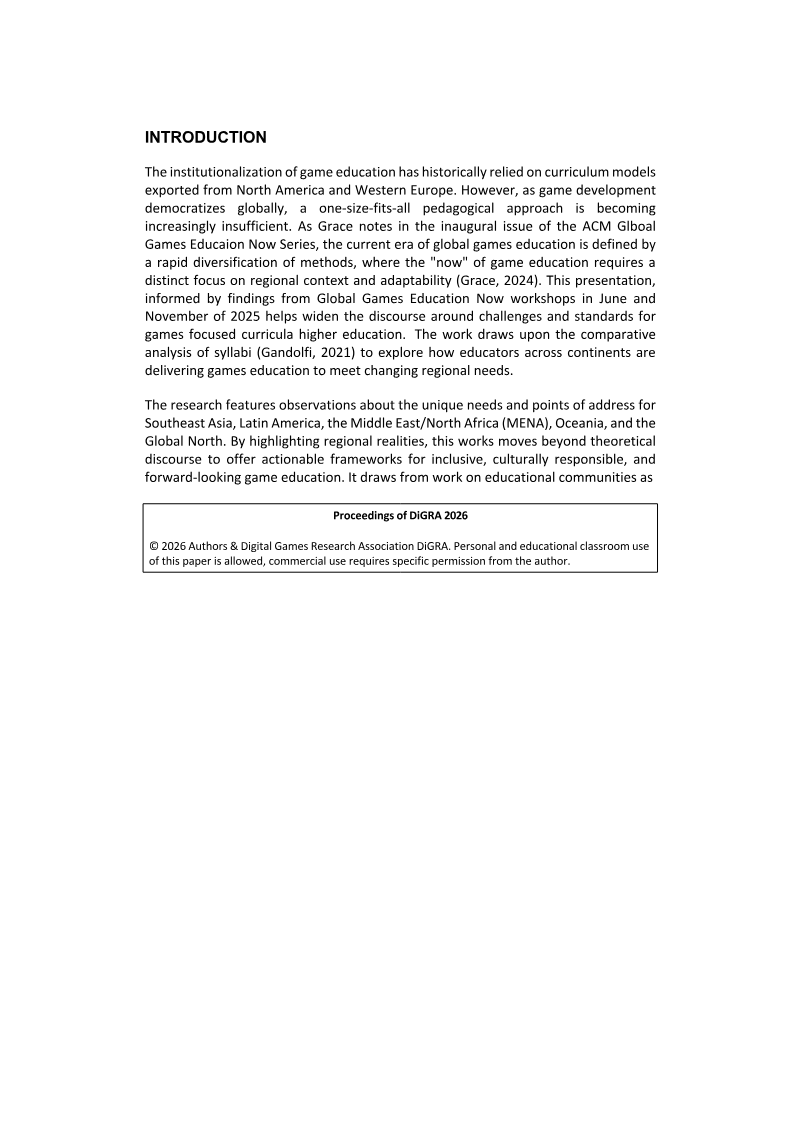
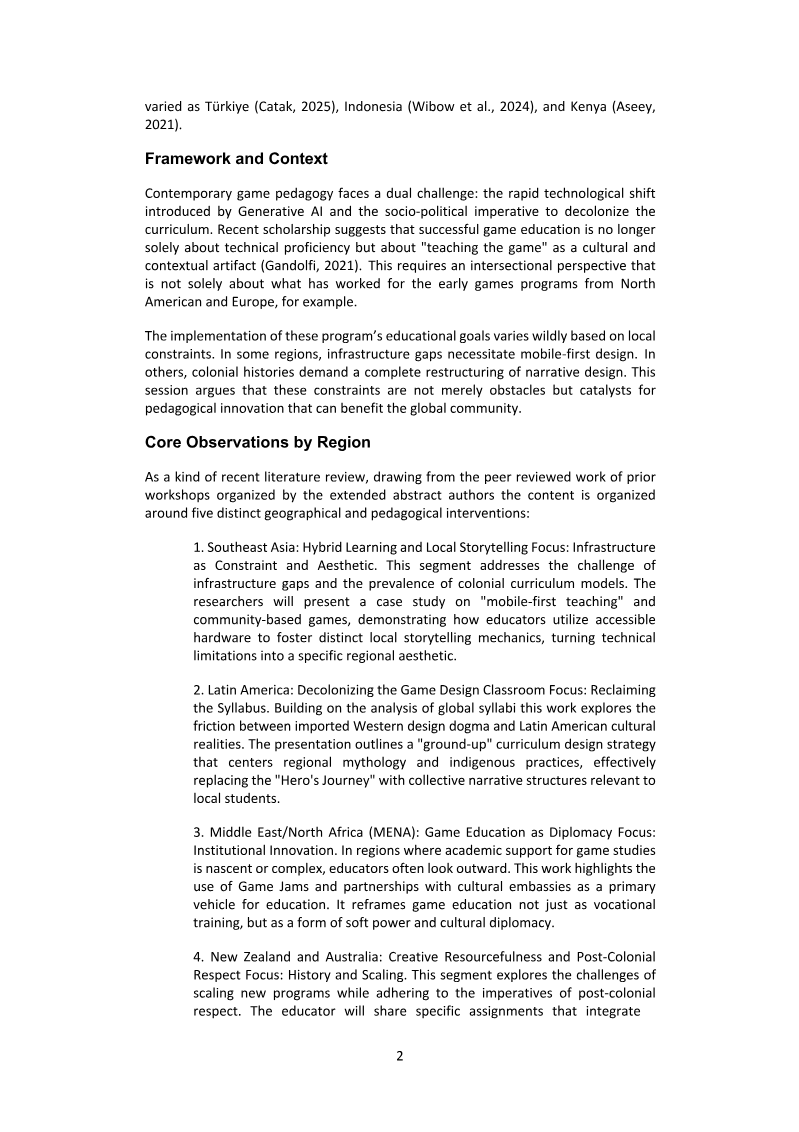
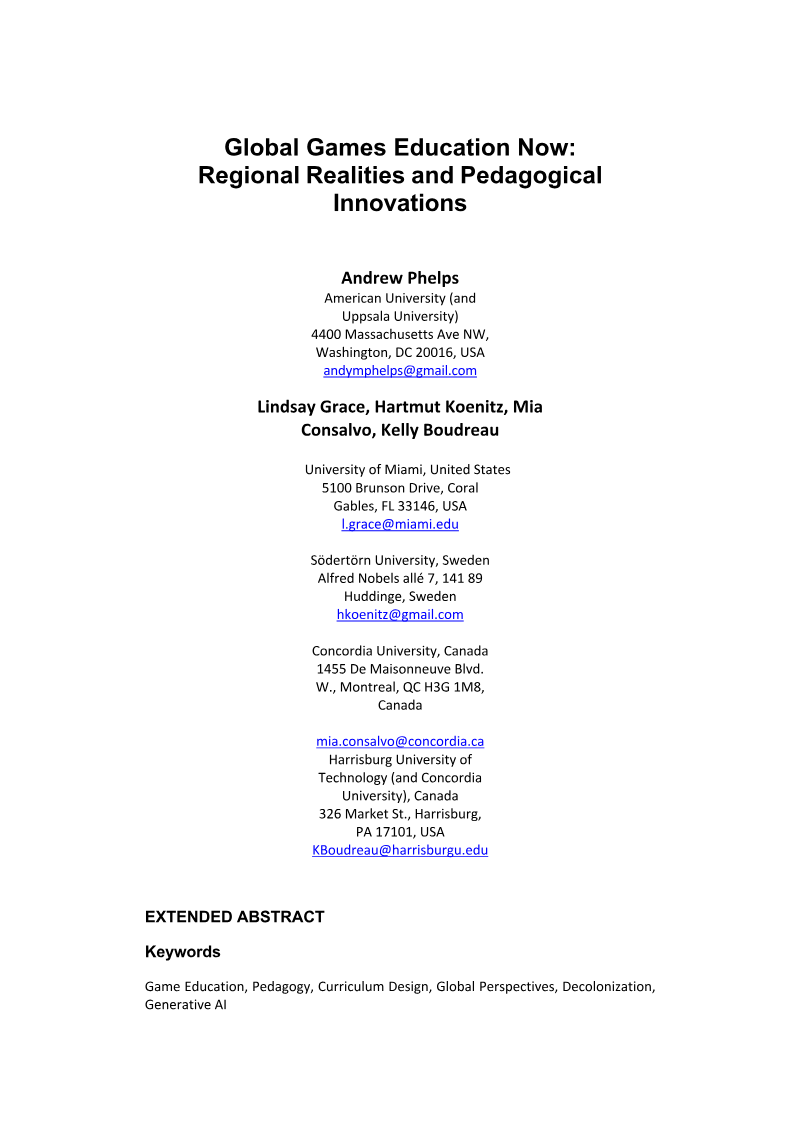
Game development is becoming globally distributed, and educators are moving toward regionally responsive curricula. The abstract draws on Global Games Education Now workshops held in June and November 2025.
The document, "Global Games Education Now: Regional Realities and Pedagogical Innovations," examines the evolving landscape of global games education, arguing against a singular, Western-centric pedagogical model. It asserts that the rapid diversification of game development necessitates regionally contextualized and adaptable educational approaches. The analysis draws from findings of Global Games Education Now workshops held in June and November 2025, and a comparative analysis of syllabi, to explore how educators worldwide are addressing changing regional needs.
The research highlights unique educational needs and innovations across five distinct geographical regions: Southeast Asia, Latin America, the Middle East/North Africa (MENA), Oceania (specifically New Zealand and Australia), and the Global North (Europe/North America). Key observations include the adoption of mobile-first teaching and local storytelling in Southeast Asia due to infrastructure constraints, and the decolonization of curricula in Latin America by centering regional mythology. In MENA, game education functions as cultural diplomacy through game jams and embassy partnerships. New Zealand and Australia focus on integrating indigenous history and Treaty principles into game mechanics, while Europe and North America are reimagining classrooms with Generative AI, prompting a re-evaluation of authorship.
The document emphasizes that contemporary game pedagogy faces dual challenges: rapid technological shifts, particularly with Generative AI, and the socio-political imperative to decolonize curricula. It suggests that successful game education now involves teaching games as cultural and contextual artifacts, moving beyond mere technical proficiency. The work concludes that the heterogeneity of global game education is its strength, fostering resilience and equipping future curriculum developers with tools for culturally sustainable and industry-ready environments. It also notes the value of global advocacy networks in facilitating the exchange of these new pedagogical frameworks.

DiGRA · 2026

DiGRA · 2026



DiGRA · 2026



DiGRA · 2026



DiGRA · 2026



DiGRA · 2026



DiGRA · 2026



DiGRA · 2026



DiGRA · 2026

DiGRA · 2026



DiGRA · 2026



DiGRA · 2026
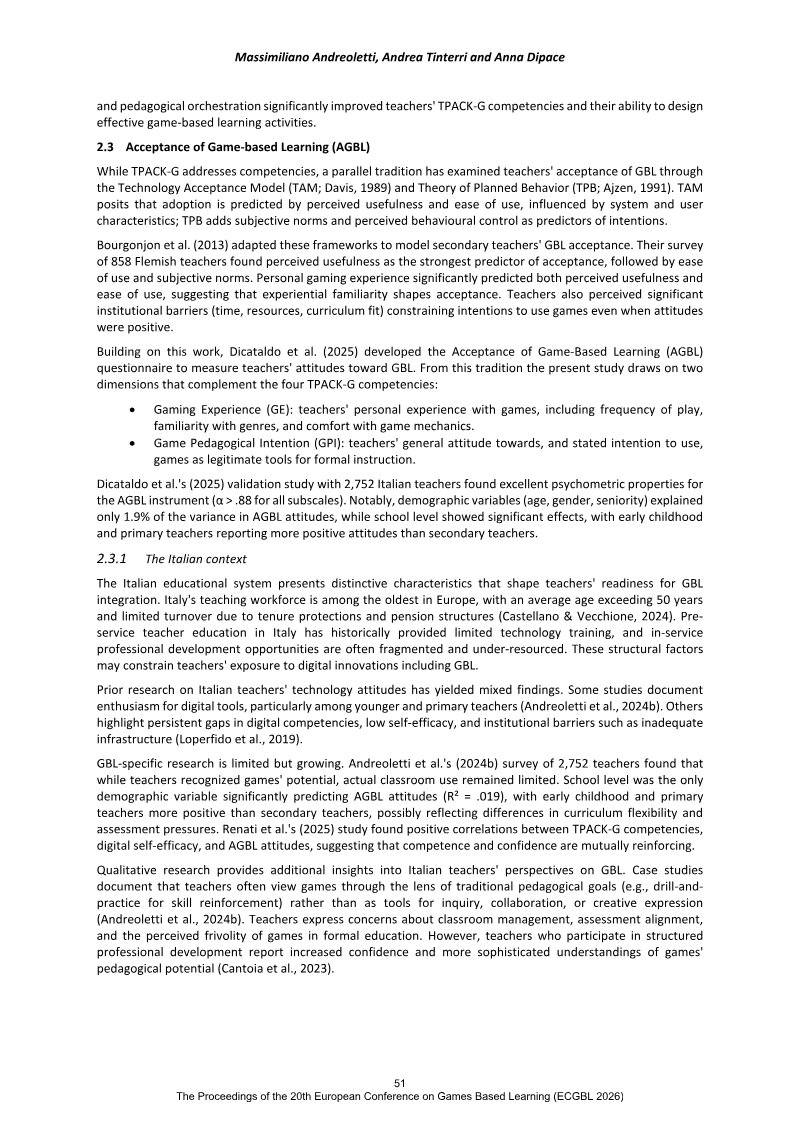
European Conference on Games Based Learning (ECGBL) · 2026










Comments