1 free read left. Create a free account for unlimited reading + AI research.
Create free account
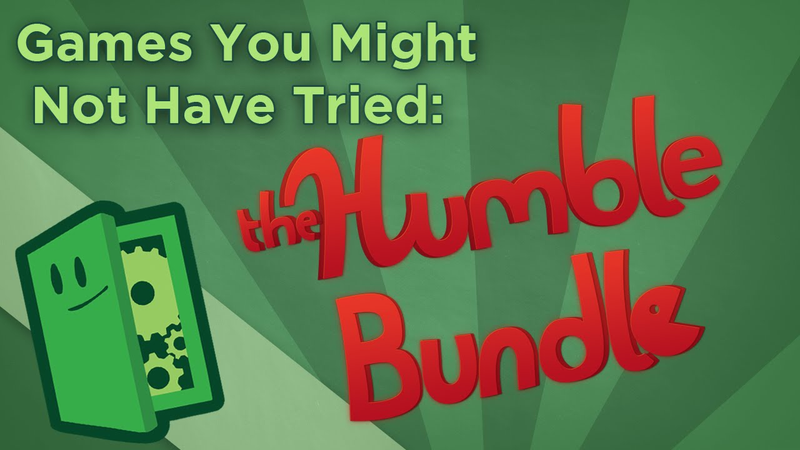
Games You Might Not Have Tried: Humble Bundle - Find New Games - Extra Credits
Key insights
6 takeaways- 01Titles like Enemy Mind and One Finger Death Punch demonstrate how indie studios innovate by distilling complex genres into specific, streamlined mechanics like ship-possession and rhythmic two-button brawling.
- 02Many overlooked indie titles, including Two Brothers, offer exceptional world-building and artistic value despite suffering from technical instability or significant bugs.
- 03Games such as Hand of Fate successfully blend disparate genres, specifically integrating roguelike deck-building with third-person arena combat.
- 04Supporting smaller developers is essential because their resource constraints often lead to highly specific, intellectually stimulating experiences that are absent from mainstream, polished releases.
- 05Experimental narrative titles like Ether One and Master Reboot utilize the medium to explore complex, grounded themes such as dementia and the nature of digital memory.
- 06Independent developers frequently prioritize novel mechanical and narrative concepts over high-fidelity production, resulting in unique gameplay loops that challenge traditional industry tropes.
Ask AI about this video
Transcript
It's time for another games you might not have tried. It's been a while, so as usual, this here is a list of games that flew under the radar. A bunch of games that didn't get the attention they deserved. These games may not all be great. Some of them may not even be good, but I can at least promise that they are interesting. So, if you've been looking for something new to try or just something a little different, something to pique your curiosity or make you think about design in new ways, well then here you go. And this episode is particularly special because we teamed up with the folks at Humble Bundle to bring you a games you might not have tried in bundle form. Yep, you can get every game on this list in one swoop right now. Just go to this link in the annotation here or click the link in the text description below. We've always wanted to make the games we highlight on this show easier to get somehow and the Humble Bundle folks have helped to make that a reality. So, if you love the sound of these games or even if you're just intrigued by the possibilities they present, follow the link and get them all at once. All of the money from that link goes to the developers, the folks at Humble, or a charity. So, you can even be supporting a good cause while
you do it. Oh, and hey, none of these games have ever been in a Humble Bundle before. So, even if you're an aficionado who's buying every one of these bundles, everything you get in that bundle will be new. So, with that, let's talk about the games. First up, Enemy Mind. You know what I always liked best about side scrolling shooters? It's not about memorizing the patterns, but getting to play around with all the interesting weapons. Trying to figure out how to use whatever crazy gun I have in the current combat scenario. And to my delight, with Enemy Mind, the folks at Shell Games took that weapon concept and built their entire game around it. In Enemy Mind, you find yourself in a war between two great galactic races. The war plays out around you as fighters dive in and rake a line of transports from the other side or dog fight with one another, but you are a different entity all together. You are a psychic being from neither side. The core mechanic of the game is that you can
possess any ship you want. One of your buttons fires a beam that lets you take over and fight with any ship in the game. This game is about hopping from ship to ship as each vessel you possess takes damage or runs out of ammo, constantly trying to figure out how to survive the combat that surrounds you with whatever crazy new weapons your current ship has. Oh, and without spoiling anything, it's probably got the strongest narrative delivery I have ever seen in a side-scrolling space shooter. I mean, I know that's not saying much in this genre, and I'm not saying the story's going to blow your mind or anything, but compared to stuff like Gradius, Ikaruga, and R-Type, the story in this one may surprise you. Two Brothers. Beautiful, bold, buggy. That is how I would describe Two Brothers. This game has one of the most jaw-dropping worlds I have walked through of late. It has a
soundtrack to match and story which tackles questions about the value of life, obsession, the bonds of family. And that's great, but it's also riddled with design issues and horrible bugs. Now, if you're like James, you will trek through this one for the world and for the narrative and find it a journey well worth the taking. But the thing you've got to know about Two Brothers is that the core gameplay is the weakest part. It's a top-down action-adventure title with none of the tight controls or interesting combat encounters we've come to expect from things like Zelda. This is compounded by the fact that it seems like the designers felt like they had to pad out the game with combat. You will very often find yourself slogging your way through a banal, poorly constructed dungeon thinking of when will you let me get to the next part of the story already. As a general rule, if you find yourself wanting less of the gameplay, well, that's never good. And here, really, I wish this was a 10-hour game rather than a 30-hour one. On top of that, when we played it, the game was filled with show-stopping bugs. Some of them of the might corrupt your
save variety. But, when I tell you all of that, take it as a testament to how strong the rest of the experience can be that for all that I have just said about the combat and the bugs, we still played through this one and we think you should check it out. Master Reboot Oh boy, I I rarely complain about visual fidelity here, but I really wish these guys had the resources to put a little bit more into the game's art. Master Reboot manages to deliver on some truly memorable moments, but a lot of them really do lose some of their impact because of the visuals. Like Brothers, this is a game that falls down when it tries to serve up traditional gameplay. There are a few sections we really can't talk about without spoiling things, especially toward the end, but things really can start to feel artificial and gamey and just yank you right out of the experience. But, all that said, this is, in my opinion, still a trip worth
taking. It's a creepy dive into the life of someone whose memories have been stored in the cloud after their death, but something has gone horribly wrong. You try to piece that life together bit by bit, slowly coming to understand who this is and what happened to them. It's a fascinating premise and well worth putting up with the flaws to check out. One Finger Death Punch Okay, so I've just talked about two games in a row whose mechanics don't quite live up to their narratives. So, now let's talk about a game that is all mechanics, One Finger Death Punch. If you like old kung fu films and a frenetic mash up of DDR and 2D brawler sounds awesome to you, and why wouldn't it? Man, have I got a game for you. One Finger Death Punch actually requires
two fingers to play properly, but that's it. You right-click to attack to the right, you left-click to attack to the left. They take this simple design and layer onto it a ton of weapons and challenges to make an explosive and yet hypnotically rhythmic brawling experience. Even with the simple visuals, the impact on each hit feels awesome. And don't be fooled by the simplicity of the design. Just because this is a two-button game does not mean that it's easy. They're going to crank that up to Bruce Lee levels on you later. Hand of Fate. Speaking of rhythm combat games, James adores this one. As a designer, it's so rare that you get to see somebody bring a totally novel conceit to how to deliver game mechanics. And it's even rarer that you get to see it makes so much sense and works so perfectly. Hand of Fate brings together the randomized replayability of a roguelike
with the arena combat from Arkham City and deck-building elements from games like Netrunner. So, here's the deal. The game is set at a cabin at the end of the world where a powerful entity lays out your fate from a deck of cards. It draws cards from the deck, each representing an encounter on a grand journey. As you traverse the cards, you have to overcome these encounters. Sometimes they're combat encounters, sometimes they're choices that can affect your quest. And here's part of the genius of the design. When the cards deal you a combat encounter, the game zooms you down to an Arkham City-style arena fight where all the loot and the gear you've collected thus far in your journey comes into play. But when you're not in a combat encounter, the game can just linger on the card art and allow you to make your choices in more of a text adventure style, which not only saves the
developer a great deal of work on 3D assets, but also allowed them to build us a suite of scenarios that feels vastly more varied than your standard roguelike as a result. That right there is how you work smart. Traversing a set of cards also becomes a game of balancing resources because you start out with a limited amount of food and health to make it all the way through a deck. The key though is that you can stack the deck. As you play, you unlock cards by defeating bosses or overcoming specific challenges, which you can then use to seed the deck for future runs. This creates a dynamic, ever-increasing pool of encounters and items and loot to contend with on your journeys and makes the dungeon creation, not just the dungeon traversal in this roguelike, an interesting test of wit and skill. The game is still in early access, but I highly recommend it anyway. Stick it to the man. You know, we get so few genuinely funny games that I'm surprised Stick It to the Man didn't get more notice. It's a puzzle platformer that feels like a
spiritual successor to Psychonauts. It has the quirky world, the same bizarre sense of humor, and a main character who manipulates things with his mind. Sometimes the puzzles can be a bit obtuse and the controls can feel a little bit loose sometimes, but if you're looking for a humorous game that's off the beaten path, you could do a whole lot worse than Stick It to the Man. And finally, Ether One. Perhaps it was just the particular place I was at when I played Ether One, but I found those few hours I spent in the world of Ether One to be exactly what I needed. It has a melancholy to it and a wistfulness that I rarely find in games. It's a game about dementia. It's about diving into the mind of someone whose memories are falling apart and coming to know them through the scattered fragments you can recover. But you know what I really love here is that they didn't choose the cheap and easy route and simply use the subject matter to make something surreal or bizarre. Instead, they kept it grounded,
focusing on the loneliness of memories slipping away. This is also a game about exploration, pure and simple. And it's not in a Dear Esther kind of way. There are puzzles throughout this game and you'll find yourself never without something to solve. But it's not really the puzzles you play for. It's the narrative and the world. Hearing a dash of audio or seeing some small detail you missed before is in many ways as satisfying as all the riddle solving the game has to offer. So if you're looking for a beautiful lonely world to spend a few hours in where you can explore something rarely investigated in games, if you're looking for a game you can just sit back and play for the story, it's worth checking out Ether One. And with that, we are done. If any of these games seemed interesting to you, go check out the bundle and help some small developers to be able to keep making games. I'll see you all next week.
Summary
The primary purpose of this analysis is to highlight overlooked indie video games that offer unique design perspectives, narrative depth, or innovative mechanics. By curating a selection of titles that have not received mainstream attention, the discussion aims to encourage players to explore unconventional experiences that challenge traditional game design tropes. The selection process emphasizes titles that, while occasionally flawed in execution or technical stability, provide compelling artistic or mechanical value that justifies their discovery.
The featured games include Enemy Mind, which utilizes a unique ship-possession mechanic in a side-scrolling shooter; Two Brothers, noted for its exceptional world-building despite significant technical bugs; and Master Reboot, a narrative-driven exploration of digital memory. Other highlights include One Finger Death Punch, which distills brawler mechanics into a rhythmic, two-button experience; Hand of Fate, which successfully integrates roguelike deck-building with third-person arena combat; Stick It to the Man, a humorous puzzle-platformer; and Ether One, a grounded, exploration-heavy title focused on the experience of dementia.
The analysis concludes that these games demonstrate how independent developers often prioritize novel concepts over polished, high-fidelity production. While some titles suffer from pacing issues, loose controls, or technical instability, their ability to deliver distinct emotional or mechanical experiences makes them worthy of attention. The discussion underscores the importance of supporting smaller developers, noting that these titles often succeed by working within resource constraints to create highly specific, memorable, and intellectually stimulating gameplay loops that differ significantly from standard industry offerings.
















Comments