1 free read left. Create a free account for unlimited reading + AI research.
Create free accountArticle G|A|M|E – The Italian Journal of Game Studies
1 free read left. Create a free account for unlimited reading + AI research.
Create free accountArticleG|A|M|E – The Italian Journal of Game Studies
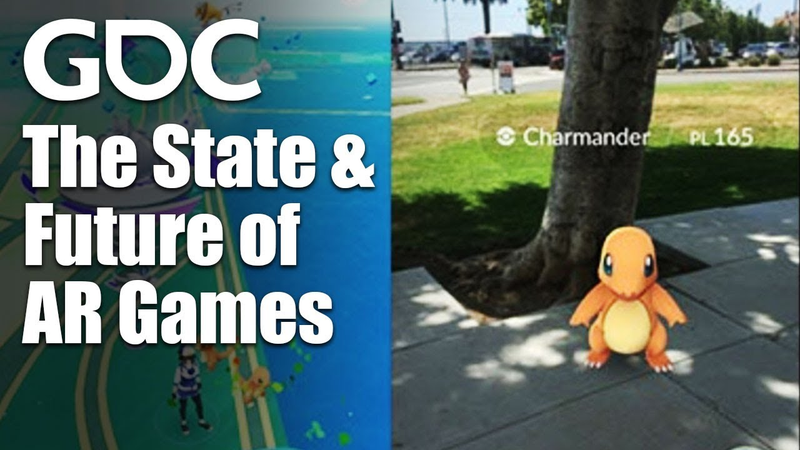
The paper argues that games combining GPS-enabled mobile devices with geographic exploration blend physical and digital environments. These spaces resemble the heterotopias often depicted in science fiction.
This paper, authored by Fátima Regis and Letícia Perani of the CiberCog research group at Rio de Janeiro State University, argues that location-aware games, which combine geographic exploration with mobile digital technologies such as GPS-enabled phones, create hybrid spaces that resemble the heterotopias frequently depicted in science fiction. Its central claim is that science fiction offers a productive conceptual framework for understanding how these games blend physical and digital environments. The authors trace a historical arc from Newtonian conceptions of physical space, through the emergence of cyberspace and graphical user interfaces, to the present-day integration of locative media with urban settings, arguing that each stage progressively dissolved the boundary between material and informational space.
The analysis draws on theorists including Johan Huizinga-style ludic scholarship, Jesper Juul, Steven Johnson, Lev Manovich, and Michel Foucault, whose concept of heterotopia structures the final section. The authors examine how rules, affordances, and playful exploration function in location-aware games, observing that players discover the rules through interaction with streets, buildings, and people as well as with digital data. Rather than supporting earlier cyberculture narratives of dematerialization, the paper contends that these games value physical space as much as virtual information. The authors conclude that concepts such as heterotopia, zone, and paraspace are well suited to describing these hybrid environments.
The work is a theoretical and conceptual essay rather than an empirical study, so it presents no survey data, sample sizes, or quantitative findings. Its scope is interdisciplinary, spanning media theory, human-computer interaction, game studies, and literary criticism of science fiction, with examples drawn from films, novels, and cartography history. It is primarily grounded in Western and Brazilian scholarship and does not address specific location-aware game titles in detail.
G|A|M|E – The Italian Journal of Game Studies · 2026
G|A|M|E – The Italian Journal of Game Studies · 2026
G|A|M|E – The Italian Journal of Game Studies · 2026
G|A|M|E – The Italian Journal of Game Studies · 2026
G|A|M|E – The Italian Journal of Game Studies · 2026
G|A|M|E – The Italian Journal of Game Studies · 2026
G|A|M|E – The Italian Journal of Game Studies · 2026
G|A|M|E – The Italian Journal of Game Studies · 2026
G|A|M|E – The Italian Journal of Game Studies · 2026

G|A|M|E – The Italian Journal of Game Studies · 2026
G|A|M|E – The Italian Journal of Game Studies · 2026
G|A|M|E – The Italian Journal of Game Studies · 2026
DiGRA · 2005