1 free read left. Create a free account for unlimited reading + AI research.
Create free accountWhitepaper DiGRA
1 free read left. Create a free account for unlimited reading + AI research.
Create free accountWhitepaperDiGRA
It states that this chain is not automatic.
This paper presents a theoretical framework for designing educational games that produce intrinsically motivated learning. It argues that games foster play, play produces a state of flow, flow increases motivation, and motivation supports learning, but that this chain is not automatic. Because players in a flow state rarely reflect on what they are learning, the authors contend that effective educational games must embed reflection within the play itself so that learning occurs inside the immersive "magic circle" rather than as an interruption to it.
The framework draws on several established bodies of work. It uses Keller's ARCS model of motivational design, which identifies attention, relevance, confidence, and satisfaction as key motivational strategies, and Csikszentmihalyi's flow theory, which links balanced challenge and clear goals to intrinsic motivation. It also incorporates Norman's seven requirements for effective learning environments and Lepper and Malone's principles for instructional game design, including challenge, curiosity, control, and fantasy. The authors observe that these perspectives converge on similar characteristics, which they illustrate in a comparative figure.
A central distinction in the paper is between exogenous and endogenous fantasy. Exogenous approaches treat game elements as superficial "sugar coating" on instructional content, whereas endogenous designs weave content so tightly into game mechanics that the boundary between game and lesson disappears. Drawing on De Castell and Jenson, the authors argue that many past educational games failed to be immersive because they did not connect gameplay with content and context, and did not allow freedom of movement within the environment.
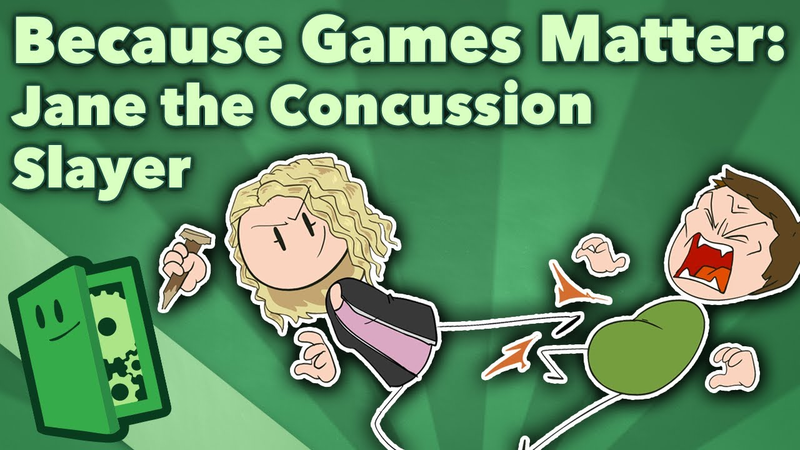
To address the reflection problem, the authors propose making reflection an in-game goal. Their illustrative example is a hockey game teaching about concussion, in which players must manage rest periods when symptoms appear, so that reflection on injury consequences becomes part of core gameplay. The paper is primarily conceptual, presenting a model supported by a review of prior literature rather than empirical testing, and its conclusions remain to be validated through experimental study.
DiGRA · 2018
DiGRA · 2018
DiGRA · 2018
DiGRA · 2018
DiGRA · 2018
DiGRA · 2018
DiGRA · 2018
DiGRA · 2018
DiGRA · 2018
DiGRA · 2018
DiGRA · 2018
DiGRA · 2018

Game Developers Conference · 2022