1 free read left. Create a free account for unlimited reading + AI research.
Create free account
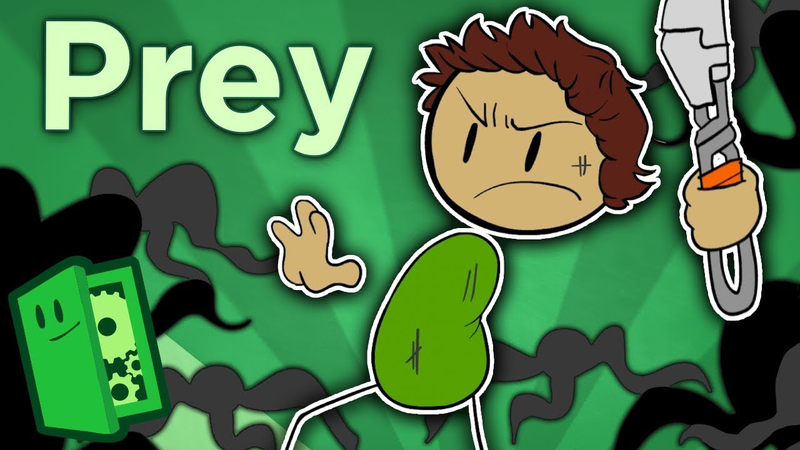
Prey - The Enemy Inside - Extra Credits
Key insights
6 takeaways- 01Prey functions as a psychological simulation designed to force players to reconcile their stated ethical beliefs with their actual in-game decision-making.
- 02Players are evaluated across four core psychological dimensions: openness to new experiences, personal accountability, the validity of utilitarian sacrifice, and the value of human empathy.
- 03The game narrative systematically dismantles utilitarian moral justifications by placing players in the role of a character who committed atrocities for scientific progress.
- 04The game presents high-stakes scenarios, such as choosing between the lives of individuals on a space station and the safety of the entire human population on Earth, to highlight the gap between abstract ethics and visceral reality.
- 05The final choice in the game serves as a meta-commentary that juxtaposes the cruelty of human scientists against the nature of the alien Typhon.
- 06The simulation concludes by challenging players to determine if humanity is redeemable despite its inherent capacity for evil and calculated cruelty.
Ask AI about this video
Transcript
Prepare to be spoiled. If you don't want Prey spoilers, this is your chance to bail and go play Prey. It's really good. I'm serious. As soon as the music finishes playing, I'm going to drop like the biggest spoiler this game has. I am buying you time right now, and that window is closing. This is it. Here we go. 3 2 1 Prey ends with what seems like the stupidest, most video game-y moral choice ever. It literally reads, "Kill everybody or take your brother's hand." On the surface, that seems so ludicrous and so typical of badly done video game moral choice moments that it's easy to dismiss, but it's actually not quite as simple as it may sound because that ridiculous choice is actually just part of a much larger ethical journey that Prey has been working the player through from the opening minutes. At the outset of the game, you're presented with a psychological test, and it seems like a
throwaway exercise, a nothing moment filled with the kind of pablum pseudo psych questions that you would see shared by your more pretentious friends on Facebook or in a void comp test. But, what you may not realize in that moment is that Prey, the game, is that psychological test. The whole experience is designed to mirror the test both in fiction and for the player. Let's look at that test for a moment. Its questions can be summed up as one, "How open are you to new experiences?" Two, "Say you're sentenced to death for something you've done. How do you feel?" Three, "Which is more important, the good of the few or the good of the many?" Four, "Which matters more to you, your personal well-being or the well-being of others?" These questions are all very easy to answer in the abstract. You probably already have an idea of how you would answer them. But, the genius of Prey is that after it has you answer those questions, it is going to force you to act them out for real, or at least in a simulation. And in doing so,
Prey is going to force you not only to question the answers you gave, but to reveal your true answers through your actions. The in-game quiz itself is a pretty big hint to Prey's larger purpose, but what's astounding is that Prey makes this even more overt by having that simulation actually be the in-game story. After the credits roll, Prey reveals that the whole game has actually been a simulation designed to test an alien creature to see if it has the right psychological makeup, and that creature is you. You have literally been playing that creature the whole time, which means that you, as the human being playing this game, are a creature taking a psychological test in the form of a simulation in which you inhabit a creature taking a psychological test in the form of a simulation. So, let's see how the game forces you to address each of those questions on that test. Question one, how open are you to new experiences? This one's fairly straightforward. In a mechanical sense, there is usually many different ways to
solve any given problem in this game. Did you actually seek out alternative solutions, or did you just use the same solutions over and over again, shooting or hacking your way through everything? Question two, say you're sentenced to death for something you've done. How do you feel? This one's a strangely specific question, and it's actually the premise of how the player is supposed to understand the story for most of the game. Early on, you meet basically a robot version of yourself who tells you that you have to destroy the station you're on, and that you are going down with the ship. That you have to do this because of the things you've done. It is made explicit that this is a death sentence, and that you are the one who has to carry it out. Why do you have to carry it out though? Well, because past you decided to secretly conduct very dangerous experiments, experiments that might endanger mankind itself. Why did you do it? In flashbacks, your character gives several justifications, but they all boil down to ushering in a new era
for mankind. To create a future where as a species we are something greater, something more. And that brings us to question three. Which is more important, the good of the few or the good of the many? On the test, this was phrased as a hackneyed psych hypothetical. A runaway train is bearing down on five people tied to a track. You can cause the train to switch tracks, but there's one person tied to the second track, too. So, what do you do? For many people, this seems like just a simple equation. You switch the tracks and do the least harm. But that is the very justification that the Transtar employees have used to justify all of the horrors you find on this station. All of this killing in the name of science. All of this torture and inhumanity. All of it was justified by saying that it was the sacrifice of a few to save millions of lives, to make all of humanity better. The entire game is built to point out that the question of the good of the few versus the good of the many is a fundamentally flawed question. That it can't be reduced to an
abstract equation. The reality of that question is so complex, and when somebody tries to make that decision from a removed abstract point of view, terrible realities can ensue. To drive this home, the game makes it abundantly clear just how difficult it is to make that choice as an abstract calculation when in a real situation. Throughout the whole game, over and over and over, you are told that if even one of these alien creatures gets to Earth, mankind is doomed. Billions of people would die. And yet, I'll bet a lot of you who played this tried to find a way to get people safely off the station before you blew it up. I bet that seemed like the right thing to do, saving those people. But in doing so, you put everybody on Earth at risk. Any shuttle, any escape pod leaving that station could easily house one of those shapeshifting aliens. They could take the form of a seatbelt or a clipboard or a coffee cup. In terms of pure calculation, you can't risk that. It is ridiculous to try to save a
handful of people from what can be thought of as the world's most infectious disease if it means risking the whole planet below. And yet, without even thinking, it's easy to prioritize the people standing right in front of you, these people with faces and names over the unnamed and unknown masses. Which leads us to the last question. Question four, which matters more to you? Would you put the good of the many over the good of yourself? Here we come to the end of the line. The question looked so silly at first, choosing whether to take your brother's hand or kill everybody. Because in the light of the rest of the test, and in light of everything you've experienced on the station, that question has become about whether there is inherent worth in humanity, whether we are redeemable. The philosophy that Prey explores is a very bleak one. It presents us with aliens, the Typhon, and we are taught to think of them as the enemy, as violent, ruthless killers. Then we're told that the Typhon lack empathy, they lack compassion. It's not that they suppress
empathy, but that they simply don't have any understanding or capacity for it. They may not even understand that they're killing people when they transmute us or incorporate our consciousness into the coral they weave. But do you remember when you were first told this truth about the Typhon? It was amidst some scenes of the most compassionless human acts, amid scientific tests carried out on living human beings. It forces us to ask, who is worse? These aliens who kill with no capacity for empathy, or human beings who have that capacity and yet ignore it to do terrible acts? There's this one moment where a man, an ex-cosmonaut whose only crime is disagreeing with the government, is sealed in a test chamber. He pleads with the characters. He tells them that he signed on for this to see his daughter, that they promised that he could see his daughter. Meanwhile, the scientists just read over the diagnostics for their test. Then they begin. They drop one of the Typhon into his chamber and watch as the creature
devours him. It is not quick or painless. You hear his screams, and the only point to this test was to see if the creature would metamorphose differently using an old subject rather than a young one. It seems so arbitrary, an experiment done just because they could, like a child poking an animal with a stick just to see what it'll do. And that whole experiment was ordered by the character you are currently playing. Your character might be the worst person on this station, the one most willing to expend others' lives, the one most certain that the ends will justify the means. And so we arrive at that last choice. Do we kill humanity or embrace it? Ultimately, it's asking us if we can look at our human tribe objectively and really see the darkness in us. See a darkness darker than those inky Typhon, darker than those living shadows that walk the halls of Talos 1. If we can, then and only then will we have the perspective to make this choice. We can condemn humanity knowing that mankind
often casts aside the compassion we've been endowed with to achieve our goals, or we can spare humanity declaring that so long as we have the capacity for compassion within us, we have a chance at redemption. Therein lies the genius of Prey. It begins by asking you simple ethics questions and then proceeds to make you put the lie to each answer you gave, thereby forcing you to actually examine those answers. I said I like to try new things, and yet I fell back on guns and hacking most of the time. I said that I would feel confident in the worth of my choices even if society condemned me for them, but when push came to shove, I scrambled to find a way out, to find a way to escape this space station. I said that I would put the good of the many over the good of the few, and yet I fought to save Talos 1's occupants, breaking quarantine and potentially exposing Earth to the most dire of threats. I said that I would choose the good of the many over my own, and yet I left that station alive. And in the end, I chose to take my brother's
hand. And I'm still asking myself, did I do it because I believe in humanity, or simply because I am human and I need to believe that there is some good in this species. Otherwise, what hope is there for me? Thanks for watching. We'll see you next week.
Summary
The video game Prey functions as an interactive psychological experiment that challenges players to reconcile their stated ethical beliefs with their actual in-game behavior. The game begins with a seemingly trivial personality quiz, but it quickly reveals that the entire narrative is a simulation designed to test the player’s moral compass. By forcing the player to inhabit a character who has committed atrocities in the name of scientific progress, the game systematically dismantles the player's abstract moral justifications, such as the utilitarian argument that the good of the many outweighs the good of the few.
The narrative structure mirrors the initial psychological test, forcing players to confront four core questions: their openness to new experiences, their reaction to personal accountability, the validity of utilitarian sacrifice, and the value of human empathy. Throughout the game, players are presented with scenarios that demand difficult choices, such as whether to prioritize the lives of specific individuals on a space station over the safety of the entire human population on Earth. These moments highlight the tension between abstract ethical principles and the visceral, emotional reality of making life-or-death decisions.
Ultimately, the game concludes with a final choice that serves as a meta-commentary on the player's journey. By juxtaposing the cold, unfeeling nature of the alien Typhon against the calculated cruelty of human scientists, the game forces players to evaluate whether humanity is inherently redeemable. The experience concludes that the true purpose of the simulation is to expose the darkness within human nature, leaving the player to decide whether to condemn humanity for its capacity for evil or to embrace it for its potential for compassion and redemption.
















Comments