1 free read left. Create a free account for unlimited reading + AI research.
Create free account
Fireside Chat: Animoca Brands: Diversifying Your Business Through M&A
Key insights
6 takeaways- 01Animoca Brands executes a targeted M&A strategy by acquiring small-to-medium independent studios with 6 to 30 employees to diversify into mid-core and blockchain gaming.
- 02The dual strategy of hands-off acquisitions and strategic ecosystem investment is designed to build a collaborative network of developers rather than a monolithic conglomerate.
- 03Acquired studios retain operational autonomy while receiving centralized support for administrative functions including legal, HR, finance, and user acquisition.
- 04The company caps individual acquisitions at approximately $10 million, focusing on a niche segment often ignored by larger multi-billion-dollar corporations.
- 05Animoca Brands utilizes earn-outs and performance-based incentives to align the interests of acquired studio founders with the parent company's growth targets.
- 06The firm complements its direct acquisitions with passive investments in the blockchain ecosystem to drive industry-wide collaboration and the development of digital asset interoperability.
Ask AI about this video
Transcript
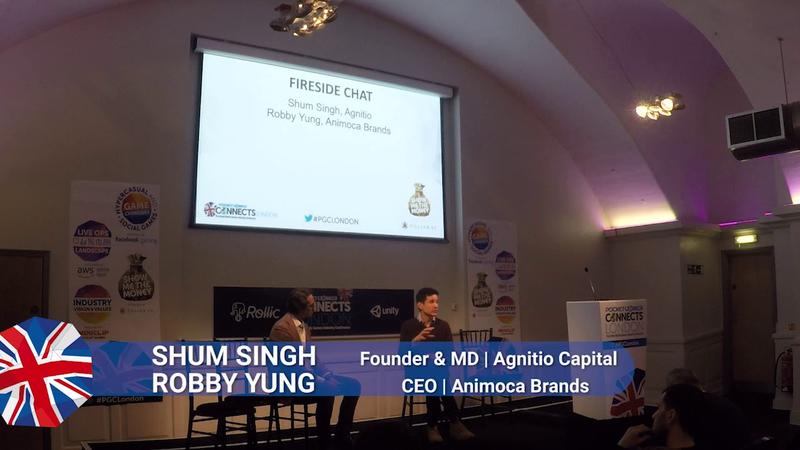
[Music] hi everyone I guess there's a few people still leaving we'll jump right into it because I've been told we're a little bit late so I'm Shum Singh I recognized a number of people in the audience so I'll be brief about who I am so I'm the founder and MD of Agni show capital which is a fully regulated investment bank based here in London and in Seattle my business partner is sitting right over there David bloom the very affable silver haired gentleman right there we basically exclusively focus on the games industry primarily conducting M&A transactions we've had the privilege of
working with Robbie on one transaction three years ago pigments which we'll get into later in the discussion what I wanted to I guess talk or focus on this particular discussion with Robbie is just a Nemo cos from inception the the sort of interesting journey they went on and one that was principally I think focused on not only organic growth but in more recent times inorganic growth and changing I think on several occasions Shortell pivoting business model and what I think is really come interesting is is they had a pretty pretty wild ride yes and and now these nice euphemism cars would have got God right but I think now is in a position of you know it was it it's kind of kind of back to a nice growth trajectory yes
well one thing that I really find interesting not only is an M&A banker but also as an avid game industry enthusiast and and reading all about the news is how active and omocha has been not only in terms of M&A but also in terms of investments yes and and I think also for the audience and maybe some people might be a little bit confused about what does Ana MOCA really encompass is it is it games is it mobile games is it blockchain because obviously you've been pioneering pioneering that space yes and so I think prior to getting into that maybe we could have we could just have a quick introduction on yourself so quick introduction any MOCA brands is a ten year old business where public company headquartered in Hong Kong but we have offices around the world largely through acquisitions we've done of studios in different countries and we are best known to be a mobile game
studio specifically focused on leveraging third-party IP so brands that we license and then make original games based on those brand licenses and that's what we're known for we started out primarily focused on casual as Chum said we've pivoted several times which is a nice way of saying slowed down and looked for more growth elsewhere and so as the results we've moved from you know the sort of core casual market to working on children and families as a target market to mid core to now primarily blockchain in terms of our focus of growth pipeline over the next two years in terms of PD we have our existing traditional so-called mobile games business which is largely casual and mid core and that continues apace but in parallel over the last two years we've been extremely active in making investments in blockchain gaming and not just in companies that are in that space but
making investments in businesses where we see the potential for blockchain as a technology to transform what they're doing already and I think part of what we wanted to talk about today a little bit is why ma you know and why embark on that strategy I think from our perspective we realize that as a studio we know how to do certain things and we're pretty good at some of those things but we definitely don't know do everything you know we're as we're obviously known as a casual studio because casual is something that we really understand working the brands we really understand we used to try to make midcourt games in-house we used to try to make frankly even more triple-a style games in house and we were absolute crap at it we just you know we put it out there it didn't work we wasted a bunch of money but everybody wants to do cool stuff and so they try it but we found M&A was a great way to then partner with
other Studios who are good at that and who have those skills that we don't have because we want to participate in that business segment and so the best way for us to do that was then to acquire a studio and grow that way well and it's interesting you bring that up I mean you've obviously been very quiz that are very active I'm sure some people in the audience and certainly myself would think well how do you integrate yep studios I mean how do you create this this you know sort of I mean as you said you know because a lot of companies you're requiring or based worldwide so it would be interesting to know I think our model is a little bit different a lot of companies that are more acquisition driven tend to be very large companies that are looking for growth beyond their core business because their core business you know once you hit a certain size growing 10% a year is a really big deal in raw number terms so so they look for bolt-on acquisitions for growth that's not so
much our business we're still a small to medium size company and I think we found a sweet spot in working with other small studios you know what you could call Indies meaning studios that are anywhere from six to thirty people in size and that's kind of our sweet spot because we're very familiar with that area and approach the idea of acquisition or merger differently because we're not trying to build one huge conglomerate one huge corporation out of the business we actually just want to be a partnership of studios if you will under an umbrella because the reason we want to work with the studio is because they make really great stuff right but often a small studio suffers from an inability to have the resources to do everything that's required of a company so they have to do legal they have to do HR they have to do finance they have to do you a
and monetization and marketing and that you know obviously in big companies they have big studios of data scientists and UA teams and all this kind of stuff and if you're 15 people you don't have the resources to do that but where you can benefit from centralizing some of that these small studios that we acquire can then focus just on building great games and doing what they do whereas you know when you're only 10 people often the founder is also the lead programmer is also the one who spends one week a month signing checks or you know doing payroll there are things like that right so I guess it's taking some of that burden off of yes the founders in particular since it sounds like most of the companies you're acquiring are probably founder led and probably don't have you know larger organizations correct but have had successful products right and some success but are looking at how can they get bigger than the previous success they had because maybe they were
limited by not having in-house marketing or in-house UA or something like that sure and then what about I guess a couple of questions and because you mentioned you're also kind of relatively let's say you smaller to mid-sized players or so and so as you said you're acquiring kind of let's say Indy size studio is there a particular size of deal that that that you're looking or a sweet spot or something or not that's for us and we're a public company so it's public information at 155 150 million Australian market cap we don't look at anything that costs more than 10 million dollars because that's just that's the budget right unless it's a pure equity deal but otherwise it's difficult because it's the size ratio issue and and that's interesting then so if it's you're saying it's sort of up to the ten million ten million let's say mark yeah there abouts do you see a lot of potential competitors out there
because obviously you have much larger players in the industry but yes with market caps of over a billion dollars doing much larger transactions yeah so I'm guessing at where you're looking for opportunities your problem I mean I even wonder if there's someone out there that that is competing with you I'd like to think there isn't anybody I think there is competition sure it's there's not much because frankly if you're you know a multi-billion dollar company you're not gonna want to bolt on an extra two million dollars in profits because it doesn't really move the needle and you've got to pay your M&A team to high salaries for that to make sense so we're trying to actually take advantage of being one of the few players in this sort of middle market segment right and then and then I'm just curious then are you principally making more acquisitions on the game side before are you also aiming to do that on the blockchain side of your business so the blockchain side is games it's
just games but in terms of blockchain gaming what we've really focused on as a strategy is to leverage our experience with branded IP so is dev in blockchain gaming typically revolves around identifying either great IP from a brand standpoint so for example Studios that are already working with branded IP that we think would really be enhanced by the idea of having digital collectables in in the product or IP in terms of this is a great game we have a brand library of a hundred different brands we work with if we put some of those brands into this great game for maps then we could make great new product together so would you say then I'm just going to point out an example because I think it's a good one for the audience to know when you acquired pixel yes who I'm sure a lot of developments here are familiar with and and their title sandbox could you maybe give a concrete example of how that work
so I think pixel was an eerily appropriate acquisition for us only because their legacy business was also branded casual games which was hand in glove with what we were doing we actually met because we were both licensees of car fields originally and so that business we really understood well but they were in the process of taking their existing 2d sandbox game which is a user-generated content game and creating a 3d blockchain version where the users who generate content in there can actually own the things that they create in the world we thought that this was a fantastic implementation of blockchain and games so when we did the acquisition we liked that we understood the core business which provided the revenue the PNL foundation right but we also really liked where they were going and felt like we could add value to them and they could also add value to us because some of the things that they'd been exploring on the newer technologies
also could be informative to our team sure that's injury so I guess then from a blockchain perspective it's finding other Studios that aren't so dissimilar that probably have already some success operating history and have had some titles out there that have either a branded IP component or have been successful or maybe an original IP that that could then have derivative products but that could be that could be good candidates for let's say blockchain yes type of technology yes and I think also going back to what you were alluding to earlier when we see how we work with all these companies that we acquire around the world it's typically a relatively hands-off approach because part of what we like about them is they are independent studios and they do a good job running their own ship and they just need help in the areas where they actually don't want to be that heavily involved so we leave them to their own
devices we set targets and KPIs and stuff together but as long as they hit their KPIs hey it's less management headache for us if they can manage themselves yeah no that's that's a really important point because a lot of the companies that we've represented in fact when we sold tickets to use a very important point for the founders was can we maintain autonomy yeah we still have the creative freedom to build the games that we really want to develop yes so I think yeah and and I think and tickets is a perfect case and I it's too bad they're not here so that we could point to them and say hey see how happy you are but it worked out really well because also I think from a structural point of view we we structured the transaction with earn outs and incentives over a multi-year period and they hit all their targets and I think that's the best outcome for everybody because although the deal cost us more because we paid more because of their success they were successful and so we
all benefited and we're we're more than happy to pay for it because they were successful and they beat their numbers and they continue to be successful yes exactly so thinking thinking ahead where do you see any Moka in let's say two to three years time I know it's very difficult to forecast sure but do you see yourselves continuing with the same strategy being opportunistic and finding you know kind of developers that that that fit let's say into that strategy that have a certain you know independent streak or maybe you know janeshia game focused genre focus and in and let's say enable them to just grow faster yes I think absolutely and I think the the other thing that we didn't talk about is and we have and obviously this is all public information so I can share it but we have also made passive investments in other people in the blockchain gaming ecosystem and that's primarily because
we really wanted to take a leadership role in that game community and so we think that it's a very exciting segment and we just want to be involved as much as we can throughout the game community because obviously we're not gonna make all the great games who knows who makes all the great games but if we can partner even as a passive investor with all the best of greed developers in that segment that's great it brings us closer together because we partner and for those of you who know about fungible tokens which is the area we're focusing on interoperability between games is a critical added value that we're going to give players so for all of us to work together and cooperate as a community becomes very important I think that's I think that's a pretty good I wanted to definitely leave some time open to Q&A so yeah I think we're out of time sorry about that
Robby you'll be around the show if anybody has a lot of questions is that right yes yes so if we could round applause to rubbish [Applause] you [Music]
Summary
Animoca Brands utilizes a strategic approach to mergers and acquisitions (M&A) to diversify its business model and facilitate growth within the mobile and blockchain gaming sectors. By targeting small-to-medium-sized independent studios—typically ranging from 6 to 30 employees—the company aims to build a collaborative network of developers rather than a monolithic conglomerate. This strategy allows Animoca Brands to enter new market segments, such as mid-core and blockchain gaming, by acquiring specialized talent and intellectual property that complement its existing expertise in casual, brand-licensed mobile games.
The company’s M&A philosophy centers on maintaining studio autonomy while providing centralized support for administrative functions like legal, human resources, finance, and user acquisition. This operational model enables founders to focus on creative development while benefiting from the resources of a larger organization. Acquisitions are generally capped at approximately $10 million, a niche segment that larger, multi-billion-dollar corporations often overlook. The company frequently utilizes earn-outs and performance-based incentives to align the interests of acquired studios with the parent company’s growth targets, ensuring that successful outcomes for the studios translate into value for the broader organization.
Beyond direct acquisitions, the company actively pursues passive investments within the blockchain gaming ecosystem to foster industry-wide collaboration. This approach is driven by the goal of establishing leadership in the emerging blockchain space, particularly regarding the interoperability of digital assets and fungible tokens. By partnering with other developers, Animoca Brands seeks to build a cohesive community that leverages shared technologies and branded intellectual property. This dual strategy of targeted, hands-off acquisitions and strategic ecosystem investment serves as the primary engine for the company’s long-term growth and diversification.


















Comments