Key insights
5 slides
Key number
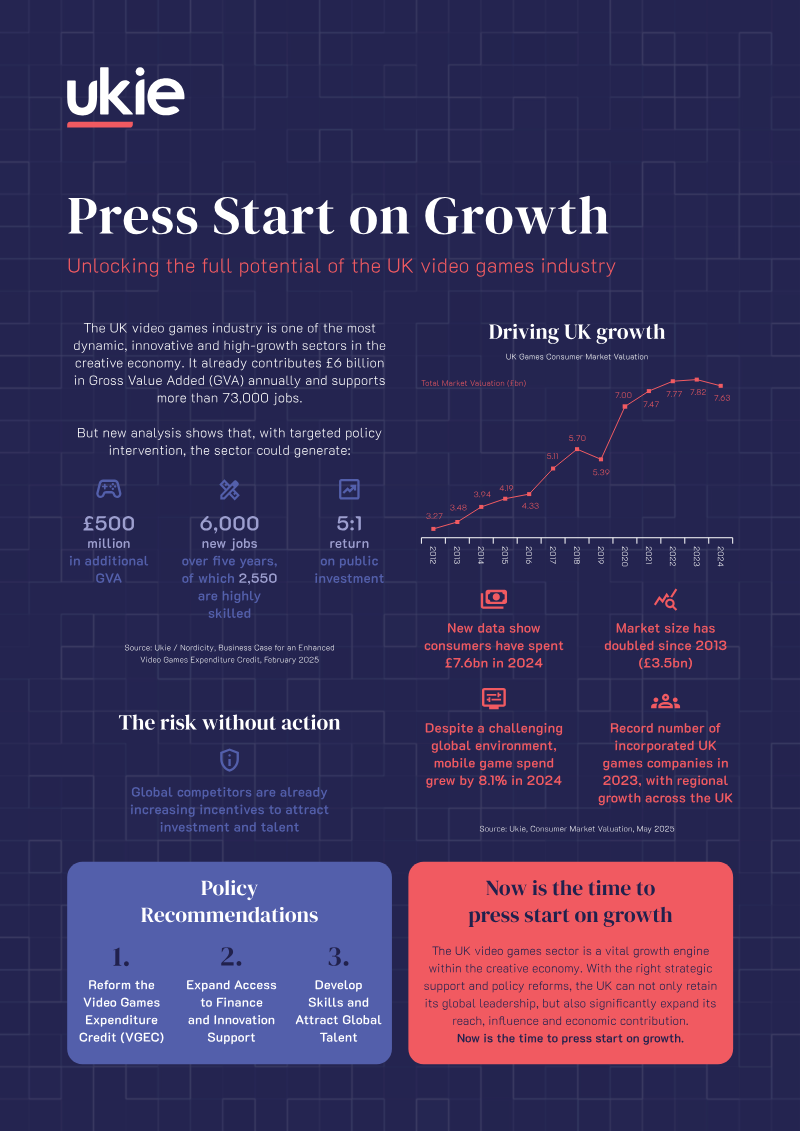
The UK entertainment market reached a record £13.3 billion in 2025.
Combined revenues from music, video, and games grew by 7.1%. This performance outpaced the UK economy's projected 1.5% GDP growth.
Long-term trend
Entertainment sales have more than doubled over the past decade.
The industry grew by over 120% in the last ten years. This significantly outpaced the UK economy's 12% growth in the same period.
Games resurgence
The games sector experienced a strong rebound in 2025, growing 7.4% to £5,365.2 million.
The sector is a significant part of the entertainment market.
£5,365.2 million
Games Sector Revenue in 2025.
- Games sector growth
- 7.4%
- Mobile/tablet games growth
- 8.8%
Music performance
Music revenues increased by 4.2% to £2,453.3 million.
Physical music sales notably grew by 11.5%, propelled by an 18.5% rise in vinyl revenues.
Ownership models
Games remain distinct with 45% of revenues from purchases rather than access.
Games are the segment most reliant on ownership models.
Like owning a book versus borrowing from a library, games often involve direct purchases rather than just temporary access.
45%
Share of revenues from purchases in the games sector.
- Music sector
- 16.6%
- Video sector
- 7.2%
1 / 5
Ask AI about this report