More from JMIR Serious Games
View all
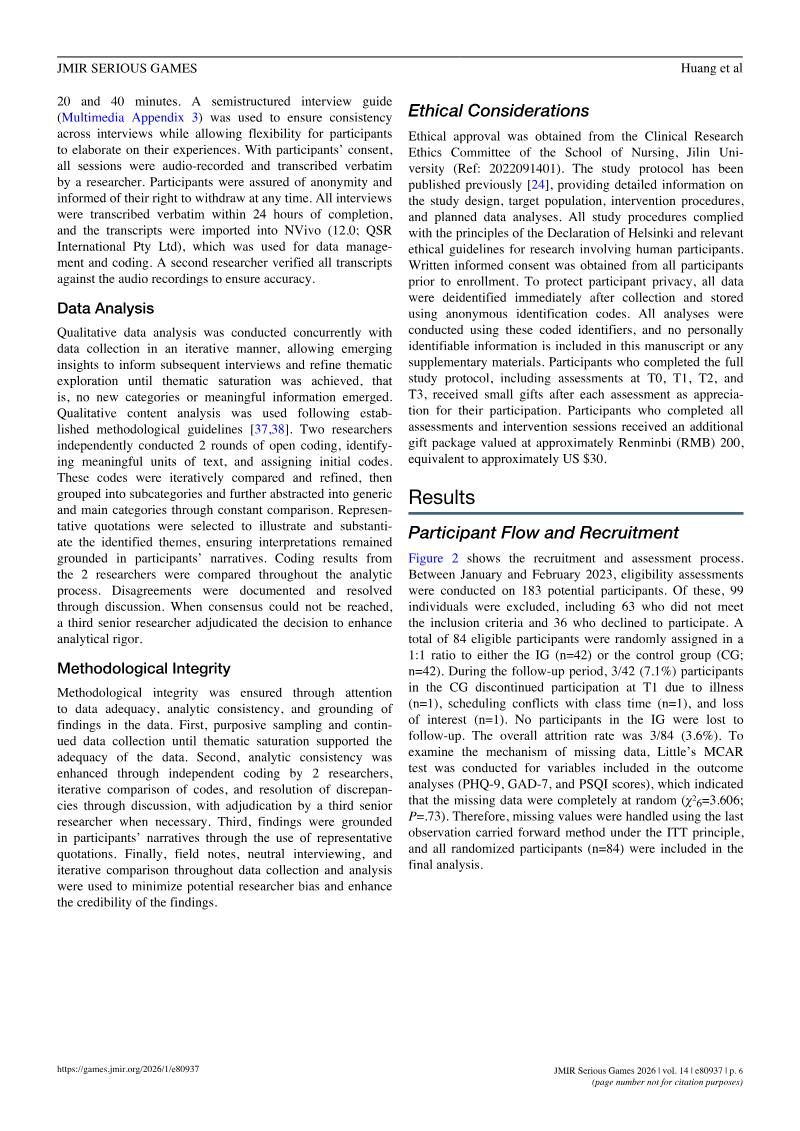
Whitepaper
The ACE of Hearts Serious Game for Young People With Adverse Childhood Experiences
JMIR Serious Games · 2026
Whitepaper
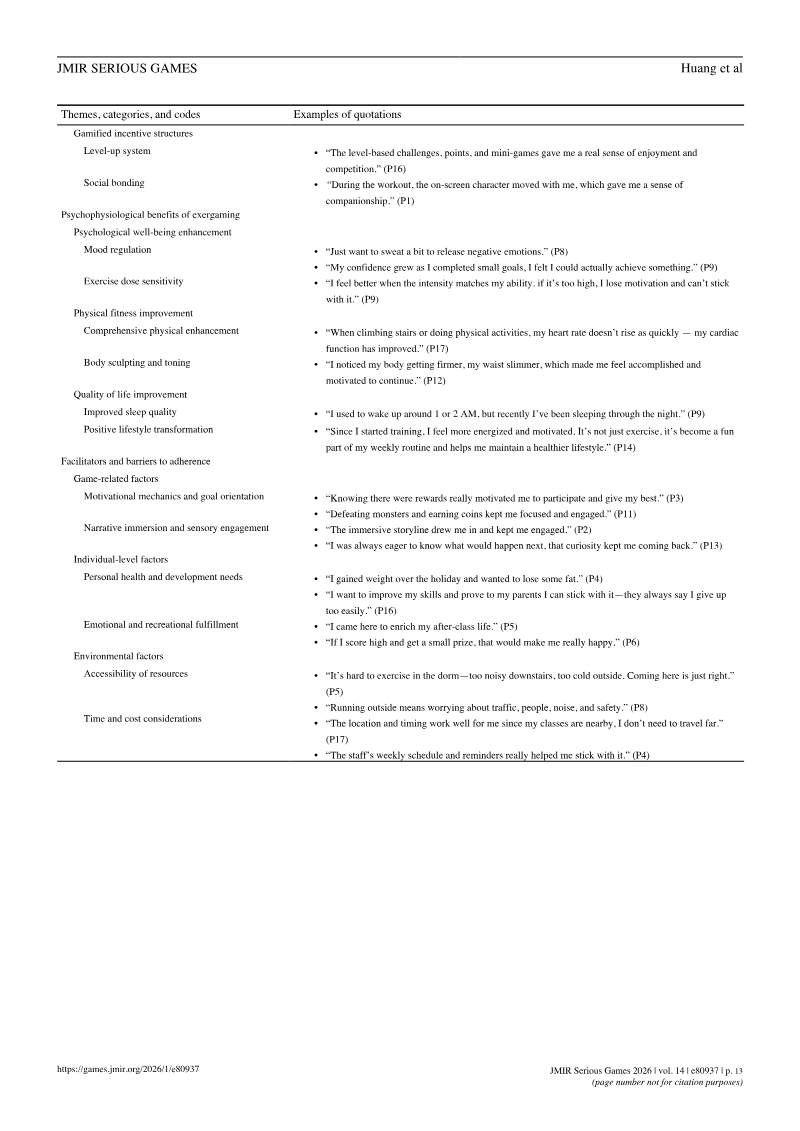
Nintendo Switch-Based Exergaming for Subthreshold Depression: Mixed Methods Randomized Controlled Trial
JMIR Serious Games · 2026
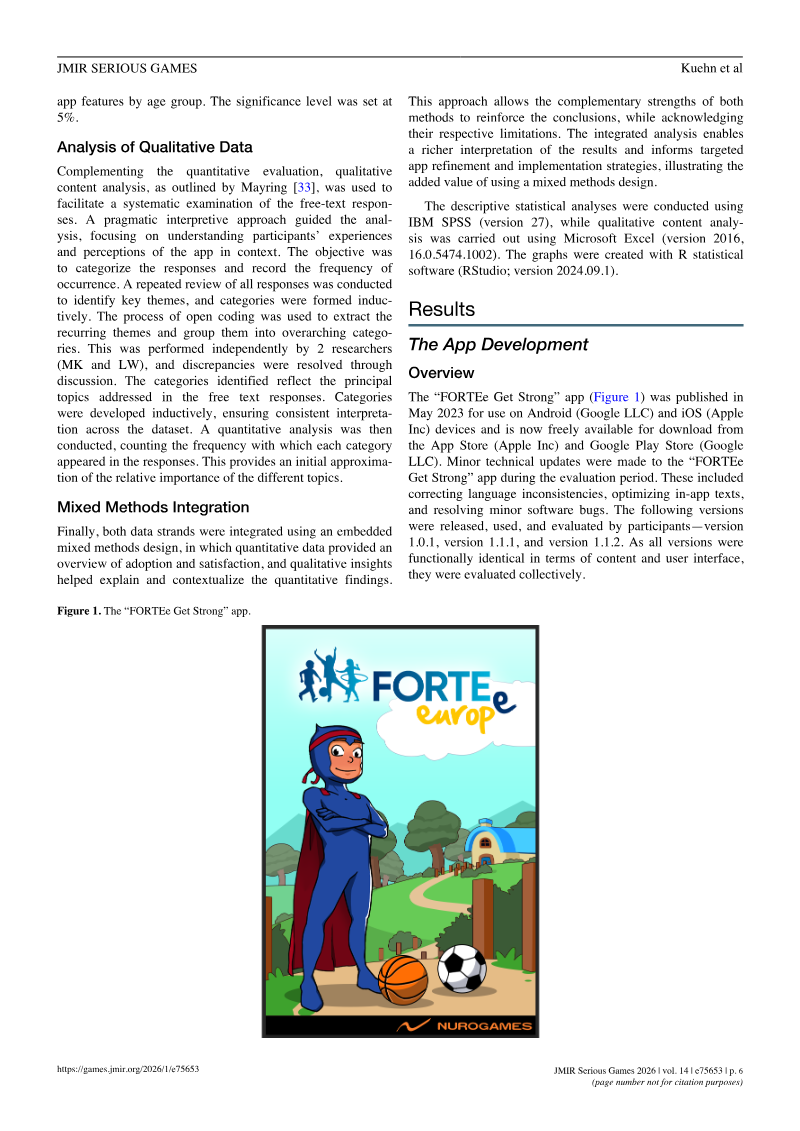
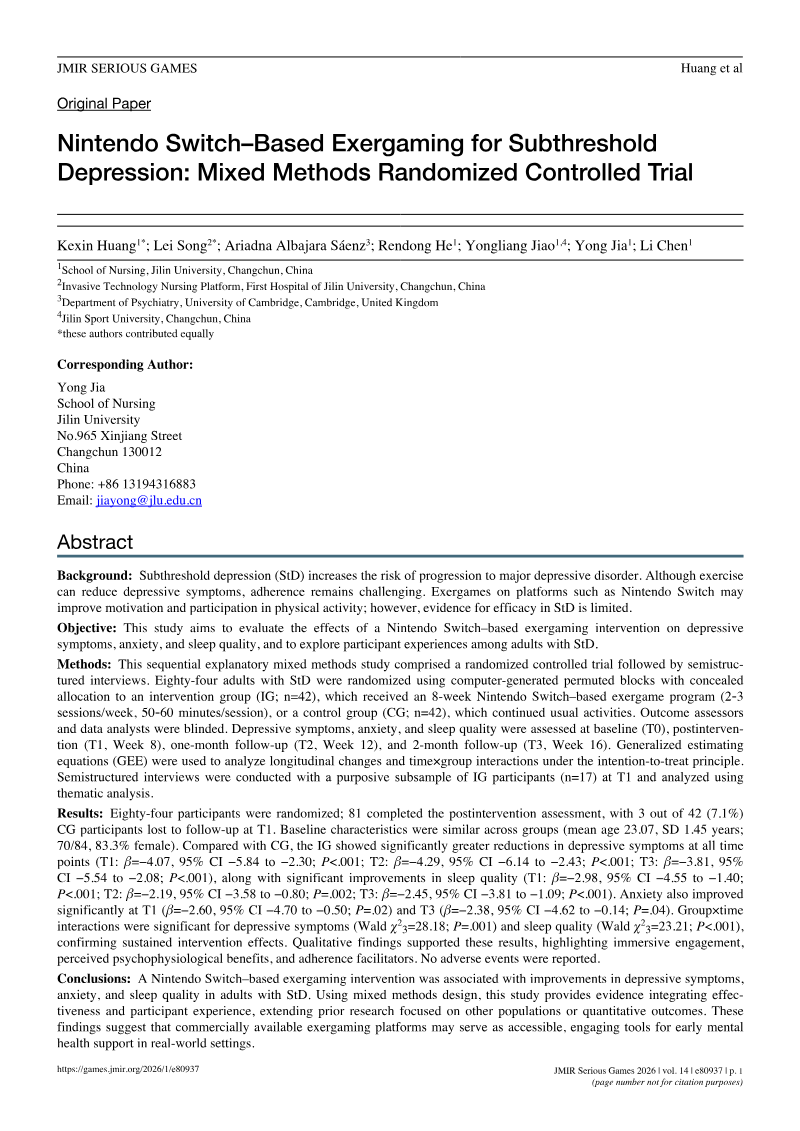
Whitepaper
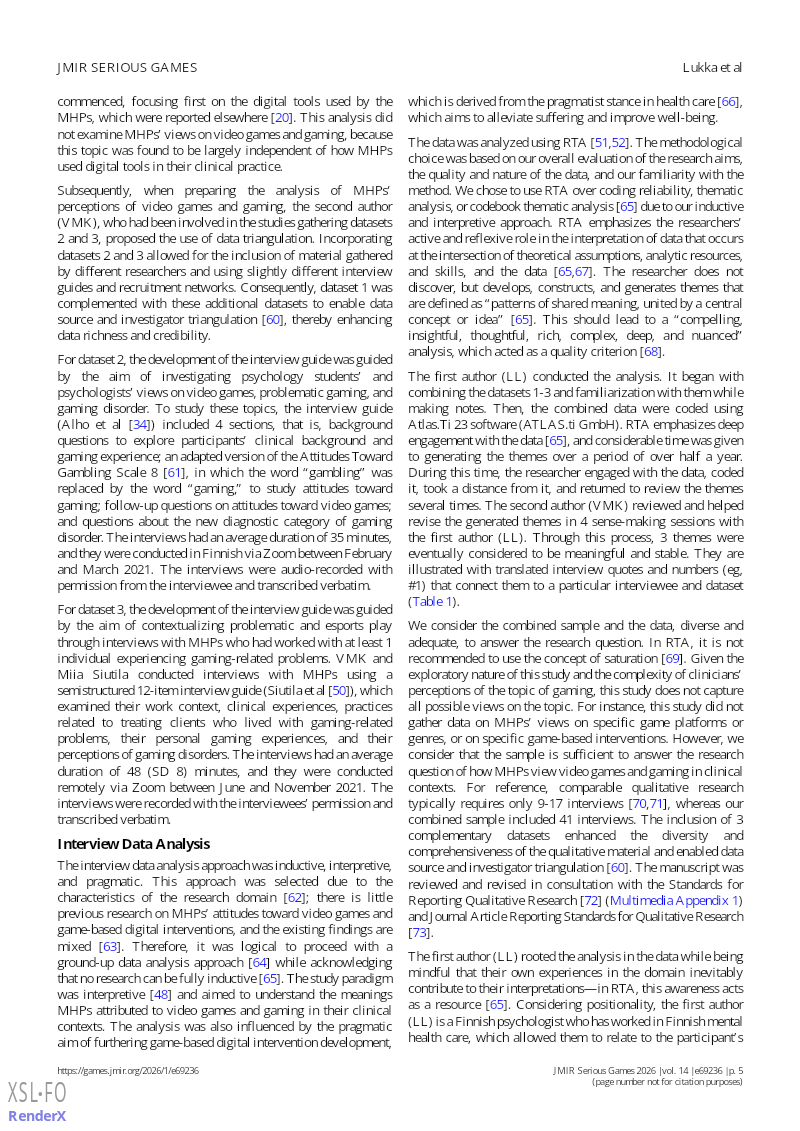
Development and Usability of the “FORTEe Get Strong” App: Mixed Methods Study
JMIR Serious Games · 2026
Whitepaper
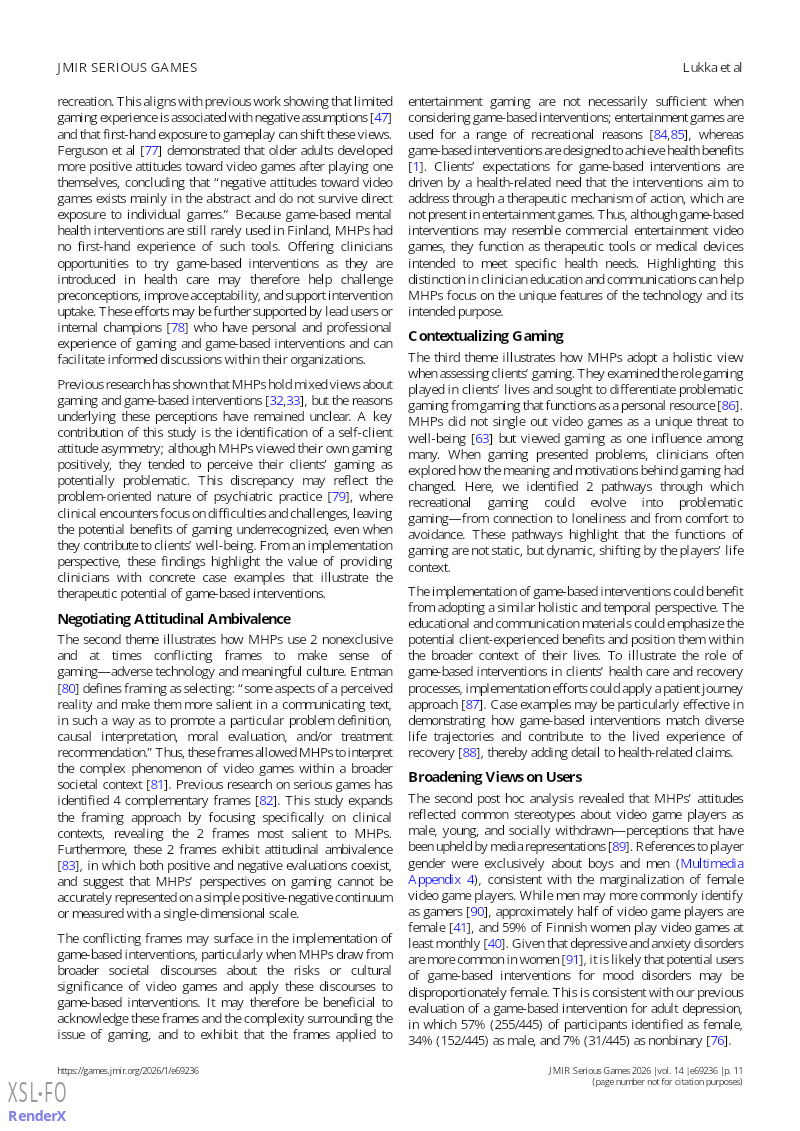
Mental Health Professionals' Views on Gaming to Inform Game-Based Interventions
JMIR Serious Games · 2026
Whitepaper
Is Gamification the New Panacea for Health Behavioral Changes?
JMIR Serious Games · 2026
Whitepaper
Effect of Gamification on Task Engagement During an Eye-Tracking Test Battery in 5-Year-Old Children Born Preterm
JMIR Serious Games · 2025
Whitepaper
A Serious Game (Health Unit in Focus) for Enhancing Undergraduate Education on Older Adults' Health: Design and Validation Study
JMIR Serious Games · 2025
Whitepaper
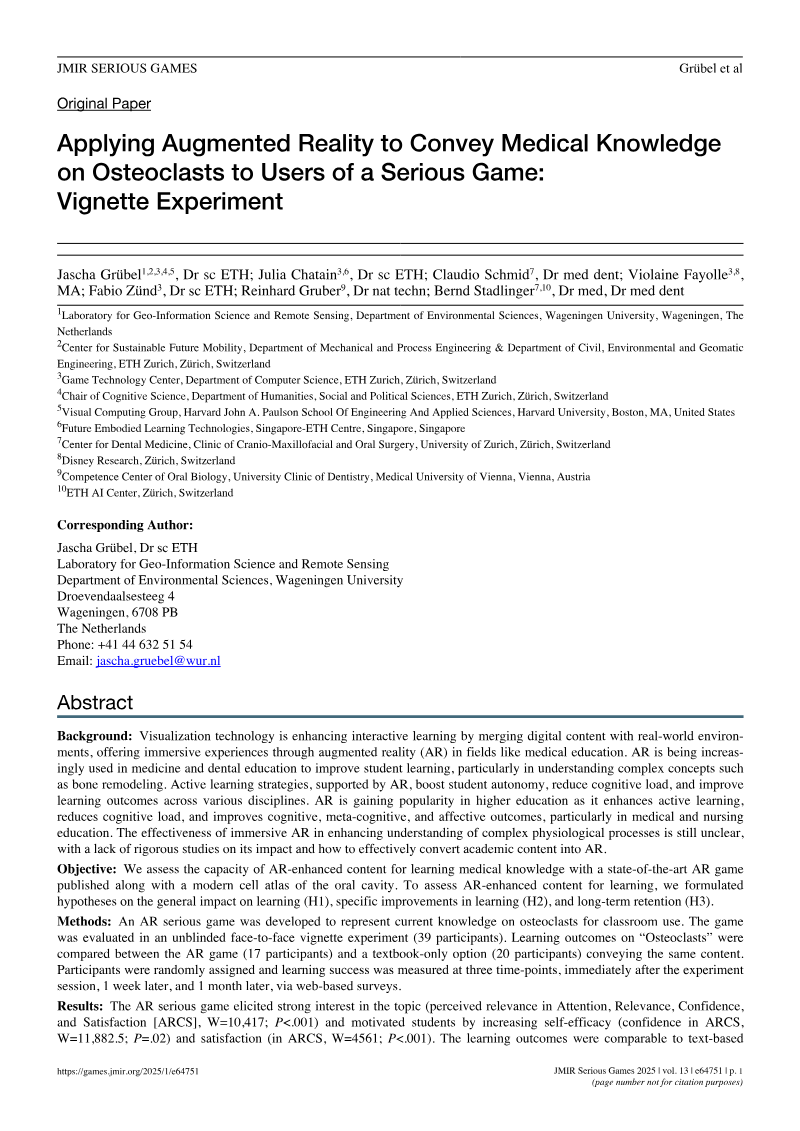
Applying Augmented Reality to Convey Medical Knowledge on Osteoclasts to Users of a Serious Game
JMIR Serious Games · 2025
Whitepaper
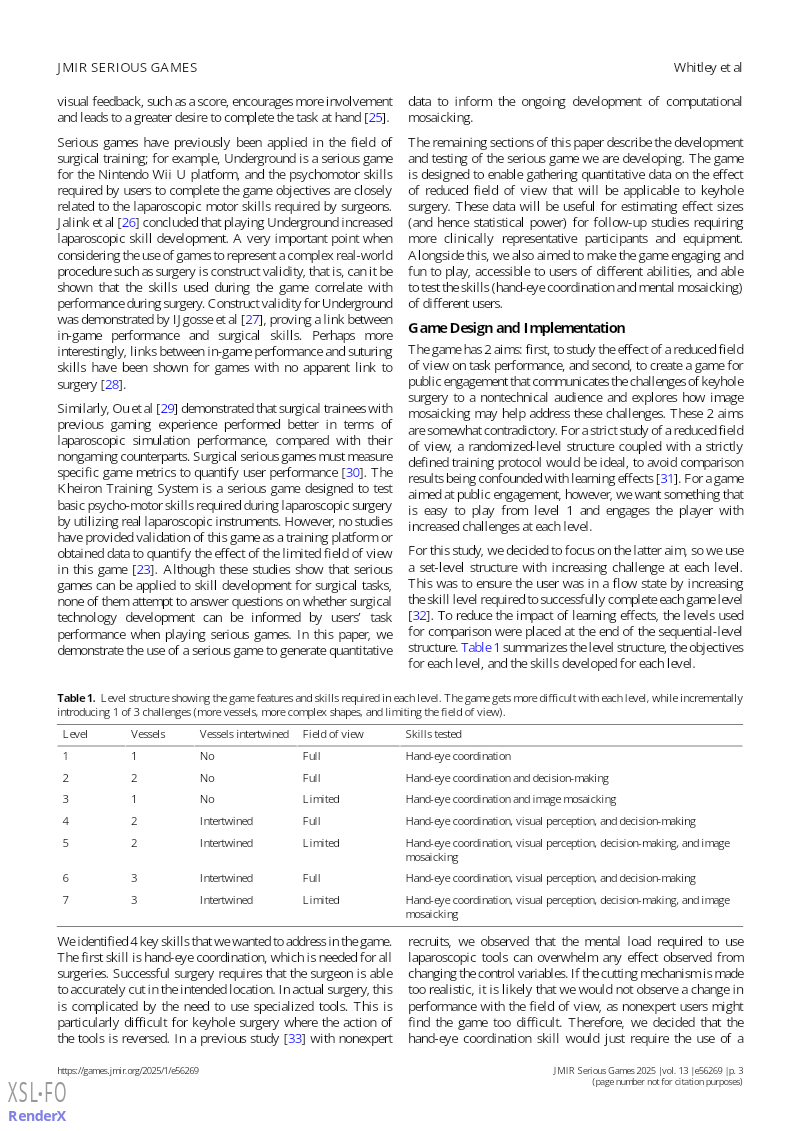
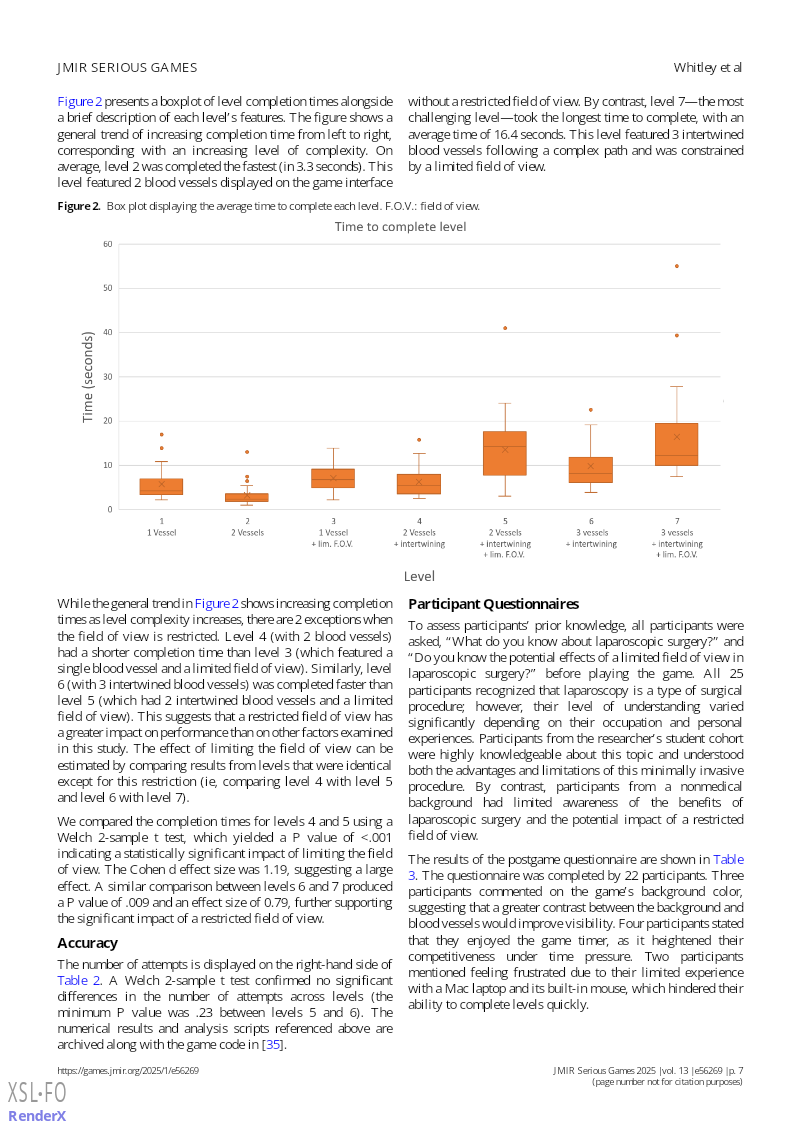
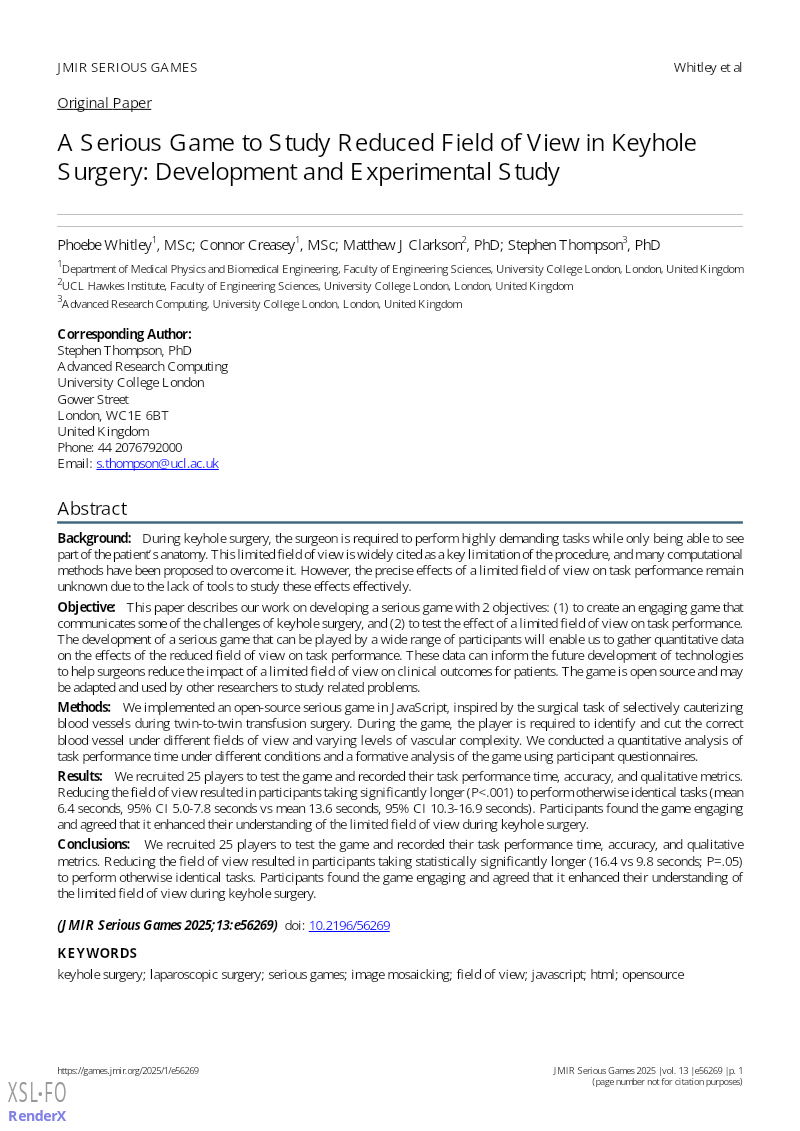
A Serious Game to Study Reduced Field of View in Keyhole Surgery: Development and Experimental Study
JMIR Serious Games · 2025
Whitepaper
Considering Theory-Based Gamification in the Co-Design and Development of a VR Intervention
National Research Council Canada · 2025
Whitepaper
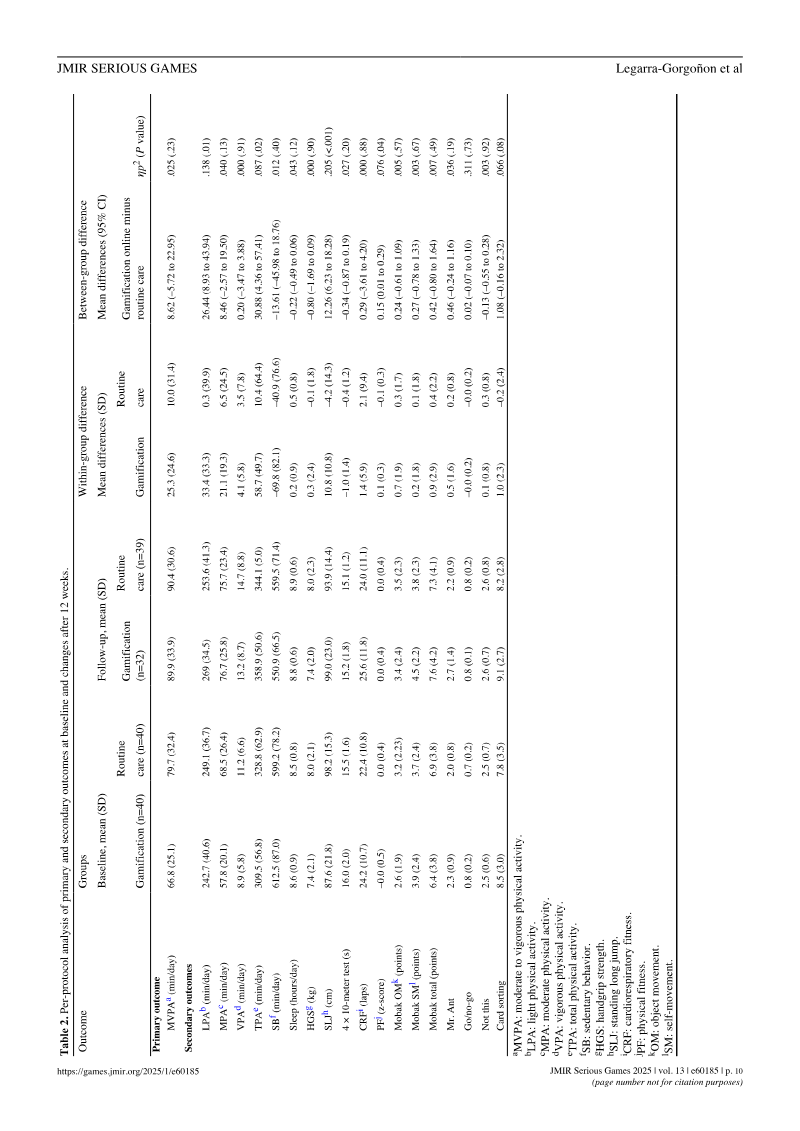
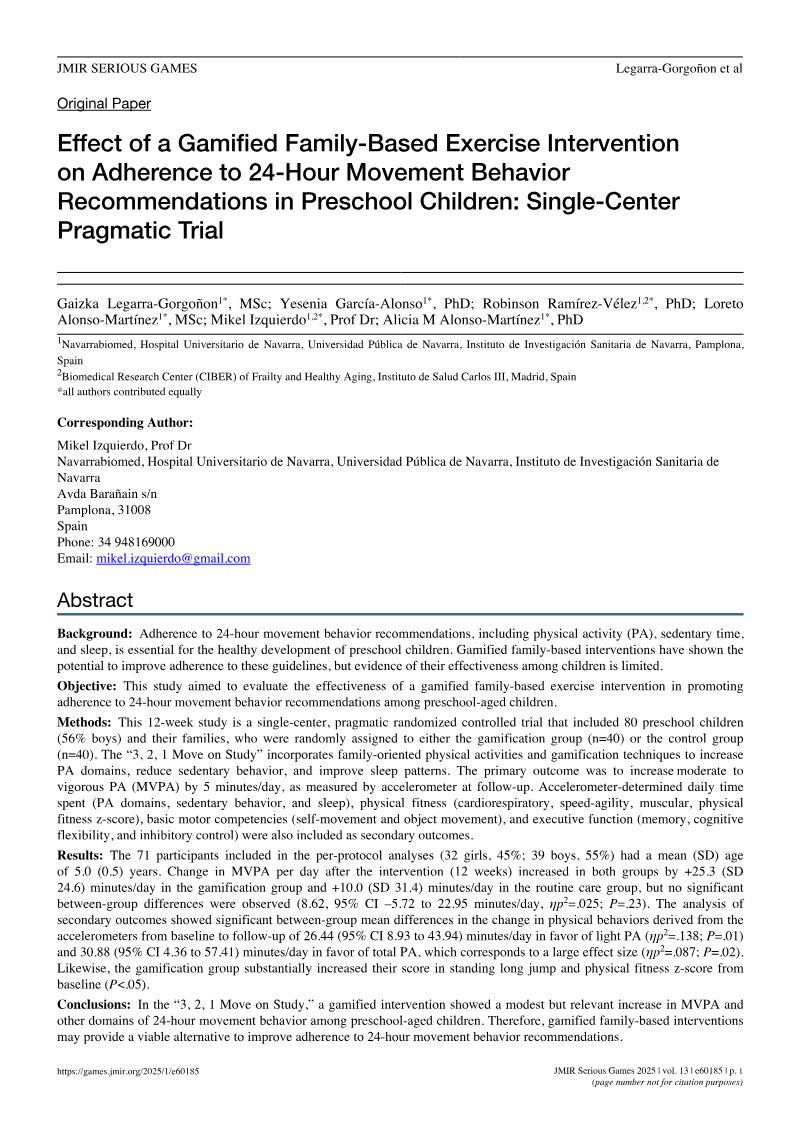
Effect of a Gamified Family-Based Exercise Intervention on Adherence to 24-Hour Movement Behavior Recommendations in Preschool Children
JMIR Serious Games · 2024
Whitepaper
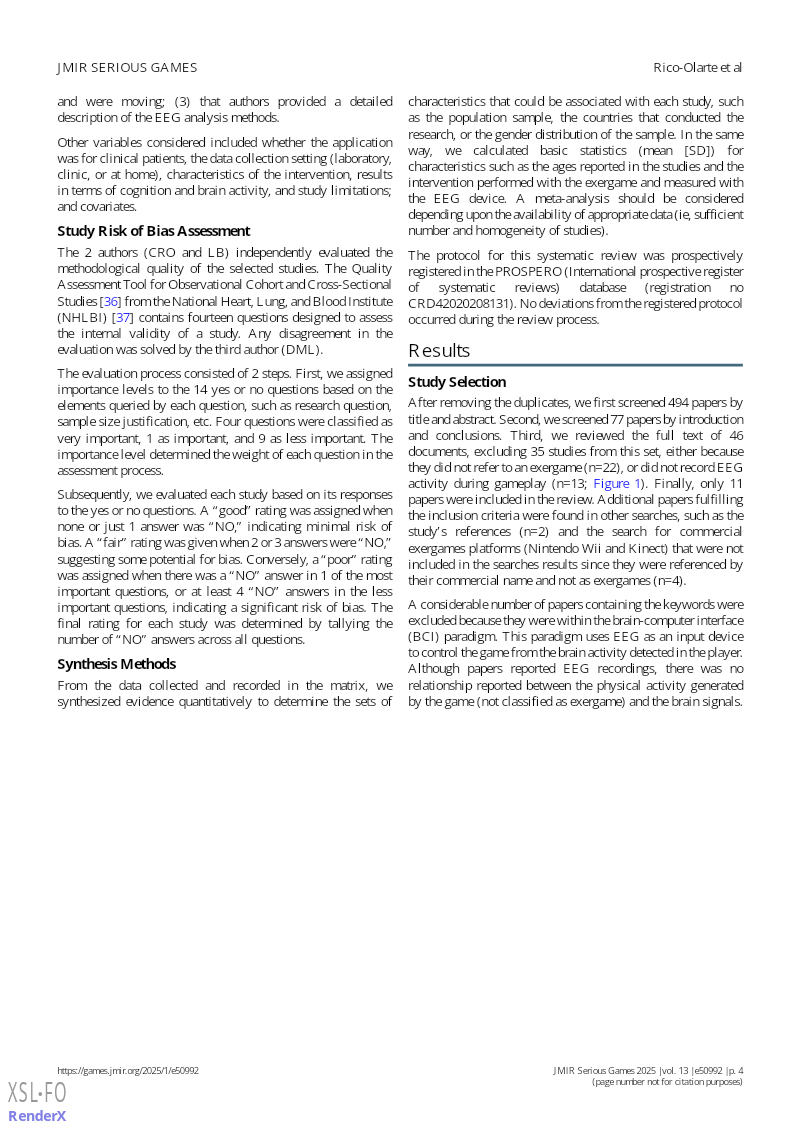
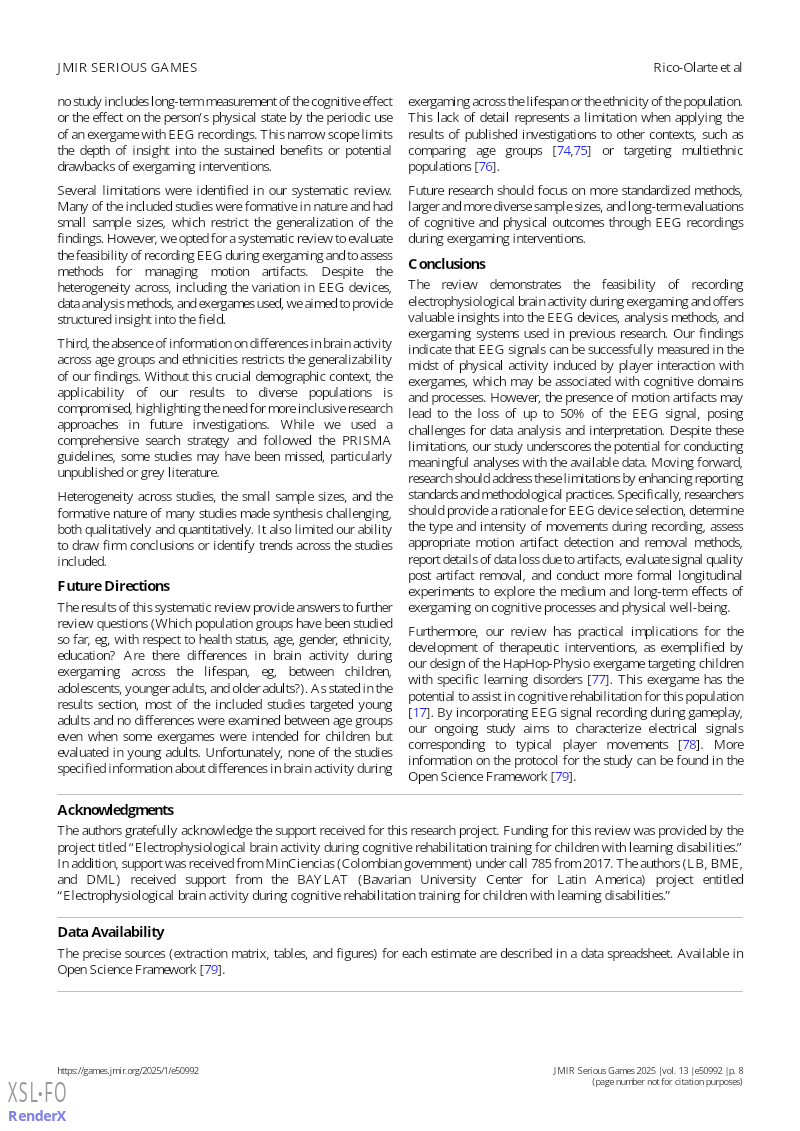
Electrophysiological Insights in Exergaming: Electroencephalography Data Recording and Movement Artifact Detection
JMIR Serious Games · 2024