1 free read left. Create a free account for unlimited reading + AI research.
Create free account
Driving engagement and deepening communities – A guide to social/multiplayer features
Key insights
6 takeaways- 01Replacing static AI with dynamic human opponents fosters deeper emotional investment and encourages longer play sessions through a self-contained ecosystem of competition and inspiration.
- 02Sharing user-generated content, such as customized avatars or virtual rooms, creates a cycle of peer-driven engagement that extends the game's longevity and revenue potential.
- 03Integrating social features directly into the game environment allows developers to capture behavioral data and player feedback that would otherwise be lost to external social media platforms.
- 04Social and multiplayer mechanics, including leaderboards, guilds, and competitive challenges, are primary drivers for increasing player retention, engagement, and monetization.
- 05Modern cloud-based solutions provide scalable, out-of-the-box functionality that enables developers to focus resources on community building rather than managing technical infrastructure.
- 06The rise of backend-as-a-service providers has removed historical barriers to entry, allowing developers to implement complex, cross-platform social systems in days or weeks rather than months.
Ask AI about this video
Transcript
[Music] [Music] she's sir hey guys I'm OMA from GameSpot's what we do is we run the back head as a service you know you could call it a gaming engagement engine back-end engine it's actually something really new kinda a lot of people don't know what to name it because it means different things to different people I'm gonna be just talking to you guys today about social and multiplayer mechanics in games it's really obvious it's really played out I can't understand why games these days won't adopt these features in their games but I'm just gonna be talking a little bit
about it I won't take too long just you know scratching the surface and then we can go to questions and stuff like that it's pretty broad subject I'm just gonna be touching lightly on it what do we mean by social from a back-end as a service provider perspective sharing experiences everybody wants to tell their story and sharing experiences one of these ways we talk about comparing scores easy system is a high score leaderboards leaderboard is one of the oldest and main ways in which you can compare scores and it's I think the first social feature ever implemented implemented in games inviting friends challenging other players viewing other players progress and creating groups and
Guilds these are what we mean by social and throughout this presentation that's why I'm gonna beam every time I say social or multiplayer just for this slide in particular what does it mean for your players what the social mean for your players we all love to tell a story by the music we listen to by the clothes that we wear and by the games that we play we all have a story to tell and these games and entertainment media help us tell our story and giving players the ability to tell their story from your game is a huge advantage to you and your game and you'll see your game being shared on social media between people by giving people the ability to do that within your game is giving people their bait to tell their story to people that relate to it most and it's the people that are
playing the games also competing with others is a lot more dynamic so when we say multiplayer people want to compete with each other people don't want to compete with AI all the time people don't want to be competing with ghosts all the time people want to come compete with something that's dynamic unpredictable constantly changing without learning the patents giving players the social mechanics gives a sense of community people want to people want to know that other people are doing what they're doing people want to relate to each other people want to communicate with each other about the things that they think is significant but outside the game is not really that significant having people compete with the loot that they earn or with the weapons that they unlock or with the track speed or a specific glitch that they found or something given players these social abilities in the game is gonna keep them
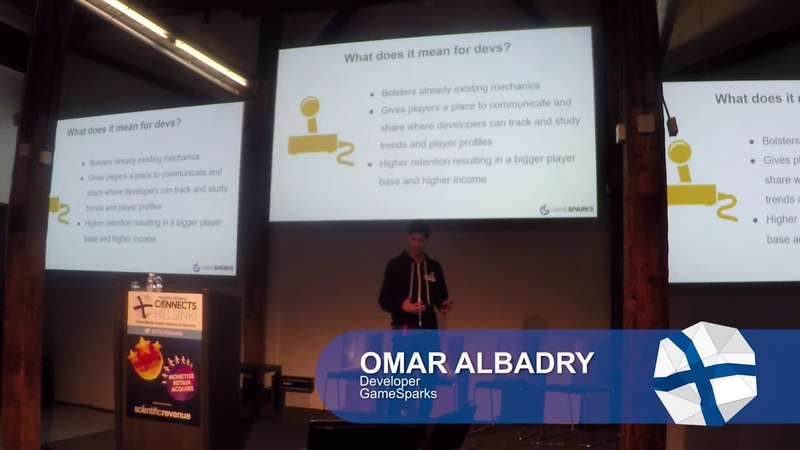
in the game a lot longer they don't have to go anywhere else to tell people their story they can tell it within within the game and of course bragging rights who wouldn't want to you know say I've got the best score I've got the best view these are the things that players look for and keep some longer in the game playing a lot longer talking about a lot longer what does it mean for the devs social mechanics Bost are already existing mechanics I'm talking if you give the player their bill to be creative but not the ability to speak about how great if they all share how grave they are it's you know you're missing a big part of of what makes this mechanic great for example we have a PewDiePie's game that's running on our back-end and it gives you the ability to create your own room your own gaming streaming room you can
buy your loot you can customize it however you want and they go a step further by allowing you to view other people's rooms you know your friends other people PewDiePie himself you can view them rate them love them and send feedback to the players about the things that they've created that's a huge huge push on that one mechanic that's people telling their stories through the mechanic people competing with each other because they can see other people's progress if I can't see other people's rooms one I'm not inspired and two I really don't know how my room is compared to other people so I won't be pushed to change it push to make changes or adopt a new style or you know you always be looking forward to seeing what other people do and how that impacts you and moves your story on other people's
story forward also having social features in your game means you can track and study the way your play is interact with each other if people have to go to social media to talk about your game you're losing a huge ton of data and a huge ton of feedback in in an environment that you can change an environment that you can kind of customize depending on the direction that your players are heading Facebook is never can to change you can't really change Facebook you can't change snapchat but you can change the way your players interact with your game to the social means that you offer them also it goes without saying the longer that you players partake in your game and the longer they socialize in it the longer they grow a community within it it will grow your plays are more
retained to the game they'll stay playing the game longer because they don't have to go anywhere else and it means higher income whether it's through ads because they stayed there longer all through in that patch is because they compete in in the best loop if I buy the best sword in a MMO game my friend is gonna see me sharing that or letting him know or comparing my avatar with his avatar and then he's gonna say I would like to buy that so - or even a better one and it's gonna be competition leading to better retention and monetization why would you implement it there's a slew of reason why you would implement social features and multiplayer features I'm actually gonna skip past this point because the important thing is why wouldn't you implement it the only reason why you wouldn't implement social features or
multiplayer features in your game besides not making sense but really social features do make sense in every type of game nowadays it's technical limitation and with technical limitation comes cost bad experience not having the right people to do it and this is where companies like us and play fab and Photon come to play what we do is we offer out-of-the-box tools that you can customize your own way and implement in games whether there are in development or whether you're gonna start on them tomorrow these tools are on clouds out-of-the-box customizable and the best thing is that they cross-platform your players on iOS on console on PC on Android can talk to each other without having to go on the media that you can
moderator video that you can't control these the as I said at the beginning of the talk this is cutting edge technology a lot of people don't know about a lot of people think it's very hard to create these tools that help you engage with your customers and your customers engaging with other customers they feel like that it's in the realm of the unknown and the uncertain but really it's actually very simple to implement the simplest social elements such as a high score leaderboard will actually take you about five minutes to implement a leaderboard in your game and anything more complex will take a week at max a week our top developers actually push big features big social features on their live games within weeks and that includes QA development and support
afterwards and they actually get the feedback on how well their social services are doing pretty quick due to analytics and other out-of-the-box features so this is pretty much it if anybody wants to ask me any questions about social features multiplayer or the cutting-edge technology of back-end as a service or engagement engines or anything to do with with them more than happy to answer [Music] [Music]
Summary
Social and multiplayer mechanics serve as essential drivers for player engagement, retention, and monetization in the modern gaming landscape. By integrating features such as leaderboards, friend invitations, guild systems, and competitive challenges, developers provide players with the tools to share their personal narratives and achievements directly within the game environment. This internal ecosystem allows players to compete against dynamic, unpredictable human opponents rather than static AI, fostering a sense of community that encourages longer play sessions and deeper emotional investment.
From a development perspective, social features transform games into self-contained platforms for interaction. When players share their progress, loot, or customized content—such as virtual rooms or avatars—within the game, they create a cycle of inspiration and competition that naturally drives further engagement. Furthermore, keeping these interactions within the game allows developers to capture valuable behavioral data and feedback that would otherwise be lost to external social media platforms. This data enables developers to refine the player experience and tailor future content to community trends, ultimately increasing the game's longevity and revenue potential through sustained retention and peer-driven monetization.
While technical complexity and implementation costs were historically significant barriers to entry, the rise of backend-as-a-service providers has democratized access to these tools. Modern cloud-based solutions offer out-of-the-box, cross-platform functionality that allows developers to implement everything from simple leaderboards to complex social systems in a matter of days or weeks. By leveraging these scalable, customizable engines, developers can overcome technical limitations, ensure cross-platform connectivity, and focus on building vibrant, enduring communities that keep players invested in the game experience for the long term.












Comments