Key insights
7 slides
The rising bill
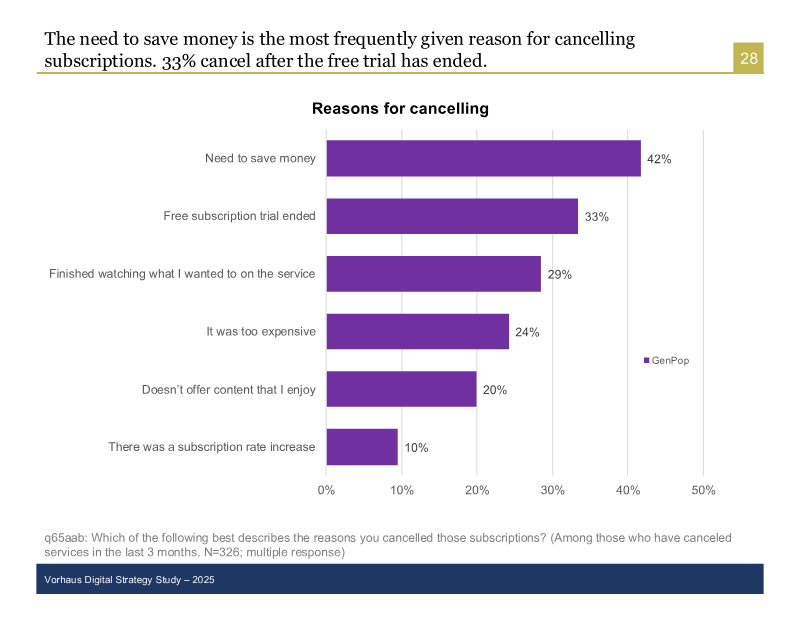
Nearly a quarter of consumers plan to cancel pay TV.
Smartphones and connected TVs have supplanted traditional television as primary mediums. Cost-sensitivity is the primary driver for churn in the streaming market.
Pay TV decline. Nearly 25% of consumers plan to cancel pay TV within the next year.
Page 13 of the reportGenPop16
18-3415
35-5416
55+16
Key number
The average consumer maintains 3.5 paid subscriptions.
The streaming market remains highly competitive. Cost-sensitivity has emerged as the primary driver for churn.
Key number
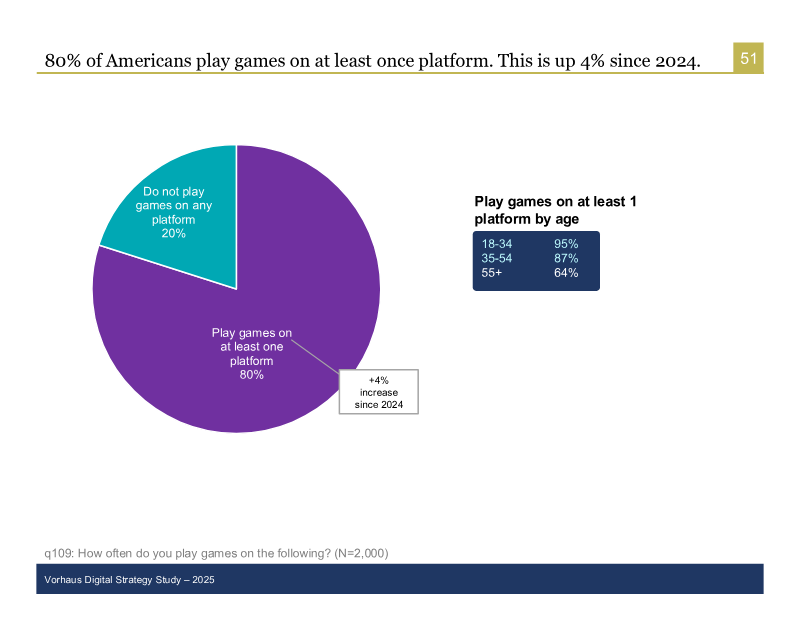
Gaming participation has reached 80% of the U.S. population.
This marks a 4% increase since 2024. Gaming has evolved into a central pillar of digital life.
What changed
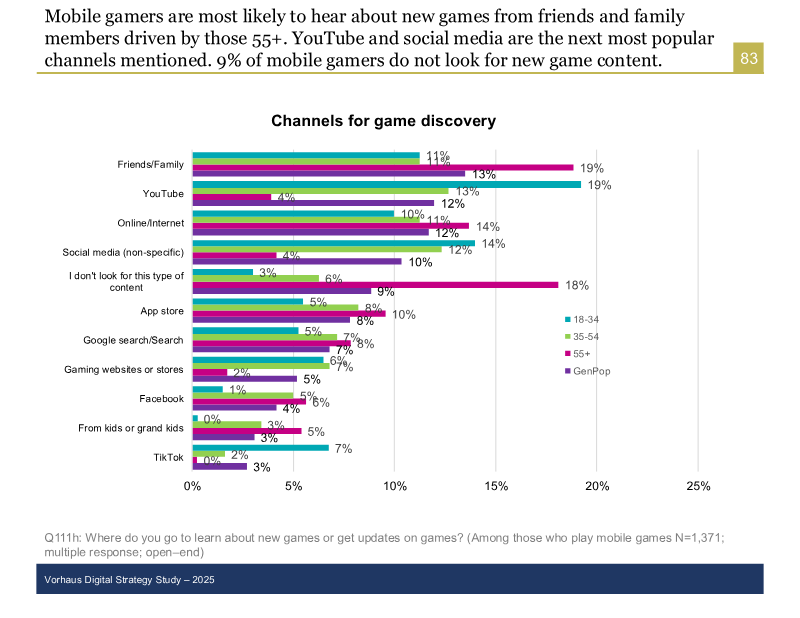
Mobile gaming is the preferred platform across all age groups.
This includes users over 55. Video-based gameplay content has replaced traditional advertising as the most effective discovery mechanism for younger demographics.
The hurdle
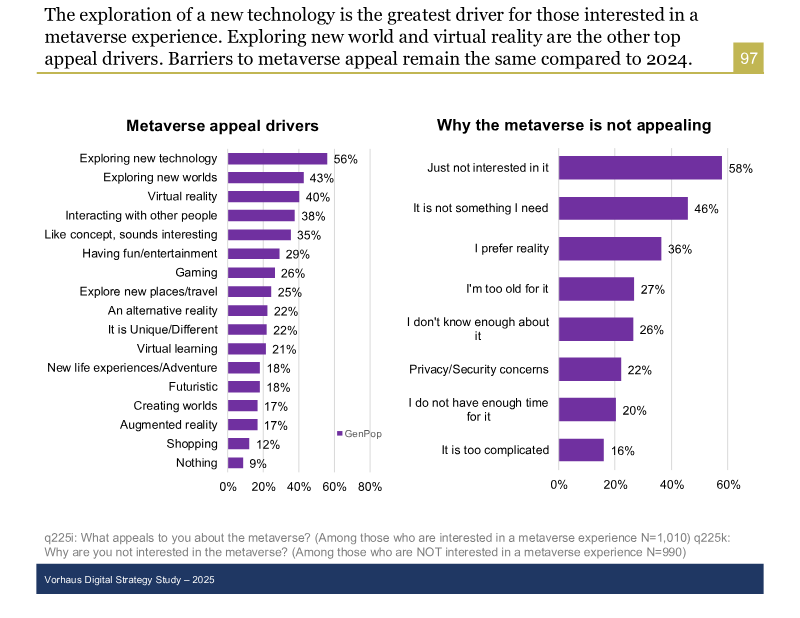
Data privacy concerns hinder widespread adoption of VR and AR.
Interest in the Metaverse, VR, and AR is concentrated in the 18–34 age demographic. Adoption is tempered by broader consumer apprehension regarding data privacy and security.
The opportunity
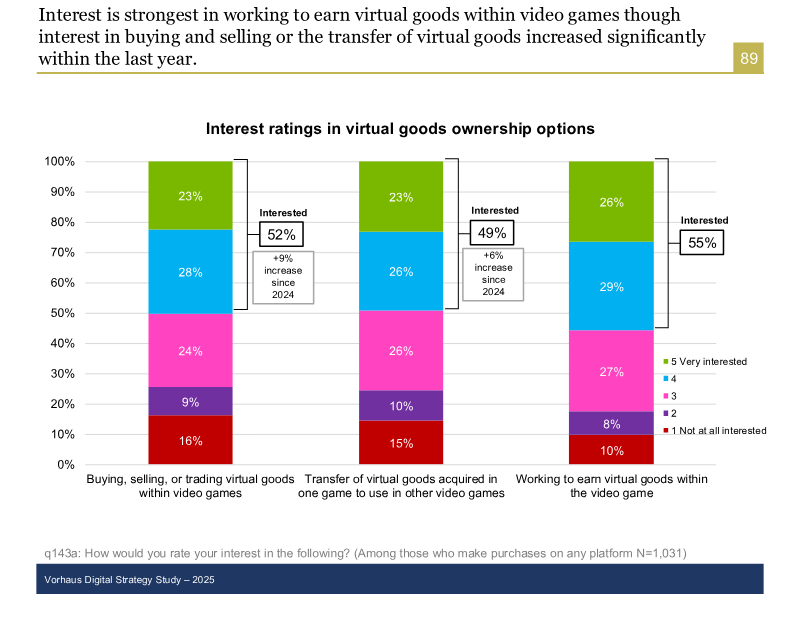
Gamers will spend more if digital asset ownership is secured.
A significant portion of gamers express a willingness to spend more if ownership and transferability of digital assets are secured. Cryptocurrency adoption remains limited.
Asset ownership. Gamers show a willingness to increase spending on virtual goods if ownership and transferability are secured.
The crisis
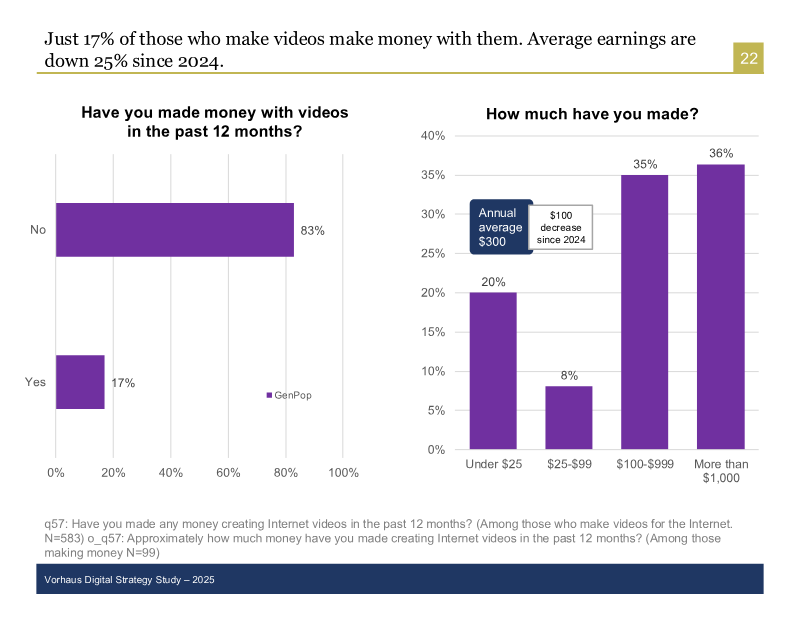
Many creators face declining average earnings despite platform growth.
The creator economy is expanding in terms of participation. Monetization remains a significant hurdle with many creators facing declining average earnings.
Earnings decline. Many participants experience declining average earnings despite the continued growth of user-generated content platforms.
1 / 7
Ask AI about this report