1 free read left. Create a free account for unlimited reading + AI research.
Create free accountWhitepaper European Conference on Games Based Learning (ECGBL)
1 free read left. Create a free account for unlimited reading + AI research.
Create free accountWhitepaperEuropean Conference on Games Based Learning (ECGBL)
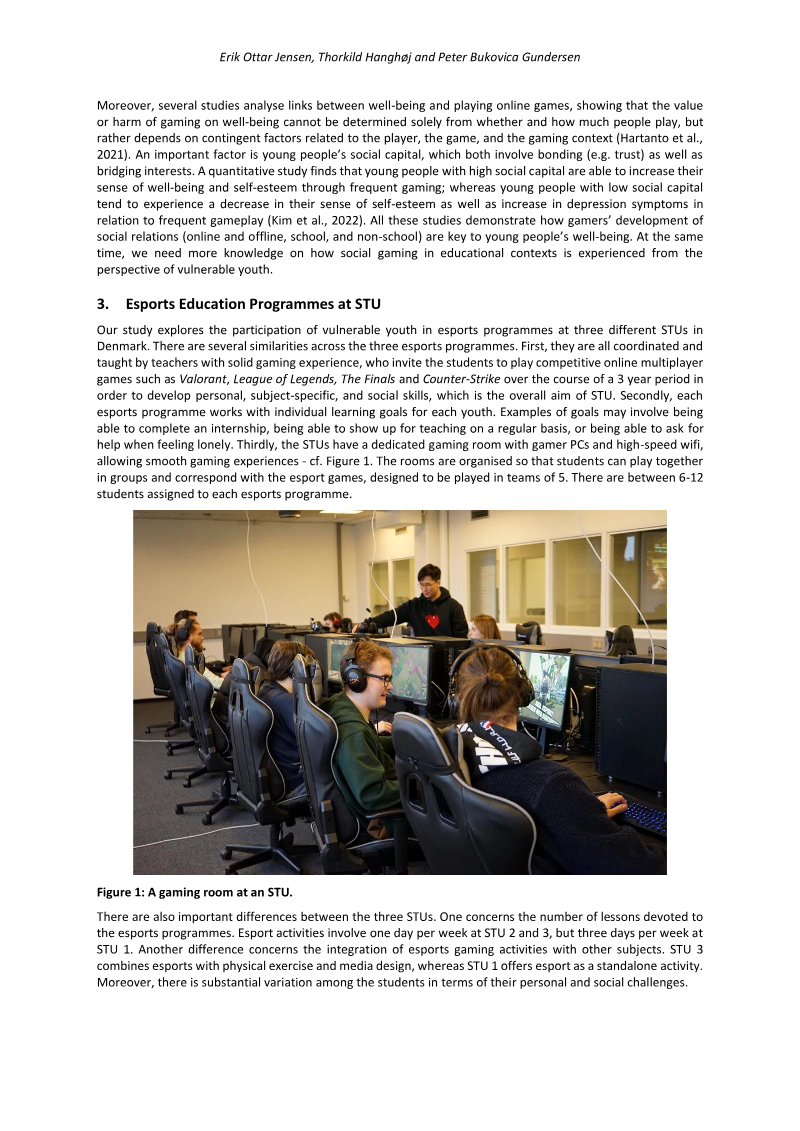
It is part of a broader project on esports in these programmes, funded by the Velux Foundation. The work centres on dialogic facilitation.
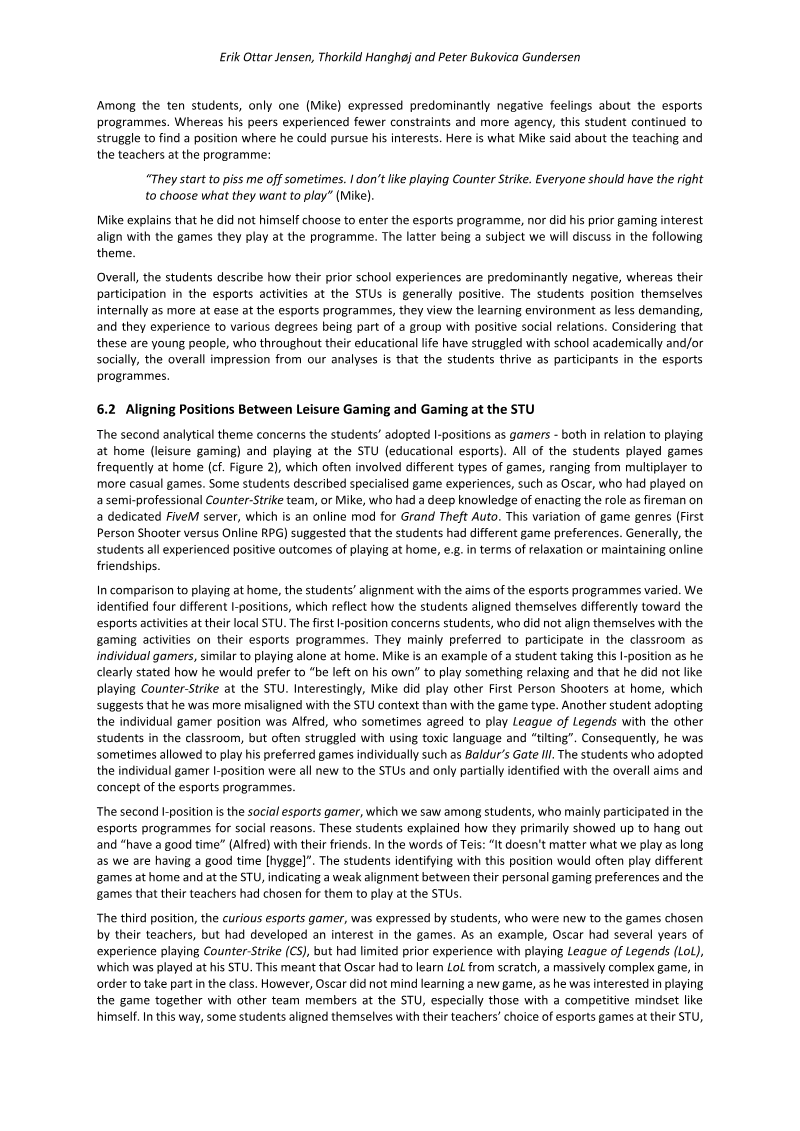
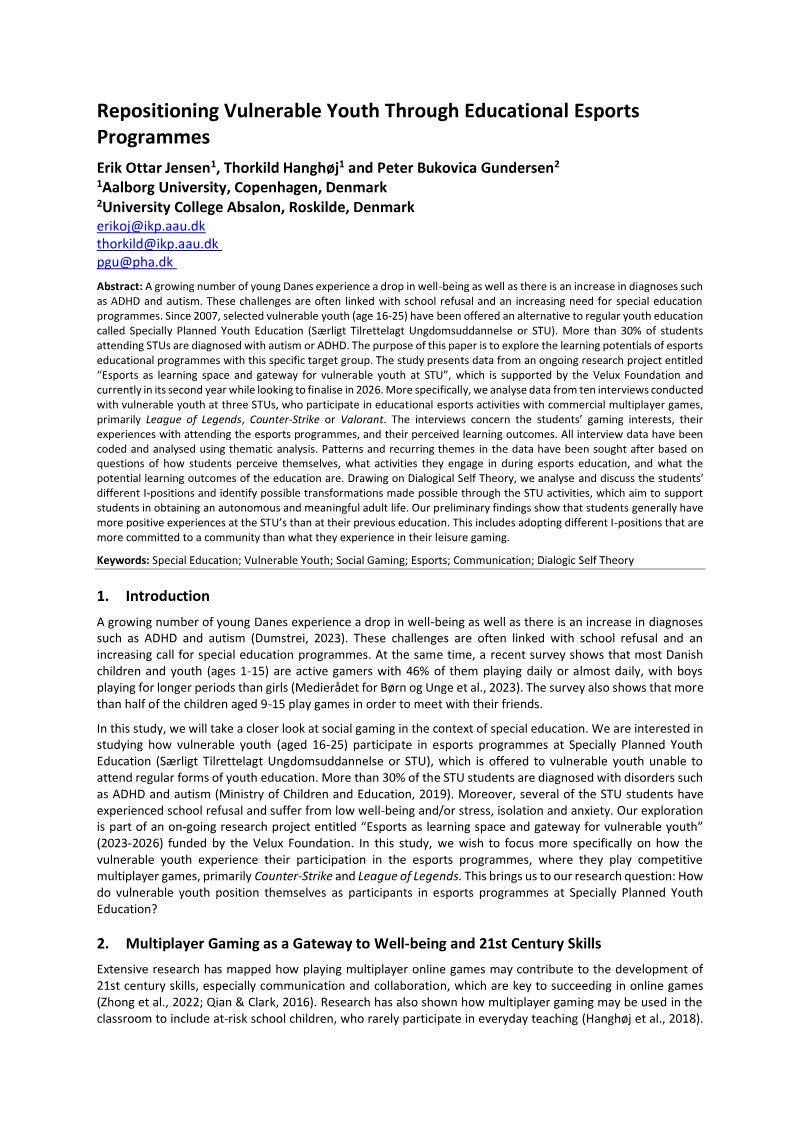
This study examines how dialogic facilitation can support esports teaching for vulnerable youth in Danish Specially Planned Youth Education (STU) schools. Funded by the Velux Foundation as part of a broader project on esports in these programmes, it centres on video observations of a pre-game briefing in Counter-Strike 2. Its central argument is that a teacher with only beginner-level game expertise can open and widen a dialogic space in which students with far greater gaming knowledge contribute to co-constructing in-game roles and peer feedback routines. The authors draw on Wegerif's open/widen/deepen framework and Fanfarelli's distinction between game mechanics and game sense to argue that this approach is valuable for teachers and aligns with the programme's goal of strengthening vulnerable students' social and communicative competences.
Analysis of classroom excerpts shows that students' differing levels of mechanical skill and strategic understanding shape the perspectives they bring to the task. An advanced student prioritises team strategy, while another emphasises personal weapon preference, revealing the inherently collaborative character of esports. The authors conclude that dialogic facilitation can convert this distributed expertise into a learning resource and offers a promising route for novice teachers. They also note that such facilitation demands careful orchestration to manage disagreements and reconcile competing learning goals.
The evidence base is limited in scope. It derives from a single class session at one Danish STU school, so the findings are illustrative rather than generalisable across settings, age groups, or game titles. The supporting literature, which spans serious games for executive function in neurodiverse children, multiplayer gaming and social communication among autistic youth, and Danish evaluations of supported youth education, situates the work within research on neurodiversity, social development, and educational dialogue.
Each row is a game or company this document names, each column a document, oldest first. A mark means that document names it. Select a row to see those documents.



European Conference on Games Based Learning (ECGBL) · 2026



European Conference on Games Based Learning (ECGBL) · 2026



European Conference on Games Based Learning (ECGBL) · 2026
European Conference on Games Based Learning (ECGBL) · 2026