1 free read left. Create a free account for unlimited reading + AI research.
Create free accountWhitepaper International Journal of Serious Games
1 free read left. Create a free account for unlimited reading + AI research.
Create free accountWhitepaperInternational Journal of Serious Games
This framework uses the Goal-Question-Metric method to assess games across health, education, and social engagement pillars.
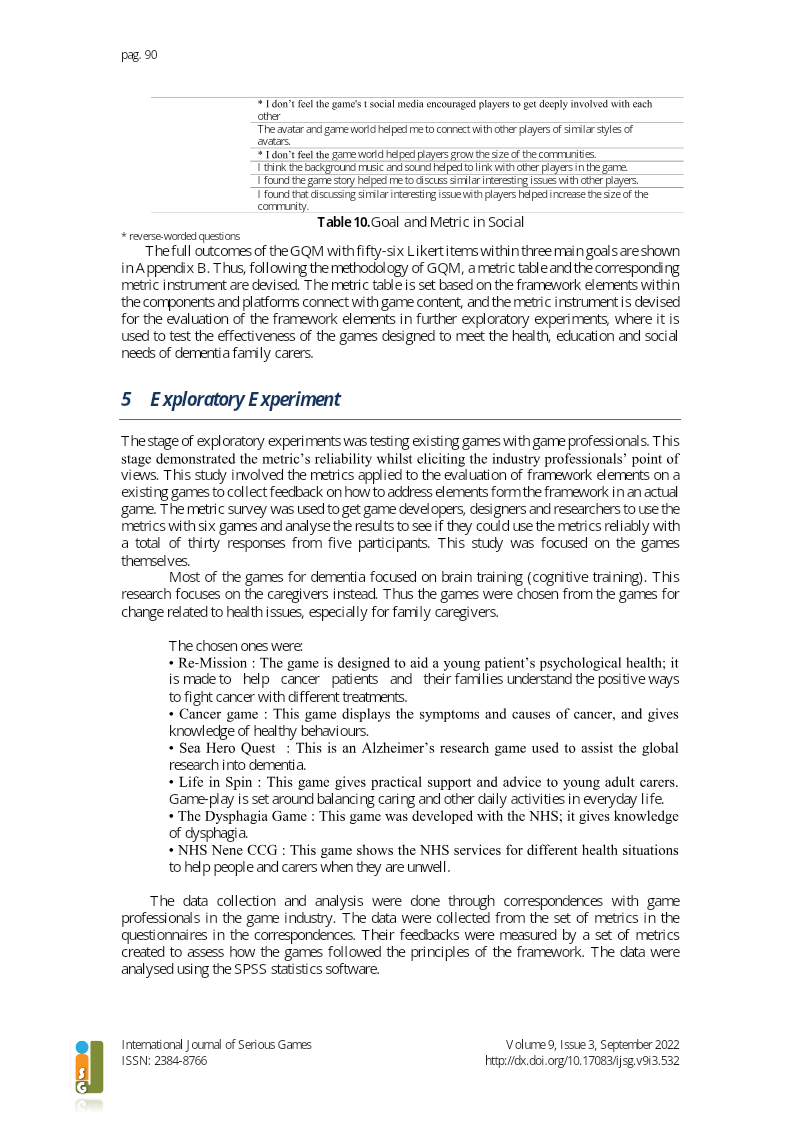
Standardized evaluation. A conceptual framework has been developed to standardize the evaluation of serious games for dementia caregivers.
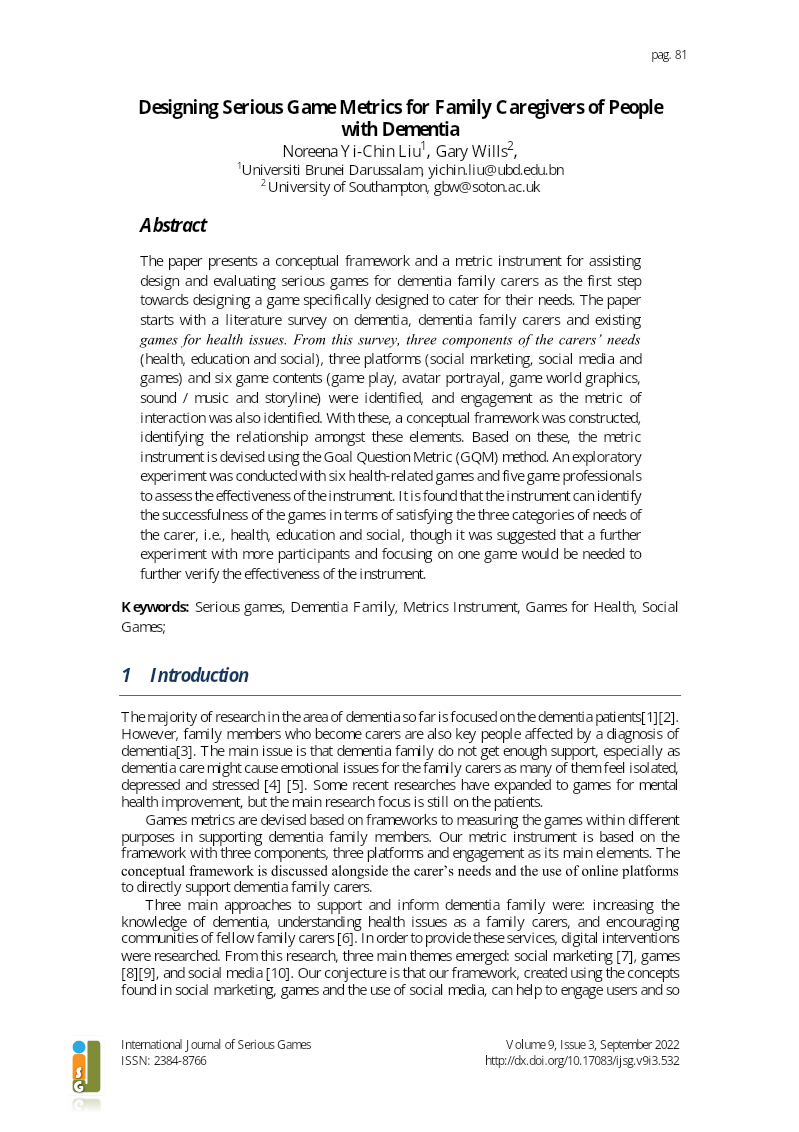
Serious games serve as a critical intervention for family caregivers of individuals with dementia, offering potential improvements in health literacy, educational support, and social connectivity. To standardize the evaluation of these digital tools, a conceptual framework utilizes the Goal-Question-Metric method to assess how specific game elements—including gameplay mechanics, avatar portrayal, graphics, sound, and narrative structure—align with the unique needs of caregivers. By focusing on these three pillars of health, education, and social engagement, the framework provides a structured approach to determining how effectively a game supports its target audience.
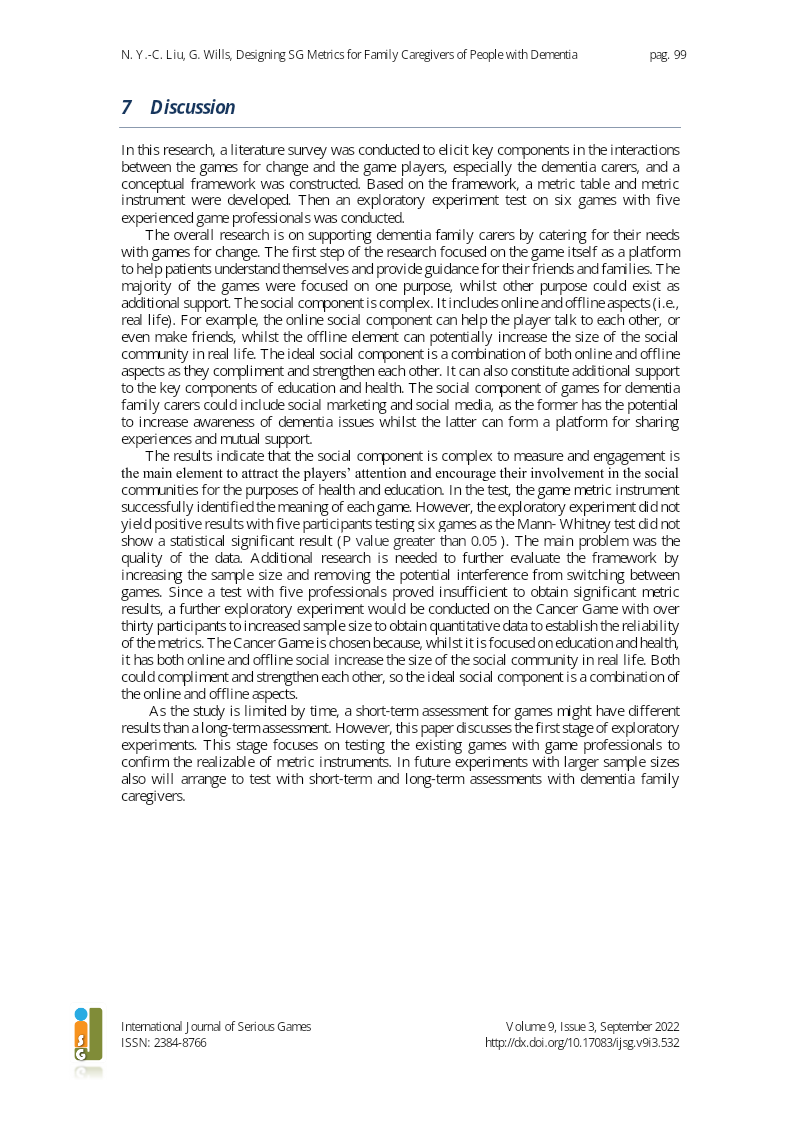
Exploratory experiments involving industry professionals and six existing health-focused games demonstrate that while the metric instrument successfully identifies the primary purposes of various titles, it faces challenges regarding statistical sensitivity. Initial testing with a small cohort of five professionals failed to reach statistical significance, indicating that the current sample size is insufficient to capture the nuanced differences in how various game designs impact user engagement. Qualitative feedback suggests that while mechanics and social features are effective in fostering peer support and learning, their perceived value remains highly subjective and dependent on the individual player’s experience.
Future research aims to refine these metrics through larger-scale validation, targeting a participant group of over thirty individuals to ensure more robust data collection. By integrating both online and offline social components and conducting longitudinal assessments, the next phase of development seeks to overcome the limitations of current non-parametric testing. These efforts are essential for establishing a reliable, standardized instrument capable of measuring the long-term efficacy of serious games in alleviating the burdens faced by dementia caregivers, ultimately ensuring that digital health interventions are both engaging and clinically meaningful.
International Journal of Serious Games · 2026
International Journal of Serious Games · 2026
International Journal of Serious Games · 2026
International Journal of Serious Games · 2026
International Journal of Serious Games · 2026
International Journal of Serious Games · 2026
International Journal of Serious Games · 2026
International Journal of Serious Games · 2025
International Journal of Serious Games · 2025
International Journal of Serious Games · 2025
Serious Games Society · 2025
International Journal of Serious Games · 2025
International Journal of Serious Games · 2018