1 free read left. Create a free account for unlimited reading + AI research.
Create free accountArticle American Journal of Play
1 free read left. Create a free account for unlimited reading + AI research.
Create free accountArticleAmerican Journal of Play
DeKoven's Interplay curriculum for Philadelphia schools in 1968 found this, and he later founded The Games Preserve in 1971.
Bernie DeKoven, a play theorist and game designer, argues in this interview that playfulness is a central and undervalued dimension of human life, particularly for adults, who he contends are more play-deprived than children. His account traces his early career, beginning with the Interplay curriculum he developed for Philadelphia schools in 1968, where he found that children's self-initiated games engaged them far more than structured theater exercises. He later founded The Games Preserve in 1971 as a center for play research. The conversation situates his work within a broader critique of institutions and attitudes that suppress play, including grading, performance-focused schooling, and the tendency to justify play through productivity or winning rather than fun.
A central thesis runs through the interview: playfulness, more than play itself, is the foundation of meaningful engagement. DeKoven frames it as a survival skill that supports adaptation and community, and he argues that fear and competitiveness erode it in adults. Trust, freedom of choice, and shared rule-making are, in his view, the conditions under which play becomes genuinely enjoyable and equitable. He illustrates these ideas through his design work, including the "modded" rule flexibility of games such as Ricochet, Alien Garden, and Light Waves, and he contends that electronic games can foster community rather than isolation when they invite creative variation.
The interview also distinguishes between playing to win and having to win, a distinction DeKoven considers essential. He contrasts competitive games, in which success depends on individual performance, with cooperative games, in which success depends on collective performance aimed at building a playful community. Examples such as Toilet Paper Tug-of-War, Kvetch Kakophony, and the Endless Blessings Game anchor these claims, alongside a transcendent ping-pong experience that shaped his view of play as a spiritual state. The conclusions are largely philosophical and experiential rather than empirical, presenting play as potentially profound, communal, and even sacred.
American Journal of Play · 2025
American Journal of Play · 2025
American Journal of Play · 2024
American Journal of Play · 2024
American Journal of Play · 2024
American Journal of Play · 2023
American Journal of Play · 2022
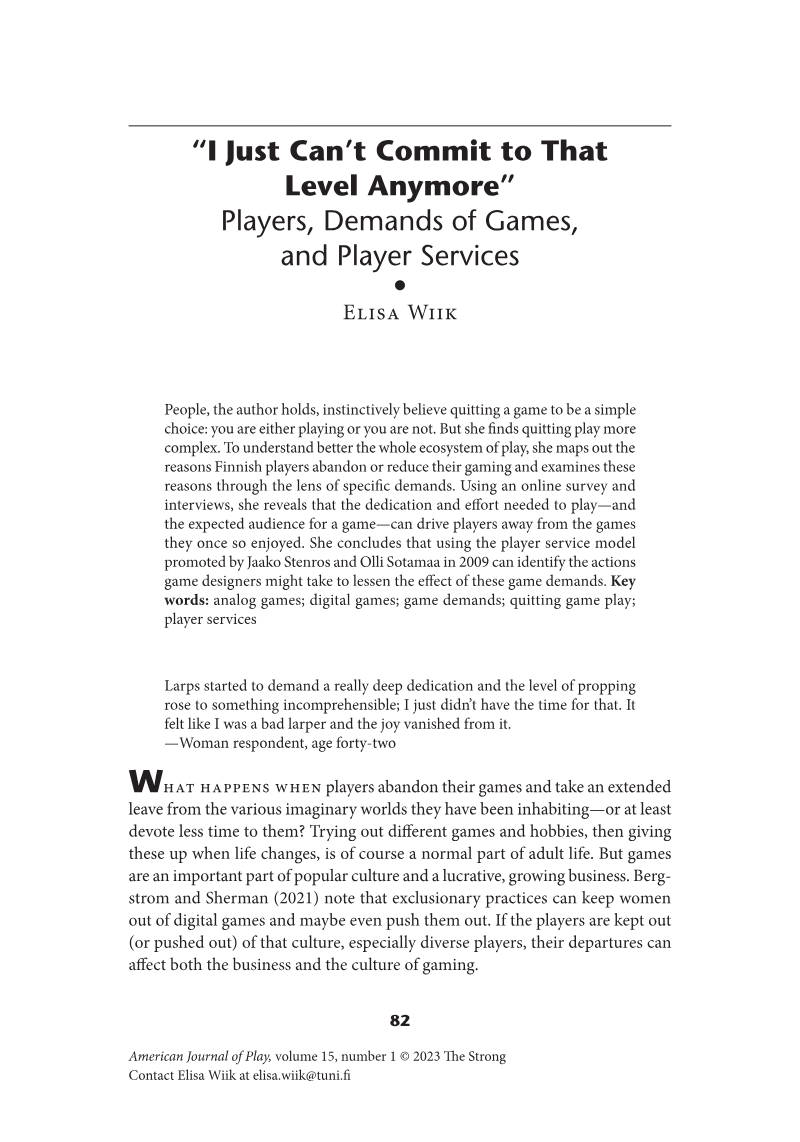
American Journal of Play · 2022
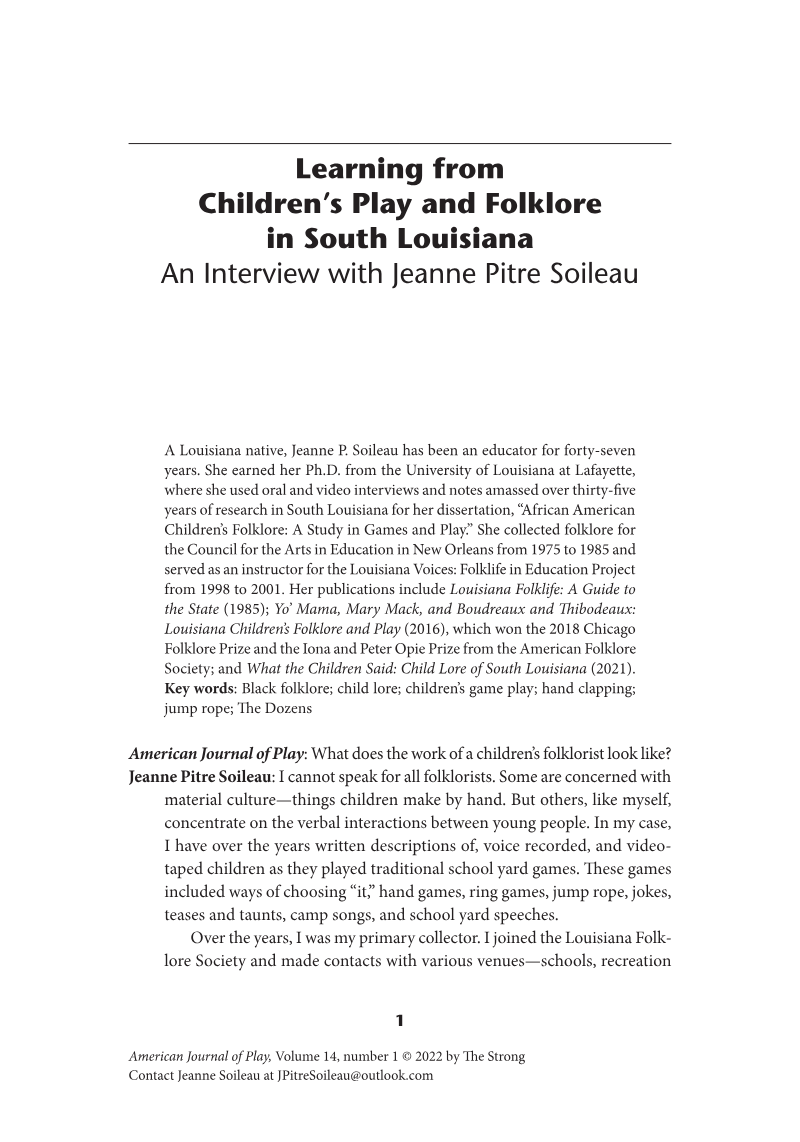
American Journal of Play · 2021
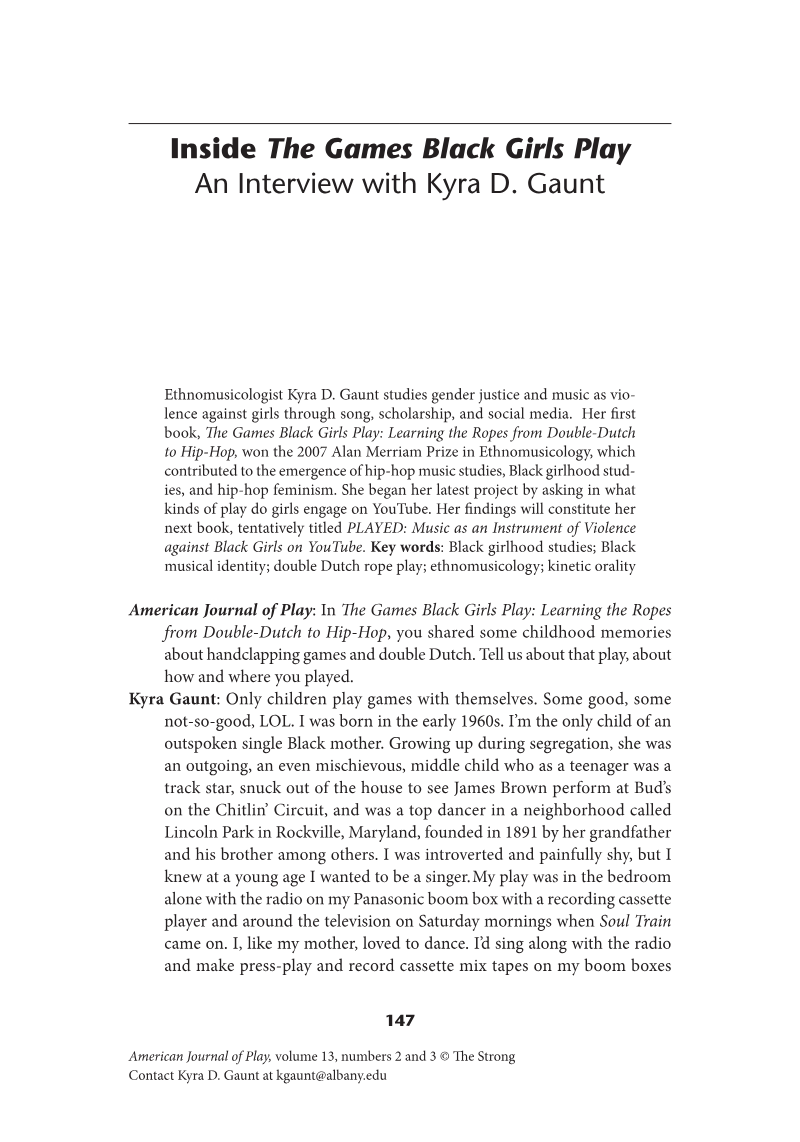
American Journal of Play · 2020
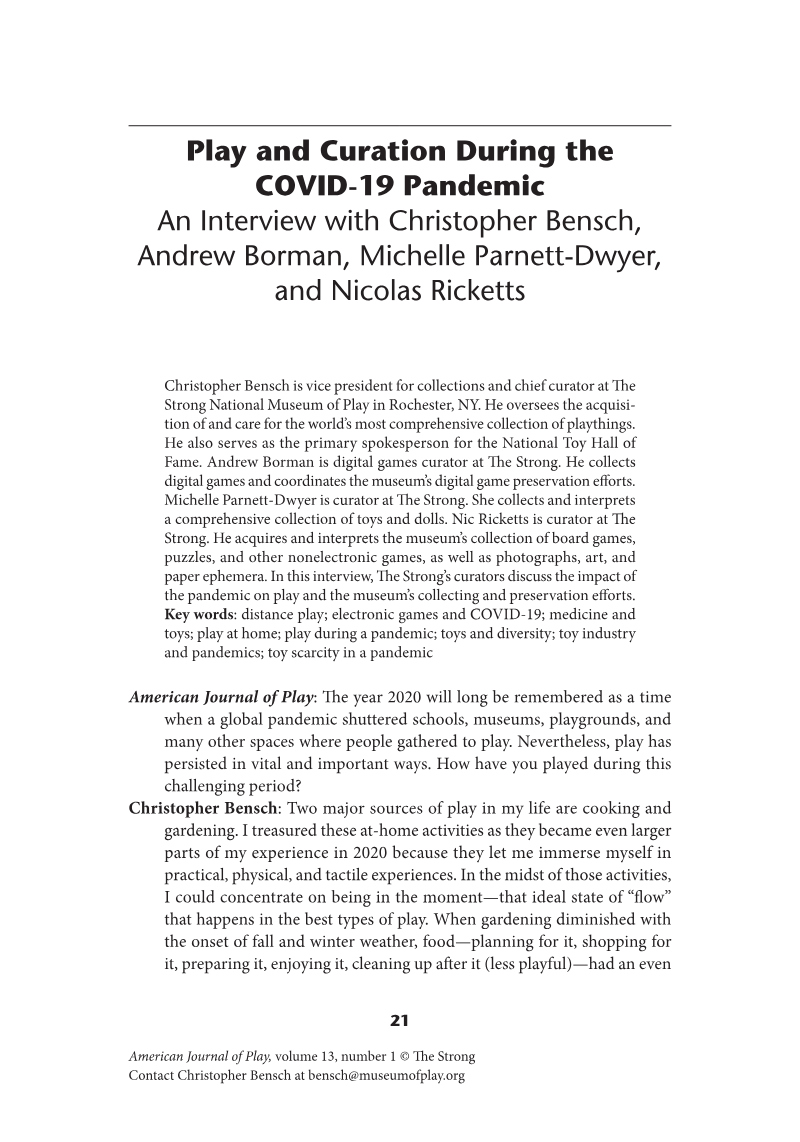
American Journal of Play · 2020
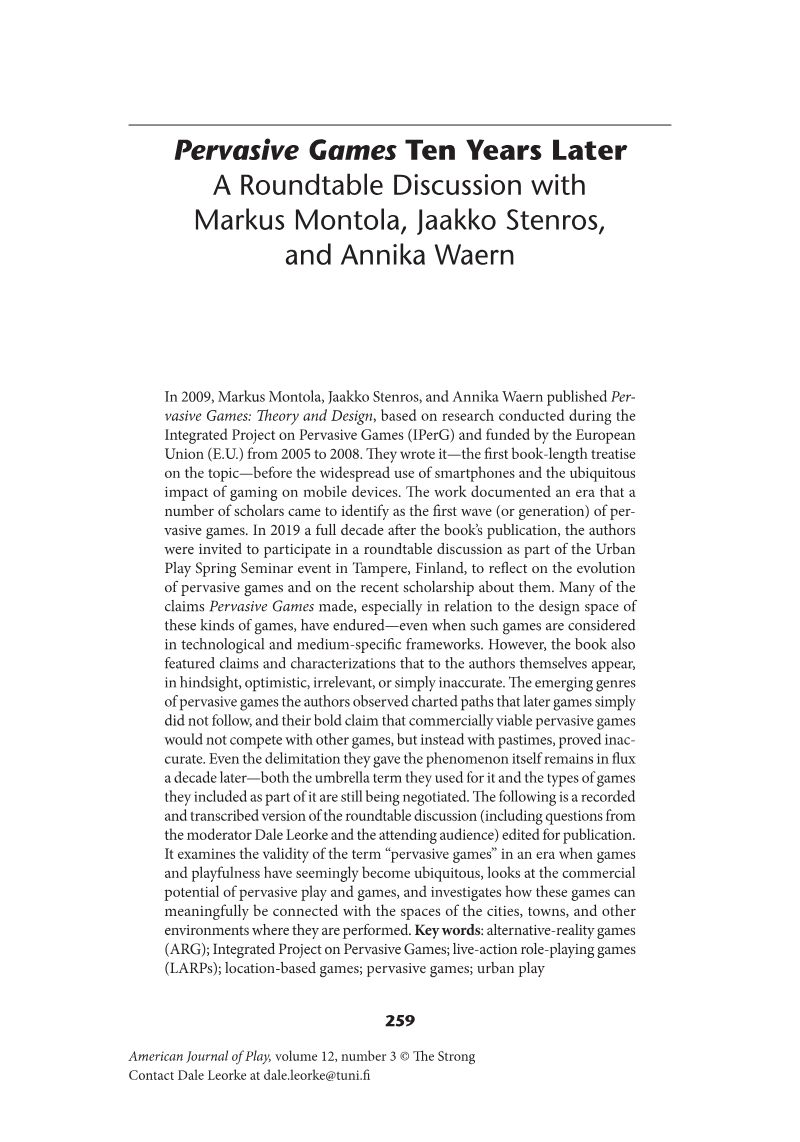
American Journal of Play · 2019
European Conference on Games Based Learning (ECGBL) · 2026