1 free read left. Create a free account for unlimited reading + AI research.
Create free account
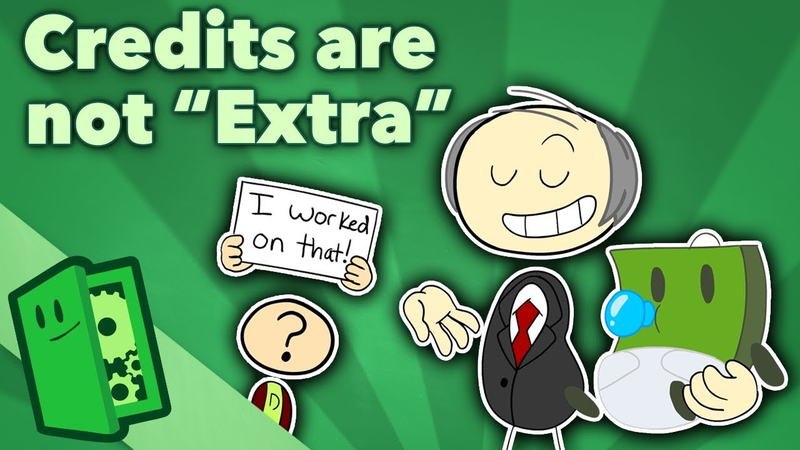
Credits are not "Extra" - Why Game Credits Matter - Extra Credits
Key insights
6 takeaways- 01Some studios historically utilize the withholding of credits as a strategic lever to prevent employee poaching and force staff to remain on projects until completion.
- 02To improve industry stability, studios should implement transparent policies such as maintaining legacy credits for all contributors and allowing staff to verify their credits prior to release.
- 03The absence of standardized crediting practices often leads to the omission of contributors who depart projects before completion, effectively erasing their professional history.
- 04Game credits function as the primary professional currency for developers, serving as essential documentation for career advancement and future job acquisition.
- 05The lack of universal definitions for job titles across different studio sizes complicates the portability of credentials and professional mobility.
- 06Current industry norms often prioritize the final contributor in a role, which misrepresents or ignores the foundational work performed by predecessors during long development cycles.
Ask AI about this video
Transcript
Sam ones worked for a large game studio where he overheard something that broke his heart to game developers both agreed the studio's new policy about not listing any credits in order to prevent companies from poaching their employees was a smart move it's not credits in this case are in no way extra so let's talk about why game credits matter this episode is brought to you by dot site domains if you're looking to build a website you can find a short and memorable domain name on the dot site domain extension to register visit www.fema.gov I see welcome to Kayla who will be doing guest start for this episode thanks Kayla to most developers in the industry credits are essential getting a job especially early in your career is almost completely dependent on what games you've worked on and a quick perusal of any industry job board will show almost every listing with the requirement in the vein of must have
worked on X shipped titles but even if a person worked on a game for years if they didn't get credited it can be difficult for them to prove it but of course credits don't really benefit the studio we touched on this with our episode about game celebrities but because developers don't typically have much name recognition there really isn't a strong incentive for a company to show off who worked on a game and not having credits makes it harder for employees to leave which means that they're more dependent on a good recommendation from their former studio which of course means they're more likely to stay in line and companies have used game credits to the disadvantage of developers from the very start of the industry in the 70s and 80s when Atari was the game industry they had the exact policy we mentioned before nobody gets credit so other companies couldn't poach anyone in fact the very reason developers like Warren Robinett invented the concept of the easter egg in games like adventure was to put their name on their work another way companies use credits as leverage is by threatening not to credit people who don't stick with the project until the very end
when confronted with this practice companies like Rockstar claim it's to incentivize people to stick around until the finish line which often points to poor working conditions if you do leave you can imagine these are the places that are less likely to confirm the word did and give you a good recommendation as you go hunting for jobs some companies go the other route and make guaranteeing game credit a job perk which if you think about it is kind of like saying free air with your hotel room ah smells like savings if you've got to say something like that there's already something wrong but there are legitimate questions for how to deal with credit issues like changing team members on a multi-year project let's say a game's lead designer leaves halfway through the game's development so a new lead designer steps up until the game is shipped who then should get credit as the lead designer well usually it's the second person and the first person gets no recognition at all but what if the first person laid out the majority of the game's core design and the second person merely polished it up it really doesn't seem right that they'd get all the credit actually there's
really no situation short of one of them being fired for some gross offense where just a single person should be credited because they both worked on the game unfortunately the idea of simply sharing credit by listing both people isn't very popular in our industry as most people would rather have work attributed entirely to them plus many studios are happier to give all of the credit to the person who's still working there rather than the person who's left and now has no voice in the company at all some companies compromise with a former employees section in their credits but this label can feel like a grudging acknowledgement even in the best of times then there's the problem of crediting people who served multiple roles during development this happens all the time because a lot of people get moved around in a three plus year development cycle so what do you do granted them for everything they worked on give them what you consider their best credit these both have problems sometimes other employees will resent having to share credit for something they spent almost three years working on with someone else who was fairly on it for a year especially if that other person pops up to other places in the
credits also giving a person the best credit can sometimes be subjective what if someone went from game design to QA over the course of a project but for their next job they're trying to land a lead QA gig it's now harder for them if they're only credited as a designer another credit landmine is the same job title meaning different things at different Studios a lead at a big triple-a company usually means that person managed multiple people underneath them but at a small industry do someone might be called a lead artist because they were literally the only artists on the team so even if they've gotten credit for it if they went to a larger company for a lead art position it's possible it wouldn't be a good match unfortunately without a tool like Union bargaining the game industry can't really create a universal set of crediting standards like the film industry has so for now all we can do is offer suggestions first I think we need to make it clear that everybody who's worked on a game should get credited even if they leave keeping legacy credits would make this possible even in perpetual online games with different credits maintained for patches or
expansions and in the case where two or more people worked in the same role an idea to reduce conflict could be to track each person's time in said role that way both people are listed but the person who had the longer tenure gets listed first one of the best solutions out there still seems to be simply asking people to take a look and make sure they're being credited properly send out the credits list to everybody being credited so they can voice their approval and yes this will cause some arguments but it's better to iron out those kinks before the game ships rather than have the whole company come under fire after the fact crediting somebody on a project no matter at what level literally costs nothing but it can mean everything to that person merely everybody who's in the industry is here because they love the medium and want to feel like they're making a contribution well it does feel good to be able to look at a game and think to yourself I've worked on that it'll always feel better to have your credit be viewable to the world and to help you land another job if your studio closes its doors and taking that away is wrong so as we grow and mature as an industry we
need to make sure that everyone gets recognition for the work they put in and that doesn't really seem like too much to ask once again thanks so much to dot site for sponsoring this episode if you're anything like me every time you have an awesome idea for a domain name god it's already taken what does it say about my creativity don't worry about that you can find the perfect domain name for your business portfolio or whatever awesome thing you're cooking up on a dot site extension in fact we're in the process of moving our website because games matter comm to extra credits dot sight because we'll be easier to find Plus dot site domain names can be found on popular registrar's like GoDaddy Namecheap and many more and if you click the link below you can get your very own dot sight domain for as low as a buck 99 and after you found the perfect domain name be sure to use the code extra credits at checkout for an extra 50% off [Music] [Applause] [Music] [Applause] [Music] [Applause]
[Music]
Summary
Game credits serve as a vital professional record for developers, functioning as a primary currency for career advancement and job acquisition. Despite their importance, the industry lacks standardized practices, often resulting in the omission of contributors who leave projects before completion or the consolidation of roles that misrepresent an individual’s actual contributions. Historically, some studios have intentionally withheld credits as a strategic tool to prevent employee poaching or to exert leverage over staff, forcing developers to remain with a project until its conclusion to ensure their work is officially recognized.
The complexity of modern game development, which often spans several years and involves shifting personnel, creates significant challenges for accurate attribution. When multiple individuals hold the same title sequentially, current industry norms often favor the final contributor, effectively erasing the foundational work of predecessors. Furthermore, the lack of universal definitions for job titles—where a lead role at a small studio may carry different responsibilities than at a large corporation—complicates the portability of these credentials. Without collective bargaining or industry-wide standards similar to those found in film, these issues persist as a source of professional instability.
To address these systemic failures, the industry should adopt more transparent and inclusive crediting policies. This includes maintaining legacy credits for all contributors regardless of their departure date, implementing systems to track tenure for shared roles, and establishing a verification process where staff review their credits prior to a game’s release. Recognizing contributions is a low-cost, high-impact practice that validates the professional efforts of developers and ensures they possess the necessary documentation to sustain their careers within a volatile industry.